NinjaOne vs. Atera

NinjaOne and Atera are both endpoint management platforms for MSPs and IT teams: NinjaOne is a unified IT operations platform, while Atera is a bundled IT management platform that relies on third-party integrations for remote access and backup. 

NinjaOne

VS
This comparison reflects our assessment as of June 2026 This comparison represents our assessment of publicly available product capabilities from G2 as of June 2026. If you believe any information here is inaccurate or incomplete, please contact us and we will evaluate and address it as appropriate.
NinjaOne is designed for

Atera is designed for

Enterprise IT operations and infrastructure teams 

Small and medium-sized MSP organizations and IT teams 

Organizations that need a unified IT operations solution 

Organizations looking for a platform that integrates RMM & PSA capabilities

Environments with distributed endpoints running on diverse OS and platforms 

Environments with many endpoints but limited technicians 

Teams that prioritize robust patching and reliable automation 

Teams that focus on streamlining professional service automation 

Key differences between NinjaOne and Atera

The main differences between NinjaOne and Atera are

DimensionNinjaOneAtera
Operational modelUnified platform covering endpoint management, patching, remote access, MDM, backup, and service desk that integrates with PSA and other tools IT teams already use.An all-in-one platform that bundles RMM and PSA.
Implementation complexityDesigned for straightforward setup and configuration, making onboarding quick and minimizing administrative overhead.Easy to set up, but configurability becomes more complex as the team grows.
Remediation approachHighly dependable Autonomous Patch Management and Patch Intelligence AI with policy-driven automation.Remediation is driven through its RMM platform using automation and remote management capabilities.
Team modelDesigned for enterprise-level IT teams and MSPs, built to scale with organizational growth.Suits small MSP teams with limited technicians.

When NinjaOne is the better choice

Choose NinjaOne when

Your environment is large-scale, spanning enterprise-level infrastructure that demands reliable endpoint management, patching, scripting, and automation.

Your MSP wants PSA functionality (billing, ticketing, and documentation) integrated with endpoint management in one platform, or prefers to connect to an existing PSA rather than adopt a bundled one.

Your endpoint fleet spans distributed devices across various operating systems and requires unified management from a single console. 

Your organization requires responsive, technically capable support to maintain uptime. 

Why IT teams choose NinjaOne over Atera

Autonomous patch management 

NinjaOne Autonomous Patch Management uses CVE/CVSS-based risk scoring, Patch Intelligence AI, and real-time vulnerability scanner integration to automate patches across Windows, macOS, Linux, and thousands of third-party applications. Atera includes patch management as part of its platform, but without the same depth of risk-based prioritization or third-party application coverage. NinjaOne is the stronger fit for environments where patch compliance and vulnerability exposure are operational priorities. 

Organizations that have outgrown Atera prefer NinjaOne for its enterprise-grade architecture and deep configuration capabilities that scale seamlessly as an organization’s endpoint count expands and IT environments become complex, without requiring a platform migration. 

NinjaOne provides policy-based automation and flexible scripting across a broad set of OS environments and more than 6,000 third-party applications, reducing manual intervention and supporting consistent compliance enforcement at scale.  

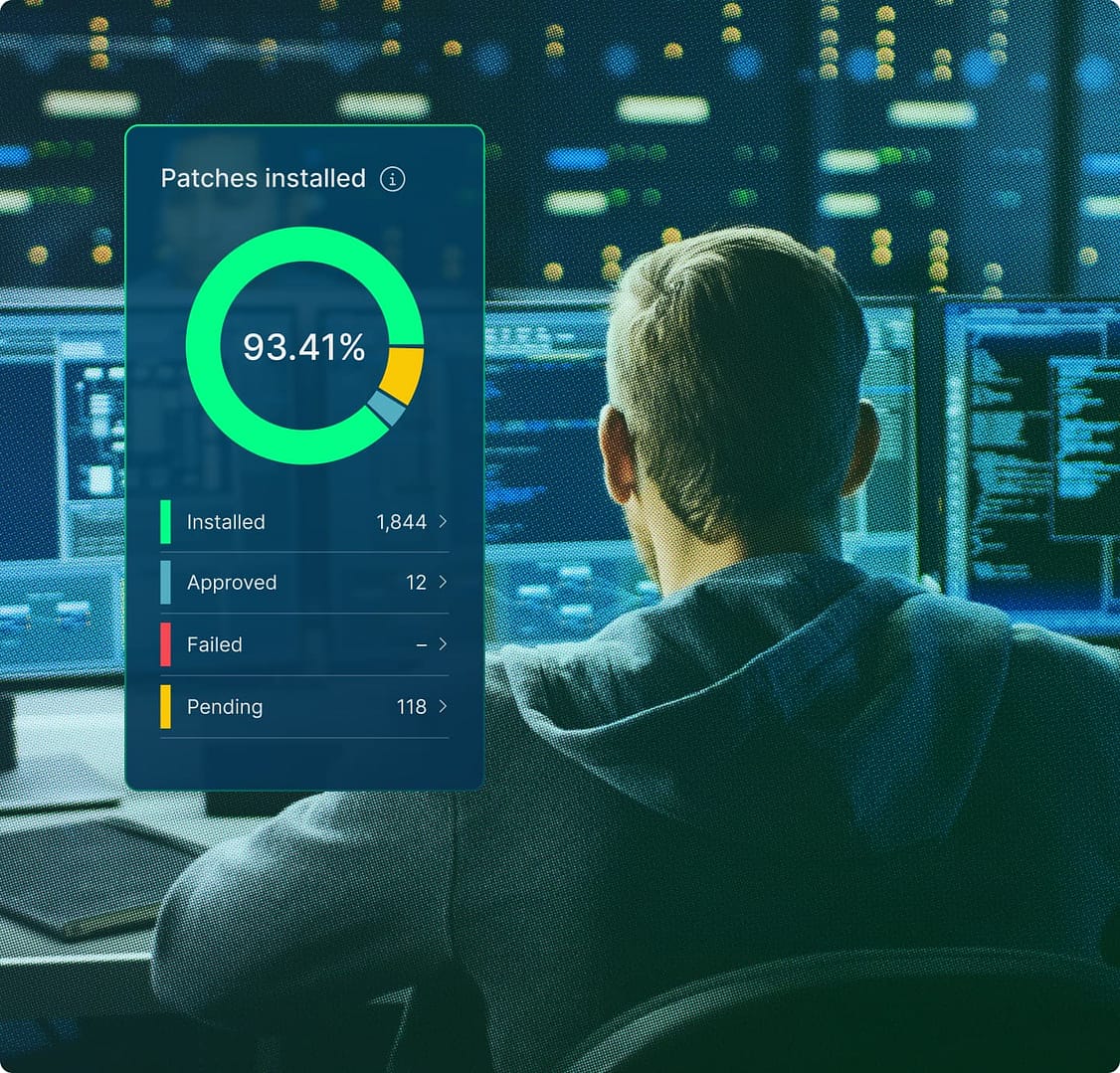
IT technician with image of NinjaOne dashboard

User reviews and ratings: NinjaOne vs. Atera

NinjaOne

4.7

Overall G2 rating (4,308

Atera

4.6

Overall G2 rating (1,137)

Information as per product capabilities from G2 This comparison represents our assessment of publicly available product capabilities from G2 as of June 2026. If you believe any information here is inaccurate or incomplete, please contact us and we will evaluate and address it as appropriate.

Discover value in 5 minutes.

NinjaOne integrations for IT environments 

NinjaOne integrates with tools commonly used in Atera environments and across broader MSP and enterprise IT stacks, including Microsoft ecosystem tools, security platforms, IT service management systems, and MSP platform integrations. 

How to evaluate the decision between NinjaOne vs. Atera

When evaluating NinjaOne vs. Atera, consider:

  • The size and complexity of your organization, specifically how large the required coverage is to have your endpoint fleet managed, maintained, and secured
  • Your need for platform consolidation and centralized management to maintain streamlined IT operations across your environment
  • The depth and granularity of automation and scripting capabilities, especially if you’re aiming for the reduction of manual intervention and elimination of human errors
  • Scalability needs as your organization or client base progresses, ensuring that your endpoint management tools grow with your endpoint fleet 
  • The quality of support given by the technical team for business continuity and the minimization of disruptive downtimes

NinjaOne vs. ManageEngine FAQs 

NinjaOne is a unified IT operations platform that gives IT teams and MSPs a single console for managing every device, patching every endpoint, and supporting every employee. Atera combines RMM and PSA into a bundled platform marketed primarily to smaller MSP teams with limited technicians. NinjaOne offers broader platform scope, deeper automation, and enterprise-grade integrations. Additionally, NinjaOne has its own native PSA for MSPs that want a unified platform, and support for third-party PSA integration for MSPs that prefer their existing tool. 

The most significant difference is operational model. NinjaOne is a unified endpoint management platform that gives teams the freedom to build an optimized IT stack with industry-leading integrations, including native PSA functionality for MSPs who want everything in one console and support for third-party PSA tools for those who prefer their existing workflows. Atera operates as a consolidated platform where PSA and RMM are bundled together. This approach works well for smaller teams but can limit flexibility as operational needs grow more complex. 

Yes. NinjaOne is a strong alternative to Atera, particularly for organizations that need more robust patch management, greater endpoint visibility, and flexibility to scale across complex, distributed environments. NinjaOne’s Autonomous Patch Management covers Windows, macOS, Linux, and thousands of third-party applications, giving teams a level of patching depth that goes beyond what Atera typically offers. For IT teams that have outgrown Atera or anticipate significant growth, NinjaOne provides the enterprise-grade architecture to support that transition without requiring a platform switch down the line. 

This depends on your organization’s requirements. Choose NinjaOne when managing large, distributed endpoint fleets that require granular control, advanced patching, and enterprise-grade integrations. NinjaOne is particularly well-suited for environments running diverse operating systems, where consistent policy enforcement and automation across every endpoint is critical. Choose Atera when your team is smaller and prioritizes RMM and PSA that can be managed from a single interface. 

NinjaOne covers and extends the core endpoint management capabilities that Atera can offer. On the PSA side, NinjaOne offers a native PSA for MSPs who want a unified platform, while also supporting integrations with third-party PSA tools for teams that prefer their existing workflows. Beyond RMM and PSA, NinjaOne also extends into MDM, endpoint backup, IT documentation, and remote access. This gives teams a broader operational foundation from a single platform. 

Ready to simplify work with unified IT?
This comparison represents our assessment of publicly available product capabilities as of June 2026. Our evaluation draws on vendor-provided materials, including product documentation and release notes, as well as publicly available pricing information, customer feedback, and analyst insights. Where applicable, details were reviewed against the vendor’s then-current generally available (GA) release as of the date indicated.