
Key Points
- Aside from enhanced security, OS updates improve performance, compliance, asset management, and operational stability.
- Autonomous patching is ideal for security updates, non-critical systems, and large-scale deployments.
- Manual patching cycles are recommended for critical systems, legacy devices, and testing environments.
- Automated and manual patching cycles are usually combined in enterprise IT environments, where systems tend to be decentralized or mixed.
It wasn’t too long ago that support for Windows 10 ended, leaving many general users scrambling to catch up on the importance of OS updates and risk reduction. For modern enterprise IT environments, however, one does not simply patch. We’ll get to that in a bit! But in general, OS updates are crucial—and this guide discusses the whys and hows of that.
Importance of operating system updates
It’s not uncommon for users to primarily associate patches with security. After all, these changes are always looking to get ahead of cyber threats, which are evolving at their own pace. But the business impact of OS updates goes far beyond security; there are also matters of performance, compliance, asset management, and operational stability.
1. Performance improvements
Among many other things, system updates tend to enhance memory handling and driver stability, reducing crashes, boosting core performance, and preventing exploits that target memory vulnerabilities.
2. Compliance and audit alignment
Updates are usually tied to patch compliance frameworks and various industry standards, making them all the more crucial to enterprise IT. Outdated systems can lead to insurance exclusions, regulatory penalties, and increased legal liability.
3. Lifecycle continuity and asset optimization
Regular OS updates extend hardware usability, prevent forced emergency upgrades, and reduce premature hardware refreshes. This directly supports IT asset lifecycle management planning and maximizes IT investments.
4. Operational stability and performance integrity
While performance improvements are often highlighted, OS updates are just as integral for what they bring in terms of consistency and reliability. For instance, OS updates solve many software compatibility issues.
If you can automate that—where it’s possible—then you’re on your way to proactive IT management. Here’s a free Proactive IT Management downloadable guide to get you going.
Patch configuration in managed IT environments
The snapshot of the 2025 Verizon Data Breach Report reinforces what we know: Most cyberattacks target endpoint vulnerabilities. Unfortunately, even the most sophisticated IT infrastructure can be undermined by out-of-support software.
But how does outdated software come about in the first place? In the age of automated patch management (highly recommended), outdated systems often persist due to a mix of oversight, resource constraints, and the complexity of managing diverse IT environments.
IT teams may not always be aware of all the active software and systems across an organization, especially in large or decentralized environments. System admins may also delay updates to give way to testing, ensuring that the new patch will not be disruptive to critical applications or workflows. There is also consideration for legacy systems, which are rather difficult, if not impossible, to update without significant effort or risk.
Considerations and strategies for OS update cycles
Regular OS updates are important because they provide critical security enhancements, thereby reducing the attack surface and minimizing exploitation risks. But there is more to it than just security. They also include performance improvements, bug fixes, and new features that enhance the overall functionality and efficiency of systems.
With that said, there are cases when it’s not mandatory or even optimal to go through a patch as soon as the update arrives. In such situations, you can automate select patch cycles and leave the rest to business and technical considerations.
Automated patching
Patch automation may require additional resources, but it is very good for scale. Here are some scenarios where consistency and timeliness are critical:
- Non-critical systems: Apply automatic updates to systems where immediate testing and validation are less critical.
- Large-scale deployments: Automate updates across multiple systems to ensure uniformity and reduce administrative overhead.
- Security-focused updates: Prioritize automated deployment of security patches to address vulnerabilities promptly.
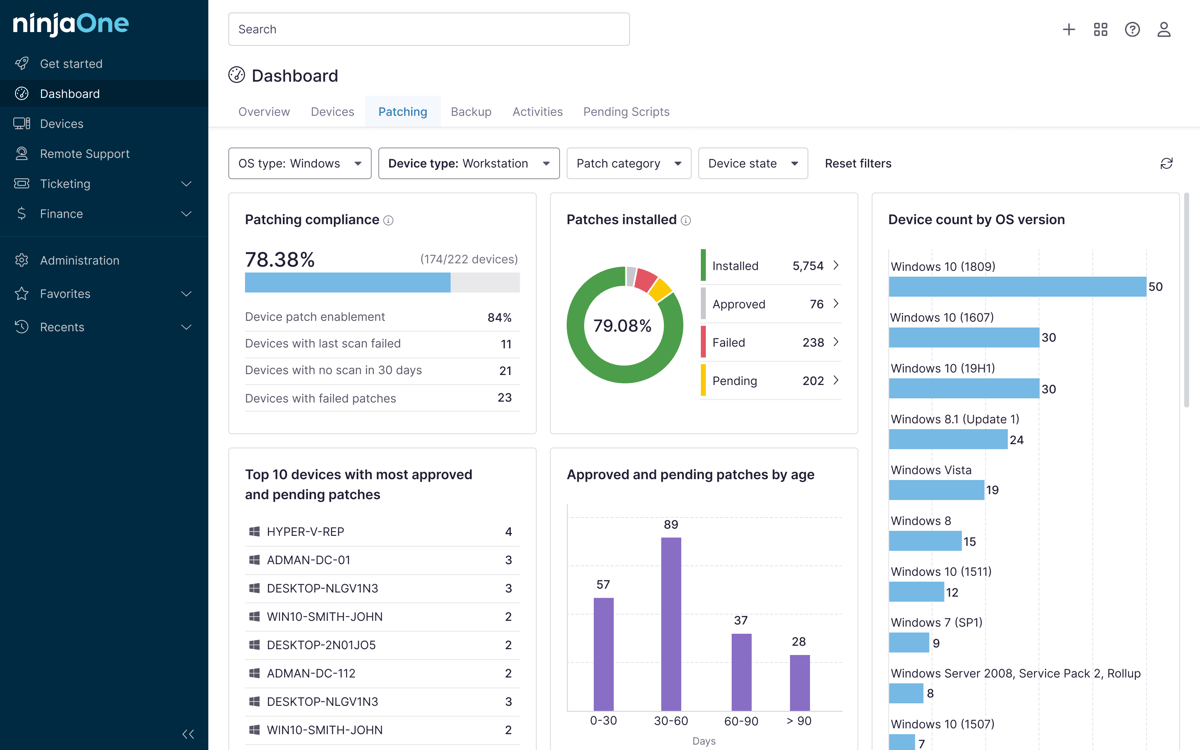
Complete an IT inventory process to identify and organize assets that can be patched on schedule. In addition, leverage patch management tools that can automate the deployment of updates across multiple systems simultaneously.
Understand where your patching process needs work.
Manual patching
Manual patching requires more effort, but offers greater flexibility and control. Here are some situations where manual patching is favored:
- Critical systems: Manually update systems that support critical business functions to avoid potential disruptions.
- Testing and validation: Apply updates manually in environments where thorough testing is necessary before deployment.
- Complex environments: Use manual patching for systems with unique configurations or compatibility concerns.
In complex or mixed settings, consider combining automated and manual patching strategies to maintain a secure and stable IT environment. For example, you can create alerts to track devices that need manual control, then set up regular updates during off-peak hours to minimize disruption to business operations.
Test and optimize patch scheduling and deployment with NinjaOne
Choosing the best patch management strategy
All patch strategies require careful planning and ongoing management to ensure systems remain up-to-date and secure. Fortunately, there is no shortage of tools that support task and patch automation for modern IT environments. That said, the right approach depends on your specific needs, infrastructure, and risk tolerance. By understanding the strengths of both automated and manual patching, MSPs and enterprise IT teams can create a balanced strategy that enhances security, stability, and operational efficiency.
Related topics: