Unify patching, vulnerability visibility, and backup in a single platform to reduce risk, shrink exposure windows, and recover fast when it matters most.
Fragmented security execution leaves your business exposed
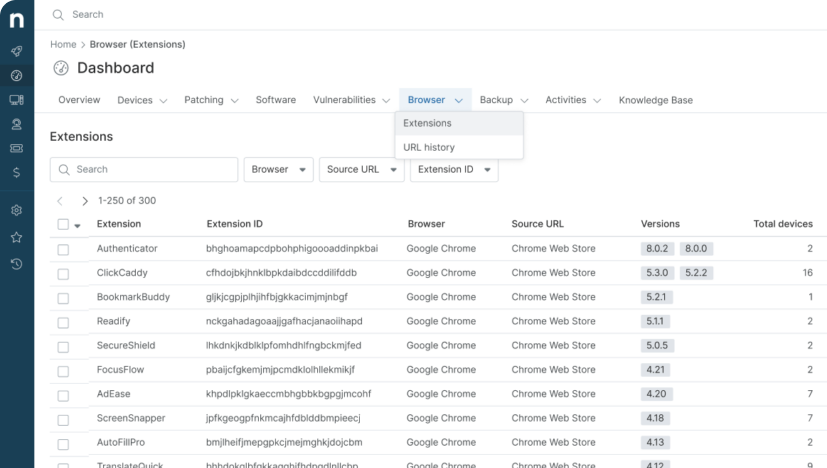
Enterprise IT teams invest in detection and compliance tools yet struggle to act on what they find. Patching is slow and manual, vulnerability data lives in a separate console, backup operates in its own silo, and browser activity, including extensions and web-based AI usage, often isn’t visible at all. The gaps between identifying and resolving risk are where breaches happen.
Unify visibility, remediation, and recovery
Close the gap between finding risk and fixing it with one connected platform.
Automate patch deployment with AI-powered stability analysis that prioritizes critical updates and pauses known-bad patches before they cause disruption. Shrink vulnerability exposure windows without introducing operational risk.
Continuous risk visibility
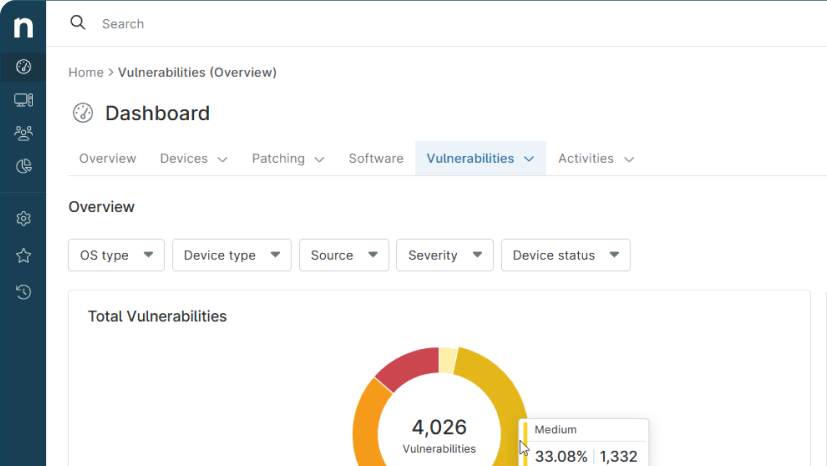
Eliminate stale scan windows and continuously identify software vulnerabilities across every endpoint. Manage and control URL and browser extension risk.
Built-in resilience
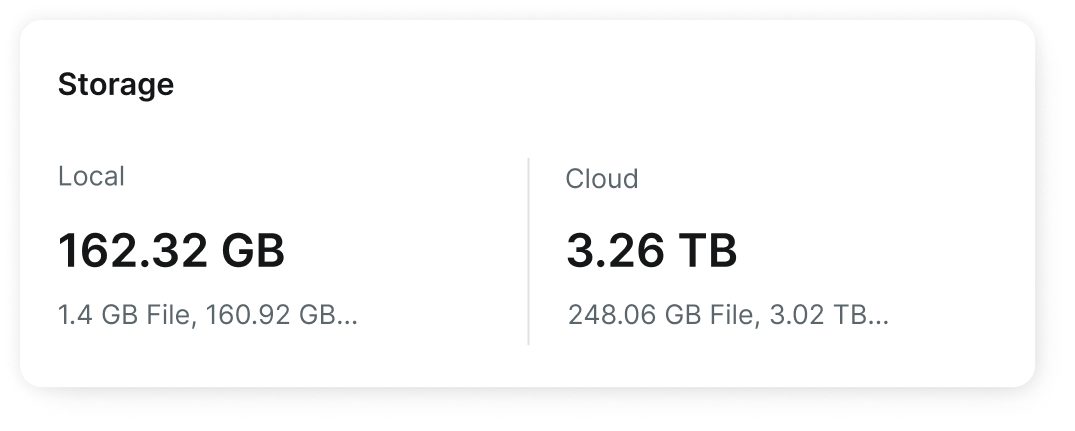
Protect endpoints, servers, and SaaS data with ransomware-resilient backup integrated into the same platform. Recover files, images, or entire workloads quickly to minimize downtime and business impact.
Reduce risk, recover fast, stay compliant
Shrink risk exposure windows
AI identifies CVEs in minutes and deploys patches automatically. Visibility into browser extensions reduces risk.
Prevent patch-related outages
Patch Intelligence AI pauses risky updates before they disrupt production. $697,200 avg. annual benefits.1 [IDC]
Recover from disruption quickly
Ransomware-resilient backup for endpoints, servers, and SaaS data in one console. Recover fast.
Strengthen compliance and audit readiness
Every action logged and auditable in one platform. 81 percent more efficient device inventory management.1 [IDC]
Products that protect critical data and devices
1 / 4
NinjaOne Endpoint Management®
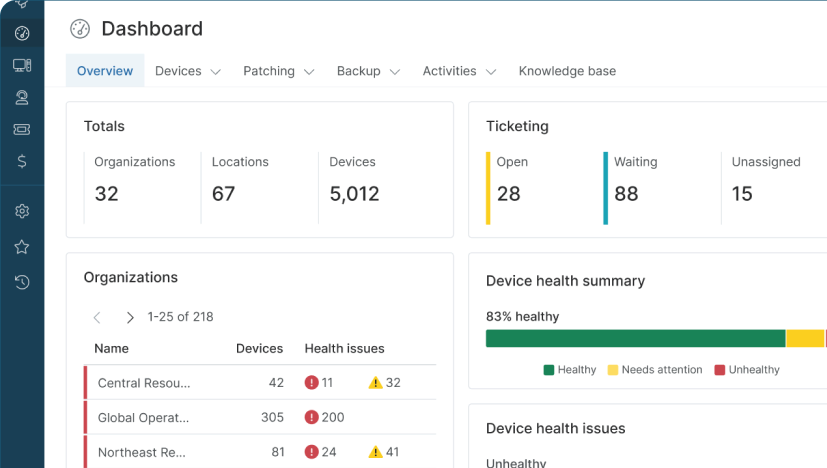
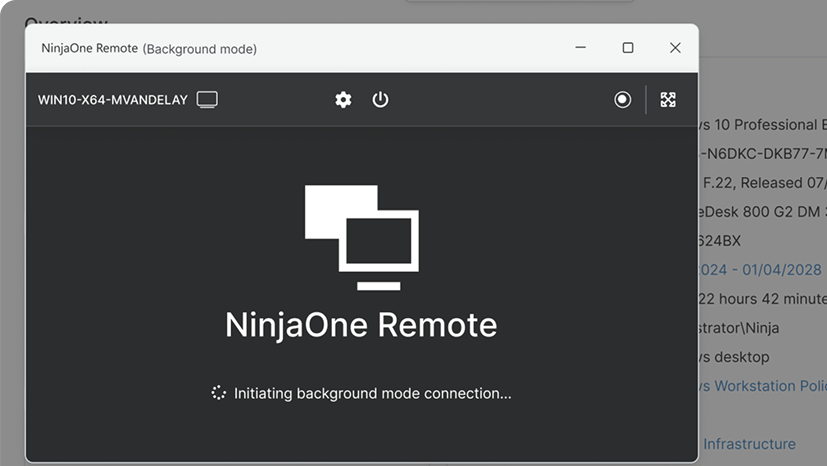
Monitor, manage, and secure all your devices from a single, easy-to-use console.
How does NinjaOne help reduce vulnerability exposure?
NinjaOne Vulnerability Management uses AI-driven, cloud-based analysis to identify CVEs within minutes of a software change, with zero endpoint impact. Combined with Autonomous Patch Management, vulnerabilities are connected directly to the patches that resolve them, so your team can remediate from a single platform without manual handoffs or separate tools.
What makes NinjaOne patching different from traditional patch management?
NinjaOne Autonomous Patch Management uses Patch Intelligence AI to evaluate real-world stability data before deploying updates. Critical patches are prioritized and deployed automatically, while patches with known issues are paused or excluded. This reduces both security risk from delayed patching and operational risk from unstable updates.
Does NinjaOne include backup and recovery?
Yes. NinjaOne Unified Backup provides image-based and file-level protection for endpoints and servers, plus cloud-native backup for Microsoft 365 and Google Workspace. Immutable storage, encryption, and policy-based retention are built into the same platform, so backup and recovery operate alongside patching and device management.
Can NinjaOne help with compliance and audit requirements?
NinjaOne automatically logs patching actions, vulnerability findings, and backup activity in a centralized platform. IT teams can generate reports on patch compliance, endpoint health, and recovery readiness without piecing together evidence from multiple systems. This supports frameworks such as CIS, NIS2, DORA, HIPAA, and PCI.
Will NinjaOne work alongside our existing security tools?
NinjaOne integrates with leading ITSM platforms like ServiceNow and Zendesk, security tools like CrowdStrike and SentinelOne, and identity providers like Okta and Microsoft Entra. An open API supports custom integrations and automation. NinjaOne also ingests data from third-party vulnerability scanners such as Tenable, Rapid7, and Qualys to unify detection and remediation in one console.
What is the business impact of unified protection with NinjaOne?
According to IDC, NinjaOne customers see an average of $1.3 million in annual benefits per organization, a 720 percent three-year ROI, and a four-month payback on investment.1 Patching and device management efficiencies alone delivered $697,200 in average annual benefits, with 73% less time on patching and 81 percent more efficient device inventory management.1
How does NinjaOne strengthen browser security?
NinjaOne Browser Management extends endpoint management into the browser, giving IT teams visibility, policy control, and risk reduction across Chrome, Microsoft Edge, and Firefox. It’s built directly into the NinjaOne platform, so you manage the browser the same way you already manage endpoints.