
Key points
- Why Teams Replace Veeam: Complex setup, higher admin overhead, and a less streamlined restore experience.
- Top Veeam Competitors & Alternatives in 2026: 1. NinjaOne, 2. Acronis Cyber Protect Cloud, 3. Cove Data Protection, 4. Rubrik, 5. Commvault Cloud, 6. Druva Data Security Cloud, 7. Barracuda Backup, 8. Datto BCDR, 9. HYCU, 10. Veritas NetBackup, 11. MSP360 Backup.
- How to Evaluate Veeam Alternatives: Compare vendors based on licensing model, workload coverage, RTO/RPO recovery objectives, and ransomware defenses.
- Backup Workload: Enterprise platforms emphasize scale and hybrid complexity; SMB/MSP-oriented tools prioritize easier operations and faster time-to-value.
- NinjaOne as the Top Alternative: NinjaOne stands out for cloud-native SaaS backup, fast deployment, unified policy-driven management, and audit-ready retention.
Veeam is well known for its robust backup solution, but its complex setup and inflexibility in restoring to different locations can make the tool challenging for globally distributed teams. In this guide, we list the top eleven Veeam competitors based on user reviews from leading sites such as G2 and Capterra.
Keep in mind, however, that while we offer our recommendations based on functionality and user experience, there’s no one best SaaS backup solution. It’s strongly recommended that you select the tool that closely aligns with your specific needs and IT budget. We also highly advise taking advantage of the free trials offered by the alternatives listed in this guide so you and your IT team gain first-hand experience of each tool. Conducting research on the cost of IT management software is also a good idea.
🥷 Experience automated, cloud-native protection for Microsoft 365 and Google Workspace environments.
Learn more about NinjaOne SaaS Backup.
Top 3 alternatives to Veeam
NinjaOne
NinjaOne is best suited for MSPs and IT teams seeking cloud-native SaaS and endpoint backup with minimal administrative overhead.
Its key strengths include
- fast deployment,
- granular recovery for Microsoft 365 and Google Workspace, and
- unified management across endpoints and cloud workloads,
while organizations with highly specialized legacy infrastructure may find it less infrastructure-centric than traditional enterprise backup platforms.
Acronis Cyber Protect Cloud
Acronis Cyber Protect Cloud is best used by teams that want an all-in-one backup and cybersecurity platform spanning endpoints, servers, and cloud workloads.
Acronis stands out for combining backup with malware protection and continuous data protection, though users often cite higher resource usage and a steeper learning curve as trade-offs.
Cove Data Protection
Cove Data Protection is a strong option for MSPs and IT providers prioritizing cloud-first backup with built-in ransomware resilience.
Cove’s immutable backups, efficient incremental restore points, and single-dashboard management are its key strengths, while limitations around reporting customization and long-term SaaS data retention may be a consideration for some organizations.
Veeam alternatives at a glance
| SaaS backup solution | Key features | Trial information |
| NinjaOne | Unified backup management, granular recovery, automated protection | Free 14-day trial |
| Acronis Cyber Protect Cloud | All-in-one solution, backup options, continuous data protection | Free 30-day trial |
| Cove Data Protection | Backup security, incremental backups, wide workload options | Free 30-day trial |
| Rubrik | Policy-driven automation, ransomware protection, cloud integration | Free 30-day trial (for Microsoft 365 data protection) |
| Commvault Cloud | Workload support, centralized data management, automation | Free 30-day trial |
| Druva Data Security Cloud | SaaS-based delivery, endpoint backup, unified visibility | Free 30-day trial |
| Barracuda Backup | Hybrid backup architecture, intuitive interface, integrated security | Free 30-day trial |
| Datto BCDR | Appliance-based backup, automated disaster recovery, MSP-focused management | Free 14-day trial |
| HYCU | Cloud and SaaS integrations, policy management, application backup | Free 14-day trial |
| Veritas NetBackup | Scalability, workload compatibility, governance and compliance tools | Free 60-day evaluation license |
| MSP360 Backup | Cloud-native storage, flexible deployment, centralized management | Free 15-day trial |
What is Veeam?
Veeam Data Platform is a data protection and backup platform used in many modern IT environments that offers comprehensive solutions for protecting workloads across physical and cloud environments. In particular, Veeam supports backup, replication, disaster recovery, and data resilience for workloads running across VMware, Hyper-V, physical servers, cloud platforms, and SaaS ecosystems.
Key features
- Backup and restore: Veeam protects virtual machines, physical servers, cloud workloads, and hybrid environments.
- Workload support: The software works with VMware, Microsoft Hyper-V, AWS, Azure, Google Cloud, and other platforms.
- Data recovery: Users of Veeam can quickly restore data into production environments to minimize downtime.
- Ransomware protection: It comes with built-in defenses to secure backups from tampering and cyber threats.
- Scalability: Veeam Data Platform is built to meet the needs of both SMBs and large enterprise IT environments.
Usability and experience
Veeam’s users have highlighted the platform’s reliability and functionality, noting that it performs consistently once fully configured. Its centralized management console provides broad visibility across workloads, making Veeam a strong fit for IT teams that need granular control over backup policies, retention, and recovery processes.
That said, some user reviews often point to a more complex setup and management experience compared to newer, cloud-native backup solutions. Initial deployment can require significant planning and technical expertise, particularly in distributed environments. As a result, smaller IT teams and MSPs have found that the learning curve and ongoing administration associated with Veeam add a lot of operational overhead.
User feedback and reviews
According to feedback in aggregated review sites such as G2 and Capterra, users point out that Veeam Data Platform can still benefit from improvement in the following areas:
- Manual management: Despite Veeam’s policy-based automation, users still have to manage cloud repositories and tiering policies manually. (Source)
- Faster backups: Some users say that Veeam can improve by speeding up large data backups and restores. (Source)
- Single file restoration: Other reviews mention that the steps to find a specific file to restore can be shorter or simpler. (Source)
Why IT pros look for Veeam alternatives
Even with Veeam’s broad workload support and feature set, there are several reasons IT professionals consider alternatives to the software:
Complexity in setup and management
As mentioned earlier, Veeam can be complex to configure, especially for global, hybrid environments or teams without specialized backup expertise. Some users even report that deep feature sets require significant learning and administrative effort.
Scalability for SaaS-focused protection
While Veeam offers strong infrastructure backup, some teams prefer alternatives with cloud-native SaaS backup capabilities and simpler restore workflows, especially as organizations increasingly rely on cloud productivity tools and SaaS applications.
Restore experience
A frequent observation among Veeam users is that granular file-level restores (especially in SaaS scenarios) can be less intuitive or slower compared to those offered by more specialized SaaS backup competitors.
Overall, while Veeam offers backup and restore capabilities suited for enterprise and hybrid cloud deployments, different IT teams prioritize simplicity and/or SaaS-native workflows, prompting them to explore alternatives.
With that said, let’s take a closer look at the top eleven competitors of Veeam Data Platform in 2026.
Top Veeam competitors and alternatives in 2026
1. NinjaOne
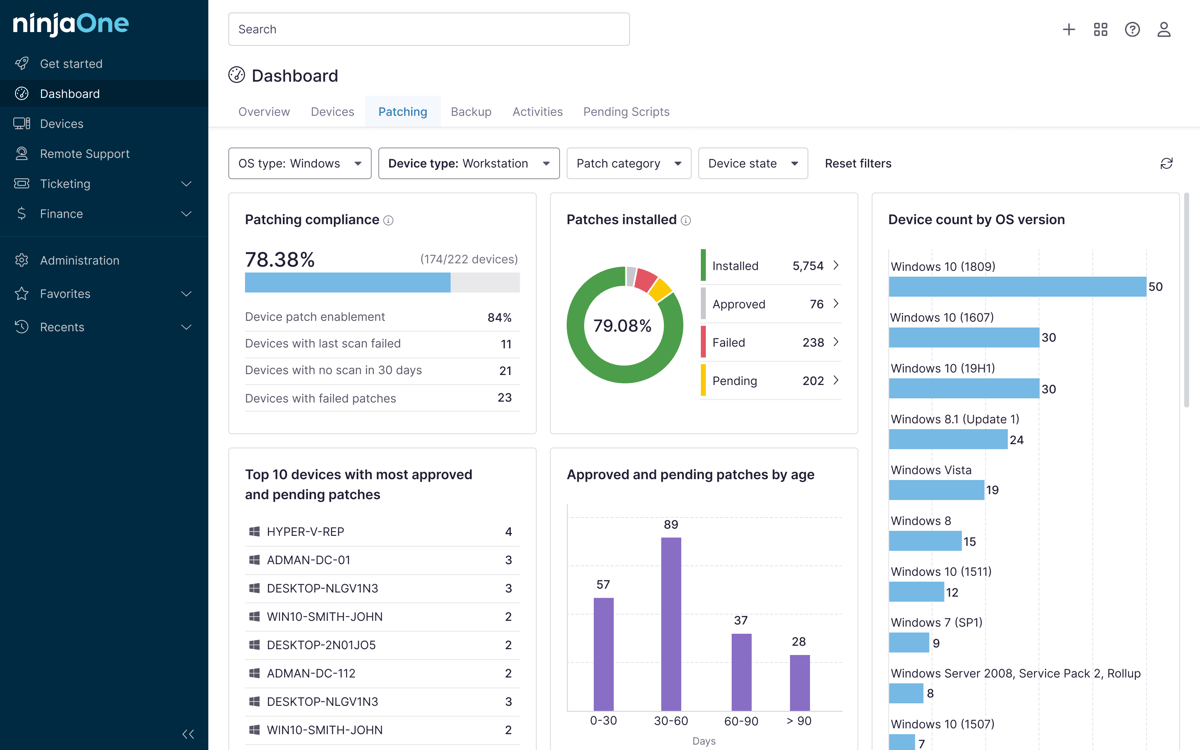
NinjaOne is an automated endpoint management software solution trusted by 30,000+ customers worldwide. Its all-in-one platform includes several native tools, including NinjaOne SaaS Backup—an automated, policy-driven backup and recovery tool for MSPs of all sizes.
NinjaOne SaaS Backup delivers secure backup for Microsoft 365 and Google Workspace, ensuring fast, granular recovery of emails, files, calendars, and collaboration data in the event of accidental deletion, ransomware, or misconfiguration. Designed for MSPs and IT enterprises in highly regulated industries, NinjaOne SaaS Backup can be seamlessly extended with NinjaOne Archiver, enabling immutable, long-term retention, legal hold, and search/retrieve capabilities to support full IT compliance and defensible data governance.
In addition, NinjaOne SaaS Backup carries that same user-friendliness that is synonymous with the NinjaOne platform. Users can easily restore a single email, mailbox, or the entire email ecosystem from a single, intuitive dashboard.
5 reasons to choose NinjaOne SaaS Backup over Veeam
1. Easy deployment
A common pain point in many SaaS backup tools is a complex setup that adds frustration to their team rather than removing it. Taking this into account, NinjaOne SaaS Backup—as with the entire NinjaOne platform—is easy to set up, fast to configure, and immediately usable, even for those with minimal technical experience.
2. Granular recovery
NinjaOne offers granular recovery for Exchange, OneDrive, SharePoint, Teams, Gmail, and Drive. This is useful for remote or hybrid workforces that work in highly regulated industries and need a security-first tool that helps protect them against accidental loss, malicious deletion, and malware.
3. Unified solution
NinjaOne SaaS Backup unifies backup management across endpoint, server, and cloud productivity suites to give users a single-policy driven experience. This end-to-end visibility also contributes to faster, more efficient workflows.
4. Automated protection
NinjaOne Backup is ideal for hybrid and multi-tenant environments. It delivers automated protection and rapid recovery for emails, files, calendars, and collaboration content. The tool ensures that all SaaS data is secure, recoverable, and completely under your control.
5. Audit-ready
NinjaOne SaaS Backup ensures your discoverable backups meet various compliance requirements, including HIPAA, GDPR, FINRA, and SEC. The solution also features compliance-based retention policies so you’re more confident during auditing.
Strengths of NinjaOne
- Healthily obsessed with customers’ success: NinjaOne offers free and unlimited onboarding, training, and support. Founder-led and controlled, NinjaOne takes particular care in treating its customers with exceptional, uncompromising support.
- Proven track record: NinjaOne delivers on its business-value promises, offering a solution that provides radical simplicity for faster time-to-value. Leveraging automation in all its tools, NinjaOne works as promised and reduces technician busy-work instead of adding to it.
- Enterprise-grade security: The NinjaOne platform features dozens of enterprise-grade security measures so users can focus on their work without worrying about threat actors exploiting vulnerabilities.
- Cloud-native management: NinjaOne is fast to implement, set up, and deploy. Its modern, intuitive, and easy-to-use product was built for the next generation of IT—from automated endpoint management to patch management and SaaS backup.
- High-velocity innovation and momentum: NinjaOne is made for IT by IT. Its platform is designed to grow with your business and boasts a long-term product strategy guided by former MSP leaders. You can see NinjaOne’s product roadmap here.
Customer story
Ron Thomas, vice president of technology at Rare, was overwhelmed with multiple standalone tools that ended up being both inefficient and redundant. He appreciates how NinjaOne simplified his costly IT stack and helped him perform multiple tasks more efficiently, from backup to reporting.
“Having everything in NinjaOne’s single pane of glass, whether it’s our antivirus or backup, helps us maintain global security. We have a tighter security posture, we can mitigate threats in real time, and we can go into ransomware recovery if needed because we have backups available,” shared Thomas.
Read more NinjaOne customer stories or check out NinjaOne reviews.
Pricing information
NinjaOne’s IT management software has no forced commitments and no hidden fees. You can request a free quote, schedule a 14-day free trial, or watch a demo.
Reviews
- 3,326 reviews (at the time of writing)
- 4.7 / 5 stars
- 276 reviews (at the time of writing)
- 4.7 / 5 stars
Protect cloud productivity with confidence.
2. Acronis Cyber Protect Cloud
Acronis Cyber Protect Cloud is a unified solution that offers backup, AI-based malware, antivirus, and endpoint protection management. Designed for modern workspaces with hybrid teams, Acronis offers full-image and file-level backup and recovery to safeguard workloads. It’s a strong contender in this list of Veeam competitors for its robust cloud backup capabilities that protects over 20 workload types from a single console, including Microsoft Exchange, Microsoft SQL Server, Oracle DBMS Real Application clusters, and SAP HANA.
Use case
Acronis is well suited for MSPs and IT teams in healthcare, finance, manufacturing, and professional services that need an all-in-one backup and cybersecurity platform to protect diverse workloads across hybrid environments.
Features
- All-in-one solution: Acronis combines cloud backup with cyber protection features like anti-malware and antivirus.
- Backup options: This Veeam alternative backs up popular workloads like macOS, Windows, Linux, Microsoft 365, and Google Workspace.
- Continuous data protection: Acronis monitors and backs up changes in real-time.
Shortcomings
- Resource-intensive: According to some G2 users, Acronis occasionally slows down, especially when backing up larger files. (Source)
- Technical support: The customer support of Acronis is variable, with some users saying that they received a response after weeks and others saying that their issue was resolved immediately. (Source)
- Complex setup: Acronis has a steep learning curve, which may be a hurdle for smaller teams or for beginner IT personnel. (Source)
Check out Acronis alternatives or compare NinjaOne vs. Acronis.
3. Cove Data Protection
Cove Data Protection by N-able boasts a cloud-first architecture that enables SaaS delivery and ransomware resilience. The backup tool isolates immutable backups away from your local network so you can easily recover your data to your environment of choice. In addition, Cove backs up all local devices, cloud workloads, and Microsoft 365 data and helps you manage this from a single dashboard.
Use case
This solution is a strong fit for IT providers serving SMBs in regulated industries—such as legal, education, retail, and nonprofit organizations—that prioritize cloud-first backup and ransomware-resilient recovery.
Features
- Security: Backups are encrypted, immutable, and isolated by default, so data is always recoverable.
- Smaller incremental backups: Cove provides up to 60 smaller incremental backups to help users save more restore points for improved RTO and RPO.
- Workload options: Cove offers server, workstation, and M365 backup for different types of workloads, such as Windows, macOS, Linux, MS SharePoint, MS SQL, VMware, and Hyper-V.
Shortcomings
- Reporting: Cove’s native reporting tool is less than ideal and could be further improved for usability and customization. (Source)
- Support: Some G2 users have said that customer support can take hours or days before responding to a ticket. (Source)
- Backup for legacy systems: Currently, Cove only backs up the latest version of OneDrive and SharePoint files. In addition, its M365 data retention is limited to only 7 years. (Source)
Check out Cove Data Protection alternatives or compare NinjaOne vs. Cove Data Protection.
4. Rubrik
Rubrik is an enterprise-focused data management and security platform designed to protect data across on-premises, hybrid, and cloud environments. It emphasizes policy-driven automation, ransomware recovery, and zero-trust security principles, and it’s often adopted by large organizations with complex data governance requirements.
Use case
Rubrik is best suited for large enterprises in financial services, healthcare, government, and higher education that require advanced ransomware protection, compliance controls, and scalable hybrid-cloud data management.
Features
- Policy-driven automation: Rubrik uses SLA-based policies to automate backup, retention, and recovery across on-prem and cloud environments.
- Ransomware protection: It includes immutable backups, anomaly detection, and recovery workflows to help organizations respond to cyber threats.
- Cloud integration: Rubrik integrates natively with major cloud providers to support hybrid and multi-cloud data protection strategies.
Shortcomings
- Detailed reports: Some users report that Rubrik can be improved by offering more tailored views for audits or capacity planning. (Source)
- Analytics: According to reviews, some advanced features such as analytics require deeper product knowledge to get the most value out of them. (Source)
- Policy configurations: Users have also mentioned that learning some of the complex policy configurations for Rubrik might take some time. (Source)
Check out more Rubrik alternatives here.
5. Commvault Cloud
Commvault Cloud is a comprehensive data protection platform offering backup, disaster recovery, and data governance across diverse environments. It enables organizations to manage data consistently across physical, virtual, and cloud infrastructures, making it commonly used in globally distributed IT environments.
Use case
This tool is ideal for large enterprises in manufacturing, telecommunications, and finance that manage multi-platform IT environments and require extensive customization.
Features
- Workload support: Commvault Cloud protects data across physical servers, virtual machines, databases, SaaS applications, and cloud-native workloads.
- Centralized data management: The platform provides a single console for backup, recovery, disaster recovery, and data governance across environments.
- Automation: Commvault offers orchestration and policy-based automation to streamline complex enterprise backup and recovery processes.
Shortcomings
- Complex interface: Based on reviews, having a cleaner interface, fewer menus, and a more guided setup wizard would make the solution easier to use. (Source)
- Navigation: Commvault’s wide breadth of features can mean that users might need to navigate multiple menus, further complicating workflows. (Source)
- Slow backup and recovery: Users of Commvault Cloud have reported experiencing slow data backup and restore speeds. (Source)
Check out Commvault Cloud alternatives or compare NinjaOne vs. Commvault Cloud.
6. Druva Data Security Cloud
As a fully SaaS-based data protection platform built on AWS, Druva Data Security Cloud eliminates the need for on-prem backup infrastructure. It focuses on protecting endpoints, SaaS applications, and cloud workloads through a centralized, cloud-native approach. Druva is often selected by organizations prioritizing simplicity and cloud-first operations.
Use case
This solution is suited for enterprises in technology and remote-first industries that want cloud-native backup without managing physical infrastructure.
Features
- SaaS-based delivery: Druva operates entirely in the cloud, eliminating the need for backup servers, appliances, or on-prem infrastructure.
- Endpoint and SaaS backup: The platform delivers centralized protection for endpoints and SaaS applications such as Microsoft 365.
- Unified visibility: Druva provides a single dashboard for monitoring data protection, compliance, and security posture across cloud workloads.
Shortcomings
- State-level backups: One user mentioned that the platform can be improved with system state-level backups, enabling fully remote OS and data restores. (Source)
- Time-consuming restores: According to reviews, restoring large files or full systems with Druva can be slower compared to local backup solutions. (Source)
- Navigation: Some users have pointed out that navigating to specific features can take several clicks. (Source)
Check out Druva alternatives or compare NinjaOne vs. Druva Data Security Cloud.
7. Barracuda Backup
Barracuda Backup is a data protection solution that combines local and cloud backup options to support hybrid IT environments. It offers straightforward deployment and integrated management, making it accessible for smaller IT teams. Furthermore, Barracuda is often chosen for its balance of simplicity and core backup functionality.
Use case
For SMBs in retail, education, and professional services that need reliable backup with minimal administrative complexity, Barracuda Backup may be a good fit.
Features
- Hybrid backup architecture: Barracuda supports both local and cloud backups to accommodate hybrid IT environments and faster restores.
- Simplified management: The solution offers an intuitive interface designed to reduce administrative complexity for smaller IT teams.
- Integrated security ecosystem: Barracuda Backup integrates with Barracuda’s broader email and network security tools for added protection.
Shortcomings
- Challenging setup: Users of Barracuda Backup have remarked that setting up the software can be “bumpy,” especially when redeploying backup VMs. (Source)
- Retention policies: According to user reviews, it can take a bit of time to learn about Barracuda Backup’s retention policies. (Source)
- Report filtering: One Barracuda user mentioned that the platform can be improved with better reporting—and report filtering—capabilities. (Source)
Check out Barracuda alternatives or compare NinjaOne vs. Barracuda Backup.
8. Datto BCDR
Datto BCDR is a business continuity and disaster recovery solution that combines local backup appliances with cloud replication. The software emphasizes uptime and rapid recovery for critical systems, making it widely used in MSP-led environments where fast recovery times and predictable disaster recovery workflows are essential.
Use case
Datto BCDR is a noteworthy option for SMBs supported by MSPs in healthcare, financial services, and hospitality that require fast local restores and dependable disaster recovery.
Features
- Appliance-based backup: Datto combines on-site backup appliances with cloud replication to enable fast local restores and offsite recovery.
- Business continuity focus: The platform includes automated disaster recovery testing and recovery orchestration to support uptime objectives.
- MSP-centric management: Datto BCDR is designed for MSP workflows, offering centralized monitoring, reporting, and client management.
Shortcomings
- Complex interface and setup: Users of the platform have pointed out that the platform’s setup and interface navigation can be challenging. (Source)
- Customer support: According to reviews, the response speed of Datto’s customer support can still be improved. (Source)
- Reporting features: Some reviews mention that Datto’s users would benefit from more granular and customizable reports. (Source)
Check out Datto alternatives or compare NinjaOne vs. Datto.
9. HYCU
HYCU is an application-aware backup platform designed to simplify data protection for cloud and SaaS environments. Focusing on reducing backup complexity by aligning protection policies directly with applications rather than infrastructure components, HYCU is often selected for modern, cloud-heavy IT stacks.
Use case
HYCU might be an ideal choice for cloud-native organizations and SaaS-driven businesses in technology that prioritize application-centric backup and simplified management.
Features
- Cloud and SaaS integrations: The platform offers native support for SaaS platforms and cloud services to simplify modern data protection.
- Policy management: HYCU reduces configuration complexity by using application-centric policies and automated workflows.
- Application-aware backup: HYCU aligns backup and recovery processes directly with applications rather than underlying infrastructure.
Shortcomings
- Immutable backup: A few users point out that HYCU can be improved with native immutable backup features. (Source)
- Scheduling concerns: One user mentioned that scheduling tasks can only be done by days and hours, with some tasks even running earlier than expected. (Source)
- Limited features: According to reviews, some of HYCU’s features, such as retention and replication control, are limited compared to those of other tools. (Source)
Check out HYCU alternatives or compare NinjaOne vs. HYCU.
10. Veritas NetBackup
Veritas NetBackup is an enterprise-grade backup and recovery platform with a long history in large-scale data center environments. It supports a wide range of workloads and offers advanced governance, compliance, and automation features. It’s also commonly deployed in organizations with legacy and modern systems operating side by side.
Use case
Large enterprises in regulated industries such as insurance and energy that require deep control over mission-critical data environments might benefit from using this software.
Features
- Scalability: NetBackup supports large-scale environments with thousands of workloads across data centers and clouds.
- Workload compatibility: The platform protects a wide range of operating systems, databases, virtual machines, and cloud workloads.
- Governance and compliance tools: NetBackup includes advanced reporting, retention, and compliance features for regulated industries.
Shortcomings
- Complex configuration: Users of NetBackup have mentioned that configuring and maintaining the platform requires significant time and knowledge. (Source)
- Lengthy backups: A few reviews say that backing up data using the software takes a bit of time, with some backups resulting in errors. (Source)
- Data retrieval: According to users, Veritas NetBackup can be improved with a comprehensive file database to facilitate document recovery. (Source)
11. MSP360 Backup
MSP360 Backup (formerly CloudBerry Backup) is a flexible, cloud-agnostic backup solution designed for MSPs and SMBs. It allows organizations to back up data to a wide range of cloud storage providers, offering greater control over storage costs and architecture. In addition, MSP360 is often favored for its customization and deployment flexibility.
Use case
MSP360 Backup could be a strong option for MSPs and SMBs in IT services that want flexible backup paired with their preferred cloud storage provider.
Features
- Cloud-agnostic storage: MSP360 allows users to back up data to multiple cloud storage providers, offering flexibility and cost control.
- Flexible deployment options: The solution supports backups for servers, endpoints, virtual machines, and cloud workloads.
- Centralized MSP management: MSP360 provides a management console designed to support multi-tenant MSP environments.
Shortcomings
- Challenging setup: Setting up MSP360 Backup for the first time can feel rather technical for new users of the platform. (Source)
- Two-factor authentication: Some reviews have mentioned that the software’s two-factor authentication feature takes more steps than necessary. (Source)
- Multiple-device backup: A few users say that setting up backups for multiple devices or more complex setups can be time-consuming. (Source)
How to evaluate Veeam alternatives
Choosing the right alternative to Veeam depends less on finding a “replacement” and more on identifying a solution that aligns with your organization’s infrastructure (or mix of infrastructures), security posture, and operational capacity.
As you compare options, focus on these four core areas:
Licensing model
Evaluate how licensing for each option is structured and managed. Look for clarity around
- how workloads, users, or devices are counted,
- whether licensing scales cleanly as environments change, and
- how easy it is to add or remove coverage without overhauling your backup strategy.
Simpler, policy-based, or SaaS-style licensing can reduce administrative overhead, especially for MSPs and growing teams.
Workload coverage
Not all backup platforms protect the same types of workloads equally. Confirm whether a solution supports the systems you rely on most, such as VMware, Hyper-V, physical servers, NAS, databases, and SaaS applications like Microsoft 365 or Google Workspace.
Organizations with hybrid or SaaS-heavy environments may benefit from tools purpose-built for cloud workloads rather than infrastructure-first platforms.
Recovery objectives
Recovery time objectives (RTO) and recovery point objectives (RPO) are critical in determining whether a solution can meet business continuity requirements.
Consider how quickly you can restore entire systems versus individual files, emails, or application data as well as whether recovery workflows are automated or require manual intervention during an incident.
Ransomware defenses
Finally, modern backup platforms play a central role in ransomware recovery. Look for capabilities such as
- immutable backups,
- multi-factor authentication (MFA),
- role-based access controls,
- anomaly detection, and
- isolated storage.
These features help ensure backups remain protected and recoverable even if production systems are compromised.
Applying the evaluation checklist to the top Veeam alternatives
Below is a comprehensive comparison of how each Veeam alternative aligns with the evaluation criteria above:
| SaaS backup solution | Licensing | Workload coverage | Recovery objectives | Ransomware defenses |
| NinjaOne | Simple, policy-driven SaaS licensing aligned with endpoints and cloud services | Microsoft 365, Google Workspace, endpoints, cloud workloads, virtual machines | Fast, granular recovery for emails, files, mailboxes, and SaaS data | Immutable backups (via Archiver), MFA, role-based access, compliance-ready retention |
| Acronis Cyber Protect Cloud | Unified licensing across backup and security capabilities | Endpoints, servers, virtual machines, databases, SaaS | Full-image and file-level recovery with continuous data protection | Anti-malware, AI-based detection, immutable backups |
| Cove Data Protection | Cloud-first licensing designed for MSP delivery | Servers, workstations, virtualization platforms, Microsoft 365 | Frequent incremental backups with flexible restore points | Encrypted, immutable, and isolated backups |
| Rubrik | Enterprise-focused, SLA-based policy licensing | Data centers, cloud platforms, databases, SaaS (for select workloads) | Policy-driven recovery workflows with rapid ransomware recovery | Immutability, anomaly detection, zero-trust principles |
| Commvault Cloud | Modular enterprise licensing across multiple data services | Physical, virtual database, SaaS, and cloud-native workloads | Granular and orchestrated recovery for complex environments | Immutability, advanced access controls, compliance tooling |
| Druva Data Security Cloud | Fully SaaS-based licensing without on-prem infrastructure | Endpoints, SaaS applications, cloud workloads | Centralized, cloud-based restores with global accessibility | Immutability, access controls, anomaly detection |
| Barracuda Backup | Appliance- and subscription-based licensing | Physical servers, virtual machines, select cloud workloads | Local and cloud restores optimized for SMB recovery needs | Encrypted backups with cloud isolation |
| Datto BCDR | Appliance-centric licensing tailored for MSPs | Physical and virtual systems, limited SaaS support | Fast local restores and orchestrated disaster recovery | Immutable cloud replication and offsite isolation |
| HYCU | Application-centric licensing model | SaaS platforms, cloud services, hyperconverged infrastructure | Application-aware restores with simplified workflows | Role-based controls, limited native immutability |
| Veritas NetBackup | Enterprise licensing designed for large-scale environments | Broad support for physical, virtual, database, and cloud workloads | Highly customizable recovery processes for mission-critical systems | Advanced governance, access controls, immutability options |
| MSP360 Backup | Flexible licensing paired with chosen cloud storage providers | Servers, endpoints, virtual machines, cloud workloads | Configurable restores (depending on storage architecture) | Encryption and access controls (depending on storage backend) |
NinjaOne SaaS Backup: A strong alternative to Veeam
NinjaOne Backup is an easy-to-use and extensive tool designed for security-conscious MSPs. Compared to others, NinjaOne is simple to set up and offers automated SaaS cloud backups for Microsoft 365 and cloud backups for Google Workspace.
That said, it’s strongly advised that you use this Veeam review to augment your own research. Work closely with your IT team and consider what files and workloads you need to back up and how frequently they need to be secured. Remember that the best SaaS backup is the one that closely aligns with your business goals and needs.
💡 Other useful references: