Key points
- A Windows KB patch identifies a Microsoft update, while a patch ID uniquely identifies a specific patch record within a patch management platform or database.
- KB numbers, patch IDs, CVEs, and OS builds serve different purposes, and understanding the differences improves patch management, vulnerability tracking, and audit accuracy.
- Using the correct identifier in the right context helps IT teams streamline patch approvals, reporting, troubleshooting, and compliance workflows.
Confusion between a Microsoft KB patch and a patch ID can make it difficult to diagnose and resolve issues (and it’s also just nice to know you’re using the right terminology in a professional environment). Microsoft KB patches are used to identify and look up updates from Microsoft, while patch IDs uniquely identify software patches in a patch management tool or other database.
This guide explains the difference between a Windows KB and a patch ID, clarifying the terminology, meaning, and purpose of each, so that your team can accurately relay information during reporting, approvals, vulnerability remediation, and audit workflows.
What is a Windows KB patch?
A Windows KB patch, or KB update, is identified by a Knowledge Base (KB) number officially provided by Microsoft. A KB number may be assigned to multiple patches. For example, this happens when there is a patch for different OS versions or architectures for the same issue.
Assigning a KB number to an update (such as a security or reliability fix or a feature update) makes it possible to search for the KB number to find the relevant Microsoft Knowledge Base article. This can include an explanation of what the update addresses, compatibility information, release notes, and other technical details to assist technicians.
KB numbers can also be used in patch reports to keep them succinct (since they link to further detail) and to refer to specific updates in scripts, exception policies, and approvals or rejections.
What is a patch ID?
A patch ID uniquely identifies a specific patch in a patch management system or other database. It can be assigned to any software patch, not just a Microsoft-provided update with a KB number.
The term “patch ID” may differ between products or services, but generally refers to a unique identifier for internal use. The patch IDs themselves may also be inconsistent, depending on whether they are locally generated, vendor-supplied, or provided from another central authority.
A patch ID may be used to identify:
- A specific deployable update package
- A patch record inside a management console
- A patch entry for one OS version or architecture
- A patch approval or rejection target
- A row in a patch report or compliance dashboard
Patch IDs and KB numbers are entirely separate, and technically unrelated. Patch management tools may show the patch ID they use to identify an update separately to its KB number. A KB number may have multiple patch IDs, for example when the same KB number is assigned to multiple patches, which may each have their own patch ID.
For example, NinjaOne assigns a unique patch ID as well as letting you approve or reject patches based on the KB number using patch logic.
Summarized: Windows KB vs. patch ID vs. CVEs terminology
KB numbers, patch IDs, and CVE (Common Vulnerabilities and Exposures) numbers are all commonly referenced in day-to-day IT operations, and should not be confused or conflated.
| Terminology | What it refers to | Where it comes from | What it is used for |
|---|---|---|---|
| Windows KB | Microsoft Knowledge Base update or article reference | Microsoft | Documentation, Microsoft Update Catalog search, scripts, release notes, and audit references |
| Patch ID | A specific patch record in a patch management system | Patch the platform or update the metadata source | Approval, rejection, reporting, deployment tracking, and patch status workflows |
| CVE | A publicly disclosed security vulnerability | CVE Program and CNAs | Vulnerability tracking, risk prioritization, and remediation mapping |
| OS build | The Windows build after the update installation | Microsoft | Version validation, troubleshooting, and compatibility checks |
Mixing up these terms leads to miscommunication and errors, including overlooking key patches, delayed deployment, and reporting inconsistencies.
How KB numbers relate to CVEs
While a KB number is not a CVE, they may reference each other.
CVEs identify general vulnerabilities across all IT products (including Microsoft products) and are published via the CVE program, as well as feeding the National Vulnerability Database (NVD).
KB articles only include information about Windows and other Microsoft products and are published on Microsoft’s website. This information may include references to CVEs for additional information on a relevant vulnerability. Due to this, a single KB article may address multiple CVEs, and the same CVEs may appear across several KB articles.
Vulnerability management tools and workflows should map CVEs to the relevant KB updates that have been applied so that remediation through patching can be tracked and confirmed.
Other Windows update terminology IT teams need to know
When working with Windows patch management, you should also be aware of other relevant Microsoft update terminology:
- Quality update: Cumulative Windows updates that include security and non-security fixes. These updates are typically released on the second Tuesday of each month.
- Feature update: A larger Windows version upgrade, such as moving from one Windows release version to another, usually released annually. These updates typically include new features and significant user-facing changes.
- Security update: An update focused on resolving security vulnerabilities in a specific product. These are typically deployed as part of cumulative quality updates, but may be provided as out-of-band updates.
- Cumulative update: An update that includes previously released fixes for a specific Windows version.
- Out-of-band update: Out-of-band (OOB) updates fix urgent issues that must be resolved immediately instead of waiting for the next cumulative quality update.
- Servicing stack update: An update to the Windows components that install and manage updates.
- Preview update: Elective updates that let you test updates before they are released as part of the next quality update.
These different kinds of updates may all have an associated KB number.
Where IT administrators will see KB patches and patch IDs
You’re likely to see KB numbers and patch IDs in the following places:
- Windows Update history
- Microsoft Update Catalog
- Microsoft release notes
- Windows Update logs
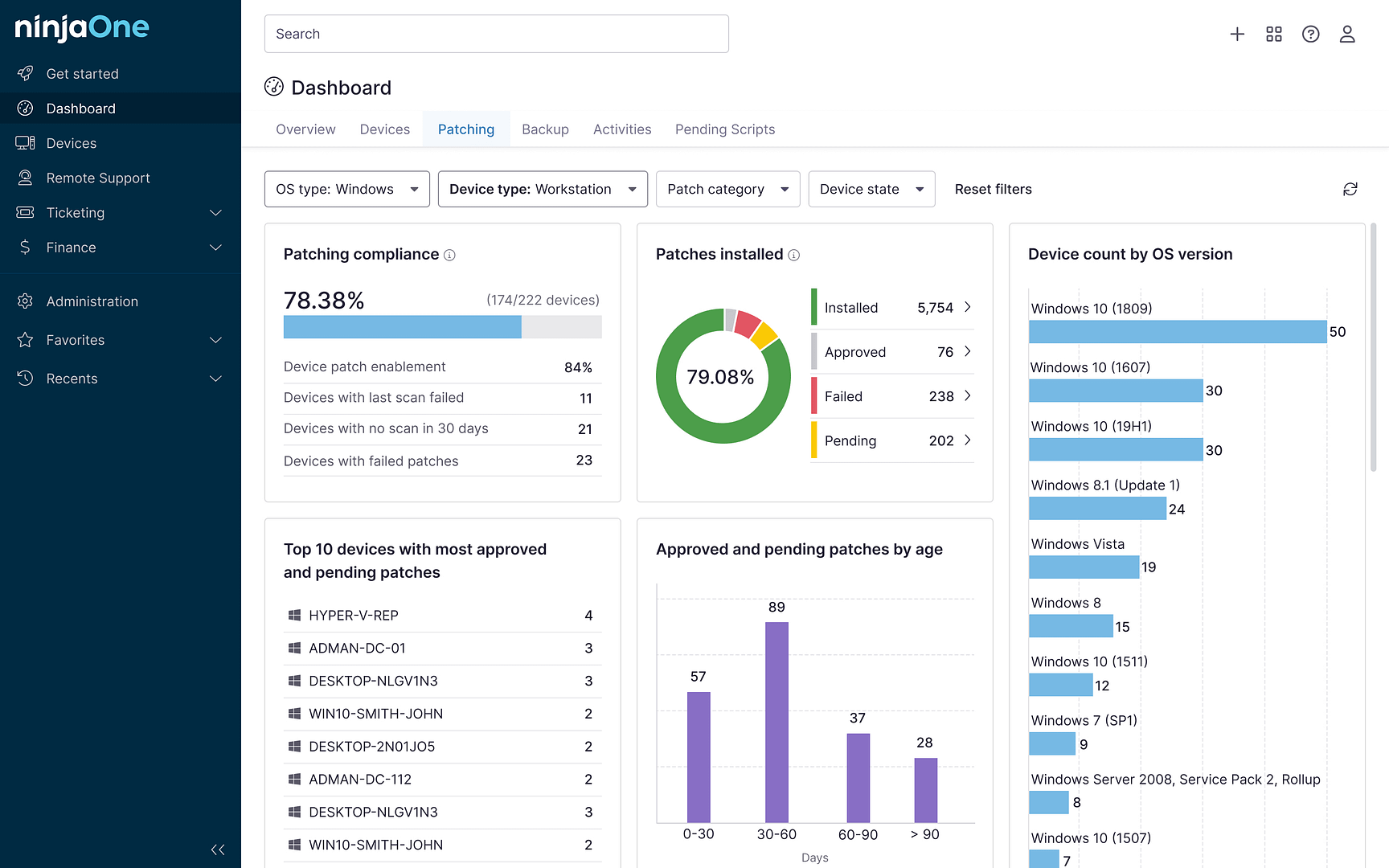
- Patch management dashboards
- Vulnerability remediation reports
- Patch compliance reports
- Change management records
- Approval and rejection workflows
- PowerShell or command-line update queries
Understanding the meaning of identifiers in these places ensures you have the proper context and can accurately relay information.
When to use a KB number vs. a patch ID
KB numbers are highly useful, as they allow you to search Microsoft documentation, as well as other online forums for information. Using KB numbers allows for the quick identification of issues, accurate communication of them between team members, retrieval of information. They also allow you to confirm what exactly a patch is resolving, and assign it appropriately to vulnerability management records (by mapping to CVEs).
Patch IDs should be used to identify patch records within the patch management platform or database which assigned them. The more fine-grained patch IDs that patch management tools can provide can help you avoid accidentally approving or rejecting related but different updates, investigate compatibility and other deployment issues, and build more detailed reports.
Deploy patches faster with effective, autonomous patch management powered by AI
The NinjaOne suite of IT tools unifies patch management with mobile device management (MDM), remote monitoring and management (RMM), remote access, vulnerability management, cloud backup, and endpoint security.
NinjaOne automatically prioritizes and deploys patches for Windows, Mac, and Linux devices, as well as thousands of third-party apps — providing extensive coverage that helps you remain secure and compliant from servers to workstations.
AI analyses public and private data to assess the risk of patches, pausing those that cause disruption or instability. Integrated with NinjaOne vulnerability management, you can connect CVEs to KB numbers and patch IDs to validate remediation and maintain a strong, proactive security stance.