
Key Points
- EASM continuously identifies, maps, and monitors internet‑facing assets to reveal exposures attackers could exploit.
- Traditional hardening secures known systems, but EASM uncovers undocumented assets like shadow IT and misconfigured cloud services.
- DNS enumeration, certificate monitoring, cloud resource mapping, IP range analysis, and public data correlation expose hidden risks.
- Governance alignment with EASM strengthens compliance and proactive risk management.
Nowadays, more and more organizations are relying on cloud apps, SaaS backups, and shadow IT, expanding their attack surface. External Attack Surface Management (EASM) identifies, assesses, and secures parts of your infrastructure exposed to the internet for a wider range of security.
Security policies focus on business-critical components; EASM blocks off the entry points. This article explains why external attack surface discovery is needed for modern compliance.
Internet-facing asset discovery increases visibility
Trend Micro’s 2025 report showed that almost 75% of surveyed organizations experienced cybersecurity incidents stemming from unknown, unmanaged IT assets. This highlights the need for total security that accounts for undocumented tools.
What External Attack Surface Management means
External Attack Surface Management is the ongoing practice of identifying, mapping, and monitoring online assets within an organization. But unlike internal security assessments, EASM looks out for possible entry points that attackers can exploit.
This manages:
- Public IP addresses
- Domains and subdomains
- Cloud storage buckets
- Exposed services
- Shadow IT infrastructure
Why traditional hardening is not enough
While modern IT security centers on your internal attack surface, undocumented assets can go unnoticed and unprotected, resulting in misconfigured public services, invisible domains, unreviewed backups, and exposed test environments.
External tools that most organizations deem unimportant can turn out to be crucial blind spots that compromise system safety, making EASM essential for ensuring protection.
How EASM discovers exposure
Most EASM solutions use the following methods to reveal shadow IT services, expired certificates, and legacy systems that can weaken your security posture:
- DNS enumeration: Maps domains, subdomains, and related records to find forgotten or misconfigured components susceptible to attack.
- Certificate transparency monitoring: Uses public SSL/TLS certificate logs to identify undocumented domains, shadow services, and externally exposed systems.
- Cloud resource mapping: Queries cloud services to detect misconfigured cloud backups and storage buckets.
- IP range analysis: Scans known/adjacent IP ranges to identify exposed hosts and open ports from legacy environments
- Public data correlation: Correlates sources like WHOIS records and GitHub repos to connect assets to their organization to uncover any hidden exploits.
Cloud and SaaS expansion of attack surface
“As-a-Service” and cloud services have expanded the possibilities of IT infrastructure beyond on-prem layouts. But this prevalence also opens your enterprise up to new attack vectors, prompting a.
This highlights the need for structured security policies that focus on auxiliary tools driving expanding environments. Common risks include:
- Reliance on multiple cloud platforms
- Unmanaged SaaS growth
- Purely remote workplaces
- API-driven integrations
Governance and risk management alignment
Internet-facing asset discovery is a major aspect of risk management. This ties External Attack Surface Management directly into organizational governance and risk frameworks.
EASM tools generate clear, intuitive reports for executives that tell you how many assets are exposed, how high their risk levels are, and any noticeable trends to help your leadership make informed decisions about resource allocation.
Additionally, after these tools identify unmanaged assets, they are added to existing management systems for continual scanning and patching along with other documented endpoints. But not all exposures carry the same risk.
External Attack Surface Management tools also rank each asset to gauge its impact on your existing security posture. Moreover, ongoing detection and remediation would demonstrate your organization’s alignment with NIST or CIS, helping your compliance audits.
Common misconceptions
Vulnerability scanning equals attack surface management
Vulnerability scanning only covers documented apps, tools, and system components. EASM enhances your visibility further through the continuous discovery of unmanaged assets, such as forgotten domains and shadow IT.
Visibility scanning inspects known aspects of your system, leaving hidden security gaps undetected.
Firewalls eliminate external exposure
While firewalls protect against unauthorized traffic, they don’t help find and remove exposed assets like publicly reachable IPs and domains. Your attack surface is still expanded. EASM helps decommission them.
Penetration testing replaces continuous discovery
Point-in-time cyberattack simulations only show you the current resilience of known systems. EASM ensures that any apps floating outside of your detection at any time are found and secured.
NinjaOne integration provides remote visibility
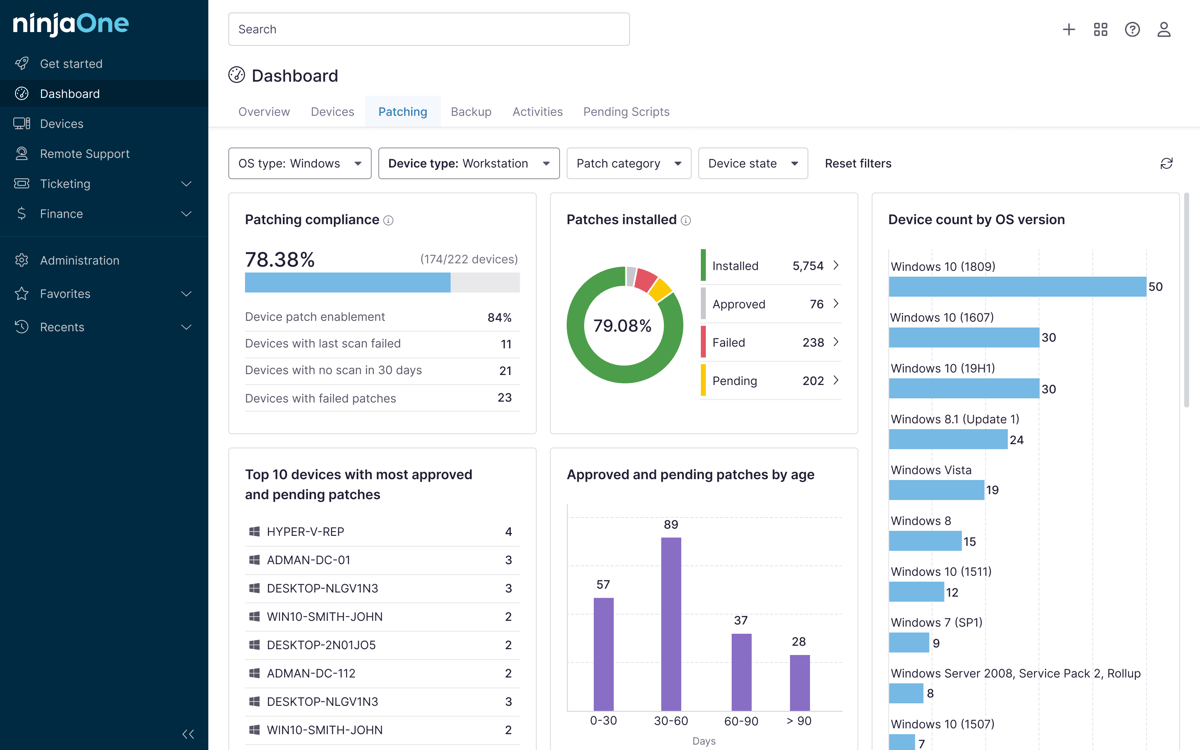
NinjaOne’s centralized dashboard also offers IT asset management (ITAM) that lists known tools and helps hunt for shadow IT. Moreover, its secure remote access functions are more secure than ad-hoc connections that attackers could use to access your tools.
External Attack Surface Management ensures modern compliance
As more businesses increasingly move towards cloud infrastructures, IT experts must ensure that all internet-facing entry points are closed off. EASM tools provide visibility into undocumented apps, stealth IT, unmanaged domains, and more. And combined with internal RMM, clients can enjoy continuous visibility.
Related topics: