Key Points
- Defense-in-depth (DiD) is a cybersecurity strategy that uses multiple security tools to protect IT infrastructure.
- DiD combines physical, network, and administrative controls to provide layered security for IT environments, ensuring that even if a layer fails, other measures will still protect an organization’s assets.
- DiDepth provides layered, redundant security controls that eliminate single points of failure, reduce the attack surface, contain breaches quickly, and naturally support compliance requirements through comprehensive, auditable protections.
- Effective DiD architectures apply complementary controls across perimeter firewalls, network segmentation, endpoint protection, and data encryption to limit attacker movement and protect critical systems.
- Implementing DiD requires avoiding tool overlap, reducing management complexity, and ensuring smooth integration across security technologies.
- Tracking detection rates, containment times, and cost-per-incident helps validate the ROI of layered security and demonstrates improved resilience over time.
Modern cyber threats have become increasingly complex and are often faster than legacy defenses. As more attackers move laterally across vulnerabilities, businesses require stricter security performance and regulatory compliance. Defense-in-depth meets this challenge head-on by layering security across endpoints, networks, and applications, transforming broad risk into manageable exposure.
What is defense in depth?
Defense-in-depth (DiD) is a cybersecurity strategy that uses multiple security measures to protect IT infrastructure. DiD mixes elements of physical, network, and administrative controls to provide layered security for IT environments, ensuring that even if a layer of security fails, other measures will still protect an organization’s assets.
Defense-in-depth provides layered, redundant security controls that eliminate single points of failure, reduce the attack surface, contain breaches quickly, and naturally support compliance requirements through comprehensive, auditable protections.
Effective DiD architectures apply complementary controls across perimeter firewalls, network segmentation, endpoint protection, and data encryption to limit attacker movement and protect critical systems.
Implementing DiD requires avoiding the pitfalls of tool sprawl and ensuring smooth integration across security technologies.
Tracking detection rates, containment times, and cost-per-incident helps validate the ROI of layered security and demonstrates improved resilience over time.
Elements of a defense-in-depth strategy
A holistic defense-in-depth strategy has a multi-tiered approach designed to protect the physical, technical, and administrative aspects of an organization’s network. Typically, it combines at least five of the following components:
Physical controls
These refer to security measures that prevent unauthorized access to physical assets. Physical controls limit who can physically interact with organizational resources, making it a critical part of safeguarding sensitive infrastructure and data.
Examples of physical controls include:
- Key cards
- Biometric systems
- Facility monitoring via surveillance cameras
- Security personnel
Network controls
Network controls tackle security measures that protect sensitive data and systems transmitted across networks. In brief, this security layer aims to prevent data breaches, unauthorized access to data, and network service disruptions.
Examples of network controls include:
- Firewalls
- Network access control
- Remote access VPNs
Perimeter security controls
Deploy next-generation firewalls combining packet filtering with deep packet inspection, application awareness, and threat intelligence integration. Configure web application firewalls to analyze HTTP/HTTPS traffic for malicious patterns before attacks reach backend servers.
Implement logging and alerting mechanisms to provide visibility into blocked and allowed traffic patterns. Set up firewall rules aligning with application requirements while maintaining security policies across all network entry points.
Administrative controls
Administrative controls encompass protocols that enable users to access the necessary resources after authentication. These security measures also limit user permissions depending on their roles.
Behavioral analysis
Behavioral analysis helps detect anomalies in user behavior by comparing it with their past normal behavior. Detected anomalies can trigger security systems, preventing common cyberattacks.
Network segmentation barriers
Network segmentation creates logical boundaries that limit attacker movement and contain potential breaches. Solutions extend beyond traditional VLAN separation to include software-defined perimeters and micro-segmentation technologies. Proper segmentation requires careful planning to strike a balance between security and operational requirements.
Make sure that:
- VLAN configuration separates user groups and system types into isolated broadcast domains
- Access control lists filter inter-segment traffic based on specific security criteria
- Software-defined networking enables dynamic policy enforcement across virtual and physical infrastructure
- Micro-segmentation creates individual security zones around critical applications and databases
Endpoint protection measures
Modern endpoint platforms go far beyond basic antivirus. They blend behavioral analysis, machine learning, and threat hunting to detect threats early and respond fast. When integrated with network security tools, they share intelligence in real time and trigger coordinated defenses automatically.
To maximize the benefits of these platforms, align endpoint policies with your network access controls. That way, protection feels seamless, with no disruption to legitimate users, and only a hard stop for anything risky. Add device compliance checks to ensure only secure, trusted devices ever touch the network.
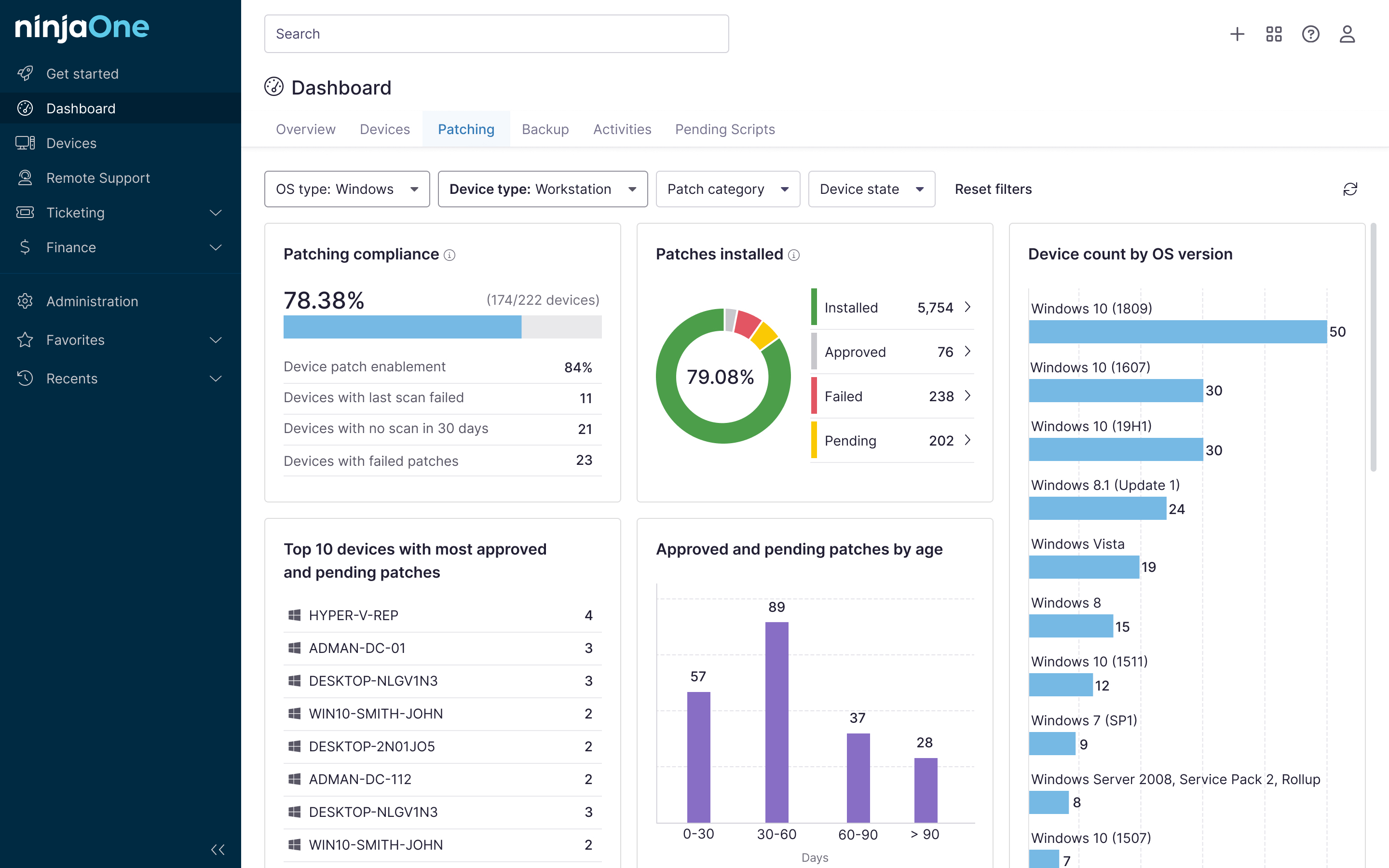
Managing multiple endpoints efficiently comes down to centralization: applying policies to device groups instead of individual machines, automating routine remediation instead of handling alerts one by one, and keeping patch, monitoring, and security status visible from a single dashboard rather than switching between tools.
Data encryption and access controls
Protecting sensitive data starts with the right encryption and access strategy. That means securing web traffic with TLS, VPNs with IPSec, and databases with strong encryption at rest. However, the real value lies in tying it all together.
Set up certificate lifecycle management to prevent lapses and integrate it with identity platforms for centralized, consistent authentication. Utilize key management systems that manage encryption across multiple layers without compromising performance.
Why is defense-in-depth important for modern cybersecurity?
The CrowdStrike 2026 Global Threat Report found that there has been a 89% increase in attacks by AI-enabled adversaries and a 266% increase in cloud-conscious intrusions by state-nexus threat actors. Worse, IT experts predict that these trends will only continue (and even escalate) in the coming years.
Defense-in-depth recognizes these threats and combines multiple technologies to provide greater protection and flexibility without affecting operational efficiency.
Key benefits of having a defense-in-depth strategy include:
Single point of failure elimination
Redundancy is central to defense in depth. A firewall failure shouldn’t expose your entire network. VLAN segmentation and tightly scoped access control lists contain threats early, while intrusion detection systems monitor internal traffic for signs of compromise.
This principle carries across the stack. Endpoint detection flags threats that evade the network perimeter. At the infrastructure level, backup authentication, parallel monitoring paths and failover mechanisms ensure security remains intact even during system outages or degradation.
Attack surface reduction strategies
The more doors you leave open, the easier it is for attackers to get in. Layered security shrinks the attack surface by closing gaps and limiting lateral movement. Each control reduces exposure and increases friction for would-be intruders.
A well-structured approach includes:
- Network segmentation that isolates critical systems from general access
- Application-level firewalls that inspect traffic beyond ports and protocols
- Endpoint detection platforms that flag suspicious behavior on devices
- Zero-trust access controls that verify every request regardless of source
Breach containment capabilities
Even the best defenses can be breached. The difference lies in what happens next. Containment strategies limit the blast radius by segmenting high-value assets, inspecting internal (east-west) traffic and detecting abnormal behavior in real time.
When done right, containment keeps the incident localized, reduces recovery time and preserves trust even under pressure.
Compliance requirement alignment
Defense in depth naturally satisfies multiple compliance frameworks, including NIST, ISO 27001 and PCI DSS. These standards mandate layered approaches across network controls, endpoint protection, data encryption and access management categories that you will routinely implement.
Compliance frameworks require audit trails demonstrating due diligence through comprehensive security measures. Layered architectures generate documentation and evidence that auditors need while providing technical controls that meet regulatory requirements.
Implementation challenges and common pitfalls
Defense-in-depth implementation presents technical and operational challenges stemming from managing multiple security technologies while maintaining network performance and user accessibility.
Layer overlap and redundancy issues
Avoid deploying multiple security tools that perform identical functions, as this creates management overhead and potentially interferes with each other’s operations. Map security functions across your infrastructure to identify unnecessary duplication while ensuring adequate coverage.
Configure complementary rather than competing security controls. Set up firewalls to handle perimeter filtering, while intrusion detection systems monitor internal traffic patterns for various threat indicators.
Management complexity concerns
Multiple security layers significantly increase operational complexity through separate management interfaces, logging systems, and policy configuration requirements. This complexity overwhelms IT teams, leading to misconfigurations and potential security gaps.
Implement standardized procedures and comprehensive documentation across all security technologies. Deploy security orchestration platforms providing centralized management capabilities to reduce administrative overhead and maintain security effectiveness.
Cost and resource allocation
Defense in depth requires significant investment across multiple security technologies, staff training and ongoing operational expenses. Organizations often underestimate total ownership costs, focusing on initial acquisition while overlooking implementation and management expenses.
Proper IT budgeting must account for:
- Technology acquisition costs for multiple security platforms and licensing requirements.
- Staff training expenses to develop expertise across different security technologies.
- Ongoing operational costs, including maintenance, support and technology refresh cycles.
- Integration expenses to connect security tools and ensure interoperability across platforms.
Integration compatibility problems
Security stacks often struggle with fragmented tooling — systems that use different data formats, protocols and management interfaces that don’t easily connect. Legacy platforms often lack modern APIs, while newer solutions may not support older standards, resulting in costly gaps in visibility and response.
To avoid these issues, evaluate integration requirements during your procurement process. Prioritize tools that support standardized protocols, enable bi-directional threat intelligence sharing and allow coordinated response actions across your ecosystem.
Measuring the ROI of defense in depth
To prove the value of defense in depth, track metrics that reflect both performance and impact. Focus on detection rates, response times, containment success and cost per incident across all layers of your security stack.
Start with a clear baseline. Measure current performance before implementation and then monitor progress over time. ROI isn’t just about tech spend; it includes reduced downtime, improved compliance and increased stakeholder trust. Use integrated monitoring tools to generate clear, actionable reports that tie security improvements directly to business outcomes.
What Features Should I Look for in an RMM Solution?
Since most defense-in-depth layers get managed and coordinated through an RMM (remote monitoring and management) platform, the RMM itself becomes part of your security architecture. When comparing the best RMM software, a few capabilities matter most:
- Cross-platform patch management: Confirm the platform patches OS and third-party applications across Windows, macOS, and Linux with equal depth, not just Windows with macOS support tacked on as an afterthought.
- Security partnerships and native integrations: Vendors that partner directly with established endpoint security providers tend to offer faster threat response and simpler policy management.
- Vulnerability visibility: Look for built-in vulnerability scanning or importers that pull data from tools like Qualys, Tenable, or Rapid7 and map it directly to managed devices.
- Access controls: MFA, role-based permissions, and SSO with your identity provider should be standard, not premium add-ons.
- Total cost of ownership: Watch for hidden costs beyond the advertised per-endpoint price. Separate licensing for antivirus integrations, patch management modules, or reporting tiers can add up quickly, so ask vendors directly what’s bundled versus billed separately. You can also read our guide on RMM pricing for additional information.
- RMM vs. MDM: An RMM manages patching, monitoring, remote access, and automation across workstations and servers, while an MDM (like Microsoft Intune) is built around device enrollment, identity, and mobile compliance policies. Many IT teams and MSPs run both side by side, using an MDM for enrollment and conditional access, and an RMM for cross-platform patching, monitoring, and third-party application management that MDM tools typically don’t cover in depth.
Evaluating RMM platforms against these criteria makes it easier to see how the defense-in-depth layers covered earlier in this article, such as patch management, endpoint protection, and access control, hold up in day-to-day practice, not just on a feature list.
For a more in-depth discussion, we recommend checking this guide: What is RMM? A Modern Definition Plus Evaluation Criteria for 2026
Simplify layered security with centralized control
NinjaOne’s RMM platform gives you full visibility and control over your defense-in-depth strategy across endpoints, networks, and beyond. Monitor all layers from one interface, automate patching, streamline reporting, and trigger coordinated responses fast. Try it now for free!
Want to learn more about remote monitoring and management? Explore the NinjaOne RMM FAQ for answers to common questions.
Quick-Start Guide
Defense in Depth: Security Strategy Breakdown
Defense in Depth is a comprehensive cybersecurity approach that involves implementing multiple layers of security controls throughout an organization’s IT infrastructure. For NinjaOne, this strategy is reflected in several key capabilities:
Key Components of Defense in Depth
1. Vulnerability Management
– Continuously scan and identify vulnerabilities across devices
– Use tools like Vulnerability Importer to integrate scans from multiple sources
– Track and prioritize vulnerabilities by severity (Critical, High, Medium)
2. Endpoint Protection
– Integrate multiple antivirus/security solutions (e.g., Bitdefender, SentinelOne)
– Provide multiple layers of threat detection:
– Malware scanning
– Threat detection
– Real-time monitoring
– Automated threat remediation
3. Patch Management
– Automate OS and software patch deployment
– Identify and address known vulnerabilities quickly
– Support patch management across Windows, Mac, and Linux systems
4. Access Control
– Implement multi-factor authentication
– Configure role-based access controls
– Enable single sign-on (SSO) with identity providers
5. Monitoring and Alerting
– Generate context-rich alerts
– Track endpoint behavior
– Provide real-time health and performance monitoring
Principle of Layered Security
The goal of Defense in Depth is to create multiple obstacles for potential attackers, ensuring that if one security layer fails, others are in place to prevent or detect a breach. NinjaOne supports this by offering:
– Integrated security tools
– Comprehensive visibility
– Automated remediation
– Continuous vulnerability assessment
By implementing these layered security approaches, organizations can significantly reduce their risk of successful cyber attacks.