
Key Points
- A Single Source of Truth (SSoT) is a data governance principle that ensures every data element across an enterprise is authoritative, synchronized, and consistent.
- Data ownership becomes unclear, reconciliation breaks down, and reporting accuracy deteriorates as an organization adopts more SaaS applications, cloud platforms, and distributed endpoints without centralized governance.
- Every critical data domain needs a named owner, a defined reconciliation cadence, and API-driven integrations that keep records consistent across all connected systems in real time.
- Centralized data governance reduces the blind spots that attackers exploit, including stale credentials, untracked endpoints, and inconsistent access records.
- A single source of truth improves reporting accuracy, cross-functional coordination, governance accountability, and operational decision-making across the entire enterprise.
These days, most enterprise-level organizations operate across cloud platforms, SaaS applications, endpoint management systems, security tools, and distributed operational environments. As their infrastructures grow, operational data often becomes fragmented across disconnected systems and teams.
These issues reduce operational trust and make it difficult to maintain accurate reporting, visibility, and accountability. A single source of truth helps enterprises centralize operational visibility while improving consistency across systems, workflows, and governance operations.
How and why does operational data become fragmented?
For most organizations, their goal is to grow. However, this growth can sometimes outstrip existing governance workflows. Administrators end up having to manage multiple IT platforms, SaaS applications, hybrid infrastructures, various reporting systems, and distributed endpoint environments. Because of this, they can have trouble keeping up with compounding responsibilities and tasks, so processes and data management can become disjointed and fragmented.
And the risk of operational fragmentation only grows as environments scale. This makes centralized governance a key tool in keeping things organized and efficient. It can help prevent inefficiencies, such as duplicate asset records, inconsistent endpoint visibility, conflicting compliance reports, and weak synchronization workflows.
What a single source of truth means in enterprise data management
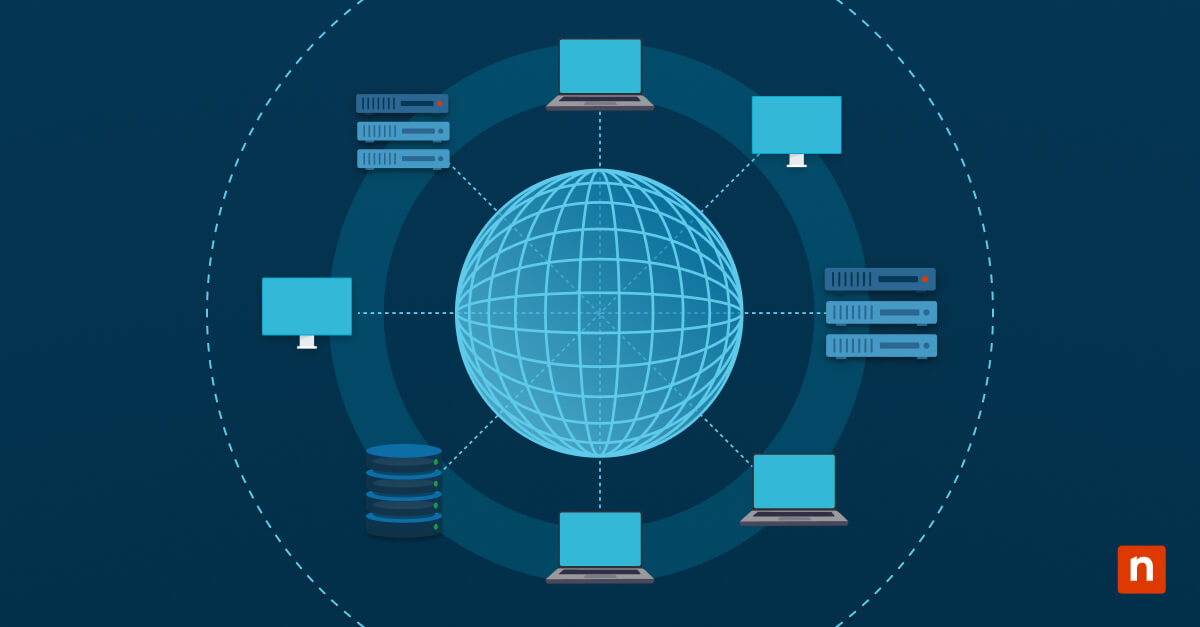
In the context of enterprise data management, a Single Source of Truth (SSoT) is a way of structuring data in a way that ensures that every data element is stored, mastered, and updated, and is always in perfect synchronization, no matter where it is in the organization. This means:
- Maintaining consistent authoritative records
- Having consistent operational visibility
- Keeping synchronized workflows
- Creating trusted reporting standards
- Having unified ownership and accountability
Having a single source of truth doesn’t necessarily mean that all your data is stored in just one platform. Instead, it means that your operational data is synchronized to an authoritative standard across all your integrated systems.
Why a single source of truth matters in data governance
The biggest thing that SSoT provides is consistency, and consistency is one of the most important things in any operation. Everyone needs to be on the same page and operating on shared information to perform their tasks properly. It gets rid of inefficiencies and ensures that people have all the information they need to make the most out of their work.
With a single source of truth, you can improve reporting accuracy, cross-functional coordination, endpoint visibility, governance accountability, and operational decision-making. Having centralized visibility reduces workflow friction and overall operational blind spots.
Challenges created by data silos
With a single source of truth, you can get rid of data silos, which can be greatly beneficial to your organization. With data silos, you end up with:
- Fragmented ownership
- Duplicated records
- Conflicting reports
- Weak synchronization
- Inconsistent governance
This kind of fragmentation will weaken your operational resilience over time. Overall, data silos reduce visibility across your organization. You’ll have more trouble with security monitoring, endpoint management, enforcing compliance workflows, and overall infrastructure governance.
How enterprises can achieve a single source of truth
To achieve a single source of truth, you need to prioritize centralized governance and continuous synchronization. This means creating workflows for regular inventory reconciliation, ensuring that there is ownership accountability, creating platforms for cross-functional visibility, and keeping your reports consistent and transparent.
When validating your organization’s data, you must continuously check for duplicate records and stale operational data. Remember to watch out for any visibility gaps and reporting inconsistencies as well.
Common enterprise data management governance mistakes
| Mistakes | Solutions |
| Maintaining disconnected operational systems. | Establish a data integration system to connect and synchronize all your systems for a single source of truth. |
| Failing to define authoritative ownership. | Every data domain should have a named owner. Tie document ownership and turnover to your onboarding and offboarding workflows to ensure consistency. |
| Ignoring reconciliation workflows. | Reconciliation should be a scheduled and automated process. |
| Treating synchronization as a one-time project. | Treat data synchronization as part of your infrastructure instead of a one-time project. Assign ownership and have defined parameters and SLAs. |
| Overlooking operational trust and reporting accuracy. | Have a formal data intake process and train employees on using it. This way, users have a clear path to report any problems or discrepancies they encounter. |
Establish a single source of truth to enhance and protect your data management practices
A single source of truth is a critical tool for any operation. To ensure that your organization has a single source of truth, you’re going to need centralized ownership, synchronization, and reconciliation. This will help prevent fragmentation, improve operational trust, and strengthen long-term resilience across distributed environments.
Related Articles: