Key Points
- Managed cloud services outsource cloud management to experts: A third-party provider handles tasks like monitoring, maintenance, security, and optimization so internal teams don’t have to.
- Managed service providers (MSPs) deliver ongoing cloud support: MSPs maintain cloud environments, resolve issues, and ensure systems stay secure, updated, and operational.
- Managed cloud services reduce operational complexity and costs: Predictable pricing models and expert oversight help organizations control cloud spending and avoid unexpected IT issues.
- Security and availability are core components of managed cloud services: Continuous monitoring, patch management, and 24/7 support help protect cloud environments from downtime and cyber threats.
- Managed cloud services scale with business growth: Cloud resources can be easily adjusted as business needs change, supporting expansion without infrastructure limitations.
Managed cloud services are outsourced IT services where a third-party provider manages cloud infrastructure or applications for a business.
The cloud has fundamentally changed how organizations work with technology. The days of an on-prem infrastructure and endpoints with a physical data center are starting to be seen in the rearview mirror by many businesses, and now nearly half of all corporate data is stored in the cloud.
There are multiple factors that have contributed to this change and accelerated the transition to the cloud, but one of the main supporting factors that makes this possible is the use of managed cloud services.
What are managed cloud services?
Managed cloud services refer to an outsourced third-party managing software, a service, or an entire network on the cloud. The amount of technology that the third party is responsible for can range, depending on the needs of an organization. Managed cloud service provider task domains can include security, maintenance, configuration, migration, and optimization, which help to continually support the cloud and ensure that it operates smoothly.
What is a managed service provider?
A managed service provider (MSP) is an organization that provides outsourced services to another business. Typically, these services are related to information technology (IT). MSPs perform the work of maintaining an IT environment, often (and increasingly) providing cloud services.
Who uses managed cloud services?
Managed cloud services are commonly used by small and mid-sized businesses, cloud-first organizations, and companies without dedicated internal IT teams.
These services free up people in the organization to work on tasks that can help move the company forward or generate revenue.
Watch the video for “What are Managed Cloud Services?” to see it explained simply.
Support cloud operations with NinjaOne’s remote monitoring and management tools.
5 benefits of managed cloud services
Better pricing
Managed cloud services typically follow a static pricing model, which means that no matter what goes wrong in your organization’s cloud, you’ll pay the same price. Often these regular payments occur monthly. It’s hard to know what may go wrong at any second, but this makes the budget for cloud maintenance predictable and affordable.
Up-to-date IT environment
Putting the responsibility of managing your cloud in someone else’s hands means you’ll have cloud experts overseeing your services. They’ll stay on top of updates and will automatically upgrade elements within the cloud, so you won’t have to worry about it yourself.
24/7 support
The round-the-clock support that managed cloud services provide is unparalleled, especially when something goes wrong in the middle of the night. Rather than having to stress and worry about how to resolve it yourself, you can depend on managed cloud services to fix any problem that might exist in the cloud.
Increased cloud network security
Managed cloud services enhance the health and protection of the cloud, helping it to be armored and prepared for possible cyberattacks and threat actors. Additionally, the 24/7 support that’s provided can boost cybersecurity since there is always someone with visibility into what’s happening in your cloud.
Scalability
A business is ever-changing, so the tools used to manage it should be able to change with it. Whether you need to scale up or down, managed cloud services can meet the needs of your organization’s cloud.
What should you look for in a managed cloud services provider?
Choosing the right managed cloud services provider requires evaluating experience, security practices, responsiveness, and long-term scalability.
Understanding of your business needs
Finding a managed cloud services provider who truly understands the types of services your business needs is one of the key attributes to consider when making your decision. If a common understanding isn’t established at the very beginning, then there will undoubtedly be problems down the road with managing cloud services. Make sure that a service level agreement is established so you can understand exactly what services you’ll be receiving.
Experience and track record
Do your research to find out how experienced they are in providing managed cloud services. They’re the ones in charge of the cloud environment, so you want to ensure that they have the expertise to manage it. Request references as well so you can speak with someone who’s also worked with them, and you can hear about their experiences.
Data security
Choose a managed cloud services provider that follows the best recommended cybersecurity practices, such as cloud-based patch management. Since the cloud can often be more susceptible to cyberattacks, it’s crucial to ensure that the right protections and precautions are put in place. Ask your provider how they plan to implement proven cybersecurity practices in your cloud environment, and make sure you’re on the same page as to what the most crucial data to protect is.
Availability and responsiveness
How available and responsible your managed cloud services provider is can have a huge effect on the productivity or your business and continual business operations. Look for a provider who has short response and resolution times to guarantee that employees and processes can continue working.
Ability to grow with your company
As your business grows, your needs will also grow and evolve over time. An experienced managed cloud service provider can adapt and provide continuous services to your business. They will know what needs to take place in the cloud in order to accommodate that growth.
Experience continuous support of cloud operations
Provide managed cloud services with the help of NinjaOne
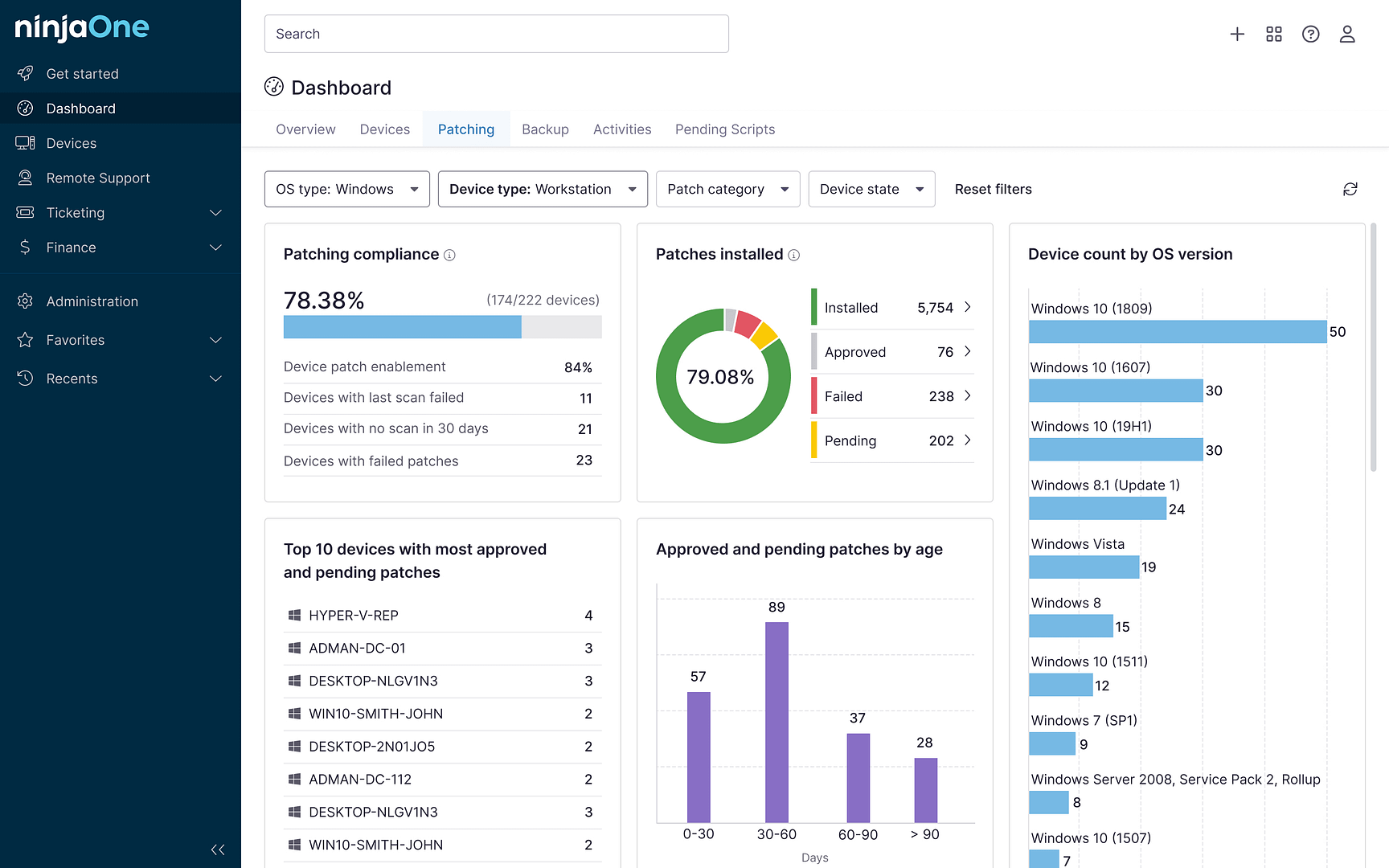
NinjaOne is a fully-remote, unified remote and monitoring management platform with tools like patch management and ticketing. The software allows you to view all your organizational endpoints in a single-pane-of-glass for full visibility into a cloud environment. Sign up for a free trial today to see how easy cloud-managed services can be with our software.