
Key Points:
- Classify Workloads Before Choosing a Backup Mode: Map every VM to its RPO and RTO targets so recovery needs drive your choice between host, guest, or blended protection.
- Use Guest Backups for Application-Consistent Data: Apply guest-level backups for stateful apps (SQL, AD, Exchange) requiring VSS consistency and granular, item-level restores.
- Use Host Backups to Protect Many VMs Efficiently: Host-level protection enables rapid full-VM recovery and simplified operations at scale.
- Blend Host and Guest Backups for Tier 1 Services: Critical workloads often need fast VM recovery and fine-grained application restores, so combining the modes gives flexibility to handle either scenario.
- Verify Recoverability Through Routine Testing and Reporting: Regular restore drills and scorecards to confirm RPO/RTO compliance and maintain audit readiness.
Deciding between VM host vs guest backups often depends on your specific use case. Whereas guest backups help you capture clean, application-consistent data and provide the option to restore specific items, host backups help you protect large numbers of VMs quickly with simple administration and fast full-server recovery.
The best approach for your organization is to understand what each workload requires, the recovery goals you are trying to achieve, and how the two methods can work together. Both approaches work well. They just solve different recovery problems.
This guide guides MSPs and IT professionals through a straightforward, repeatable process. You will learn how to classify your VMs, choose the right protection strategy, set up Hyper-V for clean snapshots (also called “checkpoints”), and build confidence through regular recovery testing.
For a quick visual overview, watch our video guide on How to Choose and Combine Guest vs Host Backups for Hyper-V.
📌 Prerequisites:
Make sure a few basics are in place:
- A current inventory of Hyper-V hosts, VMs, and the applications that live inside them. It helps to know who owns each workload and what the business expects from it.
- RPO and RTO targets for each service. Recovery expectations should be written down rather than assumed.
- Documentation of your Hyper-V version, storage layout, and any snapshot or change-block tracking features your platform supports.
- A backup solution, such as NinjaOne Backup, that allows host-level snapshots and guest-level agents.
- A test environment where you can perform controlled restores without affecting production.
Choosing and combining guest vs host backups for Hyper-V
Step 1: Discover and classify your workloads
Before you choose how to protect anything, you need a clear picture of what you are actually running.
Recommended actions:
Start by listing all VMs, the roles they perform, and where important data lives. This should include databases, shared folders, configuration files, and anything that changes frequently.
Next, assign RPO and RTO targets. Some services can tolerate a day of data loss. Some cannot tolerate losing even 15 minutes. Make sure those expectations are documented and agreed upon with your stakeholders.
Once you have that picture, tag each workload as a likely candidate for host backups, guest backups, or a blended approach. This initial tagging does not need to be perfect. You will refine it as you go.
💡 Expected outcome: A draft matrix showing each VM, its importance, its recovery expectations, and the protection mode it seems to fit.
Step 2: Choose the right mode for each workload
With your inventory and recovery expectations mapped out, you can match each workload to the protection method that best suits it.
Recommended actions:
Use guest backups when you need application-consistent data or item-level restores. SQL, Exchange, and Active Directory (AD) are common examples because they rely on VSS (Volume Shadow Copy Service) coordination and granular recovery options.
Use host backups when fast full-VM recovery and operational simplicity are the priority. This approach works especially well for stateless services, front-end tiers, and workloads that can tolerate a bit more data loss.
Choose a blended approach for truly critical services. Host backups restore the VM quickly, while guest backups enable you to recover individual items without reverting hours of work within the VM.
Document your decision for each workload, along with the reasoning. Clear justification makes life easier during audits, QBRs, and incident reviews.
💡 Expected outcome: A workload-by-workload record that explains which protection mode was selected and why it meets that service’s recovery needs.
Step 3: Prepare Hyper-V and your VMs for clean protection
Clean infrastructure leads to clean snapshots, fewer failures, and more predictable restores.
Recommended actions:
Check VSS writers on hosts and VMs to make sure they are stable. Application-aware backups depend heavily on VSS behaving correctly. Hyper-V Integration Services or modern guest components should also be up to date.
For applications without native VSS support, configure pre- and post-scripts that place the application into a safe state before backup and bring it back afterward. This helps avoid capturing inconsistent data.
Take a moment to review storage paths, CSV configuration, and cluster activity. High I/O periods can cause snapshot delays or temporary pauses inside VMs, so adjust your backup windows accordingly.
💡 Expected outcome: A stable, snapshot-friendly Hyper-V environment that supports reliable host and guest backups without unnecessary errors or contention.
Step 4: Implement guest backups
Guest backups give you application consistency and precise, item-level restore options. They operate from inside the VM, so they require a bit more setup, but the payoff is clean data and fine-grained recovery.
Recommended actions:
Install in-guest agents with the least privileges necessary. Then turn on your platform’s application-aware processing so VSS can coordinate safe snapshots of SQL, AD, or other critical services.
Document your recovery workflows as you go. Create simple steps for restoring a database, a mailbox, or a specific file. These notes will be invaluable during a real incident.
Run a few test restores in your lab or test network. Practice recovering both small items and larger components. Then, capture how long these operations take so you can set realistic expectations.
💡 Expected outcome: Consistent, application-aware backups with clear, repeatable restore paths for the workloads that need them most.
Step 5: Implement host backups
Host-level backups protect VMs from the outside and are ideal when you need speed and efficiency. They scale well and require less configuration inside individual VMs.
Recommended actions:
Enable Hyper-V snapshots and your platform’s change-block tracking features. These improve performance and shorten backup windows.
Tune your backup jobs so they run smoothly. Group compatible VMs together and monitor your repository’s throughput to avoid bottlenecks.
Test full VM restores and instant recovery scenarios next. Bring up a test VM directly from backup and measure how quickly it becomes usable. These timings help you validate or adjust your RTO targets.
💡 Expected outcome: Fast, scalable VM protection with reliable restore performance across your environment.
Step 6: Operate a blended strategy
A blended strategy brings together the speed of host backups and the precision of guest backups without creating unnecessary overlap.
Recommended actions:
Use host backups broadly across all VMs to give every system a fast baseline recovery option. Then add guest backups only to the Tier 1 workloads that require application consistency or item-level restores.
Avoid running host and guest backups on the same VM at the same time. Staggering schedules reduces VSS contention and makes both approaches more reliable.
Document which restore path to use first for each workload. When something breaks, teams should know whether to start at the VM level or the application level.
💡 Expected outcome: A clean, coordinated protection strategy that delivers strong recovery options without unnecessary duplication or conflicts.
Step 7: Monitor, test, and report
Regular monitoring and testing help you stay ahead of issues and build trust with stakeholders.
Recommended actions:
Monitor backup success rates, VSS stability, snapshot behavior, and any workload that regularly misses its RPO. Early detection prevents last-minute surprises.
Run monthly restore drills. Perform one item-level restore from a guest backup, one single-VM restore from a host backup, and one multi-VM recovery for your blended services. Track how long each step takes from start to finish.
Create a simple scorecard that summarizes backup health, restore performance, and any exceptions that still need attention. Share it during QBRs or internal reviews.
💡 Expected outcome: Reliable, audit-ready evidence that your backup strategy performs as expected and continues meeting RPO and RTO goals.
How NinjaOne can be helpful
NinjaOne Backup is integrated into its comprehensive IT management platform, allowing you to manage endpoints and backup strategies from a unified console. Key features include:
- Infrastructure visibility: NinjaOne can monitor Hyper-V hosts and virtual machines, providing visibility into your IT environment. You can tag and categorize devices to help organize your infrastructure.
- Comprehensive monitoring: The platform monitors the health of your infrastructure, tracking:
- Server and device status
- Patch management progress
- Backup job statuses
- Active security threats
- Pending system reboots
- Detailed reporting: NinjaOne simplifies backup and system management reporting by offering:
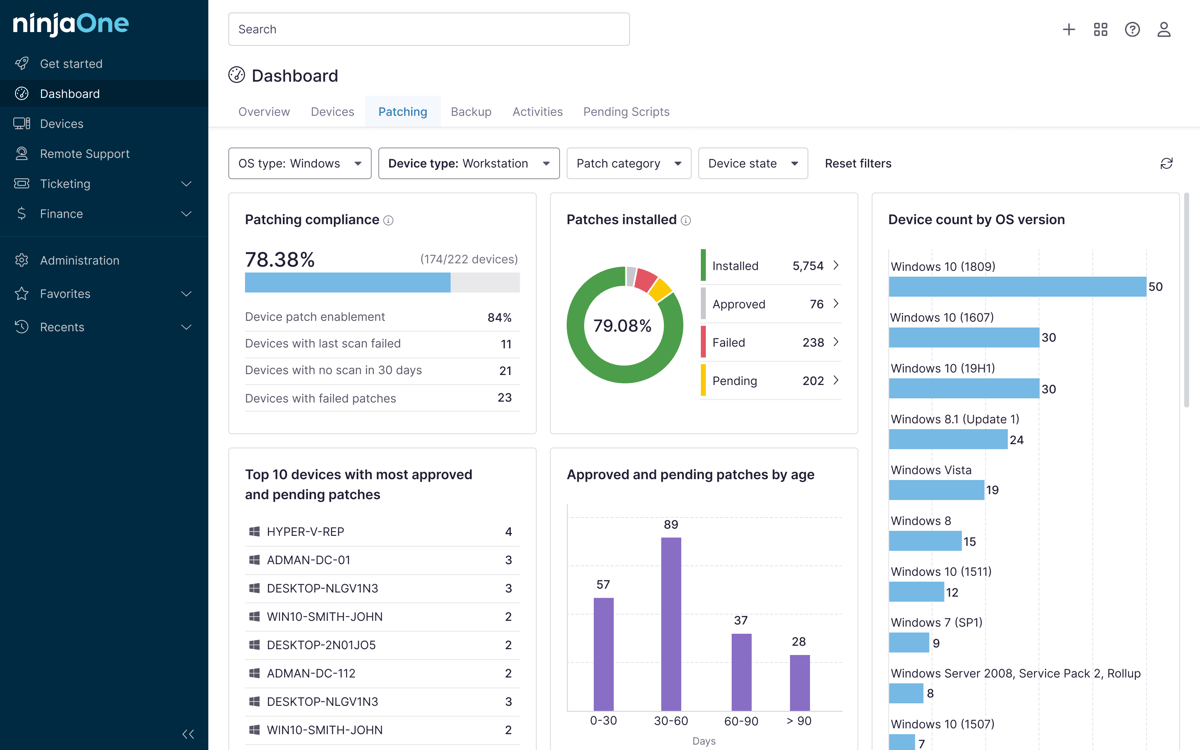
- Dashboard views with device health statistics
- Exportable data reports
- Activity logs
- Backup job history and performance tracking
The backup solution supports multiple storage destinations, including cloud and hybrid options, with granular retention settings and incremental backup technology.
You can request a free quote, schedule a 14-day free trial, or watch a demo.
The best backup strategy for Hyper-V environments
Choosing between guest, host, or blended backups should always start with recovery needs rather than habit. Prepare Hyper-V carefully, set clear expectations for RPO and RTO, and stay consistent with your testing. When you take a structured approach and prove recovery regularly, stakeholders gain confidence, and incidents become much easier to handle.
Related topics: