Key Points
- Evaluate your IT team’s readiness and establish a realistic timeline to minimize downtime and disruptions.
- Identify migration triggers such as rising costs, poor usability, limited features, or inadequate vendor support.
- Consider multi-site requirements, industry-specific compliance needs, and cybersecurity features for data protection.
Remote monitoring and management (RMM) software is a crucial tool in modern IT environments, allowing IT managers to monitor endpoint and network performance and keep the infrastructure running smoothly through timely updates and patches. But not all RMM solutions are created equal, which is why it’s common for teams to look for a better fit as the business scales.
In this article, we will explore the RMM migration process, explain factors to consider when switching tools, and provide tips on how to make the transition smoother and more efficient.
If you prefer to listen to us discuss these tips, watch our video on RMM Migration: Tips for Switching RMM Providers instead.
How to switch RMM tools
Let’s first discuss how you can tackle RMM migration with minimal hassle or downtime. This part assumes you’ve already decided to switch tools and chosen the replacement.
When migrating tools, there are two key factors that influence the process:
Your IT team
The first factor is your whole IT team. Switching to a different RMM will inevitably impact the team. This includes your technicians in the field, support teams who monitor networks, ticket responders, and even the account admin team who maintain client relations using reports. This is why it’s critical that the switch is communicated and discussed thoroughly within your organization.
In addition, it’s important to consider whether the new tool requires extra training. A tool may have a lot of features, but a steep learning curve can impact your team’s productivity. If you’re switching to a more complex tool, make sure to consider how long your team needs to learn and integrate the tool into your workflows.
Implementation timeline
The second factor to consider is your timeline. Keep in mind that RMM migration is an important task–rushing it is rarely an optimal solution. Your timeline should consider the following:
- Existing RMM tool’s contract renewal date
- Customers’ agreement terms and expiration dates
- Time needed for learning and integrating the new tool
- Current situation of your team (i.e., whether a new RMM is urgently needed or not, depending on the severity of their current RMM software’s deficiencies)
With all of this in mind, you will want to set realistic timelines for deployment and integration.
How do you know when it’s time to switch RMM tools?
Now, let’s go through what you need to consider when deciding on whether to switch to a new tool. The first question on your mind is probably, “Do I need to switch RMM providers in the first place?”
The honest answer is it depends. Every situation is different, but here are some factors that can indicate it’s time to switch.
Cost: You’re not getting your money’s worth
The first consideration for many IT managers is cost. Many RMM software vendors will offer a special introductory price for new partners — a good thing at first, but over time, the additional costs and price hikes can add up to a net loss.
Or perhaps you’re stuck in a pricing tier that just isn’t paying off. RMM pricing models use a variety of pricing models that are dependent upon which kinds of assets are being managed, costs per end-user, costs per administrator or engineer, and costs per number of software agents. There are cases where this pricing worked well when you signed up, but became less appealing as you added more end users or clients.
It is also common for RMM software vendors to require long-term contracts with their partners. This can be problematic when the service and support are not up to par or when you want to make a change to a product that better suits your needs, but a contract is all that is holding you back.
Even worse are cases where an RMM user buys a bulk set of licenses but doesn’t use all of them. This can make calculating margins a bit difficult and is generally a poor use of resources.
Maximize your resources and manpower by switching to an RMM software. Find out how much you can save with NinjaOne.
Ease of use: Your RMM platform is hard to use
Many partners who have switched to NinjaOne report that their previous RMM tool was slow to connect and sometimes failed to create remote connections altogether. This renders the tool unreliable at best, and unusable at worst.
Ease of use is essential with such tools. RMM should streamline your operation and free up resources, not create hurdles. If an RMM tool alerts the administrator that an endpoint is not functioning correctly but doesn’t enable quick, remote remediation, it’s not living up to the potential of what the best RMM software can do.
Features: Your RMM provider can’t answer all of your needs
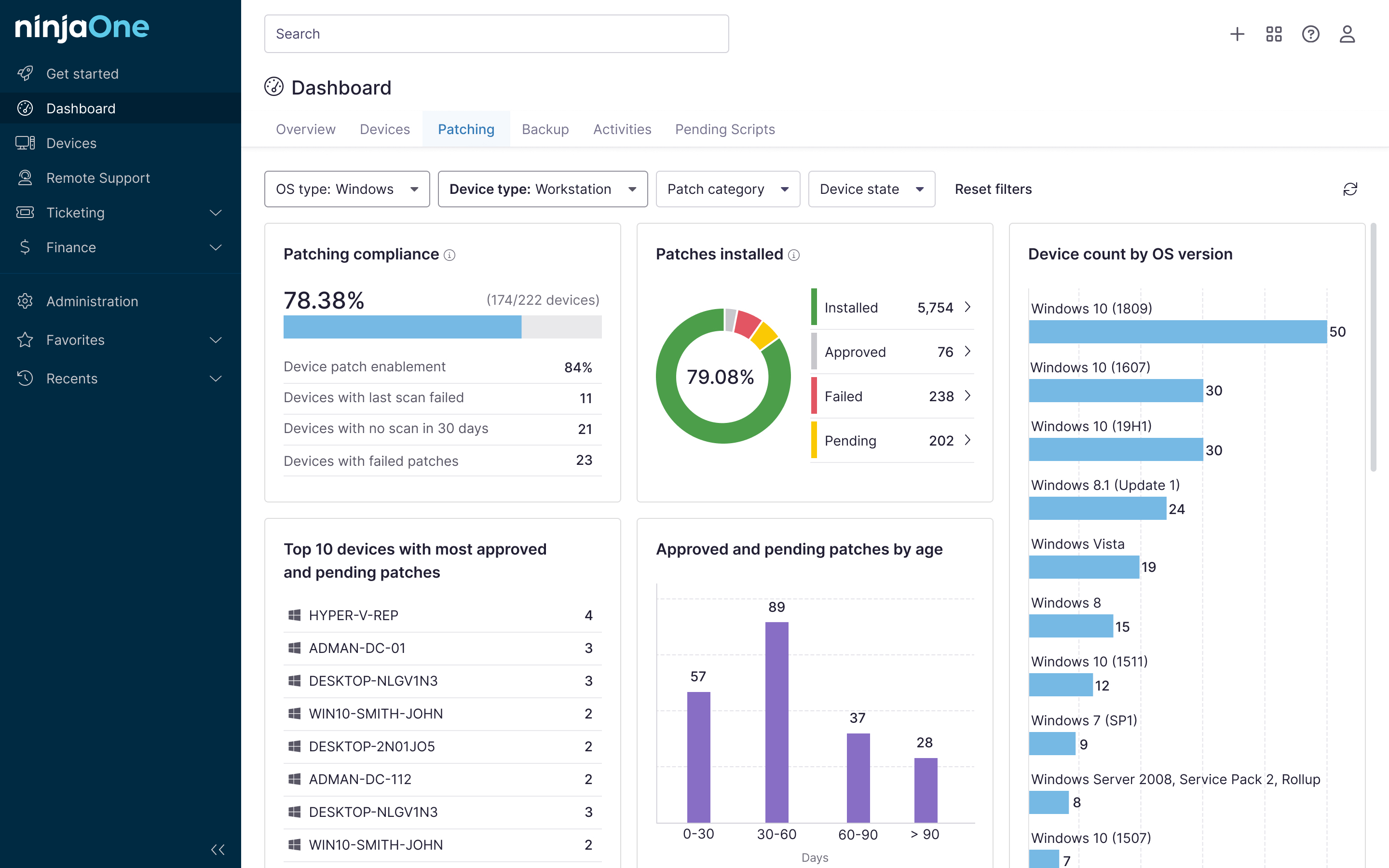
While most RMM software offers similar tools, some features are must-haves for simplifying daily IT processes and boosting IT efficiency. Patch management is a crucial capability of RMM tools, and they should be able to handle all your update and patch deployment needs seamlessly. If your RMM software doesn’t support patch management for the most widely used operating systems, browsers, and applications in your environment(s), it forces you to either waste resources with manual updates. leave vulnerabilities in place that need to be addressed, or force you to pay for a separate IT tool.
Customer service: You don’t feel like you’re getting adequate support
It’s always wise to consider service and support. Are you happy with your RMM provider overall? Are you getting prompt responses to tickets or getting technical support to prevent disruptions? An RMM provider with an active and responsive community of experts and users is also a valuable asset, as such a resource can come in handy when you’re looking for quick answers or input based on experience. Lastly, you want to ensure you’ll continue to receive post-implementation support following the RMM migration to ensure a smoother transition.
What to look for when switching RMM solutions
The most important thing is to consider what you need from your RMM to achieve your goals. As obvious as this might seem, it’s essential not to overlook even the most minor aspects of your use case — and your plans. Look at your functional needs and establish a clear picture of your current requirements:
- Identify which features in your previous RMM tool you will keep using.
- Identify the issues you’re experiencing with your current/previous RMM platform and add these considerations to your checklist while shopping for a new tool.
- Identify the absolute requirements of your RMM tool, what would be nice to have, and what features you can live without
Use this information to create a “shopping list” of priorities.
Once you have all of this sorted out, you’ll be in the best position to start looking for and talking to RMM vendors. The information you’ve assembled should allow you to develop a shortlist of RMM tools that meet your technical needs.
At this point, you can evaluate individual vendors on ancillary aspects that will ultimately impact your long-term partner relationship.
- Security
- Server location
- Redundancy/backups
- Network capacity
- Support and service
- Implementation/switching assistance
- Customizing scripts/alerts
You have to be careful when switching platforms. No one wants to change RMM tools only to find out their needs are still not being met, forcing them to switch yet again.
What MSPs need to consider when switching RMMs
If you’re a managed service provider (MSP), there are other factors you need to consider when migrating to a new RMM platform. After all, MSPs using an RMM platform will be managing multiple clients, and maintaining client satisfaction is critical for business growth.
As an MSP, here are some other points to consider:
- Your overall device count and what types of devices you will be managing.
- The number of sites where your RMM will be deployed, as well as any specific requirements each of these sites might have.
- The industries that your clients will be working in, since some industries have strict regulatory requirements and varying IT compliance demands.
- Prioritize security to protect your clients’ sensitive data during the RMM migration.
These considerations will help you further narrow down your list of potential RMM vendors. Take your time when evaluating RMM software, as it can significantly enhance MSP growth strategies and help your business reduce complexity and costs.
Getting the most from your new RMM provider
Once you’ve gone through the process of switching RMM tools, you’ll undoubtedly want to take full advantage of your new solution. Our blog contains many resources about getting the most from your RMM tools. You can read or download them later, or check out some of the highlights below.
Configure alerts
As you implement your new tool, take some time to fine-tune your alerts and notifications. RMM tools help your team focus on the most critical and urgent needs in your IT environment(s), so honing these notifications to a fine edge will go a long way in managing time and resources. The best RMM tools can create any combination of alerts, but those alarms can generate a lot of noise and waste time if they’re not set up correctly. Each IT environment is different, so taking the time to create notification standards that best fit your team’s needs is time well spent.
Ensure seamless integration
You will also want to maximize the potential of integrations with your other tools, ensuring communication across solutions in use. You can save considerable time and reduce labor costs by making full use of integrations. Compatibility with existing tools and systems is especially important for RMM software for MSPs. Seamless integrations not only facilitate a smoother RMM migration process but also minimize disruption to IT service operations for clients.
Don’t forget to find out if the RMM software vendor you’ve chosen offers onboarding and setup assistance for partners or if they can recommend services that help with the changeover process.
Make monitoring and managing your IT infrastructure fast, easy, and cost-efficient with G2’s #1 RMM software.
Thinking about switching to NinjaOne?
If your RMM tool isn’t performing up to your needs or your current RMM vendor isn’t offering the support you need, consider adding NinjaOne to your shortlist of options. NinjaOne is the #1 RMM software on G2 with its flexible per-device pricing, comprehensive suite of RMM tools, and exceptionally user-friendly user interface. NinjaOne provides IT administrators with a complete view of their IT infrastructure and the tools to manage, patch, and secure it.
When you partner with NinjaOne, you get world-class customer service, with an average CSAT score of 98. From day one, NinjaOne makes the RMM migration process as painless as possible. A highly intuitive interface makes NinjaOne easy to learn, and our customer success team will work with you to get you up and running with free and unlimited onboarding, training, and support.
Get a hands-on look at how NinjaOne can solve your business’s specific needs. Sign up for a 14-day free trial or watch a demo to see NinjaOne in action.
Related topics: