Key Points
- Use a consistent meeting agenda to keep discussions focused
- Leverage visual aids to clearly present performance and insights
- Share reports to clients at least 24 hours in advance to enable more informed conversations
- Rotate meeting attendees to increase engagement across the client’s organization
- Start on a positive note by highlighting wins, then address critical concerns right after
- Send post-meeting the client summary emails with key takeaways, action items, and next steps
Client communication plays a crucial role in an MSP’s success. Technical prowess may win you new clients, but clear and timely communication is what turns those initial relationships into long-term partnerships.
Effective communication reinforces the value of your managed services and builds trust, the foundation of any successful relationship.
However, if you think conducting Quarterly Business Reviews (QBRs) is enough to build long-term client relationships, you’re wrong.
While these meetings are essential for strategic planning, they require intensive preparation and are too infrequent to address potential high-risk issues or day-to-day challenges.
To address this gap, you need to run monthly MSP-client check-ins. These lightweight, high-frequency meetings keep the momentum going and show clients you’re proactive about helping them succeed.
Today, we’ll guide you through running monthly client check-ins without an in-depth QBR report.
Prefer a visual summary? Watch “How to Run a Monthly MSP Client Check-In Without a Full QBR” for more details.
Keeping clients engaged: A guide to running effective monthly MSP-client check-ins
Although monthly MSP-client check-ins are meant to be shorter than QBRs, they still require structure. This way, you can ensure these meetings are focused, efficient, and valuable to stakeholders.
These are the three core components you’ll need to run an effective monthly MSP client meeting:
Meeting Agenda
First and foremost, you need an agenda. This will be the foundation of your monthly check-ins, helping you keep the conversation within a 25-30 minute window.
Below is a recommended agenda format, broken down into five crucial segments:
Segment | Duration | Content Snapshot |
| Operational Overview | 5 minutes |
|
| Security & Maintenance | 5 minutes |
|
| Project Snapshot | 5 minutes |
|
| Feedback & Priorities | 5-10 minutes |
|
| Wrap-Up | 2-3 minutes |
|
Visual aids and tools
In addition to an agenda, you’ll also need visual aids and MSP reporting tools. These are the supporting materials that will bring your agenda to life.
It’ll help you turn raw data into digestible reports your clients can use to make informed decisions about their infrastructure.
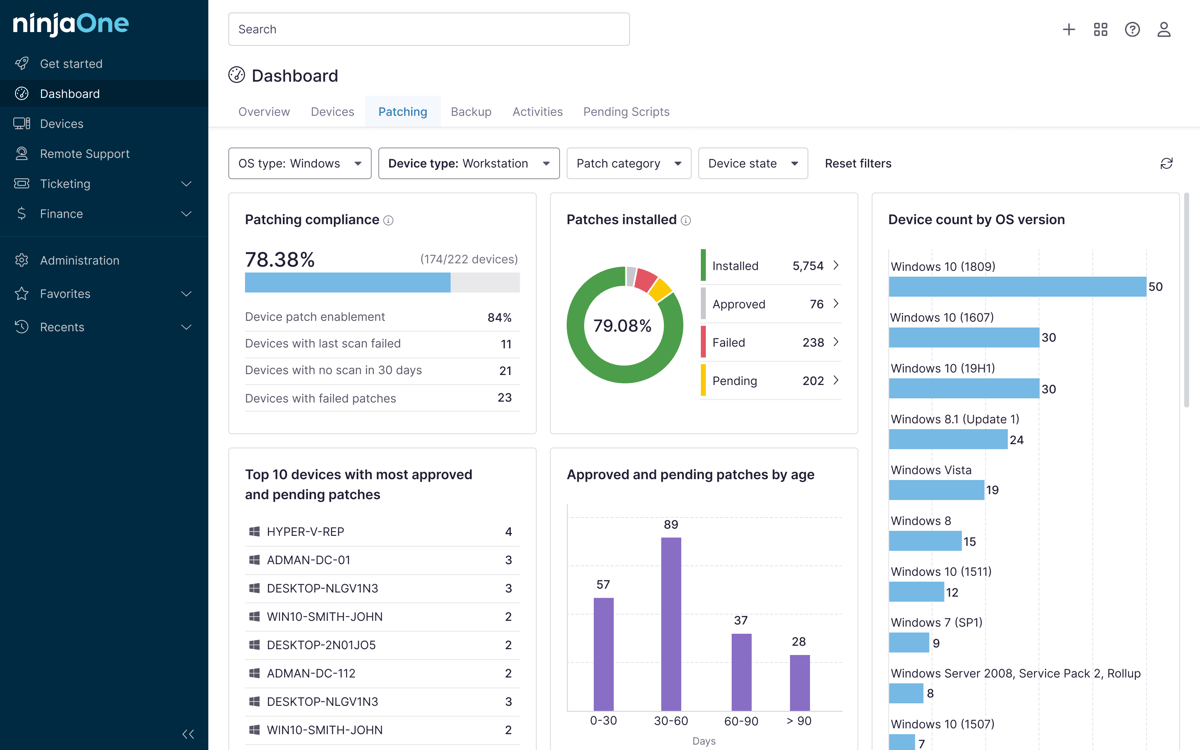
The first visual aid you’ll need is a one-page snapshot. This document summarizes key system health metrics like uptime percentage, ticket volume, and patch compliance in a clean, easy-to-read format.
Next, you’ll need a mini trend chart to add context to the numbers you presented in your one-page snapshot. Charts visualize patterns over time. They help clients understand whether things are improving or declining.
Finally, you can streamline your workflow by using RMM tools like NinjaOne to automate reporting.
Instead of using custom scripts, you can use NinjaOne’s automation features to generate key reports for your monthly check-ins.
You can feed these reports directly into your one-page snapshots and client dashboards or attach them to your follow-up emails to make monthly check-ins more data-driven.
More importantly, NinjaOne allows you to customize and schedule your report generation for a seamless, hands-off experience.
Governance and Strategic Alignment
Governance and strategic alignment ensure that your monthly check-ins lead to action. This is where you turn insights from the meetings into tasks that are tracked over time.
This typically involves:
- Automatically convert meeting outputs into tasks and integrate them into your PSA workflow.
- Review key metrics monthly to spot trends and determine next steps.
- Compiling insights from monthly check-ins into the upcoming QBR report.
This follow-through mechanism reassures clients that you’re taking their concerns seriously and are acting on them. More importantly, it builds trust, reinforces accountability, and positions your MSP as a dedicated business partner, not just another service provider.
Key metrics to include in monthly MSP client check-ins
Instead of overwhelming clients with raw data, focus on a concise set of key performance indicators (KPI) that clearly demonstrate the value of your services. Tracking and sharing the right IT KPIs and Performance Metrics improves transparency and allows clients to make more informed decisions. Here are some metrics that your MSP KPI reporting should include:
IT service delivery
Ticket volume, average resolution time, and SLA compliance demonstrate to the client the efficiency of your support team when it comes to handling support requests. They can also show clients that your IT support is reliable and that you’re meeting MSP service-level agreements (SLAs).
Device status
Give a client an overall view of the current status of all their endpoint devices, including data on patching status, device health, and hardware performance. Your MSP KPI reporting should demonstrate that your client’s IT environment is maintained and protected. These metrics also help clients see gaps you’ve identified and what steps you’ll take to address these issues.
Cybersecurity metrics
Highlight your efforts to ensure that your clients’ endpoints are protected from common cyberattacks. Present clients with detected threats, resolved issues, data backup metrics, and vulnerability remediation timelines. Make sure your MSP KPI reporting presents your proactive measures to address security threats and safeguard client data and devices. These metrics show how your services minimize costly downtime and reduce the possibility of data loss.
Regulatory compliance
Report on your efforts to achieve or maintain IT compliance with regulatory requirements. This is especially true for organizations in tightly-regulated industries, such as healthcare and finance. Show clients that their IT infrastructure is ready for a compliance audit at any given time.
Best practices for effective monthly MSP-client check-ins
Here are some additional steps on how to make your monthly MSP client check-ins count:
Use a consistent agenda template to streamline preparation
To make preparing for monthly check-ins easier, create a standardized agenda template in your PSA or documentation system. This way, you won’t miss any critical topics or segments during your meetings.
Share reports 24 hours in advance to establish productive discussions
Sending your reports before the meeting lets your client review your data and prepare questions in advance. Doing so will help you build meaningful, productive discussions during the check-in.
Rotate monthly check-in attendees to increase organizational participation
You should invite different members to the monthly check-ins. For example, bring your project manager to the first session and your account manager to the next.
This approach helps deepen your conversations and demonstrates to the client that all team members actively participate in the project.
Highlight wins and call out minor concerns early
Start your meetings on a positive note by celebrating recent successes first and discussing potential high-risk concerns afterwards.
Send post-call summary emails to ensure clarity and accountability
Send a follow-up email summarizing the meeting’s key points, action items, and next steps to ensure everyone is on the same page. You can also use this email as a reference for your next check-in.
💡 Tip: Divide your email into sections such as “What We Covered,” “Action Items,” and “Next Check-in” so that clients can easily skim its contents.
Why monthly MSP client check-ins matter
Monthly client meetings are vital to your MSP’s success because:
Check-ins prevent small issues from piling up
Monthly check-ins help you proactively address minor issues before they become major problems, reducing downtime and risk of emergency escalations.
Check-ins keep clients engaged
Maintaining regular cadence with your clients keeps them engaged. More importantly, it makes them feel more supported.
Check-ins continuously reinforce the value of your services
Instead of waiting for your QBRs to showcase your work, monthly check-ins allow you to highlight wins and progress as they happen in real-time.
Whether it’s improved ticket resolution times or successful patching, it gives you the platform to showcase the value of your services continuously.
How NinjaOne helps MSPs run impactful monthly client check-ins
NinjaOne empowers MSPs to run monthly client meetings that deliver real value by:
- Scheduling recurring monthly check-ins via NinjaOne tasks
- Embedding MSP KPI reporting widgets (e.g., uptime and patch rate) directly in client dashboards
- Sending follow-up summaries via NinjaOne after each check-in
- Using tags to track participation or completion status
- Automating reminders for next check-ins based on task deadlines
In addition, NinjaOne provides MSPs with complete visibility of an IT environment. NinjaOne provides real-time information that is essential for MSP KPI reporting. NinjaOne automates and streamlines data collection and also offers custom reporting for IT professionals. Users can generate IT reports for a variety of vital metrics, such as the following:
- Patch Compliance Reports: Identifies which devices are up-to-date, highlights missing critical updates, and tracks compliance trends over time.
- Backup Health Reports: Displays backup success/failure rates, last successful backup dates per device/group, and trends to ensure data protection.
- Ticketing & Operational Overview Report: Summarizes ticket volume, resolution times, SLA compliance, and any high-priority or overdue tickets
With NinjaOne’s help, you can ensure every client interaction is timely, clear, and impactful.
Build lasting partnerships through monthly MSP client check-ins
Lasting client relationships aren’t built in occasional big meetings like QBRs but in consistent, impactful conversations. Monthly client check-ins allow you to address everyday challenges early on and continuously highlight the value your managed services deliver.
If done right, these touchpoints can help you position your MSP as a trusted partner genuinely invested in your clients’ success.
Related topics: