Key points
- True cloud-native platforms are built on modern cloud architecture, not internet browsers alone.
- Cloud-native tools support centralized visibility, scalable performance, high availability across distributed teams, and more.
- Hosted cloud software runs on vendor infrastructure but often behaves like on-premises software, with scheduled downtime and manual upgrades.
- Cloud-native solutions use microservices so updates don’t interrupt production environments, and performance stays consistent.
- Asking vendors direct questions about architecture and scalability helps verify cloud-native claims before fully committing.
This article will discuss the difference of hosted cloud vs true cloud and how to tell whether an IT management platform is cloud native. There are cloud-based IT management apps, accessible from a web browser, and there are “real” cloud platforms that fully leverage the advantages of modern cloud infrastructure to bring you IT tools that scale for a global user base and help you meet SLA and compliance goals. True cloud-native endpoint management platforms go beyond simple web access and help your team deliver reliable, high-quality IT services.
Unified IT operations should span mobile device management, monitoring, helpdesk, and critical network and security monitoring, extending from on-premises deployments to hybrid cloud and globally distributed remote workforces. Tools should enable fast, efficient support workflows, with minimal configuration, low latency, and zero infrastructure.
What “real” cloud means for IT management tools
Cloud-native tools are developed with the advantages modern cloud architectures offer, rather than simply adapting traditional desktop software for web access. Freed of traditional software update models, “true” cloud services should evolve rapidly and deliver new features and (improve existing ones) based on user interaction and feedback, and run on completely vendor-managed infrastructure, including transparently scaling to meet your demands. Native cloud tools emphasize the “as a service” aspect of SaaS: everything is taken care of for you; all you need to do is choose the right tools that will grow with your company.
For IT management platforms, true cloud architecture should support:
- Centralized visibility and remote endpoint management
- Regular platform updates
- Scalable performance as devices and users increase
- API-based integrations
- High availability and resilience
- Consistent access for distributed IT teams
The cloud shouldn’t just mean “hosted on someone else’s computer” – it should bring real benefits and delegation of significant work, so that you can maintain a lean, focused team that is not distracted by maintaining your own infrastructure, and can focus on supporting your users.
Hosted cloud vs. true cloud-native endpoint management solutions
The distinction between hosted cloud and cloud-native is often not made clear by vendors who rely on older code bases to serve their users.
Hosted cloud is, technically, cloud software – it runs on remote infrastructure managed by the vendor; however, it still behaves much like on-premises software. It uses dedicated single-tenant instances (that may need to be manually spun up, delaying deployment), requires scheduled downtime, manual upgrades, and vendor intervention to operate. It’s effectively just outsourced hosting.
Cloud-native solutions are built using scalable architectures that optimize performance while keeping sensitive data secure. Microservices and distributed, redundant components mean that updates don’t interrupt service, reliability is increased, and nodes can be located near end-users for the best performance.
Hosted cloud isn’t inherently bad: many vendors overcome the weaknesses in their legacy architectures with additional infrastructure and support, and may even remain best-in-class due to targeting specific industries or feature requirements. In some cases, hosted cloud is preferable, including where strict data security regulations apply, or for other narrow use cases. However, generally, cloud-native IT solutions are preferable for teams that manage and support global, distributed infrastructure and users.
Questions to ask cloud IT management vendors
You should ask practical, focused questions based on your use case and priorities before accepting cloud-native claims.
This list acts as a starting point that you can tailor to your organization while comparing cloud endpoint management tools:
- Is the platform cloud-native or hosted legacy software?
- Is the architecture multi-tenant, single-tenant, or hybrid?
- How are updates delivered, and do they require downtime?
- How does the platform scale as the number of endpoints increases?
- What APIs and integrations are available?
- How is uptime measured and reported, and are there SLAs?
- How are backups, security, and access controls handled?
- Can remote endpoints be managed without on-premises dependencies?
These questions help you understand operational fit before you commit to purchase, and invest time and effort that can be hard to unwind (creating technical debt).
NinjaOne integrates everything IT teams need in a true cloud-native IT management platform
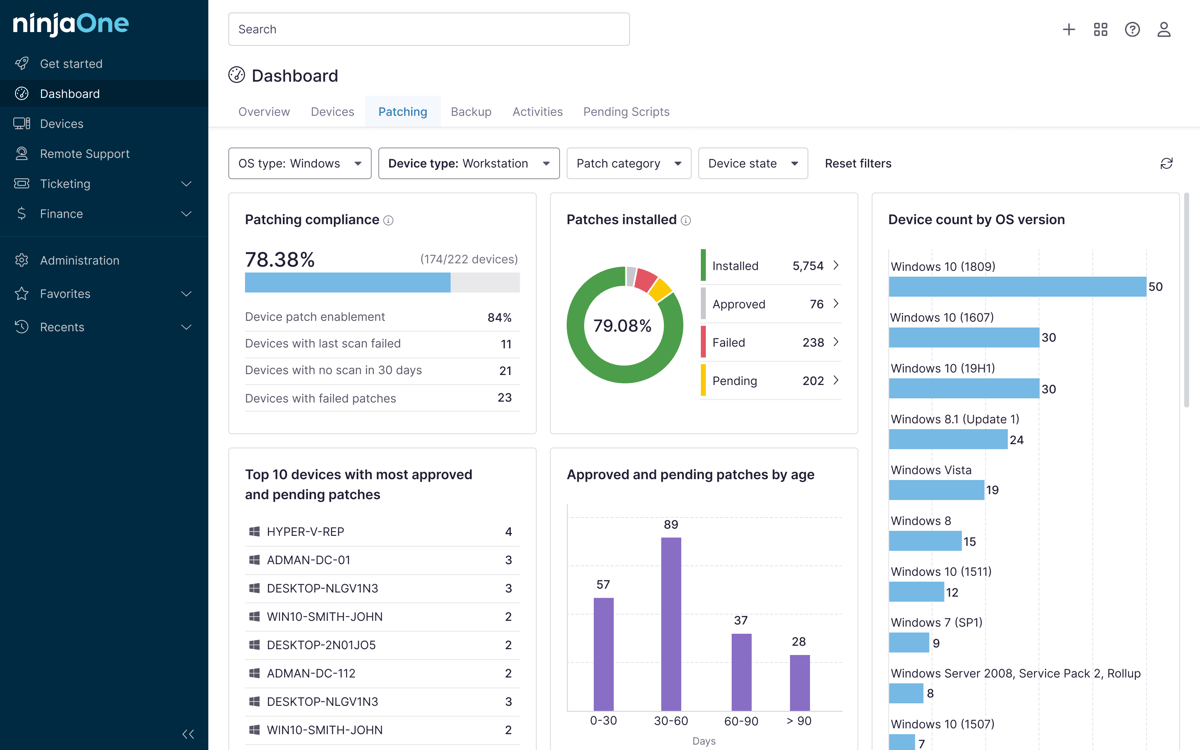
NinjaOne is the leading cloud-native IT management platform. It provides mobile device management (MDM), remote monitoring and management (RMM), remote access, backup, network and endpoint security, helpdesk, and other critical IT management tools that connect you to infrastructure and users wherever they are.
You never have to manage infrastructure or the scalability, reliability, or security concerns – NinjaOne is entirely vendor-managed, and leverages the full advantages true cloud-native platforms can offer for endpoint management.