
Key Points
- Position endpoint management software as a business control rather than just another IT tool by tying it to crucial business outcomes, like uptime, security, productivity, and compliance.
- Lead conversations with outcomes before features. Explain how endpoint management improves device visibility, health monitoring, patch management, and compliance reporting.
- Use real-world scenarios to prove value, such as identifying missing security updates, preventing device failures, responding to lost or compromised devices, and supporting remote workers.
- Address common client objections by clarifying that antivirus, reactive support, and “working” devices can’t replace proactive endpoint visibility.
- Avoid technical jargon when speaking with clients. Use plain language when discussing the importance of endpoint management to non-technical decision-makers.
- Link patching, monitoring, automation, and reporting to risk reduction so clients understand how it helps prevent breaches, long downtime, audit issues, and costly disruptions.
Many business owners are already familiar with the term endpoint management software. They may have seen it in a security audit or heard it from their IT provider, alongside other phrases like endpoint monitoring, device management, and remote support.
This doesn’t necessarily mean that they understand what endpoint management software actually does, why it’s important, and what the risks are of operating without one.
This makes it harder for MSPs to communicate the value of their services. Some clients end up underestimating the role endpoint management plays in keeping their operations secure, while others question whether it’s a necessary investment at all.
In this guide, we’ll break down how you can clearly explain the value of having endpoint management software to your clients.
How to explain the value of endpoint management to your clients
Understanding how endpoint management software works is one thing, but explaining it clearly to a non-technical client is an entirely different challenge. Not all stakeholders are interested in learning how the tool works; some of them are more eager to learn about how it keeps their business protected and whether it’s actually a worthwhile investment.
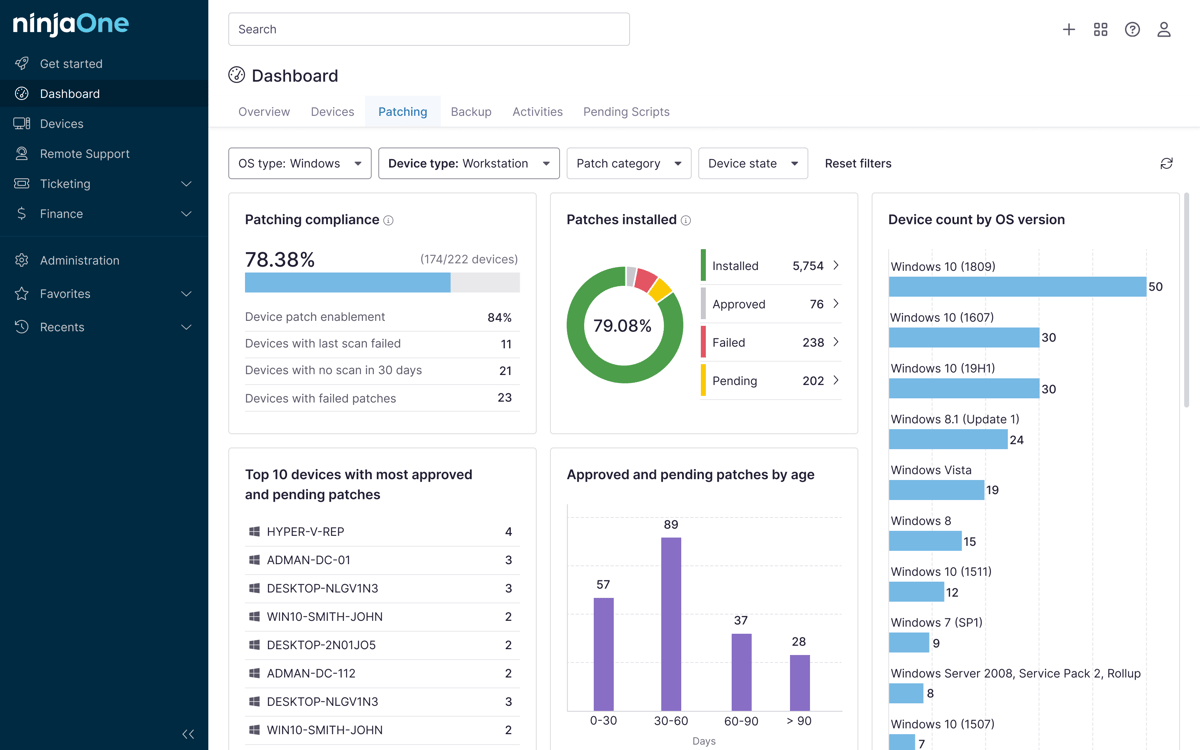
To communicate this, you need good framing. Instead of leading with the software’s feature, start the conversation by explaining how endpoint management helps IT teams know which devices exist across their environment, whether those devices are actually healthy, and what issues need their immediate attention.
You can use real-life scenarios to make that value more tangible. For example, you can say that with an endpoint management software:
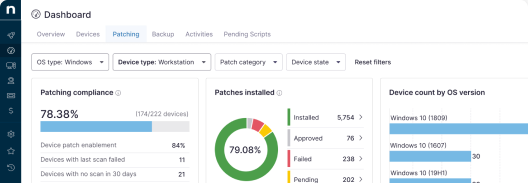
- IT teams can detect laptops with missing security updates before an attacker can exploit them.
- IT can identify which devices are running low on disk space and step in before an employee loses access to their work.
- IT can provide faster support to remote employees without needing to be on-site.
- IT can quickly respond to lost or compromised devices and limit the risk of data exposure.
- IT can generate accurate, audit-ready compliance reports whenever stakeholders or external auditors ask for them.
All these scenarios directly link endpoint management’s capabilities to business outcomes that executives actually care about: uptime, security, productivity, and accountability. This reframing is what moves most conversations forward.
How to handle common client objections
Now, implementing this approach doesn’t necessarily mean you won’t face any pushback from your clients. You could still receive resistance from stakeholders even when you have a solid business case in hand.
Here’s how you can respond to some of the most common objections around endpoint management software:
“We already have antivirus.”
Antivirus only addresses one specific layer of device risk: detecting and blocking known threats. Endpoint management software, on the other hand, covers a much broader scope. Both tools play an important role in keeping your fleet secure, but they’re not interchangeable.
Endpoint management helps monitor device health, enforces configuration standards, patches operating systems and third-party applications, maintains an accurate device inventory, and provides support to users when issues arise.
A device can have an active, up-to-date antivirus, and it would still be exposed to threats if it hasn’t been patched in months or was never configured properly in the first place.
“Our devices are all working fine.”
Just because a device is working fine doesn’t mean it’s in a healthy state. Most device issues, like unresolved patches and degrading hardware, remain hidden until they cause an actual disruption.
Endpoint management gives IT teams the visibility needed to resolve these problems before they lead to outages or audit failures.
“We don’t want another IT tool.”
This reaction is less about the software itself and more about the additional cost or overhead it may introduce. The best approach here is to focus on what endpoint management can eliminate rather than what it would add.
Center your conversations around how it can help reduce the manual effort IT teams need to put into monitoring devices and lessen resolution time.
“We only need help when something breaks.”
Having a reactive approach to IT support is not inherently wrong, but it tends to be more disruptive and expensive than proactive monitoring and maintenance.
When a device failure or security incident happens without prior monitoring, your team would have no baseline data or alert history they can use to determine what happened or when. They would have to start from scratch, which translates to more time spent diagnosing the problem and longer resolution windows.
Common mistakes to avoid when communicating the value of endpoint management software
Knowing what to say matters, but knowing what not to say matters just as much. Here are some of the mistakes MSPs tend to make when communicating the value of endpoint management to their clients:
Leading with jargon
Terms like remote monitoring and management (RMM), patch cadence, and configuration drift are routine in IT, but not all executives are familiar with them. If your client has to stop you mid-conversation and ask what a word means, you’ve already lost momentum.
Stick to plain language if you can, and only add technical terms when they add genuine clarity to the conversation. Don’t forget to attach a brief explanation to any jargon you want to use.
Separating endpoint management and security
Although endpoint management and security cover two distinct areas, they’re closely connected in practice. Treating them as two completely separate conversations can confuse clients or give them the wrong impression that having one means they don’t need the other.
A better approach would be to explain how they work together. Endpoint management keeps devices visible, well-maintained, and properly configured. Meanwhile, endpoint security focuses on detecting and responding to threats.
Both are necessary to keep a device fleet secure, and a gap in either one creates risk.
Forgetting to connect monitoring with uptime
Endpoint monitoring can seem like it’s a background IT process that has little to no bearing on daily operations. But in reality, it’s one of the primary processes that prevents those operations from being interrupted in the first place.
When you present endpoint management software to your clients, you want to make that connection explicit. Endpoint management acts as an early warning system that helps IT catch failing hardware, missed patches, and other similar performance issues before they disrupt someone’s workday.
Overpromising on automation
Automation is one of the biggest benefits that endpoint management software offers. However, it’s important to note to your clients that it’s not a magic solution that fixes everything.
For automation to work properly, it needs structure, testing, and ongoing oversight.
Automated patch deployments, for instance, still need to be scheduled, tested in controlled environments, and reviewed before being rolled out across an entire device fleet.
That’s why it’s important you set realistic expectations from the start. You want to be upfront with your clients about what is handled automatically, what still involves your team’s review, and how edge cases will be handled.
Establishing that level of transparency right off the bat will help you build trust. Clients are far more likely to have confidence in your services when you’re honest about both the capabilities and limitations of automation.
Skipping out on the value of compliance reporting
Compliance reporting is an overlooked selling point for endpoint management. Some MSPs forget to mention it when the prospect they’re talking to isn’t in a heavily regulated industry like finance or healthcare.
But there’s more to accurate and consistent reporting than audit-readiness. For instance, it gives stakeholders a clear picture of the state of their device fleet at any given time, which is vital for better decision-making.
Leaving this benefit out of the conversation means overlooking an advantage that can directly influence how stakeholders perceive the value of your service.
Discussing patching without connecting it to risk reduction
Finally, it’s important that you link patch management to what clients care about most: risk reduction.
Some enterprises view patching as routine maintenance that doesn’t warrant much attention or investment. However, that perception can leave them exposed to serious security threats.
Unresolved vulnerabilities in operating systems and third-party applications are among the most exploited entry points in real-world cyberattacks. In fact, Verizon’s 2025 Data Breach Investigations Report found that vulnerability exploitation is now the second most common initial access vector, accounting for 20% of all recorded data breaches.
What many companies don’t realize is that the window between a vulnerability being disclosed and attackers attempting to exploit it continues to shrink each year. The longer a device sits unpatched, the greater the risk it becomes.
That’s why conversations about patch management shouldn’t just revolve around software updates and maintenance schedules. Instead, it should focus on framing patching as a crucial security measure that helps protect businesses from breaches and costly disruptions.
Clients are far more likely to recognize the importance of patch management when they understand the role it plays in risk reduction.
Building a compelling business case for endpoint management software
Ultimately, clients have a much easier time understanding the value of endpoint management software when it’s positioned as a business control instead of just another IT administration tool.
At its core, it keeps endpoint devices visible, secure, updated, and ready for work. This means having fewer unmanaged devices, fewer missed patches, faster issue resolution, and less downtime.
When you start the conversation with how endpoint management software can help your clients achieve the outcomes they care the most about and back it up with real-world scenarios, you’ll be able to build a more compelling case for endpoint management, even with non-technical decision-makers.
Related topics: