Key points:
- Lansweeper is an IT asset management platform that provides visibility into hardware and software assets across an organization’s IT environment.
- Top Lansweeper alternatives include: 1. NinjaOne, 2. Ivanti, 3. Atera, 4. ManageEngine Endpoint Central, 5. Pulseway, 6. Device42, 7. SysAid, 8. SolarWinds Service Desk, 9. Asset Panda, 10. PDQ Connect, 11. InvGate Asset Management, 12. Action1.
- NinjaOne is a strong ITAM option for its reliable patch management, real-time monitoring, alerting, integrations, and flexible reporting features.
- Organizations rely on IT daily, making it important to choose an ITAM solution that fits your needs and improves efficiency.
Lansweeper is a well-known IT asset management solution. It markets itself as simple, easy-to-use software for more advanced users who need to gather information from multiple hardware and software at any given time for management, compliance, and audit purposes.
While an overall ideal system, it does have its limitations, including an imperfect support system and complex reporting tools.
You may be researching various Lansweeper alternatives and evaluating which solution is best suited for your specific needs. This article lists down the top 3 Lansweeper alternatives, along with other pro tips to consider when finding the most ideal solution for your IT group.
That being said, it’s a good idea to recall the essential features that every robust IT asset and endpoint management software must have.
- Real-time access to data
- Reliable and consistent alerts and notifications
- Asset discovery and tracking
- Ease of integration
- In-depth reporting
Evaluation methodology
This article evaluates Lansweeper alternatives based on their relevance to IT asset management and endpoint management use cases. The solutions listed were selected according to their alignment with common IT operational needs, market presence, and availability on trusted review platforms such as G2 and Capterra.
Our analysis is based on vendor documentation, publicly available product information, and user feedback, where applicable, to present a balanced overview. Because product features, pricing, and capabilities may change over time, readers should verify the most current information directly with vendors before making a purchase decision.
1. NinjaOne
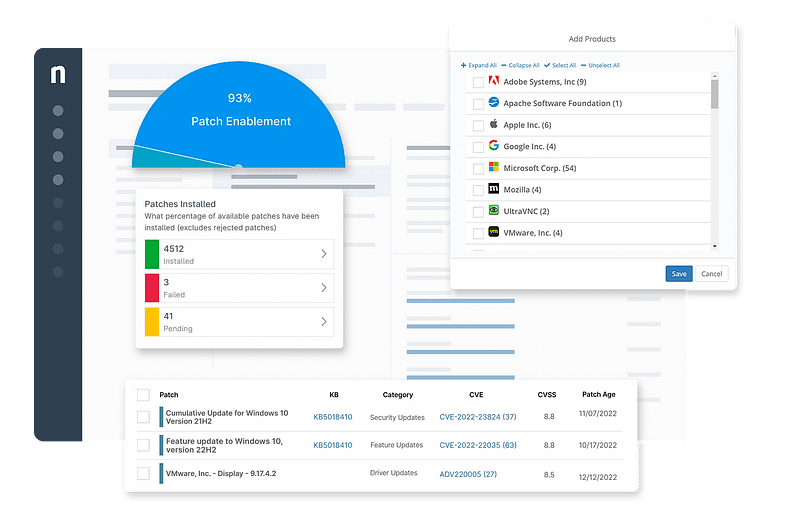
NinjaOne offers a powerful unified endpoint management system that has been specifically designed for IT technicians to improve their efficiency. The solution features a single-pane-of-glass dashboard with all your managed IT assets, allowing your team members to view everything within a network from one dashboard. This makes NinjaOne’s software easy to use and allows you to manage all endpoints and virtual machines efficiently and at scale.
5 Reasons to choose NinjaOne over Lansweeper
1. World-class, proactive support
One of the main reasons people search for Lansweeper alternatives is its support. Compared to Lansweeper, NinjaOne proactively helps you achieve your business goals and objectives from day one. This means delivering tailored and knowledgeable responses to your concerns within a few hours.
This dedication to its customers has helped NinjaOne be consistently rated as #1 in customer support for years.
2. Fast endpoint management solution
Some users have stated on G2 that Lansweeper may begin to lag as more endpoints and IT assets are added. NinjaOne, on the other hand, is known for its robust system that helps you perform all necessary tasks, including the most time-consuming IT projects, regardless of the number of devices being managed.
With its fast, intuitive UI, your IT technicians can notice an increase in efficiency and productivity from the get-go with 100,000+ endpoints.
3. Provides a powerful reporting system
NinjaOne allows you to track team impact, reinforce business cases, and tell influential stories through its customized endpoint device reporting. NinjaOne offers templated IT reports that you can customize to your business needs.
You can also manually create your own reports to reflect your unique environment and send these through flexible scheduling options.
4. Founded on innovation
NinjaOne is a proud founder-owned and led organization. It believes in innovation and is constantly updating its software based on customer feedback.
This means you gain access to a transparent product roadmap and know exactly what to expect from NinjaOne and how it can help your specific company.
5. Supports endpoints across all systems
Lansweeper is better suited for endpoints running on Windows. If you’re managing macOS or Linux devices, you may want to consider NinjaOne instead.
NinjaOne’s endpoint management tool unifies its device management to monitor, support, and control all devices across all supported systems. This is one of the many reasons its tool is rated highly by G2.
Ensure the health, security, and efficiency of all your managed devices.
Strengths of NinjaOne
- Reliable patch management. NinjaOne is known for its patch management solution that automates the patching of over 200 applications. All patching is done in the background, so your end users are never disturbed.
- Real-time monitoring. NinjaOne gives you real-time access to all your endpoints within your IT network. This enables you to proactively detect and manage threats and resolve IT tickets.
- Monitoring and alerting. Building off the previous point, NinjaOne automatically notifies your IT technicians when any potential issue arises. This helps them deploy necessary remediations to minimize any potential impacts to the end user.
- Easy integrations. NinjaOne integrates with multiple apps, from remote access to SSO. Having easier integrations significantly reduces any potential errors that may occur during manual entry so that you have happier, more productive, and more efficient teams.
- Flexible device reporting. NinjaOne helps you make reliable reports for different functions, including maintaining compliance, IT asset management, and delivering more powerful marketing and sales stories.
Customer story
Brian McFarland, the Projects and Operations Manager of Illuminate, was looking for an endpoint management solution that allowed him and his team to be more proactive and switch from a break-fix model to a managed services model. With NinjaOne, he found a tool that freed him to focus on more high-value tasks.
“It used to take me a full day to pull reports prior to client meetings – I was switching between tools, collecting data in Excel, and taking screenshots from everywhere. With Ninja, it takes at most a couple of hours and comes from a single source,” he says.
“Ultimately, Ninja ticked all our boxes. It integrated with the tools we had, was super easy to use, and fit our budget. Other tools we had seen or used were convoluted, complex, and clunky.”
See more NinjaOne customer stories or check out NinjaOne reviews.
NinjaOne Pricing
NinjaOne uses a flexible per-device pricing model without hidden fees. This means that your cost scales based on the number of endpoints you manage, the products you choose, your region, and any applicable promotions or commitment terms. Implementation and unlimited support are both included.
Since pricing varies depending on your environment’s specific requirements, the best way to understand what it would look like for your organization is to review the full details on the NinjaOne Pricing page.
Pricing information
NinjaOne’s IT management software has no forced commitments and no hidden fees. You can request a free quote, schedule a 14-day free trial, or watch a demo.
Reviews
- 4,284 reviews (at the time of writing)
- 4.7 / 5 stars
- 284 reviews (at the time of writing)
- 4.7 / 5 stars
2. Ivanti
Ivanti (formerly LANDesk Management Suite) offers a unified endpoint solution that manages all desktops, laptops, and other internet-connected devices. It operates on the motto of “Enable secure Everywhere Work” and currently offers three types of UEM solutions, Secure UEM Professional, Secure UEM Professional Plus, and Secure UEM Premium.
As an endpoint management aimed at small-medium entities and large enterprises, Ivanti markets itself as a solution for businesses of all sizes across all industries. Its functionalities are tailored to cater to the diverse needs of different organizations focused on efficient endpoint monitoring and management. Ivanti also offers essential features such as lifecycle device management, real-time asset discovery, MDM, and more.
Features
- Centralized management. Ivanti’s tool provides a central view into all devices, including which technician is associated with what device.
- Device tracking. Ivanti helps you discover and track all assets on your network.
- Automated patch configurations. Ivanti helps users automate their patch management processes.
Shortcomings
- Complex configurations. Ivanti may better suit more seasoned IT teams, as their solution may require more complicated and manual configurations. (Verified G2 review) (Verified G2 review)
- Documentation. Some Ivanti users noted that while their issues are in the database’s documentation, the provided solution may not always be current. (Verified G2 review) (Verified G2 review) (Verified G2 review)
- Requires training. Ivanti’s solution may cause a steep learning curve for new users, ideally requiring them a good amount of training to familiarize the system. (Verified G2 review) (Verified G2 review)
See how Ivanti compares with NinjaOne or learn more about Invanti vs. Lansweeper.
3. Atera
Atera provides an all-in-one solution that helps IT technicians gain access, visibility, and control over all their endpoints and networks anywhere with an internet connection. It uses a pay-per-technician pricing model that is particularly suitable for managed service providers looking to scale their IT operations. On the other hand, Atera also caters to IT teams within an organization seeking an efficient way to manage their IT infrastructure.
Atera markets itself as an all-in-one platform that offers vital endpoint management functionalities. Some of these features are RMM, remote access, patch management, network discovery, and more. The platform also emphasizes its priority on robust data security. These features and benefits make Atera an ideal choice for some companies and MSPs.
See how Atera compares with NinjaOne, or learn more about Atera vs. Lansweeper.
Features
- Can support Windows, macOS, and Linux devices. This helps IT groups manage almost every type of endpoint operating system easily.
- Real-time monitoring and management. Atera offers its users real-time data so they are immediately notified of any potential threats.
- Simple UI. Atera RMM is easy to use and understand. Based on reports on G2, Atera’s dashboard is both user-friendly and easy to roll out.
Shortcomings
- Automation scripts. Some G2 reviews mentioned that certain essential scripts can be difficult to locate or, in some instances, may not be available in the platform’s library, requiring users to develop their own scripts for basic tasks. (Verified G2 review)
- Integrations. Atera can easily integrate with dozens of software to simplify the user experience, but may not offer integrations with some applications. (Verified G2 review) (Verfied G2 review)
- Control over network hardware. Some users on G2 have stated that Atera’s platform does not offer comprehensive control over networking hardware such as routers, switches, and printers. (Verified G2 review)
4. ManageEngine Endpoint Central
ManageEngine Endpoint Central is a unified endpoint management platform made for IT teams to manage and monitor devices across distributed environments. The IT solution is well-suited for organizations that seek visibility over their desktops, servers, and mobile devices from a centralized console. This helps IT teams monitor components of their managed infrastructure and take action immediately before problems impact productivity.
As a unified IT solution, ManageEngine Endpoint Central consolidates several endpoint management capabilities into a single interface to help IT teams with their operations while reducing tool sprawl. It is positioned for both enterprise IT departments and managed service providers with goals of streamlining endpoint administration.
See how ManageEngine Endpoint Central compares with NinjaOne, or learn more about ManageEngine Endpoint Central vs. Lansweeper.
Features
- Patch deployment. ManageEngine Endpoint Central is capable of automated patch deployment for operating systems and third-party applications.
- Remote access. The platform has remote access utilities that can aid in remote troubleshooting and resolving issues without requiring physical access.
- Software deployment automation. ManageEngine Endpoint Central helps IT teams deploy software packages across managed endpoints through its automation engine with scheduling and policy controls.
Shortcomings
- Online self-help. Some G2 reviews said that online guides for the platform need to beconstantly updated to display current information. (Verified G2 review)
- Complexity. Other users said that initial configurations and navigation of the platform can be confusing and complex. (Verified G2 review) (Verified G2 review) (Verified G2 review)
- Reporting. Some users on G2 also pointed out that ManageEngine Endpoint Central’s reporting could be improved by making it more intuitive, flexible, and customizable. (Verified G2 review) (Verified G2 review)
5. Pulseway
Pulseway is a remote monitoring and management solution that provides tools to IT teams in overseeing systems, networks, and endpoints from a centralized console. The platform is marketed towards IT professionals and managed service providers who require remote access and visibility into managed infrastructures, including mobile devices.
Pulseway is designed to support ongoing monitoring and management tasks across various environments, ensuring IT teams have comprehensive visibility over IT environments. It is typically adopted by small to mid-sized businesses and managed service providers seeking a cloud-based management tool.
See how Pulseway compares with NinjaOne, or learn more about Pulseway vs. Lansweeper.
Features
- Mobile-first IT management. Pulseway has a dedicated app that allows IT administrators to monitor and manage systems directly from mobile devices.
- Alerting. The IT solution offers real-time alerting that notifies IT teams of critical system events, performance dips, or failures across monitored devices.
- Remote control. Pulseway also offers built-in remote-control capabilities that can help IT administrators access endpoints and resolve issues remotely.
Shortcomings
- Performance. Some users said that some features may not work as intended, impacting user experience. (Verified G2 review)
- Remote control agents. Other Pulseway users said that the platform’s remote agents can feel clunky occasionally and could be enhanced to be more seamless. (Verified G2 review)
- Platform inconsistencies. While Pulseway’s dedicated mobile app is a selling point, some users said that in rare instances, the web app and the mobile app offer different functions and experiences. (Verified G2 review)
6. Device42
Device42 is an IT asset management and discovery platform focused on providing visibility into infrastructure and dependencies. It is commonly used by organizations that need to maintain accurate records of hardware, software, and network relationships.
The platform is designed to support IT operations through asset tracking and documentation capabilities. It is often implemented in environments where maintaining a centralized source of infrastructure data is important.
Learn more about Device42 vs. Lansweeper.
Features
- Network discovery. Device42 offers agentless device discovery across networks.
- Application dependency mapping. Device42 also has dependency mapping for applications that visualize relationships between programs and infrastructure components.
- Rack visualization. The platform also offers visual representations of data center layouts, including rack diagrams.
Shortcomings
- Performance. Some Device42 users reported occasional slowdowns and performance dips when handling huge data or heavy requests. (Verified G2 review) (Verified G2 review)
- Not new and user-friendly. Others said that Device42 may seem complex and can be overwhelming for new users. (Verified G2 review)
- Licensing structure. Some Device42 users noted that its modular licensing model for different components may require additional consideration when selecting and managing specific features. (Verified Capterra review)
7. SysAid
SysAid is an IT service management solution that showcases tools used for IT asset management and help desk. These consolidated functionalities are useful for organizations looking for a solution that can manage IT services and track assets within a single platform. SysAid also helps in supporting service request organization and operational workflow maintenance, best suited for IT teams that need a unified IT solution focused on ITSM and ITAM.
SysAid primarily targets IT teams and the MSP industry as its base clients, while highlighting automation and analytics to optimize service delivery. The platform also aids in the reduction of manual overhead and improvement of resolution times for complex technical environments.
See how SysAid compares with NinjaOne, or learn more about SysAid vs. Lansweeper.
Features
- Workflow automation. SysAid has automation engines that allow IT teams to automate IT operations such as ticket routing and escalations.
- Self-service portals. The platform has a dedicated interface that allows users to submit tickets, access knowledge base articles, and track requests.
- Asset-service tracking. SysAid connects IT assets to service tickets for easier context identification during issue resolution.
Shortcomings
- Workflow setup. Some G2 reviews mentioned that configuring automations for workflows can be time-consuming and may require training for some users. (Verified G2 review)
- Support. Some users pointed out prolonged response and resolution time from SysAid support team. (Verified G2 review)
- Asset limitations. Some users said that it would be better if the number of assets that can be added to the management module were increased. (Verified G2 review)
8. SolarWinds Service Desk
SolarWinds Service Desk is a SaaS IT service management solution that is designed to help IT teams manage service requests and assets in an organization’s IT stack. The cloud-based platform targets IT teams and MSPs as its main market, promising alignment of internal processes and workflows with service delivery.
The platform also focuses on providing a structured approach to handling IT operations and support tasks. It is often implemented by organizations looking to centralize service management and asset tracking.
Features
- Incident request management. SolarWinds Service Desk offers structured workflows for managing IT service tickets and requests.
- CMDB functionality. The platform has built-in CMDB capabilities, maintaining a configuration management database to track relationships between assets.
- Change management workflows. SolarWinds Service Desk also allows IT administrators to see workflow deviations through a standardized process for managing changes and approvals.
Shortcomings
- Support. AG2 review mentioned that support could be more helpful in resolving critical issues. (Verified G2 review)
- Automation flexibility. Some SolarWinds Service Desk users noted that certain automation options may be limited, particularly when accessing specific fields for automation rules. (Verified G2 review)
- Asset searching. Other users said that the search function could be more intuitive to make asset search easier. (Verified G2 review)
9. Asset Panda
Asset Panda is a cloud-based asset management solution that enables organizations to track and manage physical and digital assets. While ITAM is one of its core functionalities, the platform approaches asset management through a “track and manage” strategy, putting emphasis on configurability and mobility.
The platform is designed to provide flexibility in how assets are organized and monitored. It is commonly adopted by teams that need a configurable system for maintaining asset records. Additionally, Asset Panda is used across various industries that require visibility into asset usage and lifecycle status.
Features
- Custom asset fields and workflows. Asset Panda enables organizations to tailor asset tracking fields and processes based on needs.
- Asset tracking. The platform supports asset identification through barcode and QR code scanning.
- History tracking. Asset Panda helps organizations with maintaining records of asset activity, changes, and lifecycle events.
Shortcomings
- Asset entry process. Some Asset Panda users reported that manually entering asset information can be time-consuming, especially when automated data population is limited. (Verified G2 review)
- Integrations. Some Asset Panda users noted limited integration capabilities with certain tools, which may affect workflow automation and cross-platform data management. (Verified G2 review)
- Initial setup. Others said that setting up the dashboard can be cumbersome at first. (Verified G2 review)
10. PDQ Connect
PDQ Connect is a cloud-based endpoint management solution designed to help IT teams manage and maintain devices across distributed environments. The platform is commonly used by organizations that need to manage endpoints without relying on on-premises infrastructure, targeting IT teams and managed service providers that need a lightweight approach to endpoint management.
See how PDQ Connect compares with NinjaOne.
Features
- Cloud-based device management. PDQ Connect allows IT teams for endpoint management without requiring on-premises servers or infrastructures.
- Remote commands. The platform also enables technicians to run scripts and commands on managed devices remotely.
- Device grouping and targeting. PDQ Connect can organize endpoints into groups for easier management and task deployment.
Shortcomings
- Agent reliability.Some PDQ Connect users reported that the agent may occasionally become inactive, which can temporarily limit remote management. (Verified G2 review)
- Patch deployment consistency. Some PDQ Connect users reported occasional issues when deploying patches via PowerShell scripts, including incomplete installations or failed system reboots. (Verified G2 review)
- Navigation. Other users pointed out challenges in navigation glitches, adding complexities to their operations. (Verified G2 review)
11. InvGateAsset Management
InvGate Asset Management is an IT asset management platform that helps organizations track and manage their hardware and software inventory. It is used by IT teams that require visibility into assets across their infrastructure. The platform is designed to support asset lifecycle tracking and inventory management processes. It is commonly implemented by organizations seeking to improve asset organization and oversight.
Features
- IT asset inventory. InvGate Asset Management helps catalog hardware and software assets after automatic identification.
- License management. InvGate Asset Management also aids in monitoring software licenses and usage across organizations.
- Lifecycle management.The platform can track assets from procurement through retirement.
Shortcomings
- Automation configuration. Some InvGate Asset Management users noted that configuring automation rules may require additional clarification, particularly when setting up specific conditions or workflows. (Verified G2 review)
- Reporting. Others suggested that InvGate Asset Management’s reporting feature could be enhanced by making it more customizable. (Verified G2 review)
- Integration. Some users pointed out InvGate Asset Management’s limited integrations with key third-party tools. (Verified G2 review)
12. Action1
Action1 is a cloud-native endpoint management platform focused on managing and securing devices across distributed environments. It is typically used by organizations that need to maintain control over endpoints without on-premises infrastructure. This architecture allows for a consistent management experience, regardless of the location of managed endpoints.
Action1 also supports IT teams in handling routine endpoint management tasks from a centralized interface. It is often adopted by businesses looking for a cloud-based approach to managing their IT environment. These capabilities facilitate the standardization of administrative processes across a diverse fleet of workstations and servers.
See how Action1 compares with NinjaOne, or learn more about Action1 vs. Lansweeper.
Features
- Patch management. Action1’s cloud-native patch management capabilities can deliver patches without requiring VPN or local infrastructure.
- Vulnerability detection. The platform can also help identify missing patches and security risks across endpoints.
- Remote access. Action1 users can utilize its remote desktop functionalities for troubleshooting and support.
Shortcomings
- Absence of a mobile app. Action1 users said that a mobile app would make it more efficient for them so they can use the platform on the go. (Verified G2 review)
- Remote command interaction. Some Action1 users noted the lack of a built-in interactive terminal for real-time command execution, which may affect troubleshooting efficiency. (Verified G2 review)
- Agent control. Others noted that the agent may be relatively easy for end users to uninstall, which could affect device management continuity. (Verified G2 review)
Evaluating the top Lansweeper alternatives
These days, almost every company in the world uses IT in their daily operations. It is a necessity for you to search for a proper IT asset and endpoint management solution to streamline your IT management and give you all the data you need to make better, more informed business decisions.
When researching various vendors, it’s a good idea to always fall back on your specific business needs for the software solution. Every organization is different, and you should choose a tool that will help you and your team become more efficient.