Key Points
- A SIM port hack targets control of a phone number rather than compromising a device.
- SMS-based MFA can be bypassed without malware or endpoint intrusion.
- Attack success depends on telecom carrier identity verification processes, not technical exploitation.
- Endpoint security tools rarely detect SIM-based identity compromise.
- Managing SIM port risk requires identity governance, not just device protection.
Have you heard of the SIM port hack security vulnerability? More than likely, you’ve known about this threat, but didn’t know it had a name. Yet it remains one of the biggest blind spots in modern security strategies, as it exploits many people’s assumption that a “protected” device automatically means a “protected” identity.
SIM port attacks challenge that assumption entirely and necessitate another overview of your current endpoint security strategy and its best practices.
In a SIM port hack, threat actors manipulate mobile carrier processes to transfer your phone number to a SIM card they control. Once the attacker controls the number, they can intercept SMS messages, reset passwords, and bypass multi-factor authentication, all without ever touching your device.
This way, the endpoint remains clean, but the identity does not.
What is a SIM port hack?
A SIM port hack (also called SIM swapping or SIM swap fraud) occurs when a cyber attacker convinces a mobile carrier to transfer your phone number to a new SIM card under their control.
Now, this process (what is called phone number porting) is a legitimate and sometimes necessary telecom procedure that allows you to switch devices or carriers while keeping the same number. However, in a SIM port hack, threat actors exploit this by impersonating you and persuading your carrier support to authorize the transfer.
This may involve:
- Social engineering customer support representatives
- Using personal data obtained from breaches to pass verification
- Exploiting weak carrier identity validation procedures
- Abusing online account recovery processes
Once the port is successful, your phone loses service. The attacker’s SIM card now receives calls and SMS messages intended for you.
This makes SIM hacking incredibly dangerous as you remain oblivious to the threat. After all, there is no malware installed and no security alert is triggered on the endpoint.
And yet, you are already compromised.
Why endpoint security does not stop SIM port attacks
This modern cyber threat exploits the traditional assumption that endpoint security tools are the end-all, be-all of proper IT management. While these solutions can perform a multitude of essential services, from blocking unauthorized software execution to enforcing configuration policies, their focus is always on external threats.
However, as we’ve seen, a SIM port hack bypasses all these protections because the attack occurs entirely outside the device.
There is no malicious process.
There is no exploit executed locally.
There is no suspicious binary.
Instead, the attacker manipulates telecom infrastructure and customer support workflows. Since endpoint security tools focus on device-level indicators, they typically have no visibility into carrier-level identity changes.
This creates a visibility gap. The organization may believe the device is secure (and, technically, it actually is), but the authentication factor tied to that device has already been compromised.
Discover how consolidating your security oversight helps close the gaps attackers exploit.
The risk of SMS-based authentication
Okay—by now you must be thinking, “Alright, so what if I implement an SMS-based authentication, such as MFA or 2FA? That’s got to be good enough, right?”
Well, yes and no.
MFAs do add another layer of security, but they also depend on three external factors:
- Phone number ownership
- Carrier identity verification processes
- Trust in telecom account recovery controls
So, when an attacker successfully executes a SIM port hack, they break this chain of trust. Password reset links, one-time passcodes, and account recovery codes are delivered directly to them.
When this happens? SMS MFA becomes a liability rather than a safeguard. The authentication mechanism itself is hijacked without breaching the device.
This is why today, IT security experts are advocating for more robust cryptographic device-bound verification instead of relying solely on app-based authenticators.
Business impact of SIM port hacks
SIM hacking can escalate quickly, especially in hybrid work environments. A single compromised account can easily spread into the entire network.
Attackers often begin by targeting high-value accounts, such as email. Once email access is gained, it becomes easier to reset passwords for other services, including cloud platforms, financial accounts, collaboration tools, and administrative systems.
Organizations may experience their own IT horror story in the form of:
- Email and SaaS account takeover
- Financial fraud or cryptocurrency theft
- Loss of administrative access
- Reputational damage
- Extended recovery time due to compromised recovery channels
Recovery is particularly challenging because password resets and identity verification processes frequently rely on the compromised phone number. The attacker controls both the entry point and the recovery path.
What organizations often misunderstand about a SIM hack
Strong endpoint security prevents account takeover
The most common misconception about SIM hacking is that an endpoint security tool completely eliminates account compromise. However, threat actors are able to bypass the device entirely during a SIM port hack since they never need to access it; the compromise itself occurs at a telecom carrier level. Even a fully patched, monitored, and encrypted device offers no protection if authentication factors tied to that device are hijacked.
Even so, NinjaOne’s endpoint security can mitigate this risk by offering a unified account for your entire IT network and detecting any unusual account activity.
Reduce security vulnerability with a leading endpoint security solution.
Request your 14-day free trial of NinjaOne.
All MFA methods are equal
You may have assumed that any form of MFA provides the same level of protection.
You’d be wrong.
While SMS-based MFA adds friction for attackers, it relies on control of a phone number rather than a cryptographically secured device or hardware key. In a SIM port hack, the attacker receives authentication codes directly, effectively neutralizing the second factor. App-based authenticators and hardware security keys are generally more resilient because they are bound to the device and not dependent on telecom processes.
Telecom providers fully prevent SIM abuse
Another assumption is that mobile carriers have completely solved SIM swap fraud through improved verification procedures. While carriers have strengthened identity checks in recent years, attackers continue to exploit gaps in customer support workflows and account recovery processes. Social engineering, leaked personal data, and procedural inconsistencies can still lead to unauthorized number transfers.
SIM port attacks require malware
SIM hacking relies more on identity manipulation rather than technical exploitation. While some threat actors may use malware to hack your SIM, they more often than not use other social engineering methods to access your mobile carrier. A cyber attacker targets customer support processes and identity verification workflows, not the operating system, meaning your device often remains completely uncompromised throughout the attack.
Only high-profile targets are affected
In our own research, we found that 94% of SMBs faced at least one cyberattack in 2024, and 78% fear a breach that could put them out of business. This suggests that—despite common perception—smaller businesses are actually more vulnerable to attacks than established businesses. In fact, cyber criminals are more inclined to target SMEs because they tend to invest less in their endpoint security and cryptographic device authentication.
Why do these misconceptions create risk?
When organizations rely on these assumptions, they develop blind spots in their security strategy. They may over-invest in endpoint controls while underestimating identity-based attack paths. A SIM port hack demonstrates that authentication mechanisms can be compromised without triggering traditional security alerts. Addressing this risk requires building a culture of security and acknowledging that identity security and endpoint security are related, but not interchangeable.
How organizations should approach SIM port risk
Because a SIM port hack exploits trust in telecom identity processes rather than actual software vulnerabilities, your response must focus on authentication strategy and governance instead of endpoint configuration.
Here are some recommendations:
- Understand identity-based attack paths: Not all compromises begin with malware. Some start with customer support calls, breached personal data, and account recovery manipulation.
- Reduce reliance on SMS for critical access: SMS MFA is better than no MFA, but it should not protect high-value administrative accounts or sensitive systems when stronger methods are available.
- Update incident response planning: Teams must know how to respond if a user reports sudden mobile service loss, which is a common indicator of a SIM port attack.
- Educate users on warning signs: Employees should recognize red flags such as unexpected service disruption, uninitiated MFA prompts, or password reset notifications.
💡 A quick note: This article is for informational purposes and does not recommend specific MFA vendors or products. Please note that SIM port defense does not (and should never) replace robust endpoint security. Malware protection, device monitoring, and patch management remain critical.
Quick-Start Guide
NinjaOne can help organizations address SIM port hack risks by providing visibility and control over endpoints, though it does not directly prevent SIM swaps.
How NinjaOne Helps Mitigate SIM Port Hack Risks:
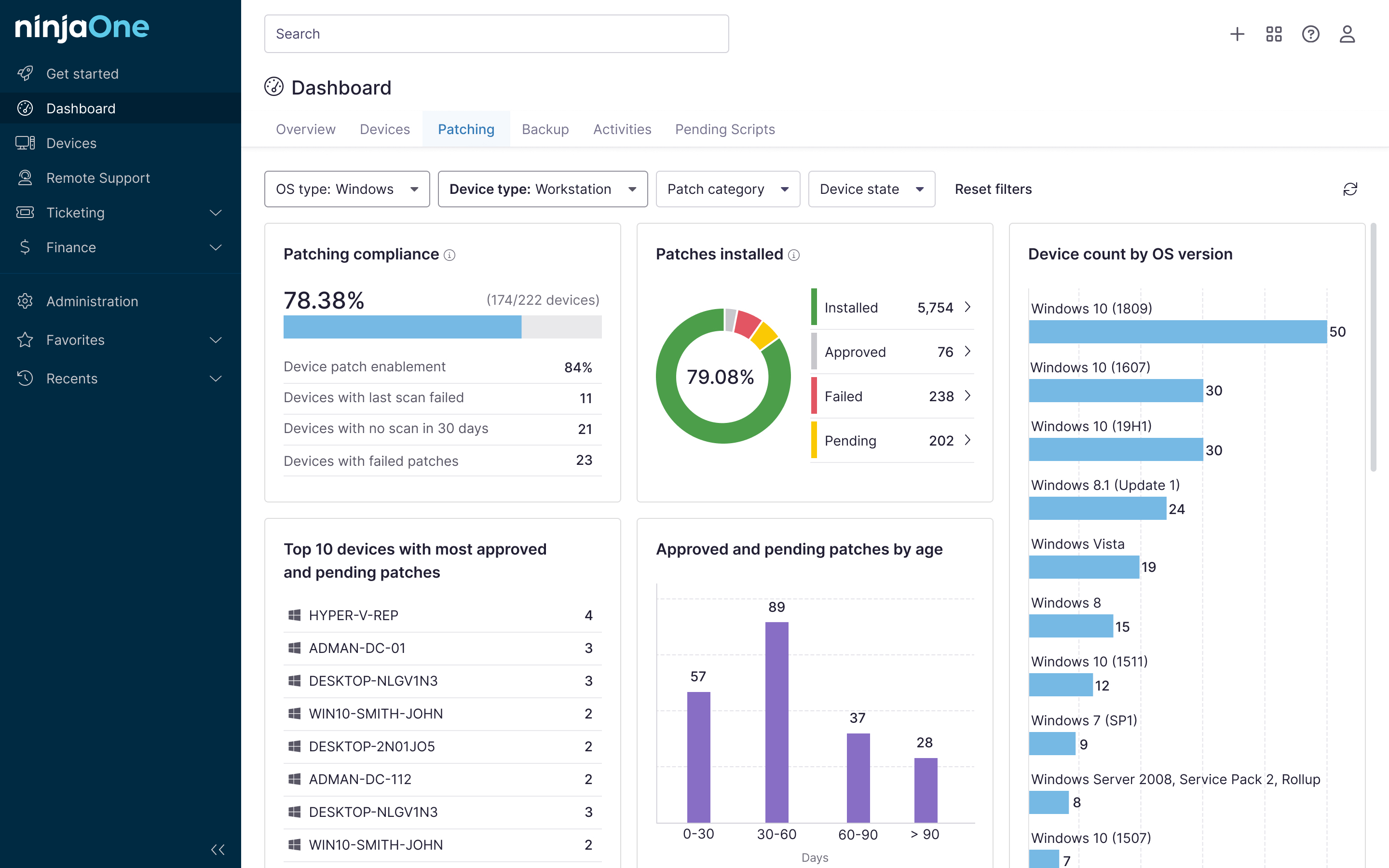
- Unified Endpoint Visibility: NinjaOne offers a single pane of glass for managing all endpoints, allowing IT teams to monitor device health, configurations, and account activity. This helps detect anomalies that may indicate compromised accounts, even if the device itself is untouched.
- Account Activity Monitoring: While NinjaOne doesn’t monitor telecom processes, it can detect unusual account behavior on managed devices—such as unexpected logins, configuration changes, or access to sensitive data—that might result from a SIM port attack.
- Policy Enforcement and Compliance: NinjaOne enables organizations to enforce strong authentication policies, such as requiring hardware-based MFA (e.g., YubiKey) or app-based authenticators instead of SMS-based MFA for critical systems. This reduces reliance on vulnerable SMS-based authentication.
- Incident Response Support: If a user reports a SIM port attack (e.g., sudden loss of mobile service), NinjaOne’s remote access and monitoring capabilities allow IT teams to quickly investigate and respond, such as resetting passwords, revoking compromised credentials, or isolating affected devices.
- Education and Awareness: NinjaOne’s resource library and blog provide guidance on SIM port hacks, helping organizations educate employees about risks and best practices for securing phone numbers and authentication methods.
SIM port attacks succeed where endpoint tools have no visibility.
Creating robust defensive strategies for complete endpoint protection
A SIM port hack reveals a critical gap between endpoint security and identity protection. Organizations that rely heavily on SMS-based authentication must recognize that phone numbers are not devices and cannot be secured the same way.
As such, while protecting endpoints is necessary, it is not sufficient. Reducing SIM port risk requires awareness of telecom-based identity attacks, stronger authentication methods, and governance processes that assume identity compromise is possible even when devices remain secure.
Related topics: