Key points
- Combining UEM and XDR unifies device context with cross-layer threat detection, turning isolated alerts into actionable insights across your endpoint fleet.
- Integrated workflows allow XDR detection to trigger automated UEM responses to shorten the procedure from alerting to issue resolution.
- Deploying unified endpoint security requires balancing telemetry depth with performance and privacy, plus choosing between an integrated platform or a best-of-breed architecture based on scalability and API needs.
- A phased rollout starting with high-risk devices helps validate data flows, refine alert thresholds, and test automated actions before scaling across the environment.
- Success depends on cross-team alignment between IT, SOC, and support, backed by shared playbooks, role-based training, and governance metrics like MTTD and MTTR.
Enterprise security depends on how well you can see, understand, and act across every endpoint in your environment. Laptops, servers, mobile devices, and remote systems all generate signals that shape your security posture.
You already rely on unified endpoint management (UEM) to configure and maintain those devices. You also use extended detection and response (XDR) to analyze behavior and surface threats. When these capabilities connect, you can move from managing devices and monitoring threats separately to operating a coordinated security model.
That’s what UEM and XDR integration delivers. You combine device context with behavioral analytics, making detection more accurate and responses faster and more consistent.
What is UEM in cybersecurity?
Unified endpoint management gives you centralized control over your entire device fleet. You define configurations, enforce policies, and maintain compliance across desktops, mobile devices, and servers from a single platform.
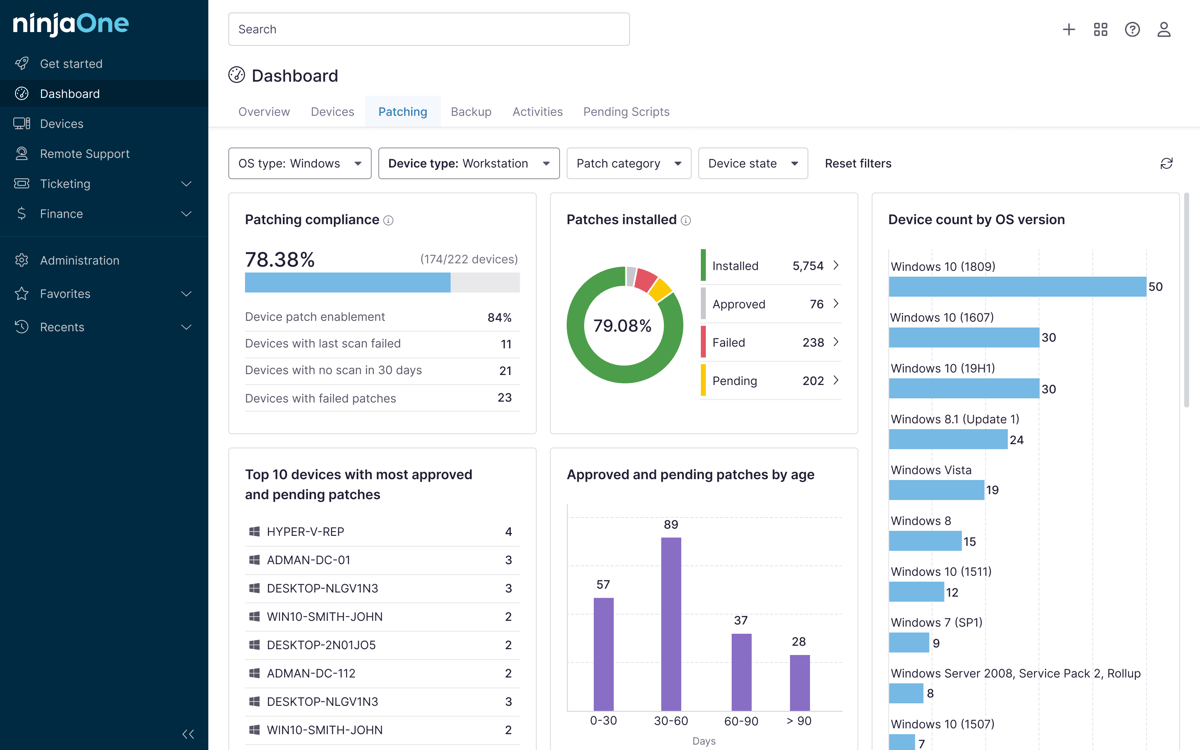
In practice, UEM provides a complete view of your environment. You can see operating systems, installed applications, patch levels, and configuration states across every endpoint.
This visibility helps you:
- Identify outdated software and apply updates quickly
- Enforce security baselines across device groups
- Maintain compliance with internal and external standards
For example, when a new device connects to your network, UEM can automatically apply encryption policies, install required software, and align it with your security baseline.
Key benefits of UEM and XDR integration
When you combine UEM with XDR, device data becomes part of your detection and response strategy. Instead of analyzing threats in isolation, you can evaluate them in the context of device posture, configuration, and usage.
Improved threat detection with unified endpoint security
Once you bring UEM and XDR together, device data becomes a more significant factor in threat detection and understanding. UEM provides detailed context for each endpoint: its configuration, software state, and compliance posture. XDR builds on that by analyzing behavior across endpoints, identities, and networks, adding another layer of insight.
This combination helps you move from isolated alerts to a more complete understanding of what’s happening across your environment. For instance, when XDR flags unusual activity on a workstation, you can immediately see whether that device is missing patches, running unauthorized software, or drifting from your baseline configuration. That context can help validate alerts and focus on the ones that matter most.
You also maintain visibility across your entire fleet, including devices that operate remotely or move between networks.
Streamlined incident response with automated workflows
Detection is only part of the equation. The next step is acting on that information quickly and consistently. With integrated workflows, XDR insights can automatically trigger actions in your UEM platform. For example, when a high-confidence alert is triggered, you can:
- Isolate the affected device from the network
- Revoke access or reset credentials
- Push a security patch or configuration update
These actions follow predefined rules, so every response aligns with your security policies. This coordination helps you move from alert to resolution with fewer steps, keeping your response consistent across environments.
UEM vs. XDR enterprise security trade-offs
Bringing UEM and XDR together introduces design decisions around data collection, performance, and architecture. The goal is to build a model that delivers visibility and control while supporting your operational needs.
Telemetry, performance, and privacy considerations
Endpoint telemetry drives detection accuracy, so it’s important to define what data you collect and how you use it.
You can tailor telemetry based on device type and risk profile. High-risk systems may require deeper visibility, while standard endpoints can operate with optimized data collection.
Key areas to consider include:
- Selecting the right level of process and system data for analysis
- Testing agent performance to maintain a smooth user experience
- Aligning data collection with privacy and regulatory requirements
This approach keeps your environment responsive while maintaining strong security visibility.
Vendor integration versus best-of-breed architectures
Your architecture shapes how UEM and XDR work together. An integrated platform offers a unified data model and faster deployment, while a best-of-breed approach allows you to combine specialized tools with deeper customization.
You can evaluate options based on:
- API depth and data integration capabilities
- Scalability across your environment
- Alignment with your long-term security strategy
The key is selecting a model that supports both current requirements and future growth.
Best practices for unified endpoint security and XDR deployment
A successful UEM and XDR integration depends on phased rollout, operational alignment, and strong governance. If done well, it allows you to build a resilient, scalable enterprise security foundation that drives performance without disrupting users.
Phased implementation for UEM and XDR integration
You can start by introducing UEM and XDR integration in a controlled environment, focusing on a high-risk device group or a critical business unit. This gives you a clear way to align data models, validate telemetry flows, and test automated actions such as device isolation or credential resets.
As you expand, each stage should build on what you’ve already validated. You can confirm that data moves consistently across systems, refine alert thresholds to match your environment, and adjust workflows based on how teams interact with the tools. Creating feedback loops between IT, SOC, and support teams will help you fine-tune policies before rolling them out more broadly, ensuring the model scales with clarity and control.
Cross-team operational alignment
As UEM and XDR come together, they naturally bring endpoint management, security operations, and incident response into closer coordination. Defining clear ownership across these teams helps ensure every alert follows a consistent path from detection to resolution.
You can establish shared playbooks that outline how incidents are triaged, escalated, and resolved, covering each phase from containment to recovery. Dedicated collaboration channels or structured ticketing workflows can help teams stay aligned during active incidents, while regular tabletop exercises will give you a practical way to refine responsibilities and improve coordination.
Training and governance for security operations
To support this model, teams can benefit from training that reflects how UEM and XDR workflows operate together in real scenarios. Role-based sessions for administrators, analysts, and support staff can help each group understand how their responsibilities connect within the broader process.
Ongoing governance keeps the system aligned as your environment evolves. You can review telemetry configurations, access controls, and automation policies regularly while tracking metrics such as mean time to detect, mean time to respond, and overall compliance posture.
Enterprise security strategies for integrated endpoint protection
As endpoint environments become more distributed, security models are shifting toward systems that connect visibility, context, and response in real time. UEM and XDR integration plays a central role in that shift.
To support that evolution, focus on a few strategic moves. Prioritize unified telemetry so endpoint data feeds directly into detection workflows. Align endpoint management with SOC operations so response actions follow a consistent, automated path. Finally, build around device posture as a live signal, not a static state, so access and remediation adapt in real time.
Looking ahead, tighter integration between endpoint, identity, and analytics layers will define how effectively you operate. UEM and XDR together form the foundation for a model that scales with your environment while keeping control centralized and actionable.
Quick-Start Guide
NinjaOne does provide comprehensive UEM functionality, including:
– Mobile Device Management (MDM) — Android and iOS device management with policies, compliance controls, and remote management
– Endpoint Management — Windows, macOS, and Linux device management with centralized control
– Software Management — Deployment, patching, and inventory across all endpoints
– Policy-Based Automation — Conditional monitoring and automated remediation
– Remote Access — NinjaOne Remote for technician and end-user access
– Compliance & Monitoring — Device health tracking, conditions, and alerting
XDR (Extended Detection & Response) Capabilities
NinjaOne’s documentation does not explicitly mention XDR as a native feature. However, NinjaOne does provide security-adjacent capabilities:
– Vulnerability Management — Integration with vulnerability scanners (Tenable, Rapid7, CrowdStrike, Qualys)
– Threat Detection — Antivirus integration (Webroot, Bitdefender, Malwarebytes)
– SIEM Integration — Webhook support to send NinjaOne events to SIEM solutions like Splunk
– Security Monitoring — Conditions for detecting security issues and triggering automations
How They Work Together in NinjaOne
NinjaOne integrates UEM and security monitoring through:
1. Centralized Device Management — Manage all endpoints from one platform
2. Policy-Driven Security — Apply security policies across managed devices
3. Vulnerability Tracking — Identify and remediate vulnerabilities on managed endpoints
4. SIEM Integration — Stream security events to external XDR/SIEM platforms for advanced threat detection
5. Automated Response — Trigger scripts and automations when security conditions are detected
Bottom Line
NinjaOne excels as a UEM platform but functions more as a security data source for XDR rather than a full XDR solution. For true XDR capabilities, you’d integrate NinjaOne with dedicated XDR platforms via webhooks and APIs.