Key Points
- Mac administration breaks at scale without structured automation embedded in governance workflows.
- As device counts grow, manual workflows lead to configuration drift, inconsistent onboarding, delayed security updates, and increased helpdesk volume.
- Apple ecosystems rely on structured automation through Mobile Device Management (MDM), configuration profiles, and Apple Business (formerly Apple Business Manager) to prevent security fragmentation.
- Mature macOS device management includes automated patch orchestration, software deployment, privilege management, compliance enforcement, and structured decommissioning workflows.
- Automated enforcement of encryption, patch compliance, role-based access control, and device posture monitoring provides consistent, documented evidence for regulatory requirements.
- Enterprise-grade Mac administration combines automation tools, policy frameworks, monitoring, and lifecycle governance to ensure security, consistency, and operational resilience.
IT teams need structured Mac administration automation because manual workflows stop scaling as device counts grow. Automating individual tasks such as user provisioning, patching, software deployment, and policy enforcement helps, but such automation only holds up when tied to governance and lifecycle processes.
However, this may be an incomplete analysis. In many situations, Mac environments fail at scale, not because teams lack scripts. Instead, they fail because automation is not embedded into governance and lifecycle processes. To fully take advantage of the tools at your disposal, you need to reframe Mac automation as an operational maturity model rather than a checklist. This post shows how to treat Mac automation as an operational maturity model, from enrollment through retirement, and what each stage should produce.
Automation as a scale requirement, not a convenience
Automation is one of the most important tools you’re going to need for your organization, even in small environments. Your manual workflows may appear manageable at first, but as your business scales and device counts increase, manually managing your Mac devices may lead to:
- Inconsistent onboarding experiences
- Configuration drift
- Delayed security updates
- Increased helpdesk volume
From this angle, automation isn’t just a time-saving mechanism and instead becomes a scalability control. As your organization grows, automations become a necessity for consistently managing all your Mac devices.
Configuration consistency and policy drift when figuring out an IT management automation workflow
When you’re working with Mac devices, your users will often include:
- Remote workers
- BYOD devices
- A mix of Apple silicon and Intel-based Macs
- Varying OS versions
If you don’t implement automated configuration enforcement, you can run into several possible issues. Your device security may become fragmented and inconsistent if these configurations are applied manually. Ultimately, this will lead to unreliable patch compliance and security vulnerabilities. You may also have trouble keeping track of the changes you make and staying on top of compliance documentation.
Taking advantage of automation tools for your Mac device management will help solve these inconsistencies. It will also ensure that the intent of your policy will translate into practical reality.
Lifecycle automation beyond enrollment for macOS device management
Of course, automations are not a one-size-fits-all solution. They need to be tailored to your organization’s specific needs and requirements. For example, Mac device enrollment is best done using automations, and so are the lifecycle stages that follow, such as patching, privilege management, and decommissioning can be automated too.
To ensure your Mac device automation remains effective, you should have:
- Patch orchestration
- App deployment updates
- Privilege management
- Device decommissioning workflows
Enrollment is just the beginning of device management, but there are still a lot of other things you have to do. It’s critical to use all the tools, both automated and manual, at your disposal.
Risk visibility and compliance alignment when using a Mac automation tool
Security compliance is a big part of every organization, especially if you’re working in a regulated industry. If you do, you will need evidence of:
- Timely patching
- Enforced encryption
- Role-based access control
- Device posture monitoring
Automations make audits a lot easier and more streamlined. They ensure that the actions your organizations take are:
- Consistent
- Repeated
- Documented
Manual device management can make this more difficult. You may have trouble supporting security compliance without automations as your business grows and scales.
Common misconceptions with macOS device management
| Misconception | Reality |
| Automation will replace your administrators. | Automations augment and support administrators, and they will help these people shift their energies into more important tasks. |
| Mac devices can manage themselves. | Mac devices cannot manage themselves. Default configurations aren’t the same as government compliance. |
| Enrolling your device in a management tool is the same as device management. | True device management requires continuous policy enforcement. You should have all tools, both manual and automated, at your disposal for this. |
How NinjaOne can help you with Mac device management
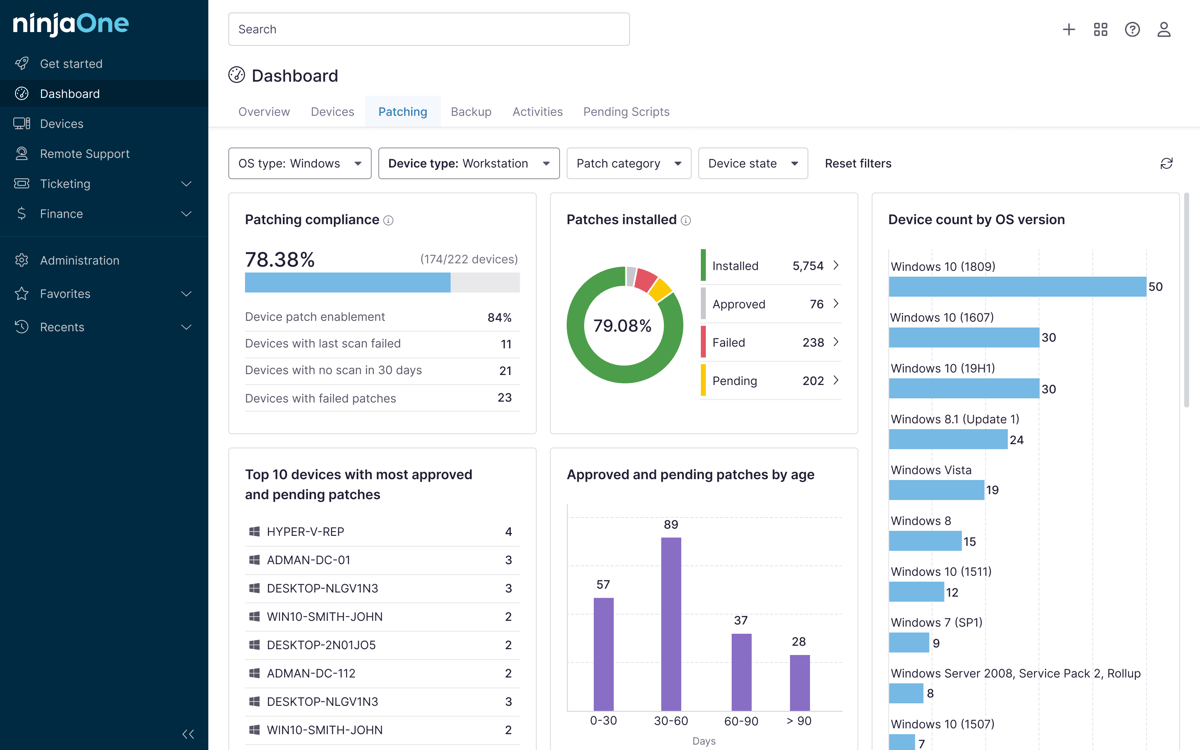
NinjaOne manages Macs alongside Windows and Linux devices from one console. NinjaOne MDM applies policy-based configuration to enrolled Macs, including FileVault encryption settings. NinjaOne Patch Management applies macOS and third-party application updates by policy, and NinjaOne Remote connects technicians to Mac endpoints for troubleshooting. Together, these capabilities help IT teams align Mac administration with governance requirements.
Optimize your workflows with comprehensive and structured Mac device administration automations
Mac administration can’t scale through isolated scripting or manual oversight alone. As your organization grows, your device management plan should too. You need to have structured automation embedded in your device lifecycle processes. This will reduce configuration drift, strengthen compliance posture, and improve operational resilience. The difference between reactive support and mature Mac management lies in governance-aligned automation.
Related topics: