Key Points
- Managed mobility services (MMS) outsource the full mobile device lifecycle, including procurement, provisioning, MDM, security, support, and retirement, delivering a scalable and compliant alternative to standalone MDM.
- MMS combines MDM, EMM, RMM, app management, and carrier oversight into one managed service that improves security, compliance, cost control, and operational efficiency.
- Organizations and MSPs adopt MMS to reduce IT workload, centralize accountability, and manage smartphones, tablets, laptops, and mPOS devices at scale.
Managed mobility services (MMS) is the outsourcing of the full mobile device lifecycle, encompassing everything from procurement, maintenance, scaling, and retiring of devices, including tablets, phones, laptops, and mobile point-of-sales devices (mPOS). This gives businesses an entirely managed mobile fleet, ensuring the ongoing reliability, security, scalability, and cost-efficiency of the mobile infrastructure they rely on.
This guide explains what are managed mobility services and it goes beyond mobile device management (MDM), the core business benefits, and how MMS relates to managed service providers (MSPs).
What are managed mobility services (MMS)?
Managed mobility services outsource the entire mobile device lifecycle as a single product. It’s an end-to-end service that your business signs up for to receive fully configured devices out-of-the-box, with ongoing management and support, all the way to end-of-life deprovisioning. As these devices are managed by the third-party provider, at no stage of the device lifecycle does your business need to expend resources to ensure the continued reliability, support, or security of the device. Providers may only offer MMS, or it may be offered as part of a broader set of services from an MSP. Internal IT departments can also provide a similar experience for users using the same tools and practices.
MMS is not provided by a single software platform, but combines multiple tools and processes to provide mobile devices to your staff with minimal resources required to provision and support them. This includes:
- Device procurement and lifecycle planning: Selecting appropriate devices, cellular carriers, and other services for your use-case, and planning for integration, upgrade cycles, and continuity.
- Provisioning and enrollment: Ensuring new and replacement devices reach users fully configured (usually with zero-touch provisioning), so users just need to power them on and sign in.
- Security and compliance oversight: MMS providers should leverage their mobile device management and remote monitoring and management (RMM) tools to enforce security policies and keep devices patched and monitored for security threats, critical for organizations that must maintain compliance.
- App deployment and updates: Your users will receive new apps and updates automatically, so that they always have the tools they need ready to use, and are running the latest secure versions
- End user support and troubleshooting: MDM, RMM, and remote access tools, combined with helpdesk that can be reached through multiple channels, allow your MMS provider to assist users, wherever they are.
A unified, cost-optimized product is the end result of combining these services and the technologies that enable them. The deprovisioning of both users (for example, on leaving) or devices (on obsolescence, damage, loss, or theft) is also part of these managed services, tying up loose ends and ensuring control of devices does not leave your organization before they are securely wiped.
What is the difference between MMS and MDM?
Android and iOS MDM are a core component of MMS, providing the software platform that allows the managed mobility service provider to manage devices and apps, enforce policies, and assist users.
Enterprise mobility management (EMM) is an additional concept that focuses on meeting evolving enterprise technical requirements, such as monitoring and security. The technologies provided by EMM are often used to provide managed mobility services.
Mobile application management (MAM) is also typically included in MMS, but on its own is limited to app-level control that is better suited to bring your own device (BYOD) scenarios.
Why organizations adopt MMS
Managed mobility can benefit organizations of any size, even single-person businesses. In addition to reducing the operational burden of sourcing and deploying devices and software, outsourcing ownership of the full lifecycle helps ensure that mission-critical tasks like updates and security are not overlooked. Even large organizations with their own internal IT teams turn to managed mobility providers to reduce their workloads so that they can focus on their core infrastructure and high-value initiatives without the risk of mobile device support overwhelming their capacity.
With MMS, accountability is centralized along with costs. Mobile devices, cellular carriers, and the separate apps and services that make them useful for your business are fragmented in nature. This can hide costs when manually managed, whereas MMS brings all of these bills under one umbrella with increased cost predictability.
Operational and business benefits of managed mobility services
The benefits of MMS directly address many compliance concerns. Under privacy laws such as GDPR and CCPA, it is your responsibility to take all available measures to protect sensitive data. Outsourcing mobile services to a single, compliant provider makes this straightforward rather than trying to address every privacy requirement from potentially multiple jurisdictions yourself.
Many managed service providers offer MMS tailored to specific industries, offering certified services that comply with both regional laws and industry specifications like FINRA. For stakeholders and users, MMS improves the reliability of mobile infrastructure, helping key staff stay connected when it matters. For tech teams, offloading the support of mobile devices ensures users have a consistent experience.
Mobile devices are often overlooked in backup strategies, but they often contain valuable data. MMS, combined with an MDM platform with backup support, gives increased backup coverage.
When MMS may not be appropriate for your business
While even small teams may choose to use a managed mobility service provider for a handful of devices for the security and compliance benefits and to abstract away additional maintenance work, it may not be cost-effective at this scale (though some consider the extra convenience worth the price).
IT teams in larger organizations may prefer to keep everything in-house if they have the resources to do so. This is generally because they already have the infrastructure to manage the full mobile device lifecycle and internal capacity to handle the increased support overheads.
In these cases, and for organizations that rely on BYOD, MDM, or MAM may also be sufficient for their purposes.
Common misconceptions about managed mobility services
MMS does not replace your MDM tools – an external party will use MDM to provide their managed service and replace your need for your own MDM platform. MMS is the holistic service provided, not the technologies that enable it.
Managed mobility is not only for large enterprises, and benefits small-to-medium businesses who often lack the resources for effective IT management and support, and risk creating security vulnerabilities or compliance violations through inattentiveness.
Finding an MSP that offers MMS
Managed mobility services is not a single platform, but a service MSPs can offer alongside other IT infrastructure, management, and support services. When choosing an MSP, look for the individual services that make up MMS as part of your MSP’s plans, or enquire whether their services meet the MMS definition – often, MMS services that are provided as part of a broader suite of IT service management (ITSM) may not be specifically advertised as such.
You should select an MSP that meets your region and industry data protection requirements, including security monitoring and backups. You should also look for MSPs that are available when you need them, offering help desk and self-service documentation to reduce the time it takes for issues to be resolved. Transparency and governance are also key requirements, as you will place a great deal of trust in your MSP to protect your infrastructure, data, and business. Outsourcing compliance for your mobile fleet does not absolve you of responsibility for it.
Offering managed mobility as an MSP
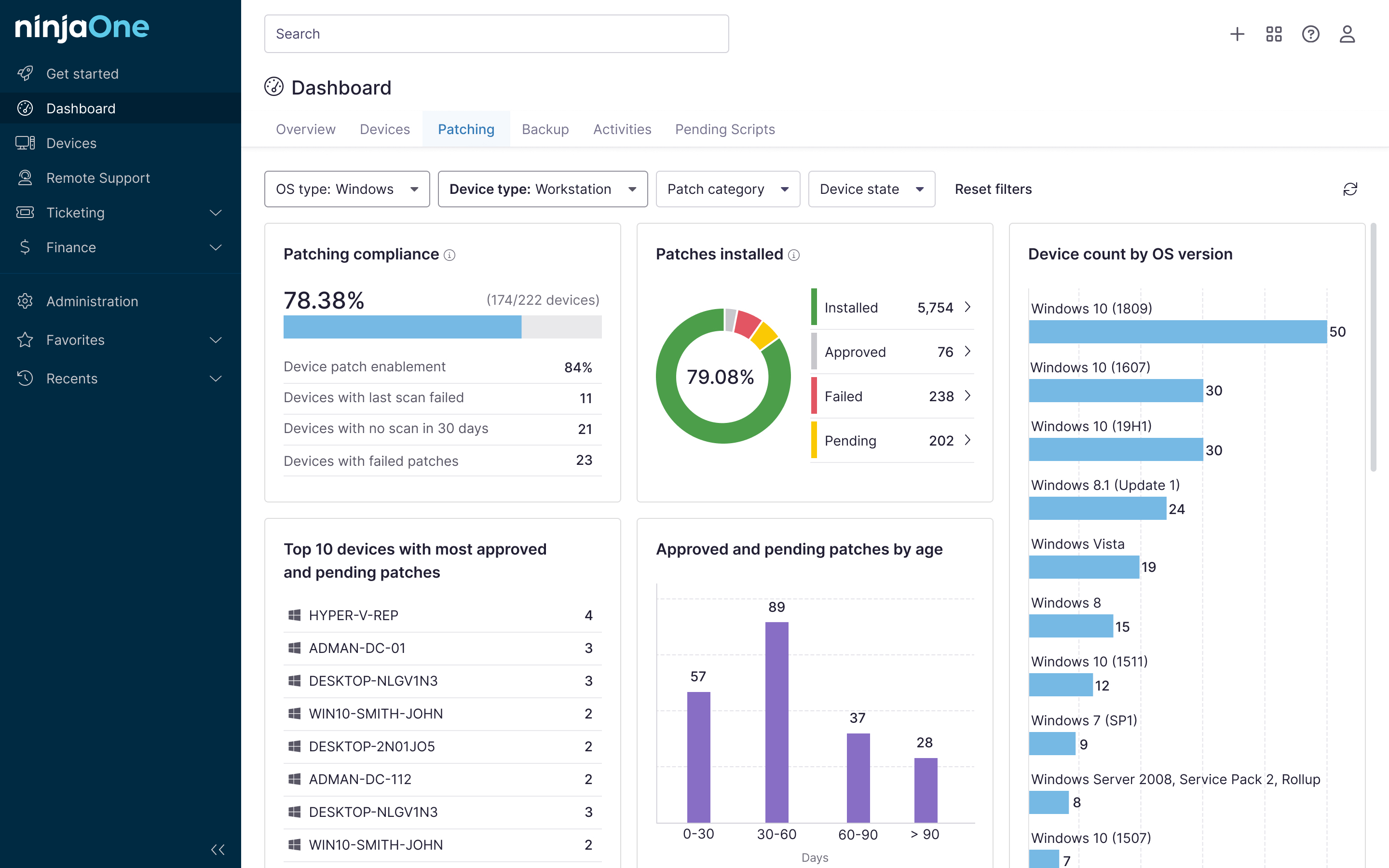
Your MSP can build the foundation for its own high-value managed mobility services on feature-complete MDM and RMM solutions from NinjaOne. You can then create comprehensive business MMS packages by completing the mobile device lifecycle with procurement, management, security, and retirement procedures, and adding your own added value that targets your clients’ industries and use-cases.
Supplying MMS also increases patronage of your other IT services. Unify user accounts, permissions, software stacks, configurations, and security policies across mobile and desktop devices, as well as cloud services, and offer your customers service excellence across every digital touchpoint.