
Key Points
- A unified strategy in securing critical data helps prevent data exposure to vulnerabilities, especially during cross-environment data movement in hybrid architectures..
- Environment-specific security can complement unified data security practices when both strategies are implemented properly.
- In cloud and SaaS environments, data ownership remains with the organization, requiring it to manage data protection and recovery.
- Critical data is vulnerable when it moves across systems without unified monitoring, clear recovery planning, and proper visibility.
An organization may have its critical data scattered all over on-premises servers, cloud platforms, SaaS applications, and user endpoints. Since most of this data is important information that is distributed across multiple environments, a unified data security strategy must be put in place. In this blog, we will highlight the significance of adopting a unified strategy when protecting critical data across all environments.
Why environment-specific security thinking fails
Deploying unique security strategies per environment was historically a common approach. But this may not work anymore in today’s hybrid IT landscape. Many traditional security strategies treat environments in isolation, each with its own protective mechanisms:
- Perimeter defenses for on-premise systems
- Access controls as part of cloud platforms’ security configurations to manage user identity and access
- Endpoint protection solutions that are mainly used for remote devices’ malware protection and device integrity maintenance
- Native SaaS controls to secure application access, but not always the data itself
In most modern IT infrastructures, data moves and synchronizes between these environments. Relying on environment-specific strategies may not be effective anymore since it obstructs “full-coverage” visibility and control, exposing data to vulnerabilities.
However, while a unified strategy is appropriate in today’s hybrid-centric IT infrastructure era, it does not replace environment-specific controls. Each environment still requires specialized protections suited to its technology stack. Unified security depends on:
- Coordination across teams (security, IT operations, compliance)
- Adaptive governance that evolves with new platforms and threats
- Not relying on tooling alone without policies and accountability
With proper implementation, both a unified mindset and environment-specific security mechanisms can complement each other, bringing a reliable and resilient data protection framework for organizations.
The data ownership problem
Data ownership remains constant regardless of the location it resides. This means that:
- The organization owns the data.
- The organization is accountable for loss or exposure.
- Recovery expectations do not change.
A good demonstration of the data ownership conflict is with cloud and SaaS platforms, which focus on protecting their infrastructure rather than your entire data. That’s why most cloud providers (and SaaS solutions) enforce a standard framework called the shared responsibility model, where the provider secures the infrastructure, but the organization is responsible for protecting its data and identities within that environment.
Since organizations are expected to define and operationalize their own data protection and recovery responsibilities, full security of an organization’s critical data is not guaranteed. This exposes it to risks such as accidental deletion, malicious insider activity, or data corruption.
Where data risk accumulates
Critical data becomes vulnerable to risks at the boundaries between environments where it moves across. That happens when:
- Data moves between on-prem and cloud without unified monitoring.
- Endpoints cache or sync cloud and SaaS data.
- Teams assume platforms automatically protect against data loss.
- Recovery planning is treated separately from security.
- Factors that can be overlooked, such as misconfigurations, inadequate visibility, and sync pathways, exist.
Security versus data protection
In general vocabulary, security and protection may be synonymous. But in cybersecurity terms, it’s important to distinguish the two from one another:
- Security controls: These are mechanisms that help prevent unauthorized access, detect threats, and enforce policies.
- Data protection: This is a collective strategy that ensures against permanent data loss, enables recovery, and preserves business continuity.
Security and protection are both necessary, but they are not interchangeable.
Why endpoints amplify cross-environment risk
Endpoints are more than just devices; they are connective tissue between environments:
- They bridge users into cloud and SaaS environments.
- They often cache or sync sensitive data for offline use.
- They are prime targets for ransomware, credential theft, and malware.
Once compromised, endpoints can circumvent cloud or SaaS access controls and expose data across environments.
Building a unified data security mindset
To establish a robust unified data security strategy, the following must be present and consistent:
- Data ownership: A clear data ownership is a must-have across on-prem, cloud, SaaS, and endpoints, so accountability is defined across environments.
- Well-defined recovery expectations: Consistent recovery expectations, regardless of the environment, enable predictable incident response, faster data restoration, and reduced downtime.
- Broad coverage: Comprehensive visibility gives extensive insights into where data is created, stored, and accessed.
- Team calibration: Alignment between security, backup, and operations teams allows for breaking down silos.
This unified mindset reduces assumptions and blind spots, enabling faster incident response and minimizing the risk of data loss.
Common misconceptions
Several common false assumptions can weaken your data protection strategy:
SaaS platforms fully secure customer data
As highlighted, SaaS platforms secure their infrastructure rather than your full data lifecycle. Technically, it might encompass some sense of security for your data. Still, it doesn’t mean that the provider is accountable for how your organization manages, retains, backs up, or recovers its data.
Cloud security eliminates the need for backups
As far as security is concerned, cloud platforms only prevent unauthorized access, detect threats, and enforce policies on their infrastructure. It doesn’t prevent events such as data deletion or corruption.
Endpoint protection is enough on its own
It is not advisable to fully depend on endpoint protection. Endpoints expose pathways into multiple environments, increasing the risk of vulnerabilities that can later be exploited by cyber criminals or data thieves.
NinjaOne integration
Modern IT platforms such as NinjaOne can help support a unified approach by providing:
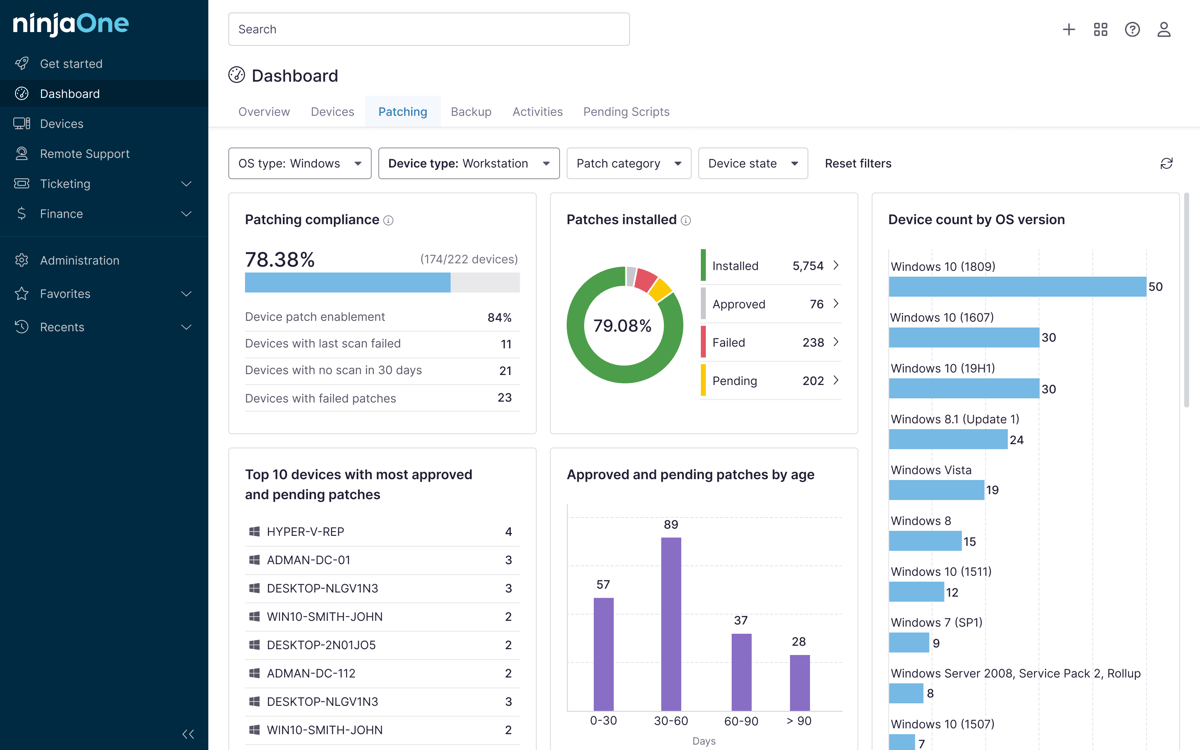
- Visibility into data location, access patterns, and usage across environments.
- Operational workflows aligning data security with recovery processes.
- Tools that simplify management across endpoints, cloud services, and SaaS applications.
- Integrated backup and recovery tools for faster response in case of data compromise.
Deploying a unified strategy for securing data
Modern data security can no longer be siloed by environment. Most organizations have fully adopted hybrid IT environments where their data movements across on-prem, cloud, SaaS, and endpoints exist. Since data risk spans all of them, it’s strictly a must for organizations to enforce a unified strategy.
Key takeaways:
- Data ownership does not transfer to platforms.
- Security controls alone do not prevent data loss.
- Endpoints are the connective tissue of hybrid risk.
- Recovery planning must be part of the security strategy.
A unified strategy aligns ownership, visibility, policy enforcement, and recovery expectations across environments. This mechanism helps reduce vulnerability exposure, improve resilience, and avoid costly false assumptions about who protects their data.
Related topics: