Key points
- System vulnerability scanning strengthens patch governance by continuously finding vulnerabilities, prioritizing remediation based on risk, and feeding them directly into your patch management workflow.
- Vulnerability management and patch management serve different purposes: vulnerability management identifies, assesses, prioritizes, and validates security risks, while patch management deploys and tracks software updates.
- Risk-based prioritization helps you patch the vulnerabilities that pose the biggest threat by factoring in exploit activity, threat intelligence, asset criticality, and business impact.
- Integrating continuous vulnerability scanning with automated ticketing and patch deployment reduces manual work, shortens mean time to remediate (MTTR), and improves patch compliance and operational efficiency.
- Strong patch governance focuses on reducing real-world risk, while making it easier to meet compliance and audit requirements.
The window between vulnerability disclosure and active exploitation continues to shrink. About one-third (28.3%) of exploited vulnerabilities are weaponized within 24 hours of disclosure, before most security teams have finished assessing the risk.
Attackers are also exploiting more vulnerabilities. Exploited high and critical vulnerabilities rose 105% between 2024 and 2025, from 71 to 146. Meanwhile, organizations are failing to adjust. Over the same period, mean time-to-patch climbed from 32 to 43 days, widening the gap between attack speed and defensive response.
This means that attackers can weaponize vulnerabilities faster than most patch cycles can close them. Your patch management process can’t operate on 30-day cycles when attackers move this quickly. Instead, organizations need system vulnerability scanning that connects directly to patch workflows and applies threat intelligence to prioritization decisions.
Is vulnerability management the same as patch management?
No. Vulnerability management and patch management address different parts of your security lifecycle, though organizations often conflate them.
Patch management focuses on deploying software updates. Your team tests vendor releases, schedules maintenance windows, tracks patch compliance, and manages rollback procedures. These activities assume someone has already determined which updates matter most.
Vulnerability management encompasses that prioritization decision along with identifying, evaluating, remediating, and validating security weaknesses. It includes:
- System vulnerability scanning
- Risk assessment based on asset criticality and threat intelligence
- Continuous monitoring.
Patching is one remediation method within this framework, but not every vulnerability has a patch available.
How does vulnerability scanning help patch management?
System vulnerability scanning changes patching from a simple compliance checkbox exercise into a risk-driven process that allocates resources based on actual exposure.
Connect system vulnerability scanning to patch workflows
Most organizations operate with manual handoffs between security and IT operations. A security analyst runs a scan, exports findings to a spreadsheet, and submits tickets through a separate system. Each handoff adds delay and strips away context.
Automated vulnerability management eliminates these handoffs:
- Continuous scanning identifies new vulnerabilities and correlates them against your current asset inventory
- Risk-based prioritization automatically ranks findings based on exploitability, asset exposure, and business impact
- Integrated ticketing generates remediation tasks with full context without manual intervention
- Real-time tracking maintains visibility from discovery through validation
This scan‑to‑ticket motion shrinks time to remediation, eliminates swivel‑chair work, and keeps everyone aligned on what gets fixed, when, and why.
Use threat intelligence to prioritize patching efforts
CVSS scores provide a starting point, but they don’t tell you which weaknesses attackers actively exploit. A vulnerability rated critical may pose minimal risk if the affected system sits on an isolated network, while a moderate-severity CVE on an internet-facing authentication server could represent your highest priority.
Vulnerability prioritization that integrates threat intelligence focuses your patch management process on the intersection of exploitability and exposure. When CISA adds a CVE to the Known Exploited Vulnerabilities catalog, your scanning platform flags affected systems and automatically adjusts patch priorities.
What’s the difference between vulnerability scanning and patch management?
While system vulnerability scanning and patch management work together, they serve fundamentally different functions within the remediation lifecycle.
Vulnerability assessment vs. patch management
Vulnerability assessment answers the question: what security gaps exist, and which ones create meaningful business risk? Your assessment process discovers missing patches, misconfigurations, weak authentication controls, and outdated software. The output provides a comprehensive view of your risk landscape.
Patch management lifecycle answers a different question: how do we safely deploy available vendor updates? It handles testing patches, scheduling maintenance windows, managing exceptions when updates conflict with critical applications, and maintaining compliance documentation.
Organizations that align both processes create a feedback loop. Scanning identifies which systems need patches and why, while patch management validates that remediation closed the gaps.
Discovery vs. remediation
Modern vulnerability scanning tools maintain current inventories, correlate findings against updated threat databases, and identify which systems face the highest exposure. Autonomous patch management takes those prioritized findings and executes remediation: downloading patches, testing them in controlled environments, deploying updates during approved maintenance windows, and validating system stability.
Each function depends on the other. Discovery tells you what’s wrong and which problems matter most, while remediation fixes those problems while maintaining operational stability.
Risk analysis vs. corrective action
Vulnerability assessments provide the context that informs remediation decisions. They connect technical findings to business risk by identifying internet-facing assets, systems that support critical operations, and vulnerabilities that attackers actively target.
Patching implements the corrective changes that eliminate or reduce those identified risks. However, patching without risk context means treating every vulnerability equally regardless of business impact. When both processes share data and align workflows, organizations reduce the gap between discovery and resolution while ensuring effort focuses on meaningful risk reduction.
What separates mature patch governance from routine patching
Good patch governance helps teams focus on the risks that matter most, know who owns the next step, and demonstrate that exposure is actually decreasing.
Reduce operational noise through risk-based remediation
Security teams receive more findings than they can act on. Without systematic prioritization, teams either burn out or develop informal methods that may miss critical exposures.
Risk-based remediation focuses attention on vulnerabilities that create actual business exposure by considering:
- Whether exploit code exists in the wild or attackers actively target the vulnerability
- Which assets are affected, and whether those systems face the internet or support critical functions
- What compensating controls might reduce risk until patches can be deployed
This demands a fundamental shift: success is no longer about tracking completion rates, but reducing actual risk. Gartner validates this evolution, projecting that by 2028, over 80% of I&O leaders will measure patching success by risk reduction alone.
Build compliance and audit readiness into patch governance
IT compliance requirements from HIPAA, PCI DSS, and ISO 27001 mandate regular vulnerability assessments and timely patching. Mature governance makes compliance a byproduct of normal operations.
Your vulnerability remediation timelines connect directly to policy requirements. When auditors ask how you handle critical vulnerabilities, you can provide live reporting showing discovery dates, remediation actions, and validation results.
The hidden costs of treating scanning and patching as separate programs
Many organizations assign vulnerability scanning to security teams while patch management lives in IT operations. This can create coordination gaps that increase both your risk and operational overhead.
Visibility without action leaves risk unresolved
Organizations struggle to maintain visibility when responsibility is split across teams. A 2025 Optiv study found that 74% of respondents cited a lack of understanding of all potential sources of vulnerability as their biggest challenge. Security teams identify exposures but don’t control patch deployment schedules, while IT teams manage updates but lack threat intelligence.
This way, findings reside in spreadsheets without affecting risk reduction. Teams coordinate via email and ticketing systems, which add weeks to your remediation timelines.
Patching without context wastes resources
When IT teams lack direct access to vulnerability data and threat intelligence, they make patching decisions based on incomplete information. Vendor severity ratings become the primary input, creating several problems:
- Critical-rated updates for software your organization barely uses get the same priority as actively exploited vulnerabilities on customer-facing systems
- Patches addressing theoretical vulnerabilities consume the same resources as fixes for weaknesses under active attack
- Deployment schedules follow calendar-based maintenance windows rather than risk-driven timelines
Your team spends time testing and deploying patches that address minimal exposure while high-priority vulnerabilities wait for the next scheduled maintenance window.
Strengthen patch governance with NinjaOne
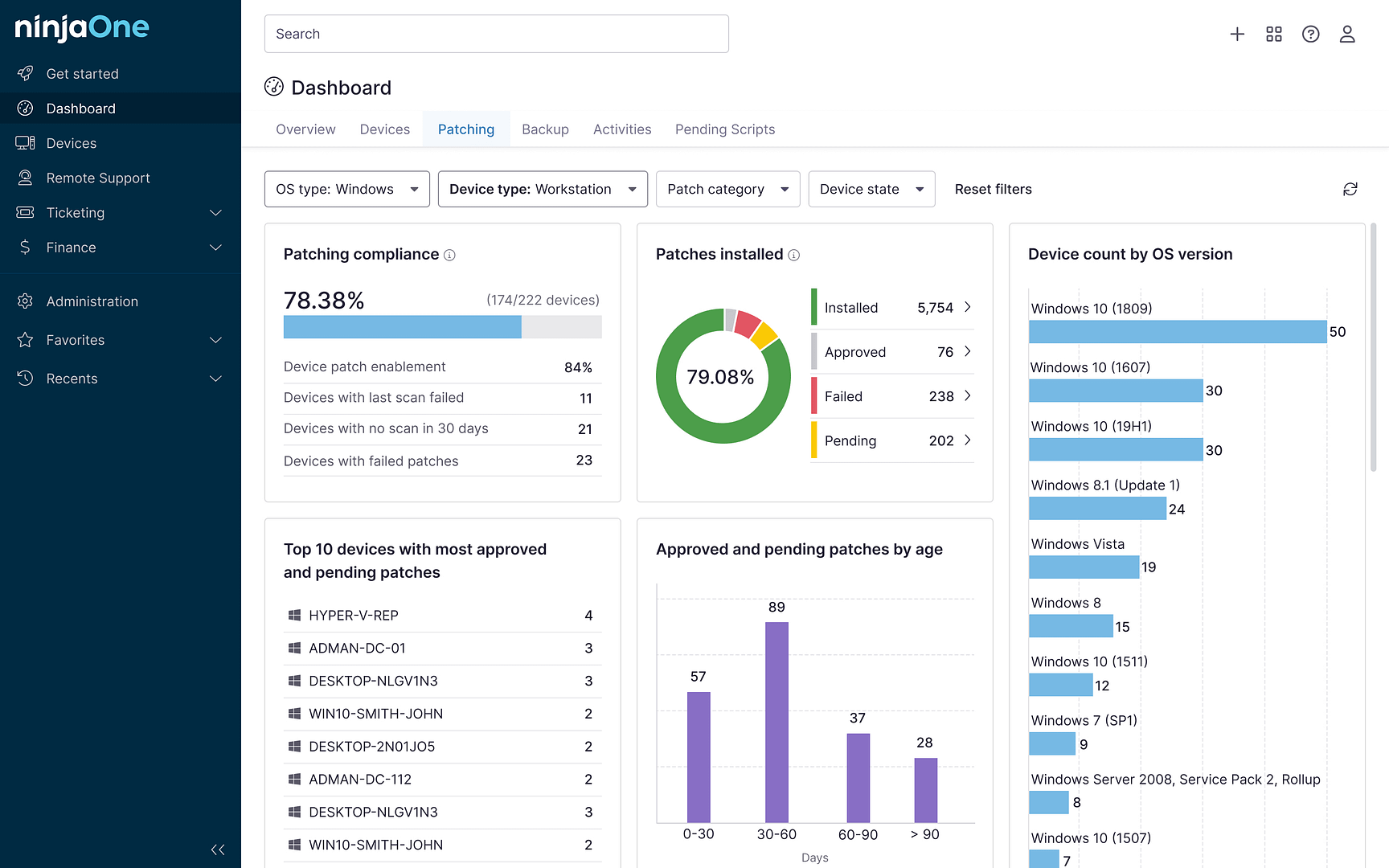
NinjaOne connects endpoint visibility with automated remediation workflows to close the gap between vulnerability discovery and patch deployment. Your team gets continuous asset monitoring, risk-based patch prioritization, and automated patch deployment at enterprise scale.
Try NinjaOne for free to see how integrated vulnerability management and patch governance reduce your exposure.