
Key Points
- Virtualization delivers flexibility, portability, and efficient resource use, enabling consolidation, simplified backups, and rapid deployment.
- It is not an ideal approach for unstable systems and workloads needing direct hardware access, ultra-low latency, and specialized peripherals.
- A hybrid approach, combining physical and virtual infrastructure, often provides the best balance of performance, cost, and flexibility.
Physical-to-Virtual (P2V) migration is often seen as a crucial step to modernization and cost-saving initiatives. However, organizations should never treat it as a one-size-fits-all solution. This guide looks at strategic considerations that help teams decide whether their IT environment is ready or in need of virtualization.
Key differences: Physical vs. virtual machines
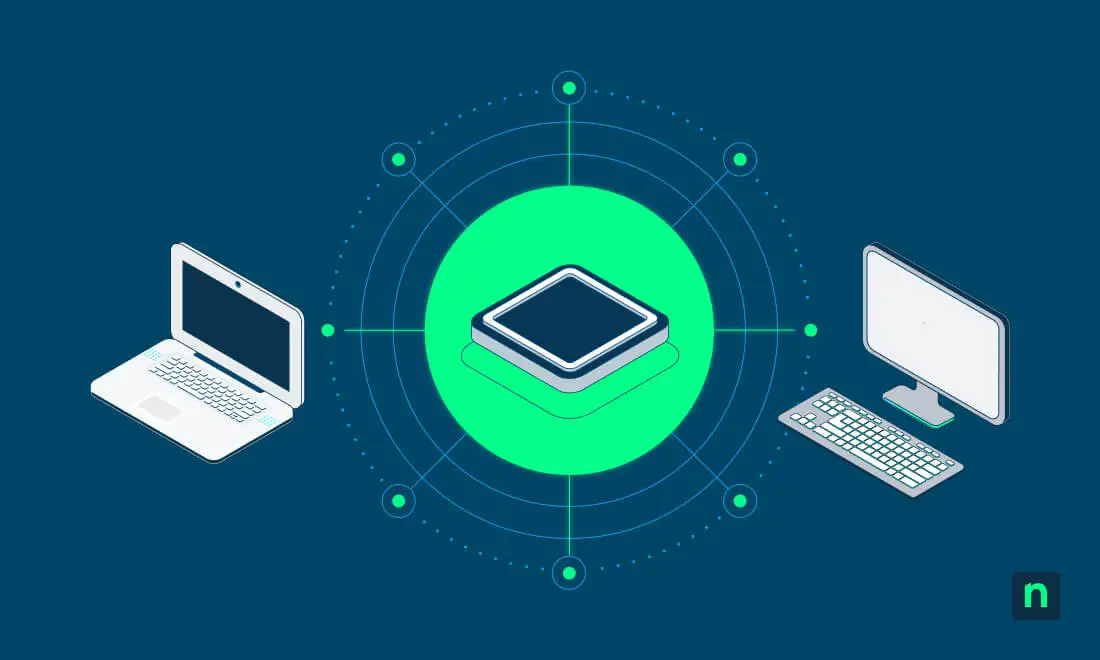
A physical machine is a tangible computer or server with dedicated hardware components, including CPU, RAM, storage, network interface card (NIC), and an operating system (OS). A virtual machine (for example, Hyper-V, VMware), meanwhile, is the software-based emulation of the former.
| Component | Physical Machine | Virtual Machine (VM) |
| CPU | Dedicated physical processor. | Virtual CPU (vCPU) is allocated from the host. |
| RAM | Dedicated physical memory. | Virtual RAM (vRAM) is allocated from the host. |
| Storage | Physical HDDs/SSDs. | Virtual disks (for example, VMDK, VHD files) |
| Networking | Physical NIC and switches. | Virtual NIC (vNIC) and virtual switches |
| OS | Installed directly on hardware. | The guest OS runs on the hypervisor. |
Physical machines are ideal for workloads that need direct hardware access, stable performance, or specialized peripherals. However, they can be costly to maintain, difficult to scale, and prone to underutilization.
On the other hand, VMs and containers offer flexibility, portability, and efficient resource utilization. Multiple VMs are typically run on a single physical host, enabling consolidation, easier backups, and rapid deployment.
When is virtualization a good fit?
While virtualization offers many advantages, it can’t be a strategy on its own. In fact, it’s most effective for extending the life of physical servers, consolidating hardware, improving backup and recovery options, and preparing for modernization.
1. Server consolidation
Virtualization is ideal for server consolidation, where multiple underutilized physical servers are combined into a single physical host running several VMs.
With this approach, organizations can simplify IT asset management (ITAM), improve efficiency, and free up data center space. It’s particularly beneficial for workloads that don’t require dedicated hardware, such as file servers, web servers, or internal applications.
2. Cloud migration preparation
For organizations planning a move to the cloud, virtualization is both a critical and an intermediate step during the transition.
By converting physical servers to VMs, IT teams can standardize workloads, test cloud compatibility, and streamline the migration process. Additionally, virtualized workloads are easier to migrate into cloud platforms like AWS, Microsoft Entra ID, or Google Cloud, reducing complexity and minimizing disruption during migration.
3. Testing and development
VMs are perfect for testing and development environments, where teams need isolated, reproducible setups. This flexibility reduces the risk of conflicts between different projects or configurations and eliminates the need for dedicated physical hardware for each use case.
4. Legacy system preservation
Instead of replacing or upgrading physical machines, legacy systems can be virtualized and run on modern infrastructure. This approach helps retain the critical functionality of legacy assets while reducing the risk of hardware failure.
There are many other instances where virtualization can be leveraged to improve IT efficiency. For example, it generally reduces cost since fewer physical servers mean lower hardware costs, reduced energy consumption, and less need for physical space. It also offers unmatched scalability and flexibility, allowing organizations to dynamically adjust resources (CPU, RAM, storage) based on demand.
When is virtualization not a good fit?
Virtualization offers limited benefits or is a mismatch itself in environments where workloads require direct hardware access, dedicated GPUs, or ultra-low latency, as hypervisor overhead or resource contention can present unnecessary challenges or cost.
Similarly, applications with specialized hardware dependencies, like proprietary PCIe cards, custom telecom equipment, or medical imaging devices, may face compatibility or instability issues when virtualized.
While others may choose between virtual or physical infrastructure, others may also benefit most from a hybrid infrastructure, which enables teams to match workloads and optimize IT performance consistently.
When to use physical, virtual, or both in your IT strategy
While virtualization typically offers clear advantages in resource efficiency, scalability, and cost savings, physical machines remain essential in IT environments where direct hardware control, real-time performance, or other specialized requirements are non-negotiable in some capacity.
On that note, a hybrid infrastructure can also prove to be the optimal approach. For instance, MSPs can offer more solutions with a mix of dedicated physical resources for high-availability needs and virtual machines for scalable, managed services. This strategic balance allows organizations to align each workload with the most suitable environment, maximizing both efficiency and performance.
Related topics: