
Key Points
- Network agility is the operational capability to adapt network behavior quickly and safely in response to growth, incidents, and business demand.
- SDN and SD-WAN enable agility via programmability, flexibility, and centralized control, but require integration with broader operational practices.
- Automation, visibility tools, and cross-team alignment are essential for sustaining agility and preventing IT networks from becoming operational bottlenecks.
Modern IT environments are often designed for rapid scaling, seamless cloud integration, and minimal downtime. Network agility helps meet these expectations efficiently, while also serving as a catalyst for general operational flexibility. MSPs and enterprise IT teams looking to adopt agility principles can use this guide as a soft starting point or a framework to assess their current capabilities.
Why network agility matters
Let’s say your organization is struggling to adapt to new security threats or support sudden shifts in demand, all while battling frequent downtime and missed SLAs. Network agility doesn’t just address these issues; it redefines how your IT environment responds to change. In other words, an IT environment is agile if it can:
- Implement changes quickly and consistently across environments.
- Resolve incidents automatically and rely less on manual workflows.
- Scale resources dynamically to match evolving business needs and growth.
The best time to adopt agility principles is during periods of transformation, such as cloud migrations, infrastructure upgrades, or digital initiatives. Early adopters can also avoid costly reactive fixes, minimize disruption, and improve operational readiness.
Core components of an agile network
There are many ways to build for network agility. For instance, organizations can start by modernizing legacy infrastructure or scaling resources dynamically to match growth. Others may prioritize real-time visibility to preempt disruptions or enforce standardized workflows to reduce human error.
Regardless of the approach, sustained success is typically achieved on the back of these four foundational components:
1. Visibility and awareness
IT teams benefit a lot from having real-time visibility over network performance and traffic patterns, especially when it comes to identifying bottlenecks, network failures, and security threats.
For example, when network congestion is identified, an agile system should be able to automatically reroute traffic to maintain uptime and performance. This approach prevents outages and ensures a seamless customer experience.
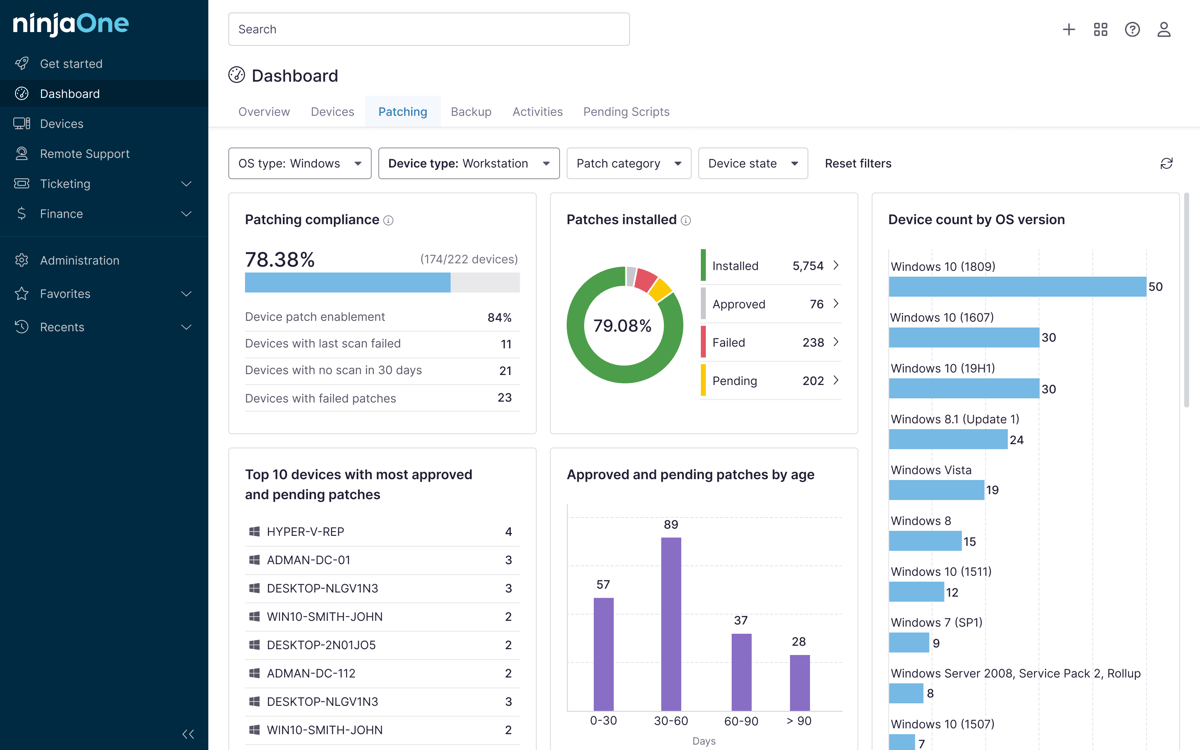
Look for IT monitoring software that provides real-time insights and can centralize data using intuitive dashboards, so that it’s easier to visualize network health and performance metrics.
2. Change control and repeatability
Another way to optimize for agility is to standardize version-controlled configurations and workflows. Repeatable processes eliminate configuration drift, human error, and accelerate deployments.
In hybrid environments, standardization ensures policies and performance are consistent across on-premises, cloud, and edge locations. When a misconfiguration is flagged, the team should be able to roll back to a safe version on demand.
3. Decoupling and abstraction
Decoupling allows IT teams to deploy, modify, and scale services independently of hardware. With abstraction, it also simplifies management, reduces complexity, and makes it easier for environments to adopt new technologies (for example, cloud, edge computing, or 5G).
For example, organizations can use SDN, micro-segmentation, SD-WAN, and containerized network functions to centralize control, isolate workloads, simplify management, and enable dynamic scaling.
4. IT automation with governance
Automation reduces human error and frees up teams for strategic work. With that said, governance is subsequently required to ensure that autonomous processes stay aligned with security, compliance, and operational standards.
or added control, IT teams can implement approval-based workflows for critical changes, ensuring oversight and compliance. By integrating automation with monitoring tools, teams can also leverage real-time network conditions to trigger alerts or remediation—reducing response times and maintaining stability.
Building a future-ready, agile network
Network agility is more than just a technical upgrade; it’s a strategic commitment that transforms your infrastructure from a static system into a dynamic, resilient platform. By focusing on visibility, standardization, decoupling, automation, and operational confidence, you can create a network that can keep pace with industry shifts and operational growth.
For emerging businesses and MSPs, prioritize incremental improvements and build sustainable foundations. Whether you’re modernizing your stack, migrating to the cloud, or positioning to scale, agility can bring stability to your network and prepare you for what’s next.
Related topics: