
Key Points
- SLED covers state, local, and education government buyers that purchase goods and services across independent public agencies.
- There is no single national SLED procurement system, and each state or local entity operates under its own procurement rules and authority.
- Vendors must register in multiple state or local procurement portals because there’s no single national SLED system.
- Agencies award contracts based on compliance with requirements and overall value.
- SLED represents a large and recurring public-sector market, offering long-term opportunities for vendors that stay consistent and prepared.
SLED, short for State, Local, and Education government procurement, is one of the largest markets in the United States. Unlike federal contracting, which follows a single set of centralized rules, SLED is much more decentralized. That means each state, municipality, and educational institution runs its own purchasing process.
Because of this, SLED creates major opportunities for many vendors, including technology vendors. This guide walks through how the SLED procurement process works and how technology vendors can better navigate it.
What is SLED procurement?
SLED procurement refers to how State, Local, and Education entities buy goods and services. It doesn’t operate under one centralized national system. Instead, every agency within SLED manages its own procurement rules. They define their own requirements, create their own timelines, and decide how vendors will be evaluated.
Public sector organizations covered by SLED procurement
- State agencies and departments
- City and county governments
- Public school districts, community colleges, and universities
How purchasing works in SLED
Agencies release their own solicitations, which are formal requests for vendors to submit bids or proposals. Then vendors prepare and submit their proposals, and each agency reviews them on its own schedule. Finally, the agency awards the contract based on its own set of standards.
What makes SLED unique
One defining characteristic of SLED is that every agency operates as its own entity. There isn’t one central portal that consolidates everything or enforces the same requirements across the board. Each agency has its own needs and rules because they buy independently.
As a result, vendors often face different requirements and evaluation methods from one jurisdiction to another.
Why SLED procurement is a major opportunity for vendors
If you want to understand how big the SLED opportunity is, start with the numbers.
SLED industry purchasing power
Industry estimates commonly put SLED procurement spending at $1.5 trillion to $2 trillion a year, though no single government source publishes one official combined total. That’s close to 10% of the entire U.S. GDP. And it’s not slowing down. Gartner forecasts that state and local government spending on enterprise IT will reach $125.4 billion in 2026.
There are also tens of thousands of state, local, and education entities across the country. Each one is a potential customer. That means steady demand for technology, infrastructure, and professional services.
What this means for vendors
From a vendor’s perspective, this creates sustained opportunities across a wide range of offerings. And it’s not just about the size of the market. Vendors may find that SLED contracts can move faster and involve less competition compared to federal contracts.
Simply put, SLED can be a practical and accessible entry point into public-sector work.
How SLED procurement differs from federal contracting
Federal contracting is often seen as the counterpart to SLED procurement. The table below provides a simple overview of their key differences:
| SLED procurement | Federal contracting | |
| Governance structure | Decentralized. Thousands of independent state, local, and education agencies manage their own procurement processes. | Centralized. Federal agencies follow one shared system. |
| Governing rules | No single rulebook. Each state or local agency sets its own procurement rules. | Governed by the Federal Acquisition Regulation (FAR) as the standard rulebook. |
| Vendor registration | Vendors usually register separately with each agency or state they want to work with. There’s no one SLED portal. Registration typically requires business information, tax details, insurance certificates, and a W-9 for each agency. | Vendors register once in SAM.gov to compete for federal contracts. |
| Procurement timelines | Often shorter, especially for small to mid-sized contracts. Some awards happen in 30–90 days. | Typically longer, often 12–24 months from solicitation to award. |
| Compliance requirements | Varies widely by agency. Security standards, documentation, and evaluation criteria differ across jurisdictions, and a growing number of states now require cloud security authorization through GovRAMP (formerly StateRAMP). | Formalized and standardized under FAR for civilian agencies, and with the Defense Federal Acquisition Regulation Supplement (DFARS) adding requirements specific to Department of Defense contracts. |
The most common step-by-step SLED procurement process
Even though requirements and timelines can vary in SLED procurement, most agencies still follow a fairly predictable sequence. Here is a general framework to help you understand how the process typically moves from when an opportunity is posted to when a contract is awarded.
- The process starts when a department identifies a need, such as an IT or cybersecurity upgrade or hardware replacement. At this stage, the agency also confirms the available budget or secures grant funding.
- Next, the agency publishes a solicitation on its own website or procurement portal. This document outlines the scope, submission rules, compliance requirements, and deadlines vendors must follow.
- Vendors then register with the specific state or local agency, if required, and prepare their proposals. Submissions usually include technical details, pricing, security documentation, and proof of qualifications.
- After submissions close, the agency reviews proposals based on factors such as cost, capability, security, and relevant experience. The weight of each factor varies depending on the agency.
- Finally, the agency selects a vendor and issues a public award notice. From there, contract finalization, onboarding, and implementation begin.
Cooperative purchasing: a faster path into SLED
Many vendors enter the SLED market without running a full solicitation by joining a cooperative purchasing contract instead. A cooperative purchasing organization runs one competitive solicitation, and any of its member agencies can then buy from the awarded vendors without a separate RFP.
Common cooperative purchasing vehicles include:
- NASPO ValuePoint, which links contracts across multiple state governments.
- Sourcewell, which gives vendors access to a large network of member agencies through a single award.
- OMNIA Partners, which manages cooperative contracts across state, local, and education agencies.
Winning a spot on one of these contracts can open the door to thousands of agencies at once, which is why many SLED procurement teams check for a cooperative contract before writing their own solicitation.
What technology vendors must prepare before selling to SLED agencies
Technology vendors should prepare the following to compete effectively:
- Registration: Vendors often need to register in multiple state or local procurement systems since there is no unified SLED registration system, and requirements vary by jurisdiction. Have business information, tax details, insurance certificates, and a W-9 ready for each registration.
- Budget cycles: Technology purchases often follow state and district fiscal year cycles, so understanding budget timelines is key to forecasting opportunities.
- Proposal tailoring: Each SLED agency sets its own submission rules, compliance standards, and evaluation criteria, so proposals must be tailored to match those specific requirements.
- Security readiness: Agencies evaluate vendors based on capability, pricing, compliance, and past performance, and they expect strong security practices aligned with standards such as NIST, HIPAA, or PCI. A growing number of states also require GovRAMP authorization for cloud services, so vendors should confirm the specific requirements for each target state.
When selling to SLED agencies, preparation matters. Well-prepared vendors reduce the risk of administrative rejection and improve their chances of moving forward in the evaluation process.
Limitations and challenges in the SLED market
The decentralized structure of the SLED market creates challenges that require persistence and operational discipline. Here are some key ones to keep in mind.
Procurement rules vary widely between jurisdictions
Each public entity sets its own procurement rules and evaluation standards. Even similar projects can differ across jurisdictions, so vendors must continuously adapt to local requirements.
SLED requires ongoing administrative effort
Because there’s no single system, vendors must handle different registrations and agency processes at the same time. To keep up, they need to stay organized and on top of the paperwork.
SLED rewards persistence and relationship building
Many SLED agencies prefer to work with vendors they already know, especially for smaller or repeat contracts. In this market, wins rarely happen overnight. Vendors usually start small, prove themselves, and then grow into larger opportunities over time.
Common misconceptions about SLED procurement
Here are a few common misconceptions that can shape the wrong expectations about the SLED market.
“SLED procurement follows federal rules.”
It doesn’t. SLED is decentralized, which means thousands of agencies operate independently through their own procurement offices and systems. There is no single rulebook or national framework that governs them all.
“Federal registrations are always required.”
In most cases, they aren’t. SLED agencies usually have their own vendor registration portals, so vendors register directly with the state or local entity they want to work with. Many opportunities also come with fewer compliance requirements compared to federal contracts.
“SLED contracts are too small to matter.”
That assumption overlooks the scale of the market. Industry composite estimates put combined SLED spending in the $1.5 trillion to $2 trillion range each year, and Gartner forecasts state and local government spending on enterprise IT will reach $125.4 billion in 2026. Many vendors begin their public-sector journey in SLED because opportunities can move faster and the path to entry is often more accessible.
NinjaOne integration
In SLED evaluations, vendors are assessed on security, documentation, and operational maturity. NinjaOne supports these areas by improving visibility and strengthening compliance readiness.
| NinjaOne capability | How it helps in SLED procurement |
| Compliance readiness | Helps vendors align with security standards and maintain audit-ready documentation during evaluations. |
| Documentation and reporting | Generates structured reports that support proposal submissions and security reviews. |
| Centralized management | Provides visibility and control across distributed environments, demonstrating operational maturity to SLED agencies. |
NinjaOne has gone through this same evaluation process as a vendor to the SLED market. NinjaOne holds GovRAMP Moderate Authorization and is available to SLED agencies through Carahsoft, NinjaOne’s Master Government Aggregator, on the NASPO ValuePoint and OMNIA Partners contracts, so agencies can procure NinjaOne without running a full standalone solicitation. Learn more about NinjaOne’s approach to state and local government IT.
Shawn Southern, IT Infrastructure and Security Architect at the City of Sarnia (one of several municipal governments that uses NinjaOne to help meet compliance and reporting demands similar to those in SLED evaluations), had this to say:
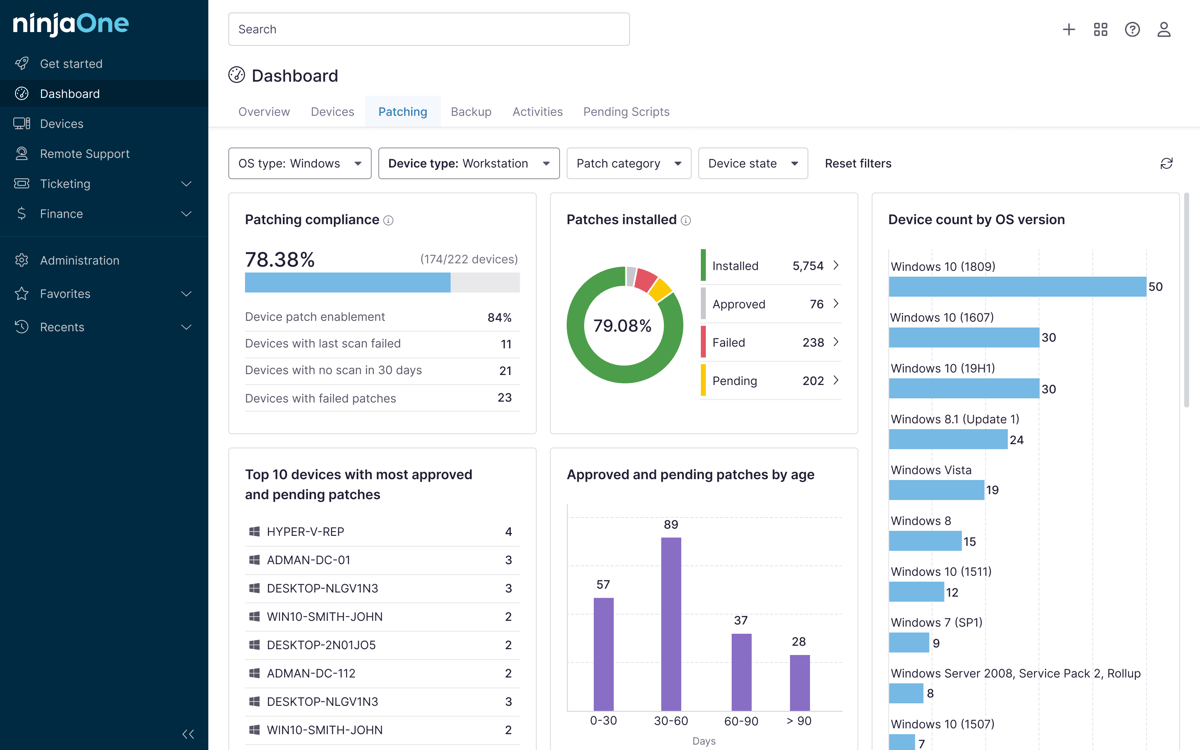
“NinjaOne’s automated patching reduced our patch time by 90%.“
Building long-term value through the SLED procurement process
SLED procurement is a large and opportunity-rich part of the public sector. Vendors that take the time to understand how it works and prepare properly put themselves in a stronger position to compete.
Success here is rarely instant, but with persistence and steady execution, vendors can build credibility and expand across state, local, and education agencies over time.
Related topics: