Key Points
- What Network Alerts Mean: Network alerts notify teams when a network’s performance, behavior, or health deviates from the expected conditions.
- Network Alerts Signal Change: Network alerts don’t necessarily confirm outages or incidents.
- Alerts, Metrics, and Incidents Serve Different Purposes:
- Metrics continuously measure network health
- Alerts call attention to potentially crucial conditions.
- Incidents represent actual outages that require action.
- Alert Management Defines How Teams Respond to Alerts: Alert management determines how teams evaluate, prioritize, and handle alerts.
- Effective Alert Management Favors Relevance: A small number of well-designed, actionable alerts is far more helpful than a high volume of low-impact notifications.
Modern networks are not without monitoring systems. These tools help IT teams monitor their infrastructure’s performance and overall behavior while they work on other tasks.
When monitoring systems detect a drop in performance or unusual traffic, they generate network alerts.
Network alerts are real-time notifications designed to help teams respond to issues before they escalate. But if these alerts are poorly designed, they can become overwhelming or, worse, counterproductive.
This guide explores what network alerts are and the importance of proper alert management. Keep reading to learn more about what makes network alerts different from incidents.
What are network alerts?
Network alerts are automated notifications triggered by anomalies in specific conditions. Monitoring systems generate them each time they find something wrong within an infrastructure. This could include:
- Threshold breaches caused latency, packet loss, and a sudden increase in utilization.
- State changes (like interface up or down events)
- Unexpected behavior patterns.
It’s easy to assume that all network alerts require immediate action, but in reality, some are simply designed for informational purposes. These alerts are meant only to inform you that there’s something going on in your infrastructure that needs your attention.
Alerts vs metrics vs incidents
A lot of people confuse network alerts with metrics and incidents, but these are very different concepts.
Metrics, such as bandwidth and error rates, are raw data points that continuously measure the health of your network. When these metrics start crossing a specific threshold or showing anomalies, they generate network alerts.
Meanwhile, incidents are actual events that need immediate response and remediation; think service disruptions or ransomware attacks.
Understanding the difference between these three concepts is crucial for proper alert management. If you can’t separate alerts from actual incidents, you could end up escalating every notification your team receives and end up fatiguing them.
Alert management: Turning signals into actions
Alert management refers to the process of analyzing, prioritizing, and responding to network alerts. It determines how alerts are evaluated and handled. Here’s how it works:
Every alert you receive follows the same flow. A condition is detected, triggering an alert that will be sent to the assigned team or system. From there, the team evaluates the relevance and possible impact of the detected condition.
Their assessment will determine whether the action warrants action, escalation, or can be safely dismissed.
Now, the goal of alert management here is to make sure that the decision-making process throughout this flow is intentional rather than reactive. This way, your team has a repeatable process they can follow each time they receive an alert.
When an alert management strategy fails, it’s rarely due to the monitoring tool itself. Most of these issues stem from gaps in design and process. Some examples of this include:
- Overly sensitive thresholds.
- Poorly designed alerts with no context or ownership
- Duplicate alerts caused by the same condition
So, how do you achieve effective alert management?
Start by shifting your focus from increasing alert quantity to improving its quality. This means prioritizing relevance over coverage and ensuring that each alert has a designated owner and clear steps.
It’s also recommended that you periodically review alert thresholds, triggers, and response expectations. This way, you can ensure that your alerts reflect the current conditions and priorities of your environment.
The goal here is to create an alerting system that your team can trust and rely on.
Common challenges teams face with alert management
Even the most well-intentioned alerting strategies can drift over time. The good news is that there are a few warning signs you can watch out for to prevent things from getting out of hand.
Teams are ignoring alerts
If your team is ignoring network alerts, it’s a sign that they’ve lost trust in them. This typically happens when alerts are triggered too frequently, lack context, or flag low-impact conditions that don’t need immediate action.
The best approach here is to evaluate the alerts and determine whether they’re still relevant. You can use historical data to check which alerts led to actual resolution and which didn’t.
Too many alerts
A growing volume of alerts is one of the clearest indicators that your alerting strategies are drifting away. Duplicate triggers, poorly tuned thresholds, and notifications caused by low-impact conditions can overwhelm even the most experienced teams.
Reducing this noise will help the important alerts stand out.
Missed incidents
When incidents occur without triggering alerts, it could be because the right conditions aren’t being monitored, or the set alert thresholds don’t reflect real-world scenarios.
To solve this, you need to adjust your monitoring system’s existing thresholds to better align with actual risks.
Slow response times
Sometimes alerts are triggered as expected, but the response is delayed. In these cases, the root cause is usually a lack of clarity. You want to review how the alerts are routed, whether the ownership is defined, and if the escalation paths are easy to follow.
A good alert should clearly indicate who the owner is and outline what their next steps should be.
Bringing effective alert management into practice with NinjaOne
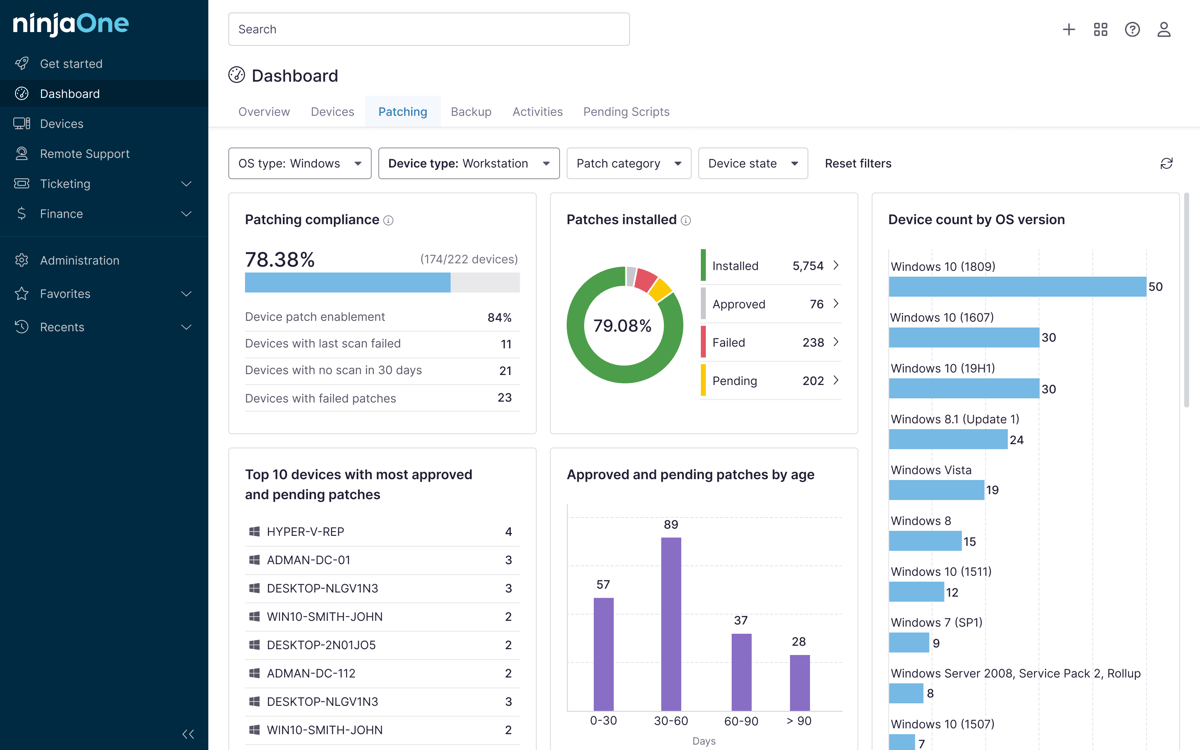
NinjaOne’s RMM solution features comprehensive network monitoring and alerting capabilities that can help you surface alerts that actually matter.
With the alert management best practices we’ve discussed earlier and NinjaOne’s RMM, your team can design informative alerts and integrate them into their daily workflows without creating too much noise.
Quick-Start Guide
NinjaOne offers robust network alert capabilities and comprehensive alert management features designed to help organizations monitor and respond to network issues effectively. Here’s a concise overview:
Types of Alerts
NinjaOne supports several types of alerts, including:
- Device Down Alerts: Notifies when a monitored device becomes unreachable.
- Performance Thresholds: Alerts based on CPU, memory, or disk usage exceeding set limits.
- Security Events: Detects threats like unauthorized access attempts or malware activity.
- Configuration Changes: Alerts when critical device configurations are modified.
Best Practices
- Regularly Review Alert Configurations to ensure relevance and reduce noise.
- Use Severity Levels to prioritize responses effectively.
- Leverage Escalation Paths for critical alerts requiring immediate attention.
- Monitor Alert Dashboards daily to stay proactive about network health.
NinjaOne’s alert system empowers organizations to maintain network reliability and security through timely, actionable insights.
Designing network alerts for action
Network alerts play a vital role in maintaining visibility across modern IT environments. They help you detect changes, anomalies, and potential risks, but only if you manage them properly.
This is where effective alert management can make all the difference. With it, you can add structure to how alerts are designed, evaluated, and acted on. More importantly, it can help your team make informed decisions consistently instead of treating every alert as if it were an emergency.
Related topics: