Key points
- Incomplete asset visibility, not license violations, causes most enterprise software audit costs and compliance fines.
- Enterprise IT asset management software replaces periodic manual inventory snapshots with continuous, real-time visibility across endpoints, cloud resources, and SaaS applications.
- Cloud-based IT asset management improves accuracy by automatically discovering assets and normalizing data to eliminate duplicate and conflicting records.
- Accurate, up-to-date asset data helps IT teams optimize software licenses, plan hardware lifecycles, and reduce wasted cloud spend.
- Integrating IT asset management with ITSM, security, and compliance workflows strengthens governance and creates a reliable audit trail across the asset lifecycle.
Software audits have gotten more frequent and more expensive. In the past year, 62% of organizations were audited, up from 40% in 2023, and 45% paid over $1 million in audit fines in the past three years.
Most of those costs trace back to incomplete asset visibility, not license violations. Departments purchase SaaS tools without IT approval, creating gaps in your license inventory that auditors find before you do. Without accurate records of what you own and who uses it, your team can’t optimize licenses or respond confidently to compliance questions.
Enterprise IT asset management software replaces periodic inventory snapshots with continuous visibility, giving your team the asset intelligence needed to make proactive decisions rather than react to audit findings.
Why enterprise IT asset management software is essential for scaling businesses
IT asset management has become more difficult as environments grow more distributed. Cloud services, remote endpoints, SaaS applications, and contractor devices have expanded your asset footprint faster than manual tracking could document it.
In fact, complete asset visibility declined to 43% from 47% year-over-year in 2025. It looks like organizations are losing ground despite increased investment in IT management tools.
The problem stems from how teams track assets. Spreadsheet-based tracking and quarterly audits create blind spots that affect security and compliance. By the time your team completes a manual inventory, the information is already outdated. New cloud resources get provisioned, employees install unauthorized applications, and devices connect to your network without appearing in asset records until the next audit.
Enterprise IT asset management software addresses this by replacing periodic snapshots with continuous visibility. Your team maintains a real-time understanding of your environment, enabling proactive decisions rather than reactive responses to audit findings.
How cloud-based IT asset management improves asset visibility
The challenge isn’t collecting asset data but maintaining accurate, up-to-date inventories as your environments change. A cloud-first model offers these continuous updates and centralized oversight.
Improve asset discovery across distributed environments
Cloud-based IT asset management provides continuous discovery. Automated asset discovery identifies endpoints, applications, and cloud resources as they appear:
- Continuous monitoring detects new assets immediately rather than waiting for scheduled scans
- Integration with cloud platforms identifies resources across AWS, Azure, and Google Cloud
- Network discovery finds devices connecting to your infrastructure
- Agent-based collection gathers detailed configuration data from managed endpoints
Asset records stay current as employees provision cloud resources, install applications, or connect devices to your network.
Maintain accurate asset records at scale
Discovery alone is not enough for accurate records. Enterprise asset management solutions also normalize information from multiple sources:
- Correlating data can eliminate duplicate records that distort reporting
- Normalizing asset attributes across different data sources
- Resolving conflicts by identifying the authoritative source when records disagree
As a result, when your team evaluates license requirements, plans hardware refreshes, or assesses security exposure, they work from current information rather than outdated snapshots that undercount deployment.
How enterprise IT management software turns asset data into decisions
Accurate information about licenses, hardware, and security exposure creates the foundation for better decisions. Still, the value of asset management comes from the actions your organization takes, enabled by this intelligence.
Improve lifecycle planning with operational insights
Organizations waste resources on unused software licenses. Wasted cloud spend increased to 29% in 2026, reversing a five-year downward trend.
Asset lifecycle management helps organizations optimize these costs:
- Identify aging hardware before performance issues affect productivity
- Detect underutilized software licenses that can be reclaimed or redeployed
- Flag high-risk assets running unsupported operating systems or applications
Instead of requesting renewal funding based on last year’s spending, your team can present data about which assets support operations, which underperform, and which represent candidates for retirement or reallocation.
Connect asset intelligence to business outcomes
Enterprise IT management software also connects asset records to business context. A server scheduled for retirement may support a critical application your finance team depends on. A license that appears underutilized may enable seasonal work that peaks at quarter-end.
Understanding these connections prevents decisions that optimize costs in one area while creating problems elsewhere.
Why enterprise asset management solutions support broader IT operations
Asset data is more valuable when it’s connected to ITSM, security, and compliance workflows rather than operating in isolation.
Integrate asset management with IT service workflows
IT service management depends on accurate configuration information. When users report issues, technicians should be able to see the device, owner, software, recent changes and related configuration items without switching systems.
Use integration to remove manual lookup and reconciliation:
- Link assets to incidents automatically based on the affected user or device
- Populate service requests with current configuration details
- Validate change requests against documented asset relationships
- Track configuration items from deployment through retirement
This gives technicians the context they need up front, so they can spend less time gathering information and more time resolving the issue.
Strengthen governance throughout the asset lifecycle
IT compliance should be built into every stage of the asset lifecycle. As assets move from procurement to deployment, reassignment and retirement, teams need a reliable way to capture approvals, ownership, policy checks and decommissioning records.
Without automated tracking, that evidence often ends up scattered across spreadsheets, email approvals, and disconnected systems. Enterprise asset management provides teams with a documented audit trail as assets move through the business, so when auditors ask how licenses or hardware are managed, teams can point to the process rather than manually reconstructing the timeline.
What to evaluate when choosing enterprise IT management software
Most platforms look capable in a demo. The real differentiators show up after implementation, when your team tries to use asset data inside existing workflows.
Assess how well asset data supports operational workflows
Standalone asset management tools create extra work for IT teams. Asset records live in one platform, incidents are managed in another, and teams have to reconcile the differences manually. When the same asset appears differently across systems, technicians have to stop and verify which record is accurate before they can take action.
Endpoint visibility only improves operations when it connects to existing workflows. When evaluating platforms, look beyond whether integration exists:
- Consistency across systems: Do asset records stay consistent across your ITSM platform, security tools, and procurement systems?
- Conflict resolution: How does the platform handle contradictory information when different systems report different things about the same asset?
- Sync direction: Do updates flow bidirectionally, or does manual synchronization reintroduce the friction you’re trying to eliminate?
Prioritize scalability and adaptability
Organizations buy enterprise IT asset management software tools to solve current challenges, but your environment will look different in two years as cloud adoption accelerates, new device types appear, and business requirements change. The platform you choose should adapt to these changes rather than requiring replacement when requirements expand.
When evaluating platforms, ask:
- Does the platform handle cloud resources, containers, and SaaS applications through the same workflows as physical hardware, or does each asset type require separate processes that add complexity?
- Does performance hold as your environment grows, or does it force you to limit monitoring scope to stay functional?
Solutions that solve today’s inventory challenges but lack extensibility create tomorrow’s management problems, forcing you back into the visibility gaps you’re trying to escape.
Simplify IT asset management with NinjaOne
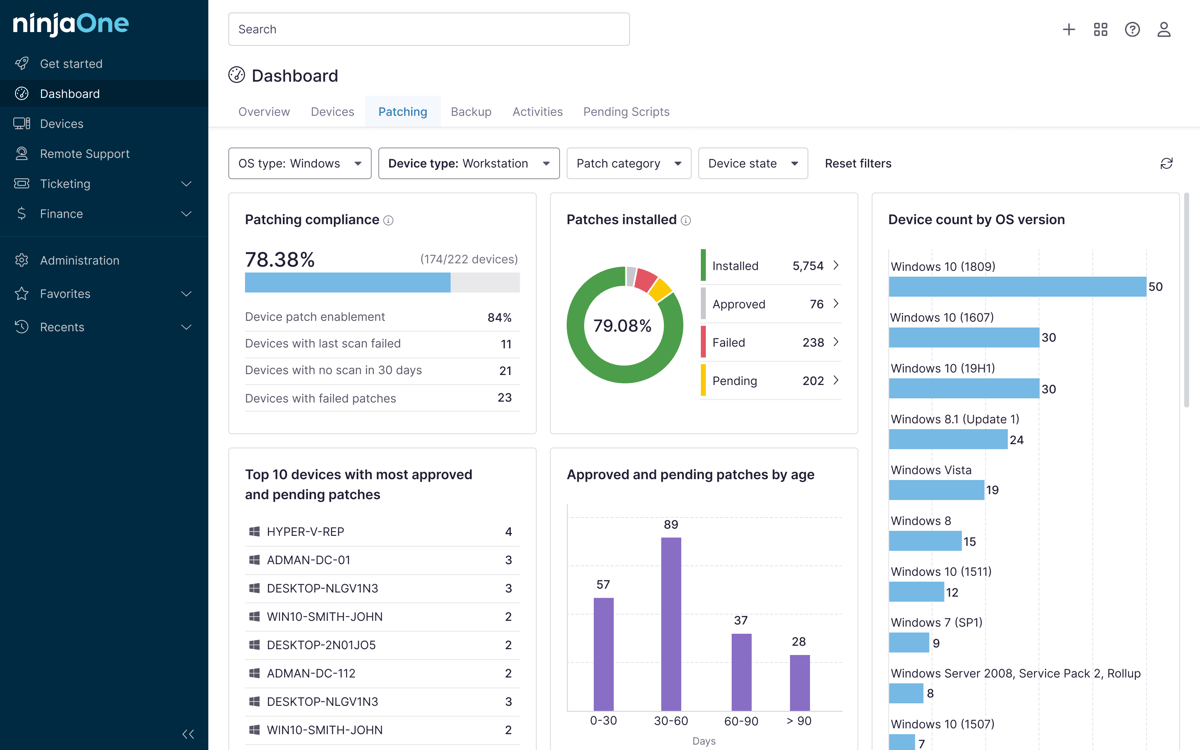
NinjaOne helps IT teams maintain accurate IT asset inventories, automate lifecycle management, and gain visibility across distributed environments. Your team gets continuous asset discovery and integration with endpoint management workflows through a unified platform.
Try NinjaOne for free to see how enterprise IT asset management software supports better IT decisions through continuous visibility and operational integration.