Key Points
IT Asset Management (ITAM) provides a structured process to track, control, and optimize all IT assets throughout their lifecycle.
- Implement a defined ITAM process to manage procurement, deployment, maintenance, and retirement of IT assets efficiently.
- Use ITAM software tools for asset discovery, lifecycle tracking, real-time monitoring, and auditing to maintain visibility and control.
- Reduce costs and risks by identifying unsupported or obsolete assets and ensuring compliance through continuous oversight.
- Adopt ITIL best practices to align ITAM and ITSM goals, improving service delivery and operational efficiency across the organization.
The number of IT assets organizations possess is growing rapidly, but managing this growth doesn’t have to be complicated. Efficient IT asset management comes down to having a process and plan in place to track all assets quickly and consistently. With this in place, you can improve the speed and delivery of IT services across organizations.
What is IT Asset Management?
IT asset management (ITAM) consists of managing and overseeing all the assets in an organization’s IT environment. The main goal of ITAM is to maximize IT asset value in your business. Although ITAM is similar to CMDB, they are not the same, and CMDB is considered a subset of ITAM.
The term “IT assets” covers hardware, software, or other related technology within the IT environment. The span of time that these IT assets are used within the organization is tracked through a process called IT asset lifecycle management. To learn more about the key components, benefits, and best practices of IT Asset Management and how to choose the right ITAM software, watch our video: What is IT Asset Management (ITAM)?
The IT Asset Management Lifecycle
IT assets cycle through a series of phases, starting when they are first obtained and ending when they are no longer of use. The five stages of the IT asset lifecycle model are requisition, procurement, deployment, maintenance, and retirement. IT asset lifecycle management follows this model and aims to reduce costs and maximize the use of IT assets.
📌Watch our IT Asset Lifecycle Management Overview video to explore the 5 stages of IT asset lifecycle management, discover best practices, and learn how SMBs can maximize value from their assets
What is an IT Asset Management Process?
An ITAM process is a set of procedures focused on accounting for IT assets and ensuring they operate efficiently. This involves keeping track of who has these assets,where they are located, and monitoring their use in the organization throughout their lifetime.
Why is an IT Asset Management Process Important?
An ITAM process is crucial because it provides structure and extends visibility to all IT assets. Without an ITAM process in place, workflows can be inhibited, assets can become vulnerabilities, or the acquisition/disposal of IT assets can be performed improperly. This can lead to unplanned downtime or expenses and impact operations as a whole.
The implementation of a structured ITAM process imparts control and helps to streamline IT operations, manage risk, reduce unnecessary waste, cut down on costs, and improve visibility within the organization:
Take back control
The overall goal of an ITAM process is to gain control over any assets within your organization. With the help of ITAM software, the process enables you to track all IT assets and continually monitor them throughout their lifecycles. To ensure you’re gaining other benefits of ITAM software, apply these ITAM best practices.
Streamline IT operations
Many actions or services are taken to carry out various IT operations. For example, an ITAM process optimizes these actions by managing your IT assets ensuring that other IT processes are efficiently completed.
Manage risk
Keeping track of your IT assets makes it easier to manage risk and mitigate against vulnerabilities. For example, assets that have reached the end of their lifespan or are no longer supported with patches can be a direct gateway for bad actors into an IT environment and should be actively managed and removed when possible.
Reduce costs
ITAM is a preventative measure you can take to decrease the amount of money you spend on maintaining a functional IT environment. Although carrying out your ITAM process will incur an expense for your business, it will enable you to significantly reduce costs associated with fixing IT vulnerabilities or replacing IT assets later on.
Improve visibility
Beyond taking control, an ITAM process grants complete visibility into an organization’s IT assets from one central location. This prevents the need to manually track down new IT assets or update the asset inventory to reflect assets that are no longer being used in the business.
What is ITIL?
The Information Technology Infrastructure Library (ITIL) is a set of frameworks that provides best practices and procedures for ITAM and IT service management (ITSM). ITIL helps ensure that IT services align with what businesses need for their IT environments. Explore our other blog to learn more about ITIL vs ITSM and other processes.
Professionals who manage digital services within a business can become ITIL certified. In the latest version of ITIL, ITIL 4, there are seven modules. These modules make up the five different levels in the ITIL 4 certification.
ITIL certification is a widely recognized achievement that many businesses seek because of the numerous benefits that come from the principles. For example, hiring a professional who knows the best IT standards and practices can help an organization implement efficient ITSM or ITAM processes for organizations.
Five important tools for an ITAM Process
ITAM processes are carried out using IT asset management software, which is software used to systematically manage and keep track of your organization’s IT assets. Five essential and helpful tools included in ITAM software are:
1) Procurement
Procurement for IT assets refers to the process of obtaining IT assets within an organization. This ITAM tool helps the IT procurement process manage and organize any acquired assets throughout the IT procurement process.
2) Asset discovery
When IT assets are continually added or retired within your organization, keeping track of all IT assets is challenging. Asset discovery constantly scans for new assets in your IT environment. This feature prevents you from manually attempting to track down new assets and helps keep your asset inventory up-to-date.
3) Asset lifecycle tracking
Each IT asset has a lifecycle, starting with the requisition and ending at retirement. ITAM software will track your organization’s assets through each stage of the lifecycle, helping you manage each device from start to finish. Following your IT assets through their entire lifespan can ensure that you get the most out of each asset, helping you gain the maximum value from your organization’s IT environment.
4) Real-time information
ITAM software provides information about your IT assets in the present, as changes are noticed. It notifies you immediately if it detects a metric going beyond the threshold you’ve previously set. This tool enables you to take action in solving any issues that arise quickly.
5) IT Asset Auditing and Reporting
Auditing assets using ITAM software can help you identify any possible problems in your business’s IT environment. Reports of the audit results can be made, which enables you to easily assess overall health of your IT assets.
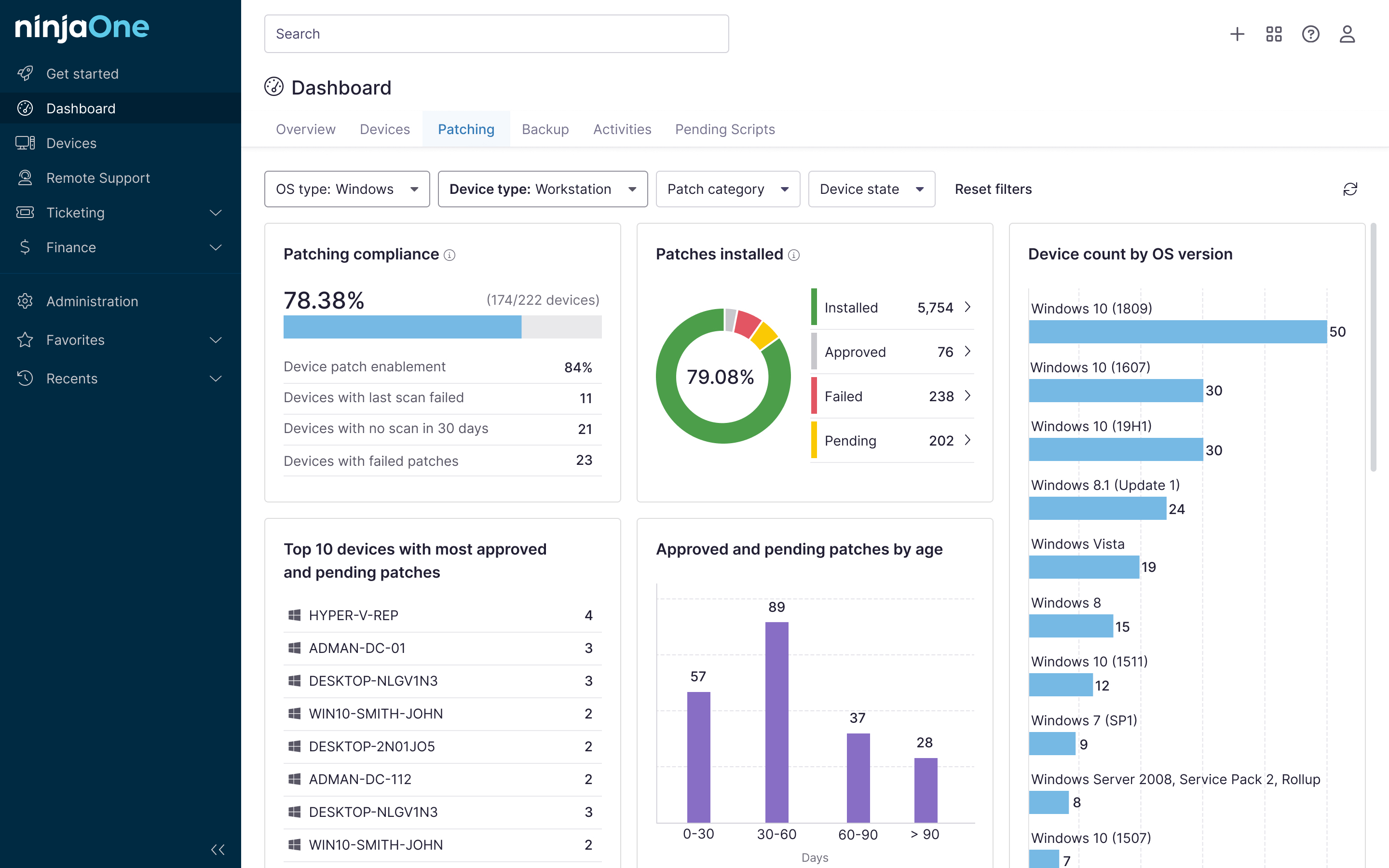
Manage Your Organization’s IT Assets Using NinjaOne
Implementing an ITAM process in your organization will actively prevent foreseeable issues and support business uptime and critical organizational processes. NinjaOne’s cloud-based IT asset management software provides an easy-to-use ITAM interface to spend less time navigating the software and more time proactively solving issues in your IT environment. Sign up for a free trial of NinjaOne today.
Have more questions about IT asset management? Check our ITAM FAQ page for quick answers and expert insights.