
For MSPs, efficient service delivery is determined by metrics such as First Contact Resolution (FCR) percentages.
The FCR measures how many reported issues are resolved during the first interaction with the technician. Improving this metric can help you increase end-user satisfaction and reduce escalation rates. You can use various strategies to improve your team’s FCR, one of them being a tiered technician playbook.
In this guide, we’ll explore how a tiered technician playbook can help you improve your FCR rates and show you how to create one specifically for your team. Keep reading to learn more about what a tiered technician playbook is and how it works.
For a visual breakdown of this topic, watch Create a Tiered Technician Playbook for First Call Resolution.
Improving FCR with a tiered technician playbook
Before you start creating your tiered technician playbook, make sure to meet the requirements listed below.
📌 Prerequisites:
- Defined technician roles across Tier 1, Tier 2, and Tier 2
- Access to PSA and RMM platforms such as NinjaOne
- A library of approved scripts and troubleshooting checklists
- Knowledge of client-specific configurations and SLAs for tailored customer support
- Proficiency with PowerShell, CMD, registry editor, Group Policy, and NinjaOne scripting and tagging features
Step 1: Define the standard metrics and sections to be included in your QBR
Start by defining tier responsibilities and escalation criteria. Here are some of the most common tasks delegated to each support tier:
Tier 1 (First Line)
- Password resets, printer issues, and local app failures.
- Basic connectivity (Wi-Fi, VPN, Outlook not syncing).
- Device health checks, AV status, Windows updates.
- Run standard scripts or diagnostics, gather logs.
Tier 2 (Escalation)
- Persistent system errors, performance degradation.
- Remote troubleshooting of services and registry/profile issues.
- GPO misapplication, login loops, complex app support.
Tier 3 (Advanced/Specialist Support)
- Server issues, advanced scripting, and data recovery.
- Networking configuration and compliance enforcement.
- PowerShell module fixes, hybrid AD, Exchange, and Azure issues.
It would also be helpful to create a decision tree or flowchart that’ll guide your technicians from identifying symptoms to resolving the issue.
Step 2: Integrate PowerShell into Tier 1 troubleshooting
Next, give your Tier 1 technicians a set of safe, pre-approved PowerShell scripts they can use to handle common issues.
Standard scripts for Tier 1 techs
- Check system uptime:
(Get-CimInstance Win32_OperatingSystem).LastBootUpTime
- Restart Windows update and check status:
Restart-Service wuauserv
Get-WindowsUpdateLog
- Scan Defender status:
Get-MpComputerStatus | Select RealTimeProtectionEnabled, AntivirusEnabled
- Log script output for escalations:
Start-Transcript -Path "C:\Logs\Tier1-Diagnostics.txt" -Append
Train your Tier 1 staff to run these scripts using NinjaOne or PowerShell ISE with some safety pre-checks.
Step 3: Include registry checks in the playbook
Add registry validation to your Tier 1 intake and Tier 2 troubleshooting. This way, your techs can quickly validate system integrity and identify misconfigurations.
Tier 1 registry validation:
- AV enabled:
HKEY_LOCAL_MACHINE\SOFTWARE\Microsoft\Windows Defender\Real-Time Protection
- DisableRealtimeMonitoring (DWORD) = 0
- BitLocker status flag:
HKEY_LOCAL_MACHINE\SOFTWARE\Policies\Microsoft\FVE
- EncryptionMethodWithXtsFdv (DWORD) = 7
Tier 2+ registry tasks:
- Remove old autostart entries:
HKEY_CURRENT_USER\Software\Microsoft\Windows\CurrentVersion\Run
- Repair user profile corruption flags
Use these scripts to export registry values during Tier 1 intake so that Tier 2 can review them should the issue be escalated.
Step 4: Use CMD for quick device and service checks
Incorporate the following command-line diagnostics into your playbook for faster issue identification:
Tier 1 checks
- Network status:
ipconfig /all
ping 8.8.8.8
- Service check:
sc query wuauserv
Tier 2 checks
- Review Event Viewer logs
wevtutil qe System "/q:*[System[(EventID=6008)]]" /f:text /c:5
- Check for system file corruption
sfc /scannow
Step 5: Enforce GPO checks and policies in Tier 2+
GPO misapplication is the most common root cause of login or access issues, so having a standardized Group Policy enforcement and validation in your Tier 2+ troubleshooting process is important.
Tier 1 enforcement for basic settings
- Lock screensavers
- Force Defender to remain enabled.
- Set UAC policy.
Tier 2 validation
- Use gpresult /h C:\Logs\GPO_Report.html to generate GPO reports.
- Include the GPO status in the escalation notes.
Step 6: Maintain a Versioned, Centralized playbook
Finally, create your centralized playbook using SharePoint, IT Glue, or Confluence.
Organize it by tier, with separate sections for the following:
- Problem symptoms
- Recommended tools/scripts.
- Expected outputs.
- Escalation criteria.
Attach links to the automation scripts hosted in your RMM or Git repository. This step ensures that your techs have immediate access to all the tools they need to resolve issues.
⚠️ Things to look out for
Keep these pitfalls in mind when following the steps we’ve discussed:
| Risks | Potential consequences | Reversal |
| Running PowerShell scripts without checking execution policies or permissions. | Scripts may fail silently or result in errors. | Use Get-ExecutionPolicy to validate the execution policy and confirm if the technician has the right privileges. |
| Registry misconfigurations. | System instability, app failures, and boot issues. | Back up the registry before making any changes. Include expert scripts in Tier 1 intake for Tier 2 to review, should the issue be escalated. |
| Checking GPO status without forcing a policy update | May lead to misleading results, which can cause incorrect troubleshooting or escalation. | Run gpupdate /force before executing gpresult /h. Include the GPO status output in the escalation notes for Tier 2 validation. |
A quick overview of what a tiered technician playbook is
A tiered technician playbook is a guide that breaks down the responsibilities and pre-approved scripts by tier level. It outlines the different issues each tier should handle, the tools or scripts they can use, and when to escalate a problem to the next tier.
Each time a Tier 1 or Tier 2 tech receives a ticket, they can use the playbook as a guide to resolve an issue as quickly as possible.
It’s more than a troubleshooting manual; it’s a structured workflow that allows your technicians to deliver faster, smarter support to all clients.
Technician errors that could impact your FCR rates
Even with a well-structured playbook in place, your technicians could still make small but critical errors that could hurt your FCR percentages. Some of the most common mistakes techs make during troubleshooting include:
Forgetting to check the execution policy or permissions before running scripts.
If your tech runs a script without verifying the system’s execution policies or the user’s rights, it will fail silently or throw errors that can lead to unnecessary escalations.
To avoid this, train your staff to run Get-ExecutionPolicy and verify if they have the correct permissions to execute the script.
Making configurations to the registry without backing it up first
Editing the registry without exporting it is risky. One incorrect value alone can cause system instability and even lead to boot failures.
That said, your playbook should warn techs about configuring the registry without backing it up first.
Not forcing Group Policy updates
Your technicians should run gpupdate /force before checking a system’s GPO status. Skipping this step could lead to inaccurate Group Policy data and cause techs to escalate simple issues like login failures or access problems.
Escalating or closing tickets without complete documentation
It’s very common for techs to escalate or close tickets without checking if all the required fields have been filled in. However, this simple oversight can cause delays and confusion between support tiers.
To ensure proper documentation, configure your ticketing system to enforce mandatory fields before closure or escalation.
Using generic fixes for client-specific issues
Implementing generic solutions to client-specific issues may break custom configurations or violate compliance policies.
Make sure your staff is familiar with the client-specific SOPs and overrides included in your playbook. Creating clear exceptions for your Tier 1 and Tier 2 teams’ reference can also be helpful.
More tips on how to effectively improve FCR rates
Here are some additional tips you can follow to improve your FCR percentages effectively:
Include client-specific overrides in your playbook
Not all clients have the same infrastructures or configurations. Some will have specific setups or policies that will require particular overrides.
That said, including client-specific SOPs in your playbook will help your staff avoid using generic fixes that might cause more harm than good to your client’s systems.
Immediately escalate any incident that involves access, encryption, or data loss to Tier 3
Any issue that involves sensitive data, security breaches, or encryption failures must be flagged and escalated to your senior technicians immediately.
These situations typically have legal or regulatory implications, so they must be handled by specialists who understand how compliance standards, like HIPAA and GDPR, work.
Limit Tier 1 troubleshooting to 20-30 minutes before escalating it with supporting evidence
Your Tier 1 staff should aim to resolve issues within a specific time frame. If they can’t fix an issue within 20 to 30 minutes, they need to escalate it to the Tier 2 team with all the data they’ve gathered.
This keeps the resolution process moving and prevents Tier 2 techs from repeating all the steps that Tier 1 has done.
Use your playbook as a training tool when onboarding Tier 1 and Tier 2 technicians
Instead of just using the playbook to solve issues, why not use it to train new technicians?
By giving them a playbook packed with real-world scenarios and pre-approved procedures, your new hires can quickly learn to troubleshoot issues as effectively as your senior staff.
More importantly, it sets the standard for delivering support to all clients.
How NinjaOne can help you enforce your playbook
NinjaOne makes enforcing technician playbooks easy by:
- Deploying tiered scripts by technician or group levels.
- Tagging devices or tickets with resolution outcome and tier classification.
- Collecting logs from PowerShell, CMD, and the registry for documentation.
- Monitoring compliance with baseline policies such as firewall, Defender, and BitLocker.
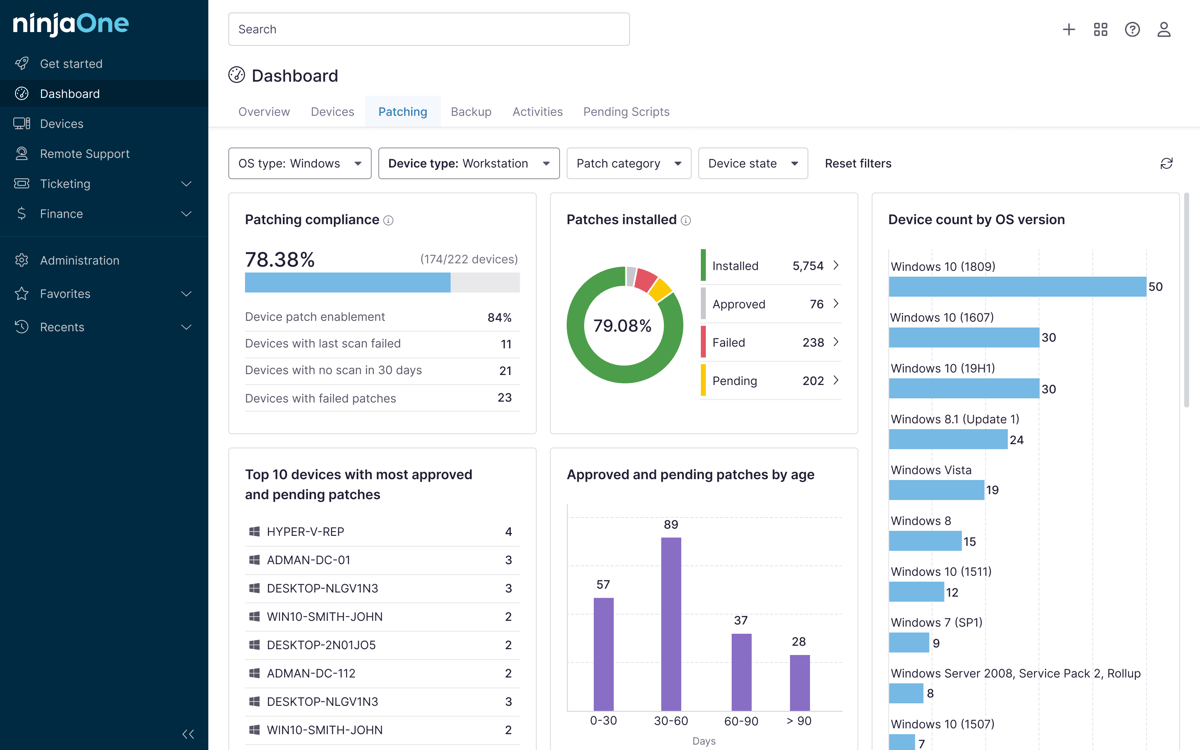
- Generating per-client reports on ticket type, resolution time, and technician efficiency.
With NinjaOne’s help, MSPs can enforce, track, and improve FCR outcomes across all managed clients.
Boost your FCR rates with a well-crafted technician playbook
Improving FCR rates doesn’t have to be that hard. By creating a comprehensive technician playbook and implementing a structured troubleshooting workflow across all support tiers, your team can resolve more issues, reduce escalation, and create a new standard for service delivery.
Related topics: