Key Points
- Mobile devices in healthcare affect patient care and employee productivity: Disruptions that could cause minor issues in an office can delay care, making availability and reliability in non-negotiable environments.
- Shared devices do not fit standard governance models: Most environment device policies assume that one user, one device. In healthcare, devices are tied to locations, passed between staff, and used across shifts, changing who is responsible and how policies apply.
- Security measures that slow down clinical staff get bypassed: If access controls add friction to time-sensitive work, staff will try to find workarounds. Governance needs to be enforceable without getting in the way of care.
- MSPs serving healthcare need to treat it as a different environment, not a stricter version of standard IT: The tools, policies, and ownership models that work elsewhere may not translate seamlessly to healthcare. Getting this wrong creates compliance gaps and operational risk.
Mobile devices in healthcare provide opportunities to increase the quality and efficiency of patient care. However, these devices, and the increasingly diverse use cases that they are enabling, present unique challenges for the IT teams responsible for their governance. From clinical workflows to administrative tasks, there are an increasing number of unique risks that affect patient privacy and well-being, as well as the security, compliance, and operation of healthcare operators.
This guide explains how mobile devices are changing the healthcare IT landscape, and how governance needs to evolve to meet an environment that challenges traditional IT ownership models.
Mobile devices as part of clinical workflows
Mobile devices in healthcare support point-of-care access to clinical systems, enabling the swift and accurate dispensing of information and medication, as well as ready access to communication, monitoring, and collaboration tools. Disruption to these devices doesn’t just impact productivity (as it does in other general business scenarios) – it directly impacts the quality of care patients receive.
What makes healthcare mobile device governance different
Healthcare environments amplify existing mobile device governance concerns (that are centered on aligning IT with business goals and mitigating risk), while also adding its own unique complications. The protection of sensitive patient data while enabling streamlined, real-time, highly accurate workflows is at the crux of this.
Primary challenges include:
- Devices are used in time-sensitive, high-pressure situations
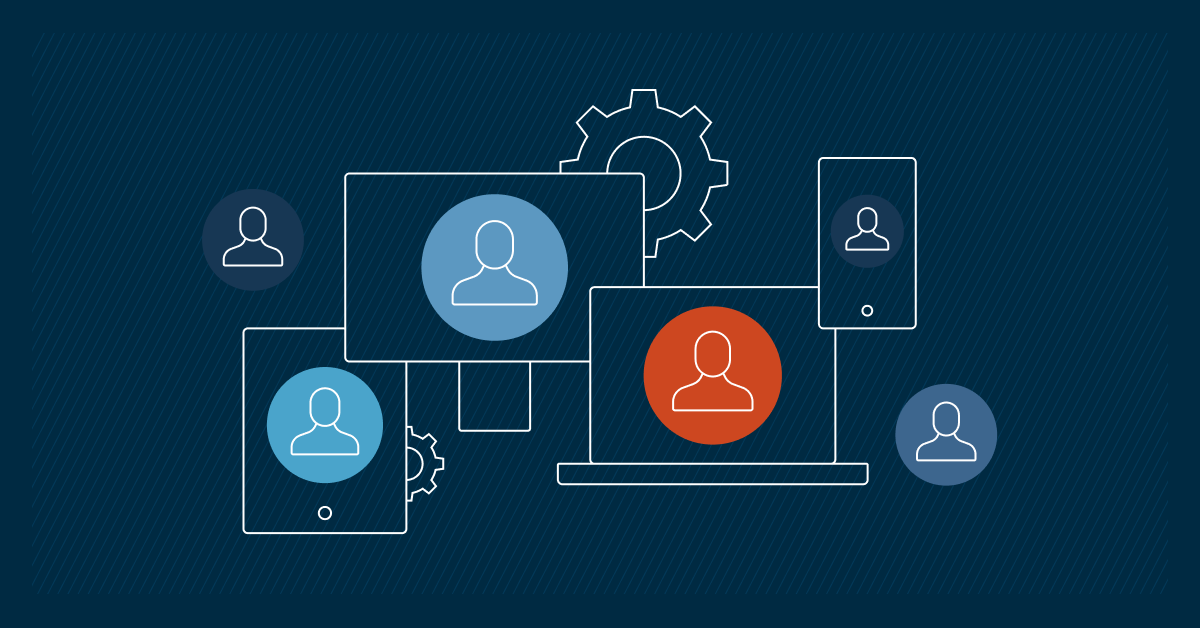
- Multiple users may share the same devices
- Regulatory and privacy requirements (for example, HIPAA) are strict and non-negotiable
- Availability and convenience must be balanced with security and compliance
These factors change how devices must be governed compared to non-healthcare businesses.
The device governance questions introduced by healthcare challenges
The healthcare challenges above lead to governance questions such as who is responsible when a device is used across different roles and shifts, and how access control is enforced without introducing friction to workflows. These governance questions have significance in healthcare environments, as service disruption could lead to delays in providing urgent care.
Privacy is also a greater concern on shared devices that may be left in publicly accessible areas. The traditional assumptions that can often be made about mobile devices, and the governance decisions informed by them – single-user phones or tablets with predictable usage patterns – fail to adequately address mobile device management requirements in healthcare.
Aligning IT governance in healthcare
Aligning IT processes with healthcare outcomes is complicated by shared devices, and who is responsible for them.
Healthcare devices are in continuous use, being shared by clinicians for diverse tasks including communication, remote collaboration on medical records, and time management. Devices are usually tied to a physical location (i.e., a specific ward or station) rather than to a specific user. This changes responsibility for the device and governance models.
Tech teams can use healthcare-compliant remote access to manage shared mobile devices, but on-the-ground responsibility must be clearly established to ensure that there is sufficient oversight for every device. Ownership will depend on the purpose and location of the device, and every device must be readily available and in a state for immediate use.
Risk and compliance considerations
Shared devices introduce additional risk and compliance concerns. The protection of patient data is critical (and legally mandated) in healthcare, and must be recognized in all policies and processes that enable mobile devices to improve clinical efficiency. To this end, access controls must be enforced; however, this must be done in a way that does not create roadblocks that delay care or encourage users to seek workarounds.
Common failure patterns in healthcare mobility, and how governance can solve them
Taking mobile device governance measures, controls, and technologies designed solely for office environments and applying them to healthcare leads to suboptimal outcomes. Mobile device management (MDM) platforms must be flexible so that they can be adapted to healthcare workflows, rather than disrupting them. Documentation platforms can be leveraged to establish ownership of shared devices and ensure there are no accountability gaps, while security and access policies should be enforced and monitored with mechanisms that do not interrupt workflows.
Treating mobile mobility in healthcare as a purely “IT” project overlooks its vastly different real-world requirements, leading to workarounds and exceptions that become difficult to manage. If you’re a managed service provider (MSP) looking to serve the healthcare industry, you should carefully choose tools with a track record of success in healthcare environments, and consult with your clients about how their on-the-ground requirements differ from other organizations.
NinjaOne enables effective IT governance in healthcare environments with a comprehensive management toolchain
NinjaOne unifies MDM, with remote access, documentation, and security enforcement and monitoring in a flexible IT toolchain that is proven in healthcare environments. HIPAA compliance is built-in, providing internal IT teams and MSPs with a solid foundation to establish effective governance for mobile devices in healthcare environments.
This allows you to maintain visibility over devices, secure and support them, and enact policies and processes that allow the benefits mobile devices bring to healthcare to be fully realized by on-site clinicians.