Key Points
- Network device access issues should be resolved using a structured troubleshooting methodology.
- Verifying power, cabling, interface status, IP addressing, routing, and default gateway settings prevents unnecessary escalation to deeper diagnostics.
- Systematic troubleshooting isolates issues across connectivity, DNS, services, and security policies.
- Security controls such as firewalls, network segmentation, and ACLs commonly impact device access.
- A device may be reachable on the network even if monitoring tools lose access due to credential errors, agent failures, or discovery misconfiguration.
- Preventing recurring network access failures requires documentation, configuration baselines, and root cause analysis.
Sometimes, a device can’t be accessed through the network. When this happens, IT admins may jump directly to commands or resets. While these actions may sometimes resolve the issue, executing them without prior diagnosis often bypasses root cause identification and can lead to recurring problems and increased downtime.
Network device access troubleshooting works best when done using a thoughtful and systematic approach that validates connectivity, configuration, and policy in a defined sequence. This will better help reduce downtime and prevent recurring failures.
What network device access issues look like and how to troubleshoot them
Access issues can manifest in many different ways. Your managed devices may not respond to ICMP (ping) or application-level connection attempts, or some of them may experience intermittent reachability. Your management tools may lose track of your devices, or you may have users reporting inconsistent access.
When this happens, it’s critical to identify and resolve the problem as quickly as possible to minimize downtime. Here’s how you can troubleshoot your network device access issues in a controlled and systematic manner:
Step 1: Validate physical and data link layer connectivity
Perform an initial check on the problematic devices. You should verify the following:
- Power and cabling status
- Interface link state and speed
- Wireless associations, if applicable
Sometimes, the problem isn’t with your network but with the hardware itself. If that’s the case, resolve these issues first before checking your network.
Step 2: Verify IP addressing and routing configuration
If there are no hardware issues, you should check if the device has:
- The correct IP address and subnet assignment
- The correct default gateway configuration
- The correct local routing table
If any of these are incorrect or misconfigured, they can cause issues that look like more complex network problems.
Step 3: Test basic network reachability
If your network devices are still having access issues, you should now move on to testing the device’s basic network reachability. Perform a basic test using the command prompt or your network monitoring tool. This will confirm:
- Local gateway reachability
- Same-subnet communication
- Cross-subnet access
These tests will determine whether the issue comes locally from the problematic device or somewhere else upstream in your network. It will help you narrow down what you need to do and which parts of your network you should focus on.
Step 4: Check name resolution and services
If the problem is with your broader network, it may be related to name resolution and services. It can stem from:
- DNS misconfiguration – This happens when there is an error in the setup, maintenance, or security of DNS servers or records that causes them to behave incorrectly.
- Service availability failures – This means that one of the services you’re using to maintain your network is currently unavailable or inaccessible.
Step 5: Review security controls and policies
Another reason why a device is experiencing access issues is that security controls or policies may be restricting access due to their configuration. Remember to check the following as well:
- Firewall rules
- Network segmentation policies
- Access control lists
Before modifying your network configuration or assuming device failure, make sure to review your security policies and settings. The device’s firewall may be blocking network access, or the problematic device may not have the appropriate permissions to connect to the network.
Step 6: Confirm monitoring and management visibility
Once you’ve resolved the problem, you should verify that you can now see all your devices in your remote monitoring platform and that everything is visible to management and the IT teams responsible for them.
You need to make sure that the device can be reached by your remote monitoring platform and confirm its discovery, polling, and access configuration. And once that’s done, don’t forget to cross-check management credentials and verify that the correct credentials and access methods (such as SNMP, SSH, or agent-based authentication) are properly configured and valid.
Preventing recurring network device access issues
To prevent and minimize recurring issues with your network device connection, you should:
- Keep detailed documentation about your network standards and procedures.
- Ensure that you establish and follow consistent network configuration baselines.
- Perform detailed post-incident root cause reviews consistently and diligently.
Remember that prevention is easier and more effective than repeated troubleshooting. It keeps workflows efficient and prevents prolonged downtimes.
Limitations and scope considerations when troubleshooting network device access issues
Remember that network access troubleshooting doesn’t always come from a single, defined root cause. It may come from a combination of different issues that have complex relationships with your network.
To properly troubleshoot, you need to have a strong understanding of your own network’s environment and behavior. To do this, you need detailed documentation and baselines to refer to. Your process must adapt to the network’s complexity, and your IT staff needs to stay flexible.
Common misconceptions when troubleshooting network connectivity issues
| Misconception | Reality |
| Simply resetting your adaptors will fix most access issues. | It may temporarily solve the issue, but it can also hide the deeper problem. You still need to perform a root-cause analysis. |
| All access issues are network failures. | It may be caused by a network failure, but it can also be due to endpoint configurations. |
| Running more commands will lead to faster resolutions. | Following a structured troubleshooting approach is more effective than relying on multiple tools or commands without proper analysis. |
How NinjaOne helps with network access troubleshooting
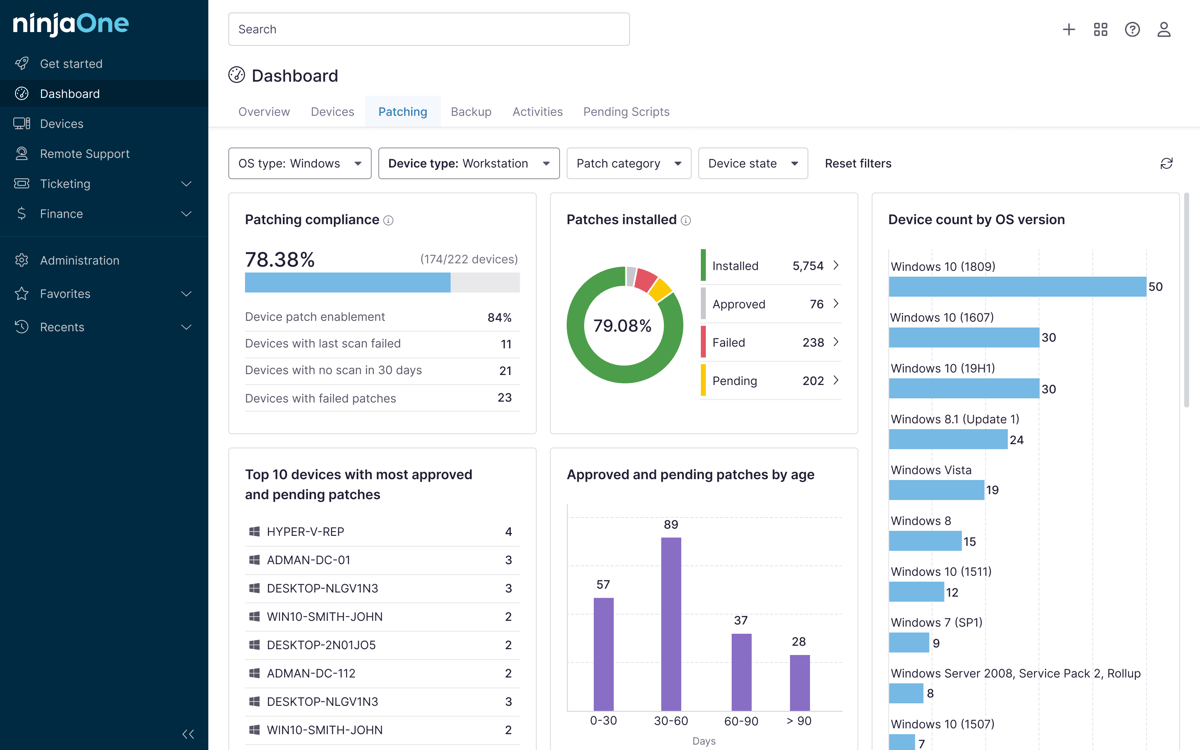
NinjaOne’s endpoint management tools can assist with network access troubleshooting by providing endpoint-level visibility and remote diagnostic capabilities. This will help MSPs distinguish between device-side and network-side causes of access failures, reduce blind troubleshooting, and speed up resolution.
Develop a comprehensive and systematic network troubleshooting methodology
Network device access issues are best resolved using structured troubleshooting instead of simply performing ad hoc fixes. Ensure that your MSPs follow a layered diagnostic process that will isolate problems faster, reduce downtime, and prevent repeat incidents to make the most out of your investments.
Related topics: