
Key Points
- Automating patch management, onboarding and offboarding, ticketing, backups, compliance checks, network reporting, VM deployment, and file migrations can provide significant value by reducing repetitive manual work.
- Automating key processes reduces repetitive manual work, cuts errors, strengthens compliance, and frees IT teams to focus on strategic projects.
- Starting an automation initiative works best by choosing simple, high-impact workflows first, designing for scale, securing executive buy-in, documenting every process, and involving other teams early.
- Extending automation further supports IT migration, configuration management, provisioning, orchestration, application deployment, and security and compliance monitoring.
Picture this: your organization has grown exponentially over the past couple of years, and the IT team is struggling to keep up with the rapid growth. You were able to get hiring approved, but there is still so much work that your team is having to work overtime just to stay afloat. Plus, now the CEO is hoping to free up some of your usual operational workloads to focus on more strategic projects, leaving you wondering how you can manage all of these tasks with the bandwidth available. What would you do?
Enter IT automation. You may already be familiar with this concept, but haven’t had the chance to implement any cohesive automation processes. With IT automation, one of the fundamentals of IT, you can take any time-consuming, repeatable processes and schedule actions based on a variety of conditions, such as time, device status, user onboarding, and more.
This leaves more time for your team to take on strategic projects rather than spending hours on mundane manual tasks. It may be a bit of a time investment in the beginning, but a worthwhile one in the long run. (If you’re looking for guidance on how to create an automation action plan, we highly recommend that you check out our automation guide.)
You might also like our article on How to Automate Repetitive Tasks with PowerShell.
Experience a seamless, efficient, and future-ready IT system with a modern solution.
Learn more about NinjaOne IT Automation System. →
What is IT process automation?
IT process automation is the process of using various software and systems to automate repetitive and manual IT tasks. By using automation, businesses can enhance accuracy, improve response times, and free up IT professionals to focus on more strategic initiatives.
Common examples include automated patch management, ticketing systems, and provisioning workflows. Implementing IT process automation helps standardize processes, minimize errors, and optimize IT operations. Our Workflow Management for IT Departments video guide explains best practices for implementation and automation, and why it matters.
But before you jump headfirst into planning and purchasing, there are a few things you need to know. Whether you’ve just started on your IT process automation journey or have already started making changes here and there, important steps need to be taken to ensure your efforts are impactful.
Don’t feel like reading? Hit play on this video: IT Process Automation: Common IT Tasks to Automate.
7 things to know before starting your automation journey
1. Don’t feel obligated to start with complex automation
Much of the day-to-day time is spent on repetitive tasks that can be made more efficient with automation. Though it may be tempting to focus on large-scale automation projects, some of the biggest gains often come from automating small, repetitive, day-to-day tasks. If you’re just getting started, focus on these workflows before implementing something more complex. And remember, you can always start somewhere and improve over time!
2. Future-proof as much as possible
Your organization needs to be scalable and evolve over time. Any implemented automation needs to be able to adapt when needed. Try to avoid hard-coding things and add variability.
3. Gamification is a great way to encourage automation
By incentivizing IT team members and end users to submit ideas for automation, you can gain valuable insights into processes you may not have considered. You can get people involved by providing a tangible gift and an opportunity to be part of the process. But be aware that any incentive shouldn’t be a burden to the end user, so see how involved they actually want to be.
4. Empower team members who are interested in automation
If your team is new to automation, you might have newer IT professionals who are looking to grow into new roles and learn new skills. Invest in your people and encourage team members to learn how to automate. Not only will it help your organization, but it will also improve your employees’ satisfaction.
5. Don’t silo your team
Automation will likely impact more than just the IT organization, so be sure you’re including the necessary teams in any automation rollouts. Communicate impacts and how they will positively affect their own workflows!
6. Get executive buy-in
Because executives aren’t working on the front lines, they may be skeptical of the value of automation investments. To overcome this hurdle, you’ll need to outline how automation can improve IT operations and, more importantly, positively impact the overall budget.
7. Document EVERYTHING
Maybe one of the most important steps in your journey is to make sure you’re documenting all of your processes. If something goes wrong with the automation workflow, someone leaves the company, or you’re starting a new process, you’ll be happy to have all of the documentation there as a valuable resource.
What can be automated in IT?
Most IT-related tasks can be automated to some degree, provided there is an automation system or platform that can integrate with the operation. Automation is often used in network/infrastructure management, cloud services, standard operating environments (SOEs), configuration management, and application deployment.
IT migration
Depending on the project, an IT migration could involve moving several types of assets from one system to another. Commonly, there’s data migration, software migration, operating system migration, and cloud migration. IT migration projects are often complex. Even more so, because they must be tailored specifically to the organization’s needs. Automation facilitates faster, smoother IT migration projects by removing many repetitive processes from engineers’ workflows and relegating them to scripts and software.
Configuration management
Configuration management helps define and maintain consistent configurations across applications, systems, and infrastructure resources. As IT environments grow, maintaining these configurations manually can become increasingly complex.
Configuration management solutions can use automation to apply and maintain predefined configurations consistently across systems. IT teams can define the desired configuration and use automation tools to deploy, verify, and manage it at scale.
Provisioning
Modern organizations need an IT infrastructure to operate, and that infrastructure must be set up. Even in this world of virtualized assets and the cloud, processes must be developed to ensure provisioning is a smooth and efficient task.
Because of the trend away from server racks and bare metal systems, the majority of IT work is executed in software. This has increased the scale and speed of what IT teams can do, but it also demands more robust processes, development, and documentation.
By codifying infrastructure (an already standard practice), IT teams have a template for provisioning within their environment. Automation simply takes these rote tasks and checklists out of individuals’ hands and executes them with minimal human input.
Orchestration
Business IT systems tend to be very complex, and the more complex they become, the more automated tasks and configurations must be deployed across multitudes of systems and devices. Orchestration is the management of these large-scale rollouts. Automation helps IT professionals manage and track these orchestrated deployments and other tasks done at scale with ease.
Application deployment
Modern application development relies heavily on automation, particularly for app deployment. Automating app deployment helps dev teams move software through all stages of development, all the way to testing and final deployment, in an efficient and repeatable way. This reduces the chances of human error impacting the development process and helps maintain consistent configurations and builds throughout.
Security and Compliance
Automation is taking a more prominent role in modern cybersecurity. New uses for AI and machine learning go well beyond standardizing processes and workflows for compliance purposes. Automation is being used extensively to learn and analyze patterns of behavior, identify suspicious activity, and alert IT teams or Security Operations Center (SOC) personnel about potential threats.
Common IT tasks to automate
You may be sold on the idea of IT automation, but you’re also a little stuck on what to implement first. Here are some ideas of potential tasks or projects that can help kickstart your journey:
We wrote a more in-depth guide on “How to Automate 10 Common IT Time Wasters”.
1. Automated tickets based on device status
Automating ticket creation based on device status ensures that IT teams can proactively address issues before they escalate. By setting up triggers for common device health concerns, teams can immediately take corrective action. Some tickets you can automate include:
- Low disk space: When a device’s storage falls below a predefined threshold, an automated ticket can alert IT staff to investigate and resolve the issue before it causes performance degradation or service disruptions.
- Device offline: If a device suddenly goes offline, IT automation can generate a ticket and notify the appropriate personnel. This reduces downtime by enabling faster troubleshooting and resolution.
- High resource usage: Monitoring CPU, memory, and disk usage can help prevent system slowdowns. Automating tickets for excessive resource consumption allows IT teams to diagnose potential bottlenecks.
2. End user onboarding and offboarding
This is one of the more common IT tasks to automate. Automating the management of employee access and provisioning devices ensures new hires are ready to work on day one and departing employees no longer have access to sensitive systems.
- Domain account creation: Automatically generate user accounts with predefined access levels based on role requirements, reducing manual workload and minimizing errors.
- Role assignments: You can assign appropriate permissions and group memberships instantly to ensure employees have access to necessary resources without delays.
- Device provisioning: Deploy standardized device configurations, including pre-installed software, security policies, and network settings, to streamline the setup process.
- Software installation: Automate software deployment based on department needs, ensuring all employees have the necessary applications without IT intervention.
- Cloud logins: Automate account provisioning and assignment of approved roles or permissions for cloud services.
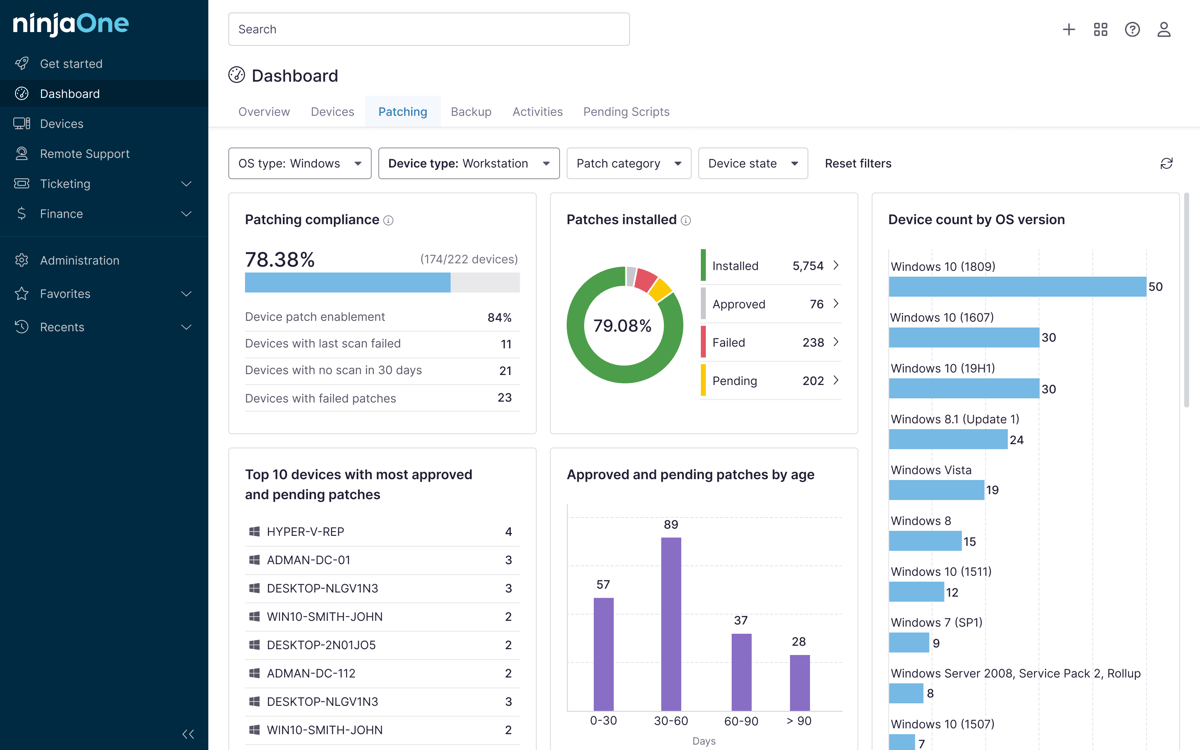
3. Patch management
Automating patch management ensures that updates are applied promptly and correctly, minimizing security vulnerabilities and potential downtime.
- Automated patch deployment: Schedule and execute patch installations across all devices and servers without manual intervention.
- Patch status reports: Generate detailed reports on applied and pending patches to maintain compliance and security.
- Rollback management: Where supported, automate rollback procedures to recover from failed or problematic patches.
4. Weekly network summary
Automation can generate insightful reports that help IT teams monitor network performance and identify potential issues.
- Resource usage: Generate reports on bandwidth, CPU, and memory utilization to optimize network performance.
- Server uptime and downtime: Track system availability to ensure critical services remain operational.
- Backup status: Automate backup reports to track backup status and help confirm data integrity and disaster recovery
- Device performance: Identify underperforming or failing hardware before it impacts business operations.
- Patch status: Provide visibility into patch compliance to ensure all systems are up to date.
5. Network and endpoint backups
Data loss prevention is critical for business continuity. Automating backups ensures that data is regularly stored and retrievable when needed.
- Snapshot cleanups: Implement policies to delete snapshots older than a specified timeframe, optimizing storage space and maintaining efficiency.
- Scheduled backups: Automate daily, weekly, or monthly backups of critical systems to prevent data loss.
- Backup integrity checks: Regularly perform integrity checks and restore tests to verify that backups are usable and recoverable.
6. Monthly compliance checks
Ensuring IT compliance with security policies and regulations can be simplified through automation.
- Network data log collection: Automatically gather and store log data for auditing and security analysis.
- Password changes: Enforce password policies and require password changes when appropriate, such as after suspected compromise or when required by policy.
- Enabling security features: Ensure firewalls, antivirus software, and other security measures remain active.
- Vulnerability scans: Schedule automated security scans to detect and mitigate potential risks.
- Removal of extraneous accounts: Detect and remove unused or unauthorized accounts to enhance security.
7. Help desk ticket responses
Help desks handle a large volume of requests, many of which can be categorized and responded to automatically.
- Time of day submitted: Prioritize ticket routing based on working hours, after-hours, or emergency status.
- User role: Assign tickets to the appropriate IT staff based on the user’s department or seniority level.
- Type of ticket: Categorize and automatically assign tickets based on predefined issue types (e.g., hardware, software, network issues).
8. VM templates and deployment
Setting up virtual machines (VMs) manually can be tedious and inconsistent. Automation ensures quick and standardized deployment.
- Predefined VM templates: Deploy VMs with preconfigured settings, reducing setup time and improving consistency.
- Automated scaling: Provision or decommission VMs dynamically based on workload demands.
- Configuration management: Apply and monitor predefined VM configurations to support company policies and security standards.
9. File migrations
Data migration between systems can be automated to reduce downtime and errors.
- Scheduled migrations: Automate file transfers between servers, cloud storage, and local devices based on pre-set schedules.
- Error detection: Identify migration failures automatically and, where possible, retry or initiate predefined recovery actions.
- Access control management: Ensure that only authorized personnel have access to migrated data.
This is just a short list of what you can do with IT automation, but if you’re looking for more ideas, here are a few Reddit threads full of incredible ideas:
- What automated tasks [have] you created in your workplace that improved your productivity?
- What’s something you automated?
- Automation Ideas
- What do you automate?
- Automation – Where did you begin?
- What are you automating at work?
- SysAdmin Professionals: What automation projects have you done that have had huge successes on efficiency and uptime and how?
You may also download our guide, Scaling IT Operations: Embracing Automation at Every Level, which covers building a culture of automation and an automation action plan.
How NinjaOne can help you with IT process automation
NinjaOne’s IT automation system is designed for the modern workforce. It allows you to automate the most tedious, repetitive tasks so you can stay ahead of potential issues. Nearly 40,000 customers in 140+ countries trust NinjaOne for their endpoint management needs. The all-in-one software offers numerous functions, from remote monitoring and management to automated scripting, in a single pane of glass.
If you’re ready, request a free quote, sign up for a 14-day free trial, or watch a demo.