
Key points
- Prevent apps from adding firewall rules in Windows 11 by disabling local rule application through Group Policy and enforcing centrally managed firewall policies.
- Limit firewall rule changes by restricting administrative execution, so apps cannot modify firewall settings during installations, updates, or initial runs.
- Lock down inbound and outbound firewall behavior using Windows Firewall with Advanced Security and define allow rules only for approved apps and services.
- Remove or disable unauthorized firewall rules using PowerShell to clean up existing entries and address rules that are recreated during app updates or reinstalls.
- Maintain long-term firewall control by monitoring rules against an approved baseline and enforcing remediation through scheduled scripts or automation.
Windows Firewall allows applications to add or change rules when they first run. While this is convenient on personal systems, it causes problems in controlled or shared environments, especially when applications are reinstalled or updated. They can also quietly restore rules that administrators have already removed.
This guide shows you how to prevent apps from adding or re-enabling firewall rules in Windows 11 using policy, permission controls, and enforcement strategies.
Recommended deployment strategies:
Automate firewall policy enforcement to maintain consistent security at scale.
Methods to prevent apps from adding firewall rules in Windows 11
Before you apply these methods, confirm that your system meets the following requirements.
General prerequisites:
- A Windows 11 device (Pro, Enterprise, or Education recommended)
- Administrative privileges on the system
- Windows Defender Firewall is enabled and active
- Optional: Group Policy or centralized management for domain-joined or managed devices
Method 1: Prevent applications from adding rules using Group Policy
One of the most reliable ways to prevent apps from creating or re-enabling Windows Firewall rules is to enforce restrictions through Group Policy. This blocks apps from managing firewall rules locally, leaving configuration controlled only through Group Policy or explicit administrative changes and reducing the risk of unauthorized network access.
Steps:
- Press Win + R to open the Run dialog, type gpedit.msc, and click Enter to open the Group Policy Editor.
- Navigate to: Computer Configuration > Windows Settings > Security Settings > Windows Defender Firewall with Advanced Security > Windows Defender Firewall Properties
- Select the Domain, Private, or Public profile tab based on your active network profile.
- In Settings, set Apply local firewall rules to No.
- Click OK to save the changes.
- Open Command Prompt and run: gpupdate /force, to apply the policy immediately.
Method 2: Control Firewall rule changes by restricting administrative execution
Applications can create or modify firewall rules only when they run with administrative privileges. When you limit which users and programs can run with elevated rights, you reduce unauthorized changes to your firewall configuration and maintain tighter control over it.
📌 Prerequisites:
- User Account Control (UAC) is enabled
- Windows 11 Pro or Enterprise for AppLocker features
Steps:
- Press Win + R to open the Run dialog, type secpol.msc, and click Enter to open Local Security Policy.
- Navigate to Local Policies > Security Options.
- Confirm that UAC elevation prompts are enabled and not suppressed.
Now, you can limit application elevation during installs and updates. Just make sure to avoid running installers as an administrator unless necessary. You can also restrict administrative access where possible. Remove standard users from the local Administrators group or use separate administrator accounts for system changes. Additionally, you may identify services that recreate firewall rules during updates and disable or reconfigure them as needed.
Note: This method does not block firewall rule changes applied through domain policies or required Windows services. It works best when combined with Group Policy enforcement and rule monitoring.
Method 3: Lock down firewall rule configuration with Windows Firewall Advanced Security
After you block applications from creating firewall rules, define which network connections you actually allow. Windows Firewall with Advanced Security allows you to set strict inbound and outbound behavior, so applications cannot rely on flexible or user-driven exceptions.
Steps:
- Press Win + R to open the Run dialog, type wf.msc, and click Enter to open the Windows Defender Firewall with Advanced Security.
- Select Windows Defender Firewall Properties in the left pane.
- For each profile (Domain, Private, Public):
- Set Firewall State to On.
- Set Inbound connections to Block.
- Set Outbound connections to Allow or Block based on your policy.
- Create predefined allow rules only for approved applications and services.
- Review local and temporary rules created during runtime and remove any you don’t need.
- Verify that firewall rules come from policy or explicit administrative configuration and that applications cannot persist new entries.
Method 4: Use PowerShell to remove and disable unwanted firewall rules
If an application has already added firewall rules, use PowerShell to review and clean them up. This method works well when you need repeatable changes across multiple systems.
Steps:
- Press Win + X and select Windows PowerShell (Admin).
- List firewall rules:
Get-NetFirewallRule |
Select-Object DisplayName, Name, Enabled, Direction, Action, Profile
- Inspect a specific rule before you change it:
Get-NetFirewallRule -DisplayName “RuleName” |
Get-NetFirewallApplicationFilter
- Disable an unwanted rule first:
Set-NetFirewallRule -DisplayName “RuleName” -Enabled False
- Remove the rule only after you confirm you don’t need it:
Remove-NetFirewallRule -DisplayName “RuleName”
- Verify the result:
Get-NetFirewallRule -DisplayName “RuleName” | Select-Object DisplayName, Enabled
- If you need ongoing cleanup, save the commands in a script and run it on a schedule through Task Scheduler.
Tip: Read How to Automate Repetitive Tasks with PowerShell.
Note: DisplayName can match multiple rules and may change after updates. Use the rule Name value after you identify the correct entry.
Method 5: Monitor and enforce firewall rules using scheduled scripts
Even with strict policies in place, applications may still attempt to add firewall rules during updates or reinstalls. Scheduled scripts let you detect and correct these changes without relying on manual checks.
Steps:
- Create a PowerShell script that inventories firewall rules. Capture properties such as Name, DisplayName, Enabled, Direction, Action, and Profile.
- Compare the current rules against an approved baseline.
Tip: Use a baseline based on approved rule names or an export from a known good device.
- Remediate rules that fall outside the baseline. Disable unauthorized rules first. Remove rules only after validation and change control have been completed.
- Use Task Scheduler to run the script on a defined schedule. Configure the task to run with the highest privileges for an administrative account or the SYSTEM account.
- Log all actions, including disabled or removed rules, along with timestamps. Forward logs to your monitoring pipeline when you need visibility or audit records.
Additional considerations
You need to account for several practical factors when locking down firewall behavior. These points help you maintain security without disrupting required services or user workflows.
Some Windows services may require specific firewall rules
Some Windows components and built-in services rely on predefined firewall rules to function. Blocking or removing these rules without review can affect features such as file sharing, remote management, or Windows Update. Review system-level rules before enforcing restrictive policies.
Applications may continue to prompt for firewall access
Even when you restrict local rule creation, applications may still prompt for firewall access during installation, updates, or first launch. These prompts do not always mean a rule will apply. Users should avoid approving prompts and instead rely on policy-enforced behavior.
Blocking outbound traffic by default requires planning
Setting outbound connections to Block by default is a strict configuration. Many applications and services require outbound access for updates, authentication, or cloud connectivity. Test this approach carefully and define allow rules for required traffic before deployment.
Firewall rule control doesn’t replace application whitelisting
Restricting firewall rule creation limits network access, but it does not prevent an application from running. Applications may still execute locally even when their network traffic is blocked. Use firewall controls alongside separate execution controls when you need to limit what software can run on a system.
Rules created by system-level services may require separate handling
Some firewall rules are created or managed by services running under the SYSTEM account or by Windows-managed components. These rules can persist even when user-level rule creation is restricted. Review system-managed rules carefully before removing or disabling them.
Troubleshooting
You might run into issues when enforcing firewall policies. The sections below cover typical problems and what to check before changing your configuration.
Application still adds rules
If an application appears to add or re-enable firewall rules, confirm that Group Policy enforcement is active. Verify that local firewall rules are turned off for the active profile and that the policy applies successfully to the device.
Rules reappear after the update
Some applications recreate firewall rules during updates or repair operations, especially those with background services or auto-updaters. Automate rule cleanup with PowerShell as described in Method 4. If the behavior persists, review the application update mechanism and restrict it as necessary.
Firewall becomes too restrictive
If required applications stop working, review your firewall configuration. Confirm that allow rules exist for required applications and services. Adjust outbound rules in stages instead of blocking all outbound traffic at once.
PowerShell changes not applying
Firewall changes made through PowerShell require elevated privileges. Run PowerShell as administrator and confirm that scheduled scripts execute with the highest privileges. Add logging to confirm script execution and results.
Rule changes not persisting
If firewall rules revert after a reboot or policy refresh, check for conflicts between local settings and domain or MDM policies. Managed policies override local changes by design.
NinjaOne integration
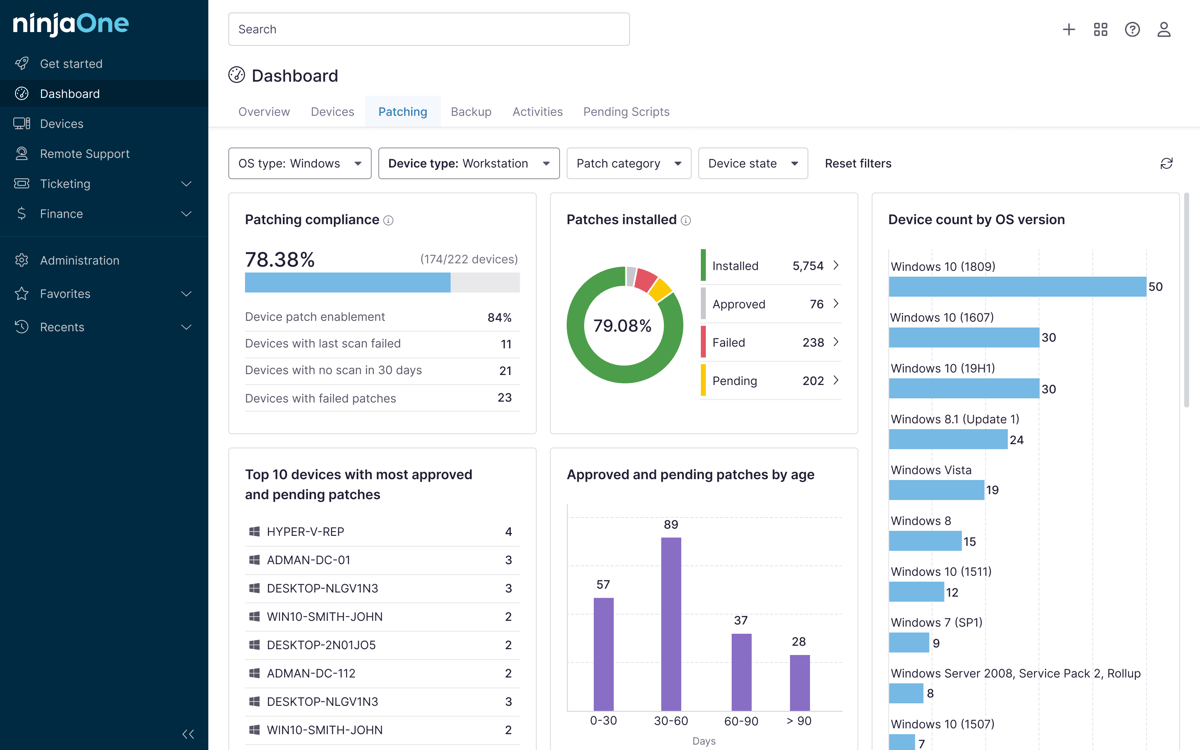
NinjaOne can be used to operationalize firewall rule control across managed Windows 11 endpoints. Using NinjaOne, administrators can automate firewall configuration and enforce compliance at scale. Here’s how:
| NinjaOne feature | How it helps |
| PowerShell scripting | Deploys firewall cleanup and validation scripts that remove or turn off unauthorized rules across multiple endpoints |
| Scheduled automation | Runs firewall enforcement scripts on a schedule to prevent rules from returning after application updates or system changes |
| Policy deployment | Applies firewall-related configurations consistently to ensure endpoints adhere to approved standards |
| Endpoint monitoring | Flags devices where firewall rules change unexpectedly or repeatedly, which often indicates application-driven rule recreation |
| Centralized reporting | Highlights endpoints that drift from the approved firewall baseline and need review |
| Remote remediation | Fixes firewall rule issues without requiring local user access or manual intervention on the device |
Set alerts and track unauthorized network activity across distributed endpoints.
Maintaining control to prevent apps from adding firewall rules in Windows 11
Stopping applications from adding or re-enabling Windows Firewall rules keeps network behavior predictable and under your control. When you combine policy enforcement with permission boundaries, PowerShell cleanup, and ongoing checks, applications lose the ability to quietly restore access or drift away from approved firewall behavior over time.
Related topics: