
Key Points
- Map Current Systems and Workflows: Identify where PSA, ITSM, and ESM tools overlap or conflict to create a clear integration starting point.
- Define Integration Goals and Data Flows: Establish how tickets, billing, and reporting data will move between systems to support a unified service model.
- Normalize Data Across Platforms: Standardize client IDs, service categories, and billing codes to ensure accuracy in PSA ITSM integration.
- Extend ITSM Workflows to ESM Teams: Apply proven ITSM processes to departments like HR, finance, and facilities for consistent service delivery.
- Automate Ticket and Billing Reconciliation: Connect closed tickets to time entries and invoices to enhance billing transparency and minimize manual work.
- Maintain Governance and Continuous Review: Use recurring audits and shared dashboards to track SLAs, performance metrics, and financial accuracy.
While professional services automation (PSA) manages billing and contracts, IT service management (ITSM) governs service delivery, and enterprise service management (ESM) extends those same controls across other departments. Together, they form the backbone of a unified service model that merges financial accuracy, operational quality, and governance.
This guide gives MSPs and IT leaders a practical runbook for building that alignment. By implementing PSA ITSM integration and extending those workflows into ESM, teams can synchronize financial and service data, automate workflows, and maintain evidence of performance that demonstrates efficiency and client value.
Manual processes don’t scale with service delivery.
Steps to connect PSA, ITSM, and ESM for a unified service model
Connecting PSA, ITSM, and ESM requires a clear understanding of how data, ownership, and accountability move between systems. Before you can start turning them into a concrete unified service model, here’s what you need to do:
📌Prerequisites:
- A shared client and asset data model across PSA and ITSM platforms.
- API or integration tools configured to sync tickets, alerts, and billing events.
- Centrally stored service level agreement (SLA) and operational level agreement (OLA) definitions.
- A stakeholder map defining ownership and accountability for both IT and non-IT service owners.
- A recurring review schedule and a central log to continuously update service evidence repositories.
Step 1: Map current tools and workflows
Mapping existing systems is the first step in building PSA ITSM integration that supports a unified service model. This establishes where data overlaps, where ownership breaks down, and how each system contributes to the service delivery process.
📌 Use Cases:
- This step helps MSPs identify duplicate or disconnected tools that create reporting gaps and billing inconsistencies.
- It allows teams to document ownership, dependencies, and process handoffs before connecting PSA, ITSM, and ESM platforms.
📌 Prerequisites:
- Access to all RMM, PSA, ITSM, and ESM platforms used in daily operations.
- Clear ownership documentation for each platform and visibility into where data and workflows overlap.
To accomplish this, here’s what you need to do:
- Inventory each system and record what operational areas it supports (ticketing, billing, or service management).
- Document overlapping data like assets, tickets, or billing codes shared between systems.
- Identify friction points like duplicate tickets, orphaned billing items, or inconsistent SLAs.
- Evaluate each platform’s maturity level to determine which integrations can be activated immediately and which require redesign.
Outcome: You’ll have a comprehensive system map that shows ownership, dependencies, and integration readiness across PSA, ITSM, and ESM environments.
Step 2: Define integration objectives and data flows
Defining how systems exchange data creates the framework for unified service management across PSA, ITSM, and ESM. Establishing a clear flow between service delivery, billing, and reporting ensures each system supports the same goals.
📌 Use Cases:
- This step aligns PSA, ITSM, and ESM workflows so that tickets, time entries, and billing data will remain consistent across all service functions.
- It enables MSPs to track how requests, approvals, and performance metrics connect across IT and non-IT departments.
📌 Prerequisites:
- Business outcomes that clearly define what integration must achieve, such as improved billing accuracy, SLA compliance, and enhanced data visibility.
- A process diagram that maps how tickets, alerts, and billing records move between systems and owners.
To perform this step, here are the actions you need to take:
- You’ll need to design the data flow.
- Alerts and requests first move into ITSM for triage
- Tickets and time entries go to PSA for billing
- KPI metrics flow back for review
- Identify which non-IT departments – such as HR, facilities, and finance – will use this flow to extend ITSM into ESM.
- Document expected handoffs, responsibilities, and review checkpoints to ensure accountability throughout the process.
Outcome: You’ll have a structured data-flow model that connects PSA, ITSM, and ESM under unified service management, defining how operational and financial data flow across systems.
Step 3: Connect and normalize data
Normalizing data ensures that shared fields such as asset names, client IDs, and service categories follow the same structure across systems. This consistency will allow PSA, ITSM, and ESM platforms to exchange information without duplication or mismatch, supporting accuracy within the unified service model.
📌 Use Cases:
- This step enables MSPs to maintain data integrity across connected systems, supporting accurate billing and reporting.
- It enables technicians to manage tickets and assets within a single, consistent structure, thereby improving visibility across departments.
📌 Prerequisites:
- API connections or vendor integrations that link PSA, ITSM, and ESM platforms.
- A defined data plan that outlines shared fields such as asset, client, service category, and billing code.
You can connect data and achieve normalization via the following tasks:
- Integrate RMM alerts to PSA and PSA to ITSM using supported APIs or vendor connectors.
- Normalize data fields such as asset, client, and category to eliminate duplicate records and sync related objects. Here are examples:
- Standardized endpoint names like “LAPTOP-HR-002” for an HR laptop.
- Consistent client identifiers across PSA and ITSM (e.g., “Client-A-123”)
- Unified service category labels, like “Network Incident” for network issues.
- Ensure billing codes in PSA match the corresponding service categories in ITSM to maintain accuracy in invoices and reports.
- Align naming conventions and field formats to enable unified reporting across ESM and other connected systems.
Additionally, keep in mind that data normalization is an ongoing process rather than a single step due to API changes, new service categories, AI-driven classification updates, and so on. As such, on top of the tasks listed above, it’s good practice to establish
- continuous data normalization policies,
- automated validation rules that enforce naming and category standards, and
- exception-based remediation instead of periodic cleanup.
Step 4: Extend ITSM processes to ESM teams
Once ITSM workflows are proven reliable, extending them to other departments will establish consistent service standards across the organization. This step bridges ITSM and ESM by applying the same structure of requests, approvals, and reporting to business functions beyond IT.
📌 Use Cases:
- This step enables MSPs to replicate service management efficiency in non-IT departments, such as HR, finance, and facilities.
- It allows executives to compare performance, response times, and SLA compliance across departments within a unified service model.
📌 Prerequisites:
- Documented ITSM workflows that define request types, approval paths, and escalation points.
- Agreement from various teams to adopt standardized processes and shared SLAs.
Here are actions to perform to successfully extend ITSM processes to ESM teams:
- Replicate proven ITSM workflows in ESM platforms to cover areas like onboarding, procurement, and facility access.
- Configure shared approval and request structures to ensure consistent turnaround times across departments.
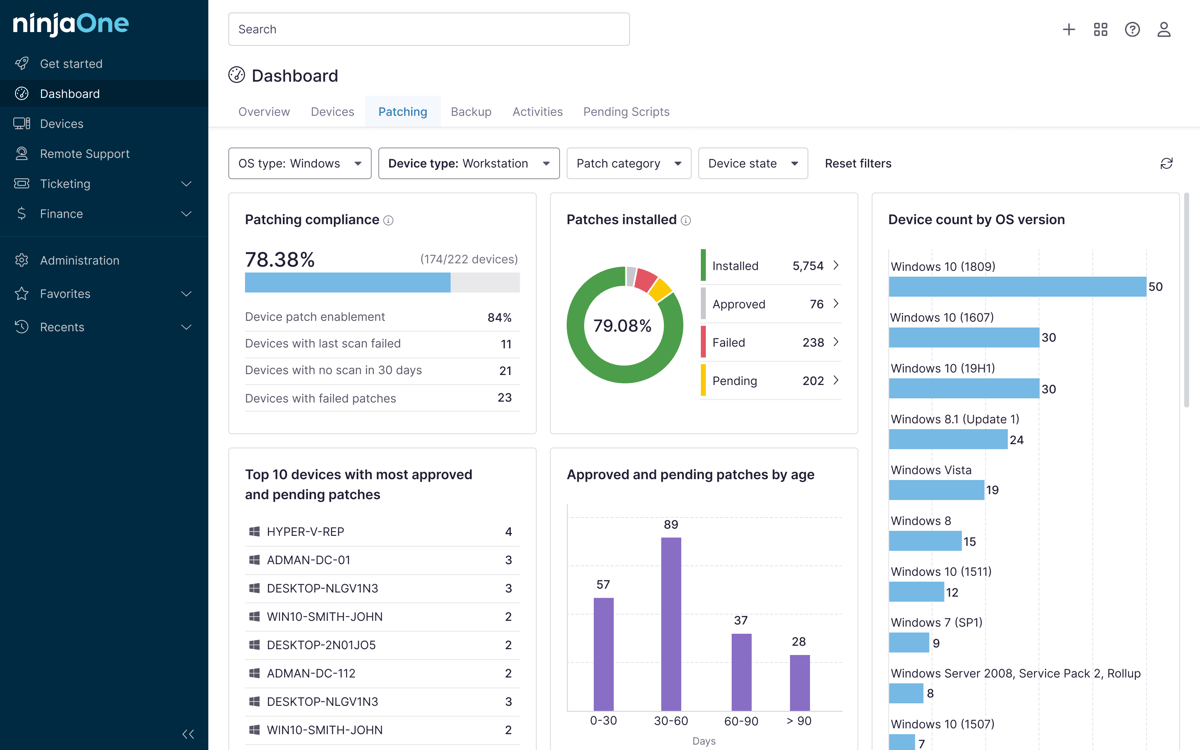
- Apply unified dashboards that track response times, service volumes, and SLA performance for all teams.
- Use reporting to highlight process alignment and identify areas where ESM teams can improve service maturity.
Outcome: By the end of this step, you’ll have established consistent cross-departmental workflows that align IT and business services under a single operational standard.
Step 5: Automate ticket and billing reconciliation
Automation closes the loop between ticket resolution, time entry, and billing. Integrating these steps into your unified service model ensures that every completed task generates accurate financial data.
📌 Use Cases:
- This step enables MSPs to maintain billing accuracy by automatically linking ticket resolutions in ITSM to approved time entries in PSA.
- It provides transparent usage tracking, allowing both clients and internal teams to verify that the billed work matches the service delivery.
📌 Prerequisites:
- Automation tools or PSA workflows capable of converting closed tickets into approved time entries and invoice line items.
- Predefined rules for ticket status, billing approval, and reconciliation frequency.
To automate ticket and billing reconciliation, here’s what you need to do:
- Configure PSA automation to create a time entry and invoice line item for every resolved ticket in ITSM.
- Schedule nightly syncs to identify exceptions and generate reconciliation reports.
- Review unmatched entries to confirm whether tickets were billed, credited, or excluded.
- Maintain workflow transparency by providing shared visibility into ticket, time, and billing data.
Outcome: You will achieve automated synchronization between PSA and ITSM, ensuring billing accuracy, reducing manual effort, and maintaining consistency between service and financial data within the unified service model.
Step 6: Govern with regular reviews and evidence
Lastly, governance keeps service performance measurable and transparent across PSA, ITSM, and ESM systems. Regular reviews will ensure the unified service model remains aligned with both business and operational goals.
📌 Use Cases:
- This step helps MSPs track SLA performance, backlog trends, and service quality across departments.
- It reinforces accountability by linking financial, service, and operational data in a recurring governance cycle.
📌 Prerequisites:
- A set schedule (monthly or quarterly) for reviews and governance sessions that includes relevant stakeholders.
- Reports from PSA, ITSM, and ESM platforms that contain SLA data, ticket volumes, and billing metrics.
The actions you need to perform are as follows:
- Be sure to schedule a monthly governance session to review SLA attainment, backlog aging, cross-department requests, and revenue versus effort trends.
- Export data from PSA (financial), ITSM (service), and ESM (cross-department) into a consolidated evidence packet. Alternatively (or additionally), employ automated evidence capture (e.g., automated executive summaries).
- Review outcomes using shared dashboards that highlight performance, exceptions, and opportunities for improvement.
- Capture key actions and assign accountability for process or configuration changes based on review findings.
Outcome: Ultimately, you’ll have a structured governance process that validates service performance, ensures continuous improvement, and strengthens accountability across the unified service management framework.
⚠️ Things to look out for
| Risks | Potential Consequences | Reversals |
| Misaligned data between PSA, ITSM, and ESM | Duplicate records or inaccurate billing data | Standardize field names and run data validation before syncing |
| Unreviewed governance metrics | Missed performance issues or SLA breaches | Schedule fixed monthly reviews or event-driven alerts and assign data owners. In addition, employ predictive SLA breach detection |
| Overcomplicated reporting | Stakeholders not understanding the data and losing visibility into key outcomes | Keep dashboards simple and focus on measurable service indicators |
Best practices for connecting PSA, ITSM, and ESM
| Practice | Purpose | Value Delivered |
| Shared data model across PSA and ITSM | Provides clients and internal teams with a single, consistent view of service and billing data | Accurate reporting, fewer sync errors, and clearer accountability |
| SLA governance and monthly reviews | Shows service results during client and internal reviews using documented performance | Transparent performance tracking and measurable improvement |
| ESM expansion | Extends standardized service workflows to other departments so all teams will follow the same delivery model | Organization-wide consistency and faster issue resolution |
| Ticket and billing automation | Links time entries, tickets, and invoices automatically to streamline technician workload and billing accuracy | Reduced administrative effort and more reliable financial alignment |
| Evidence-based QBRs | Consolidates verified metrics into review materials that demonstrate real service impact | Clear proof of efficiency, outcomes, and continuous value |
Managing multiple clients is more efficient with a unified system.
Automation touchpoint example for creating a unified service model
You can utilize automation tools where possible to simplify ticket and billing reconciliation across PSA, ITSM, and ESM systems.
- Automate ticket creation and closure syncs between RMM, PSA, and ITSM.
- Schedule a daily job to reconcile time entries against tickets and flag unmatched items.
- Generate a monthly or quarterly report that merges SLA metrics with billing data for governance and QBR reviews.
NinjaOne integration ideas for PSA ITSM integration and ESM alignment
NinjaOne can act as the operational hub connecting PSA, ITSM, and ESM systems. By linking monitoring, documentation, and automation, MSPs can maintain accurate service data and measurable governance across all departments.
| Task | Result |
| Feed RMM and endpoint alerts into PSA tickets | Ensures service events are tracked automatically and linked to contract records |
| Use PSA integration for contract and billing management | Keeps financial and operational data synchronized across systems |
| Apply ITSM workflows for request handling and process control | Standardizes incident, change, and approval procedures across teams |
| Extend service metrics to ESM departments such as HR or finance | Enables organization-wide visibility into service performance and response times |
| Store workflows, metrics, and review outcomes in NinjaOne Documentation | Provides traceable evidence for audits, governance sessions, and QBRs |
Integrate PSA, ITSM, and ESM to build a streamlined unified service management workflow
PSA, ITSM, and ESM form the core of a unified service model that links financial accuracy, operational quality, and accountability. When data flows and reporting are aligned, MSPs can manage service delivery and billing using a single, consistent system. This ensures that every metric ties back to measurable business performance.
For MSPs that need an all-in-one solution to ensure faster service delivery, accurate billing, and scalability, NinjaOne’s PSA software bundle combines billing, ticketing, documentation, and IT asset management (ITAM) into a single platform. On top of centralized IT service management, it features smart contract management, automated invoicing, and real-time visibility for boosted efficiency and maximum profitability.
Start your 14-day free trial of NinjaOne or watch a free demo of its PSA software in action.
Related topics: