Key Points
- Microsoft Edge Kiosk Mode Locks Devices: Restricts endpoints to Edge-only functionality for a predictable, secure user experience.
- Implemented via Windows Assigned Access: Operates at the OS level through dedicated local kiosk accounts rather than inside the browser settings.
- Supports Single-app and Multi-app Modes: Provides either complete application lockdown or limited flexibility for shared workstations.
- Deployed Across Industries: Retail, hospitality, education, healthcare, and digital signage rely on kiosk mode for streamline operations.
- Requires Active Management: Demands continuous monitoring, patch management, and administrative oversight to handle system updates and maintenance.
Microsoft Edge Kiosk mode locks your device to a single task or application. This is done to simplify use, reduce security risks, and streamline the customer experience for public terminals, digital signage, and more. But knowing how restricted browsers work is key to running trouble-free environments.
Kiosk mode simplifies digital interactions
Restricting your device to one function streamlines usage. Consider your technical constraints before you configure Edge.
📌 Prerequisites:
- Windows 10/11 Pro Enterprise, Education, or IoT Enterprise editions
- Dedicated local user account (Standard/Non-Admin)
- User Access Control (UAC) enabled
- Console access (Assigned Access cannot be initialized via Remote Desktop)
What Microsoft Edge kiosk mode is
Microsoft Edge kiosk mode is a specialized browser configuration that runs inside Windows Assigned Access. It only allows users to interact within Edge, giving your endpoint a single, predictable purpose in public or enterprise settings.
Capabilities include:
- Automatic launch after sign-in
- Restricted settings access
- Navigation control
- Application lock-in
How Edge kiosk mode is implemented
Despite the name, Edge’s kiosk mode is not toggled within the browser app. Instead, it is enforced at the OS level via Windows Assigned Access. Here’s how:
In Windows 10
- Press Win + I, and click Accounts > Family & other users.
- Under Set up a kiosk, choose Assigned access.
- Click Get started.
- Create a new local user account for the kiosk, or select an existing standard user account.
- For the list, select Microsoft Edge.
- Choose if Microsoft Edge kiosk mode should run as:
- Digital signage or interactive display
- Public browsing
- Restart to sign into the new kiosk account.
💡Note: Multi-app kiosk mode on Windows 10 requires advanced configuration using XML, MDM, or provisioning packages.
In Windows 11
- Press Win + I, and navigate to Accounts > Other users (or Accounts > Kiosk).
- Under Set up a kiosk, select Get started.
- Name or create your dedicated kiosk local account.
- Select Microsoft Edge from the app list.
- Choose your single-app display type:
- Digital signage / interactive display (full screen, single URL)
- Public browsing (multi-tab with idle reset)
- Restart the device to apply restrictions and launch into the kiosk profile.
Note: Multi-app kiosk mode on Windows 11 requires configuration via Microsoft Intune (MDM), WMI Bridge, or Custom AssignedAccess CSP (XML provisioning packages).
Single app versus multi-app kiosk modes
Windows supports two kiosk types, and choosing depends on whether you want your endpoint to be fully locked down or have limited flexibility.
| Mode | Behavior | Best use cases | Setup notes |
| Single-app kiosk | Device launches directly into Edge; users can’t exit | Public terminals, signage | Built into Windows Settings GUI via Assigned Access. |
| Multi-app kiosk | Edge runs alongside limited apps | Shared workstations, role-specific devices | Windows 10 uses XML/Provisioning packages; Windows 11 requires MDM (Intune), WMI, or CSP. |
Common use cases for Edge kiosk mode
Mall directories, digital signs, and healthcare kiosks rely on focused device functionality to save time and streamline the user experience.
- Retail and Point of Sale (POS): Tablets used for self-service checkout, price checks, inventory management, or digital product catalogs.
- Hospitality and Service: Customer check-in kiosks in hotels, airlines, and airports, or service booking systems.
- Education: Student devices, such as tablets or laptops, are restricted to specific testing or learning apps to prevent cheating and distractions.
- Healthcare: Patient registration terminals, wayfinding, and secure access to medical records.
- Digital Signage and Information: Displaying consistent advertising or public information without interruption.
- Workforce Management: Handheld devices for employee time-tracking, delivery updates, or manufacturing logistics.
Security and management considerations
Microsoft Edge kiosk mode ensures that users are unable to tamper with your endpoints and compromise their functionality. That said, it should not be used as a security measure on its own.
To fully secure your kiosks, implement the following measures:
- Unified endpoint management platforms (such as NinjaOne)
- Regular patching and updates
- Monitoring and logging any suspicious activities
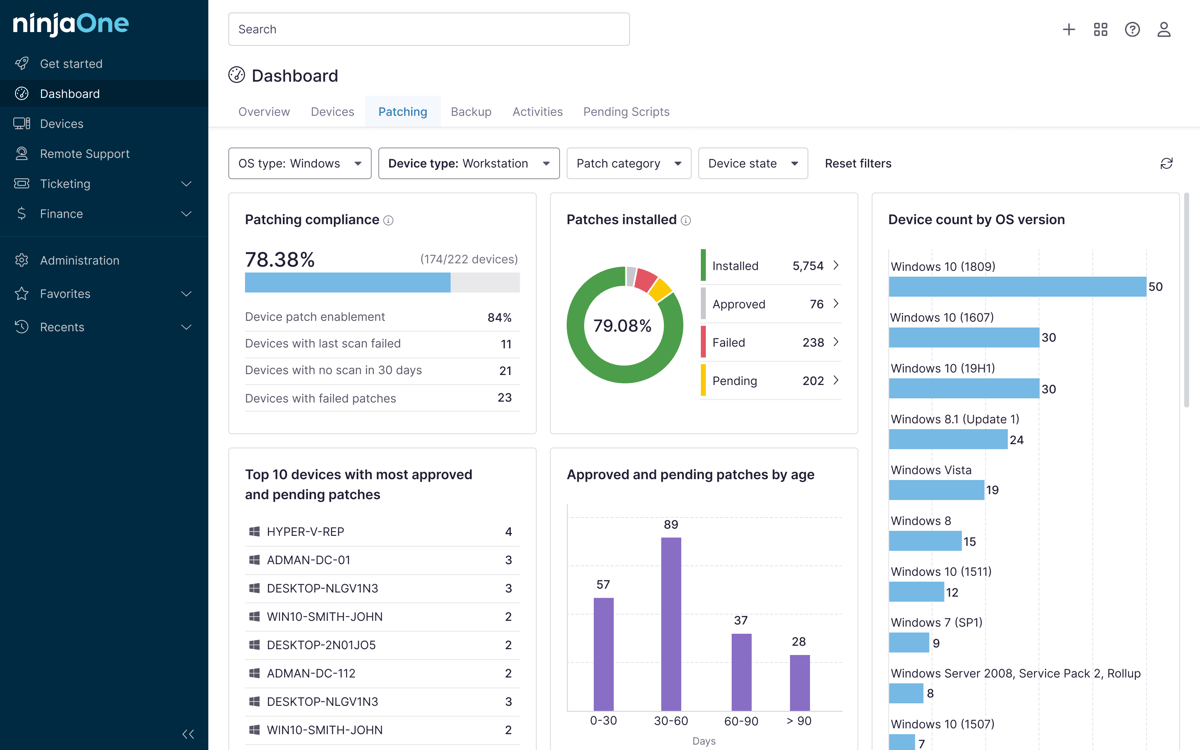
Kiosk mode reduces certain risks, but it still needs ongoing device monitoring. NinjaOne Endpoint Management gives IT teams real-time visibility into kiosk fleets. Parking technology company Flash uses the NinjaOne platform to monitor 20,000 kiosks worldwide from a single dashboard, catching issues like offline card readers before they affect revenue. Read the Flash story.
Hardening Edge Browser Policies
While Assigned Access locks down the Windows shell, administrative policies (GPO or MDM) are needed to restrict browser functionality. Key Edge policies for kiosk deployments include:
- URLAllowlist / URLBlocklist: Restrict navigation strictly to domain-approved addresses.
- KioskAddressBarEditingEnabled: Disable editing or viewing the address bar in public browsing.
- ClearBrowsingDataOnExit: Ensure session history, cookies, and cache wipe automatically when idle.
- InPrivateModeAvailability: Force InPrivate browsing mode to guarantee user privacy on shared terminals.
Pro Tip: Configure Auto-Logon for Unattended Terminals
If a kiosk restarts due to Windows Updates or power loss, it will sit at the Windows login screen unless configured to log in automatically. Use Sysinternals Autologon or set the Winlogon registry keys (AutoAdminLogon) to ensure the kiosk account launches immediately upon boot.
Limitations and scope considerations
While Microsoft Edge Assigned Access enables IT specialists to restrict functionality, it has constraints that should be considered.
For example, Edge kiosks are only applied to designated kiosk accounts. Simply put, if another user account is logged in, kiosk mode is disabled.
Kiosk mode also isn’t a potent way to harden your device’s security posture. Limiting most features just isn’t an effective trade-off. And other built-in features like BitLocker and Windows Defender play a more important role in safeguarding your endpoint data through encryption and malware protection.
Microsoft Edge kiosk mode requires planned maintenance as regular updates may disrupt kiosk sessions or even break them. And any form of troubleshooting requires administrator intervention for reliable fixes.
🥷🏻| Deploy kiosks efficiently and monitor them with real-time alerts.
Here’s how NinjaOne makes device tracking effortless.
💡Important: Kiosk mode is enforced at the OS level, which means it requires additional browser policies for compliance before IT admins can use it for internal training terminals and controlled workstations.
Microsoft Edge Kiosk mode simplifies use
Edge kiosks simplify your UI to only prioritize important business apps. It is OS-based, not app-based, and requires further hardening via monitoring platforms that simplify endpoint management for a fully secure environment.
Related topics: