
Key Points
- HIPAA-compliant patch management connects asset inventory, vulnerability scanning, risk-based remediation, and documented evidence to protect ePHI and support Security Rule requirements.
- A complete patch inventory must cover servers, endpoints, EHR-connected systems, legacy platforms, and business associate-managed systems that interact with ePHI.
- Patch prioritization should weigh ePHI exposure, asset criticality, known exploitation activity, and clinical workflow dependency, not just severity scores.
- Legacy and unpatched systems require formal exception documentation, compensating controls, risk owner approval, and a defined remediation plan.
- Audit readiness depends on retained evidence, including deployment records, scan results, exception approvals, and validation reports traceable to specific assets.
Software vulnerabilities are seldom expected, and they don’t wait for convenient remediation windows. Therefore, these unpatched systems that can be easily exploited by threat actors are usually disastrous in essential industries that depend on interconnected systems, like healthcare. According to IBM, in 2023, the healthcare industry reported the highest average breach cost of any sector at $10.93 million USD, with breaches typically going undetected for an average of 213 days, which is longer than any other industry.
The Health Insurance Portability and Accountability Act (HIPAA) sets the federal standard for protecting sensitive patient data in the United States. For enterprise healthcare organizations, HIPAA-compliant patch management is one of the most practical ways to manage that risk formally. It uses a structured, documented process that connects vulnerability identification to remediation, which supports the HIPAA Security Rule and keeps compliance teams prepared when auditors come.
This article covers what a mature patch management program looks like in a healthcare environment, how it maps to HIPAA Security Rule expectations, and what documentation organizations need to ensure audit readiness.
What HIPAA-compliant patch management means
HIPAA-compliant patch management is a structured approach to reducing software-related risk across systems that create, receive, maintain, or transmit electronic protected health information (ePHI). This kind of patch management is an ongoing process that ties vulnerability identification directly to remediation and documentation.
A compliant patch management program should cover the following activities:
- Keeping a current and accurate inventory of all relevant systems
- Identifying gaps in patch coverage and known software vulnerabilities
- Running vulnerability scans across systems commonly used to support HIPAA risk analysis and risk management requirements
- Prioritizing remediation efforts according to risk level
- Testing updates in a controlled environment before broad deployment
- Deploying patches within defined timelines
- Confirming that patches were successfully installed
- Recording exceptions, approvals, and remediation evidence for auditing
It’s important to note that HIPAA doesn’t mandate a specific patching tool, vendor, or fixed update schedule. What the HIPAA Security Rule does require is that covered entities and business associates manage risk to ePHI while ensuring that it’s documented, repeatable, and defensible. Patch management supports that expectation by addressing software-related vulnerabilities.
How patch management supports the HIPAA security rule
Patch management contributes to HIPAA Security Rule compliance in practical and measurable ways. But before you can understand where it fits, you must see how it maps to specific regulatory expectations instead of looking at it as just a general best practice.
The HIPAA Security Rule is built around the CIA triad (confidentiality, integrity, and availability), which defines how ePHI must be protected at every stage. Patch management reinforces all three:
- Confidentiality: Limits the window of opportunity for unauthorized access through known software weaknesses
- Integrity: Reduces the likelihood of system compromise or unauthorized modification of patient data
- Availability: Lowers the risk of ransomware, unplanned downtime, and service disruption affecting clinical operations
Beyond the CIA triad, patch management also supports broader Security Rule requirements, including:
- Risk analysis: Giving organizations visibility into software-related weaknesses across ePHI systems through vulnerability scanning and patch tracking
- Risk management: Acting on scan findings and deploying patches to convert identified risk into documented remediation
- Audit readiness: Maintaining patch records, exception logs, and validation reports to produce evidence that demonstrates vulnerabilities are being actively managed
Note that patch management strengthens the technical safeguard layer, but organizations still need access controls, workforce training, incident response procedures, and business associate oversight to build a program that holds up under scrutiny.
Build an enterprise healthcare patch inventory
Enterprise healthcare environments depend on various interconnected systems, and any one of them can become a liability when they fall outside the patch management program’s scope. Therefore, you need an accurate inventory of all systems that directly or indirectly support ePHI access and clinical workflows.
A healthcare patch inventory should include:
- Servers supporting clinical and administrative functions
- Workstations used across care settings
- Laptops and remote endpoints, including those used off-network
- Systems connected to or integrated with electronic health records (EHR)
- Third-party healthcare applications with access to ePHI
- Identity and access management systems
- Network-connected clinical devices and equipment
- Cloud-connected workloads and hosted services
- Remote access infrastructure, including VPN and gateway systems
- Unsupported or legacy systems that cannot be patched through standard processes
- Systems managed by business associates that interact with ePHI
After you’ve identified these systems, map each asset against the following attributes:
- System owner and accountable team
- Primary business or clinical function
- Level of ePHI exposure
- Asset criticality to operations
- Current patch status
- Known vulnerability status
- Vendor support lifecycle and end-of-life dates
- Active exception status if applicable
It’s important to avoid having an incomplete or outdated inventory that creates blind spots, which auditors will find and threat actors can exploit. Keeping it current should be an ongoing operational responsibility.
HIPAA vulnerability scan and risk-based prioritization
A HIPAA vulnerability scan is done to detect technical weaknesses in internal networks and external perimeters for the Security Rule. However, this scan is not remediation. It’s the starting point for teams to know where software-related risk is present so that patch management can address it. Scans will usually identify the following:
- Missing OS and app patches
- Outdated or unsupported software
- Exposed services and insecure configurations
- Internet-facing vulnerabilities requiring immediate attention
Before acting on results, teams should also review scans for credentialed scan success, duplicate findings, false positives, and patch availability to ensure that the remediation effort is directed at real risks that you can actually address.
When it comes to prioritization, don’t just look at severity scores. Teams should also weigh the following before assigning remediation timelines:
- Known exploitation activity
- Degree of ePHI exposure
- Asset criticality and clinical workflow dependency
- Whether compensating controls are already in place
Based on those factors, findings can be assigned to a remediation tier:
- Emergency remediation for actively exploited or critical exposure
- Accelerated patch cycle for high-priority findings
- Routine patching within standard deployment windows
- Risk addressed through configuration changes rather than a patch
- Temporary controls applied while a patch is pending or unavailable
- Risk formally accepted and documented
- Finding flagged for additional review before a response is assigned
Manage patch exceptions and legacy healthcare systems
Healthcare enterprises will usually have systems that can’t be patched on a standard schedule, including legacy clinical applications, vendor-controlled devices, and end-of-life platforms. You don’t have to eliminate every exception, but you need to manage each one with enough documentation and oversight to ensure it holds up under audit scrutiny.
Every patch exception should include the following:
- Reason the patch can’t be applied and the affected system or group
- Vulnerability details and associated business or clinical impact
- Temporary controls in place to reduce exposure in the interim
- Risk owner approval with an expiration or scheduled review date
- Long-term remediation or replacement plan
When a patch cannot be applied, compensating controls become the main line of defense. Depending on the system and its exposure, those controls may include:
- Network segmentation, access restrictions, and privilege reduction
- Enhanced monitoring and firewall rules to block exploitation pathways
- Active replacement planning where no patch will ever be available
Patch management audit checklist and evidence retention
After deploying patches, it’s important to ensure audit readiness, which depends on having evidence that your patch management program is governed, repeatable, and consistently followed. This documentation ensures you have a defensible program when auditors or investigators come asking.
A patch management audit checklist should cover the following:
- Current and accurate asset inventory
- Documented patch management policy with defined ownership
- Vulnerability scan results tied to remediation workflows
- Patch testing and deployment records
- Failed patch reports and remediation follow-up logs
- Exception approvals and risk acceptance documentation
- Change management records and validation reports
- Confirmation that required reboots or restarts were completed
- Coverage across third-party applications, not just operating systems
- A maintained list of unsupported or legacy systems
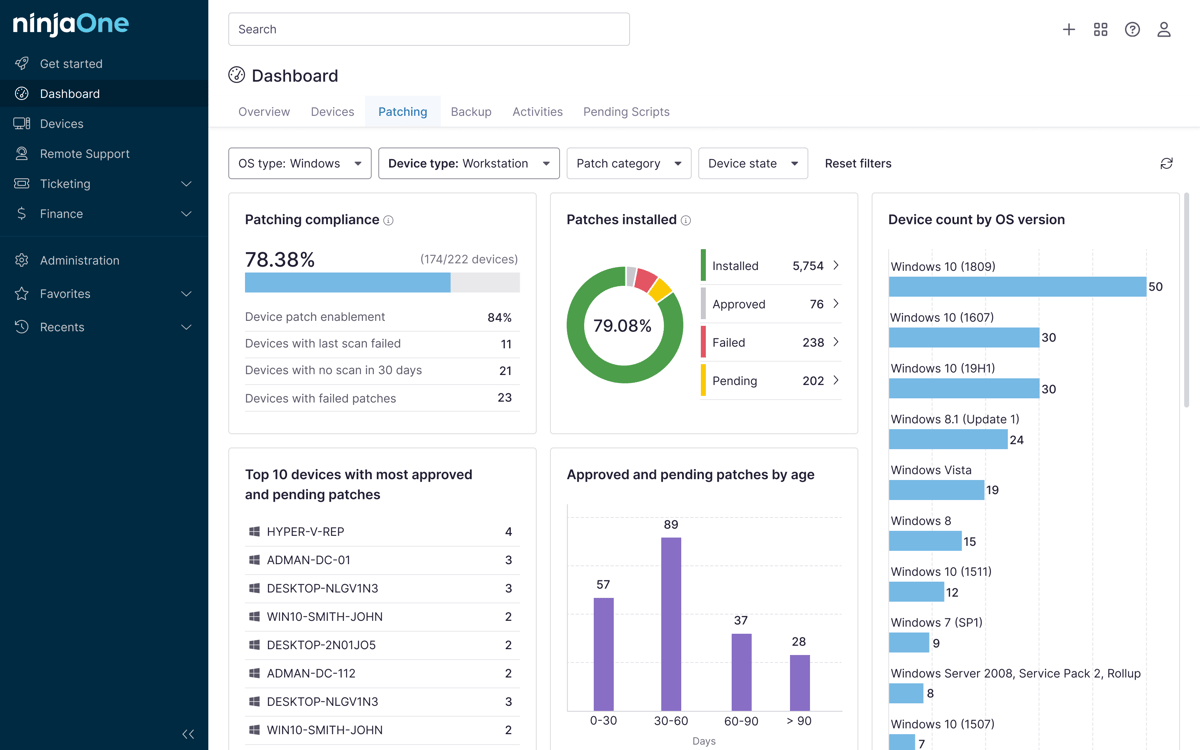
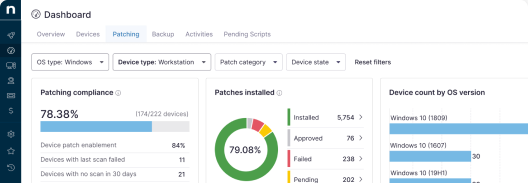
Never skip validation after deployment. Teams should always confirm patch installation status, review failed deployments, rerun vulnerability scans where appropriate, and check endpoint compliance dashboards to verify that exposure was actually reduced.
Additionally, evidence should be retained in a consistent format that compliance and audit teams can easily access. Patch records, exception logs, scan results, and validation reports should all be traceable back to specific assets, findings, and remediation decisions.
Build a patch management program that holds up when it counts
Patch management in healthcare is an active discipline that connects asset visibility, vulnerability intelligence, and documented remediation into a program that regulators and auditors can evaluate. Organizations should build it into a repeatable, evidence-driven process to reduce real risk to ePHI, respond to emerging threats faster, and demonstrate Security Rule compliance without scrambling when scrutiny arrives. This should involve cross-functional coordination across IT, security, compliance, and clinical operations to prevent avoidable gaps.
Related topics: