
Key Points
- An Endpoint Protection Platform is a core layer in enterprise data security architecture focused on endpoint-level threat prevention.
- EPP uses signature scanning, behavioral analysis, exploit mitigation, and firewall controls to block known threats.
- Its prevention-first design reduces incident volume but limits visibility into advanced or multi-stage attacks.
- EPP is most effective when integrated into a layered security architecture with detection and response capabilities.
- Strong outcomes depend on policy governance, regular updates, and integration with security operations.
Endpoint Protection Platforms (EPPs) play an important role in modern security architecture, especially as enterprise environments become more distributed and threat actors become craftier. In fact, recent findings show that endpoint malware threats grew every quarter throughout 2025, culminating in a 1,548% spike in new unique malware from Q3 to Q4 alone, with 23% of detected malware evading traditional signature-based detection entirely. This underscores how rapidly threats targeting devices are evolving.
Therefore, organizations need to strengthen security at the device level, and EPPs help by providing preventive safeguards against malware, ransomware, and other attacks even before they can execute. Although the focus is on endpoint detection and response technology in today’s threat landscape, it’s still important to understand the role of EPP in enterprise security architecture.
Automate vulnerability remediation before they become incidents.
What is an Endpoint Protection Platform?
An EPP is designed to stop threats at the device level before they cause grave damage and spread. It forms the preventive control layer within endpoint security architecture.
Its functional components usually include:
- Signature-based scanning to identify known malware
- Heuristic analysis to detect suspicious code patterns and previously unknown threats
- Behavioral monitoring to block harmful activity
- Built-in host firewall management to control network traffic
- Exploit prevention mechanisms to protect vulnerable apps and processes
In short, its main purpose is to prevent compromise instead of providing in-depth investigation or post-incident response capabilities.
Prevention as the first line of defense
EPPs are basically the control point that absorbs routine attack traffic before turning into more complex incidents. It typically operates in the background to reduce risk exposure by blocking malicious files, preventing exploit attempts, restricting unauthorized changes, and enforcing device policies.
Prevention offers value in many ways:
- Reducing security events that require review
- Limiting vulnerabilities that attackers can exploit
- Containing common threats before they spread
- Standardizing baseline security enforcement across distributed environments
EPP then helps security teams focus their efforts on higher-risk activity. However, prevention only lowers risk and doesn’t remove the need for monitoring and response capabilities altogether.
Architectural limitations of EPP
The architecture of EPPs is primarily designed for stopping known or immediately observable threats, so it can’t reconstruct complex attack narratives.
It’s important to know that EPPs can struggle when dealing with:
- Previously unknown or zero-day vulnerabilities
- Fileless malware that operates directly in device memory
- Bring-your-own-vulnerable-driver (BYOVD) attacks that disable endpoint sensors
- Attacker movement between endpoints
- Complex multi-stage attack chains across systems
Threat actors adopt stealthier methods every day, so correlating telemetry across endpoints and users is crucial for an effective defense beyond the standalone prevention logic of EPP tools.
EPP within a layered defense strategy
For maximum protection, EPPs aren’t deployed in isolation. Instead, it operates as a preventive foundation that supports broader monitoring, detection, and response capabilities.
Within a layered model, EPP usually works alongside:
- Endpoint detection and response platforms that provide deeper behavioral visibility
- Security information and event management systems that aggregate and correlate logs
- Extended detection and response (XDR) platforms that unify telemetry across endpoints, identity, cloud, email, and network
- Managed detection services that add continuous monitoring and investigative expertise
When integrated strategically, these layers ensure that routine threats are blocked early while more advanced activity can be addressed through coordinated response workflows.
Operational considerations
When choosing an EPP, it’s crucial to consider how well it aligns with the organization’s technical environment and security governance model.
Some evaluation factors to consider should include:
- Compatibility across diverse operating systems and device types
- Frequency and reliability of threat intelligence and signature updates
- Ability to integrate with existing tools
- Clearly defined escalation paths when incidents occur
This means even a well-designed EPP can underperform if policies are not maintained, updates are inconsistent, or alerts are not reviewed. Disciplined oversight and alignment with broader operational processes determine effectiveness.
Common misconceptions
When teams don’t fully understand EPPs, they unknowingly create unrealistic expectations or security planning gaps. See some misconceptions below with clarifying context for each.
| Misconception | Clarification |
| EPP eliminates all malware. | EPP reduces exposure to common threats but can’t block every advanced or unknown attack. |
| EPP and endpoint security are the same. | Endpoint security is broader, while EPP is focused on prevention specifically. |
| EPP replaces detection tools. | Prevention and detection serve different roles, but they are designed to work together. |
| EPP requires no oversight. | Ongoing tuning, updates, and monitoring are necessary to maintain effectiveness. |
NinjaOne integration
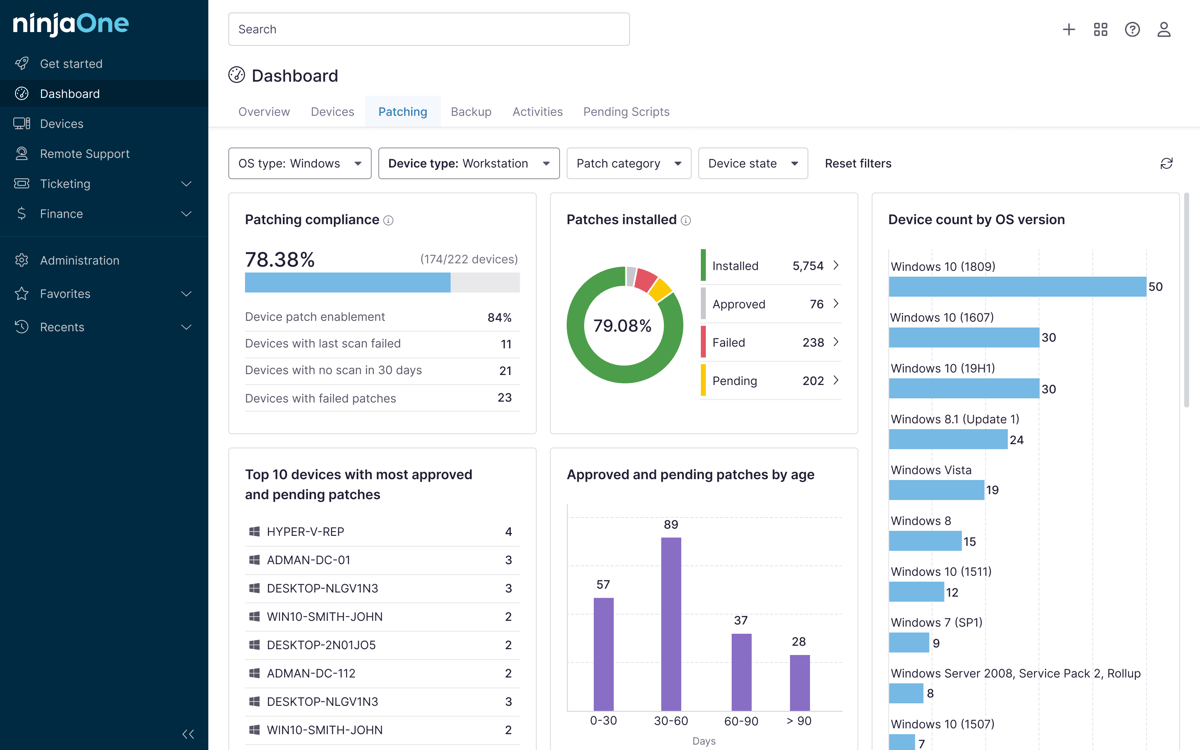
Effective endpoint protection requires consistent visibility, coordinated response, and enforcement of preventive controls. NinjaOne can provide that support with its many capabilities:
- Centralized visibility into endpoint health and security posture across distributed environments
- Integration with security tools to streamline monitoring and incident coordination
- Automated policy enforcement to maintain consistent configuration standards
- Workflow alignment that connects prevention controls with remediation processes
With these features, NinjaOne helps organizations ensure that preventive controls operate as part of an integrated endpoint management and security strategy rather than as isolated point solutions.
Optimize IT operations while improving endpoint security and compliance.
Positioning EPP within enterprise data security architecture
An Endpoint Protection Platform is still a critical component of modern enterprise security, as it provides preventive control that reduces initial attack exposure at the device level. However, its effectiveness depends on positioning, so organizations must ensure it works within a framework that includes detection, correlation, and coordinated response. Just remember its various strengths and limitations to make the most of this prevention strategy.
Related topics: