Key Points
- Dark web alerts are actionable indicators of exposed data, and must be triaged quickly to contain credential risk within the first hour.
- Confirm which identities, tenants, and systems are affected before making changes.
- Reset passwords, revoke tokens, and verify MFA to stop credential reuse and secure high-risk accounts quickly.
- Build a short, evidence-based timeline from logs and alerts to guide containment decisions and communication.
- Convert findings into a 30-day cleanup plan with assigned owners, completion dates, and control updates to prevent recurrence.
- Integrate dark web monitoring into detection workflows, metrics, and quarterly reviews.
A dark web alert indicates that your credentials or sensitive data have been exposed in breach sources, forums, or marketplaces. These alerts usually come from security monitoring tools or threat intelligence partners. Receiving one can be stressful, so you need a clear workflow to handle them effectively.
The right response is to conduct a fast triage to stop credential reuse, a focused investigation to confirm the scope, and a short cleanup plan to make the fix last. This guide gives your team a direct process based on the incident-response lifecycle in NIST SP 800-61 Rev. 3 (2025) so you can act within minutes instead of days while keeping up with best practices.
📌 General prerequisites:
Before you can triage a dark web alert, you need a few core capabilities in place for a fast, coordinated response:
- A responder on-call rota and a single incident channel for coordination.
- Access to identity and endpoint logs, SaaS audit logs, and EDR telemetry.
- A password reset and token revocation procedure for managed identities.
- Conditional Access and Multi-Factor Authentication (MFA) controls that can be changed quickly.
- A simple exercise runbook and timeline template.
🎥 This video walks through the full three-phase response on screen: How to Respond to Dark-Web Alerts With a 1-Hour Triage and 30-Day Cleanup Plan.
Phase 1: Initial response (0-1 hour)
Understand the alert and capture the right fields
When a dark-web alert is triggered, validate it first. Make sure you act only on verified, high-confidence data, not on false positives. In this step, your goal is to collect the minimum details needed to take action while filtering out low-confidence or duplicate alerts.
Steps:
- Review the alert source.
- Confirm it came from a trusted vendor or internal monitoring system. Check for known false positives or vendor reliability issues.
- Capture the following data points:
| Field to capture | Description | Why it matters |
| Email or Username + Domain | The exposed identity or account name. | Links alert to the internal directory or IAM records. |
| Timestamp and breach source | When and where the data was seen (forum, marketplace, leak site). | Determines recency and threat relevance. |
| Data type exposed | Plaintext password, hash, token, PII, or other sensitive data. | Indicates severity and exposure scope. |
| Service or site context | The site or service where the data was found. | Helps identify potential reuse or lateral risk. |
| Confidence score / Vendor notes | Any verification or enrichment provided. | Prevents chasing false positives. |
- Classify the alert.
- Use your internal severity matrix to label the alert as High, Medium, or Low. Base this on account sensitivity, data type, and likelihood of exploitation.
- If the alert is Medium or High, create a ticket in your incident response system. Include all captured fields and the initial classification for tracking.
The 1-hour triage workflow
Once the alert is validated, the clock starts. The next 60 minutes are critical. Your job is to contain any credential risk while gathering evidence for investigation. Break the hour into three blocks: Confirm and Scope, Contain, and Stabilize.
0 to 15 minutes: Confirm and scope
- Match the exposed identities to your environment and determine their role:
- Is the email or username part of your tenant?
- Is this a standard user, privileged admin, or service account?
- Check the last sign-in time, location, and device posture.
- Flag any sign-in anomalies or policy exceptions (e.g., login from a new country or unusual device).
15 to 40 minutes: Contain credential risk
Take immediate steps to block potential misuse.
- Force a password reset for the affected account.
- Revoke refresh tokens to terminate active sessions.
- Require MFA re-registration if MFA bypass is suspected.
- Disable legacy authentication and app passwords if in use.
- Confirm legacy authentication is blocked for the account via Conditional Access, and remove any app passwords still in use.
NOTE: Microsoft disabled Basic/legacy auth by default for most Exchange Online protocols back in 2022; SMTP AUTH Basic auth is scheduled to be disabled by default for existing tenants at the end of 2026, so verify no exceptions remain
40 to 60 minutes: Stabilize and log evidence
Document what happened and confirm that containment is complete.
- Capture a mini timeline:
- First and last sign-in times
- Failed login attempts
- Device IDs and IP addresses
- Any privilege escalation or role changes
- Notify the affected user or account owner. Provide next steps and guidance on password reuse.
- Record all actions in the incident ticket, including what was changed, by whom, and when.
Phase 2: The 24 to 72-hour hunt and remediation
After initial triage and containment, the next 2–3 days are for understanding the full scope of the incident. Your goal is to confirm whether the compromise was contained, identify any signs of lateral movement, and address weaknesses that could be exploited again.
Identity and access review (0-24 hours)
Focus on suspicious behavior and account activity.
- Check for anomalies:
- Impossible travel events
- Sign-ins from new or atypical locations
- Brute-force or password spray attempts
ALSO READ: Detecting and Preventing Brute Force Attacks with PowerShell.
- Review MFA and password activity:
- Recent MFA prompts or failed verifications
- Password resets or changes made without the user’s request
- Sign-ins from unknown or unmanaged devices
- Inspect OAuth and app grants.
- Revoke unrecognized third-party connections tied to affected accounts.
- Remove unused app permissions.
Endpoint and SaaS review (24-48 hours)
Investigate devices and cloud activity for signs of persistence or data access.
- Review endpoint telemetry:
- Query EDR telemetry for new executables or credential dumping tools.
- Look for suspicious parent-child process chains or abnormal command-line activity.
- Review email and file activity:
- Check mailboxes for new forwarding or filtering rules.
- Identify file access spikes, permission changes, or mass downloads in SharePoint, OneDrive, or Google Drive.
Hardening changes (42-72 hours)
Apply lasting fixes and reinforce controls.
- Disable legacy authentication protocols still used by the affected accounts.
- Enforce phishing-resistant MFA and bring password policy in line with NIST SP 800-63B-4: require a minimum of 15 characters, drop mandatory periodic resets and composition (complexity) rules, and screen new passwords against a compromised-password blocklist.
- Patch systems or endpoints showing signs of credential theft tools or exploited vulnerabilities.
Phase 3: Long-term recovery and hardening
The 30-day cleanup plan
Once the immediate threat has been contained and investigated, use the next 30 days to focus on recovery and hardening. This phase closes security gaps, documents durable changes, and reduces repeat incidents.
Tasks to schedule over 30 days
| Week No. | Tasks |
| Week 1: Credential and user hygiene |
|
| Week 2: Application and access cleanup |
|
| Week 3: Detection and data protection |
|
| Week 4: Recovery validation and documentation |
|
Runbook, artifacts, and versioning
Document everything once an incident is contained and cleaned up. Ensure that what you learned remains available for the next response. A clear runbook and version control keep every response consistent and reviewable.
Steps:
- Maintain a one-page triage checklist and a short timeline template.
- List what to validate, capture, and confirm in every alert.
- Use the same timeline format for recording timestamps, actions, and responders.
- Version playbooks, communication templates, and contact lists.
- Add an owner and last updated date to every document.
- Store versions in a shared location so the team always uses the latest copy.
- Store evidence links and outputs with the incident ticket.
- Include screenshots, log exports, and any forensic data.
- Link them directly to the incident ticket for easy reference and audit review.
Metrics and review cadence
Track the right metrics and run regular reviews to keep your response process sharp. Measure what matters, then confirm that your playbooks still work as intended.
Core metrics
- Time to confirm an alert and contain credential risk
- Number of token revocations and forced resets
- Detections added and controls changed within 30 days
- Recurrence rate of similar alerts per quarter
Reviews
- Monthly operational review of alerts, actions, and outcomes.
- Quarterly exercise to validate the triage checklist and timeline process.
NinjaOne integration
Automation speeds up triage and reduces manual errors. NinjaOne helps you collect evidence, contain threats, and track progress without slowing down your team.
| Capability | How it supports the triage |
| Automated evidence collection | Runs scripts to pull identity, endpoint, and device state into the incident ticket during the first hour. |
| Rapid containment | Pushes configuration updates to enforce password resets or apply device compliance gates immediately. |
| Detection and alerting | Sends alerts on processes, domains, or behaviors linked to credential abuse. |
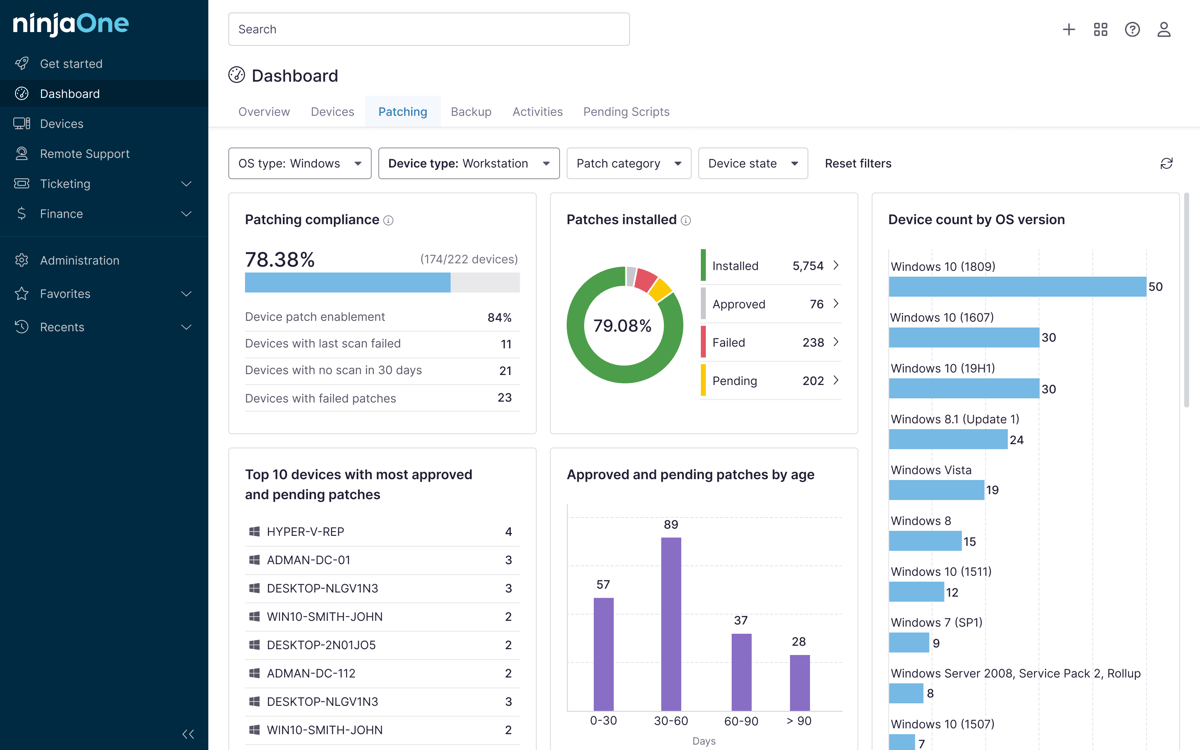
| Reporting | Generates dashboards showing time to contain, the number of forced resets, and completion of 30-day actions. |
Building a fast, repeatable response to a dark web alert
Dark web alerts only matter if they trigger fast, consistent action. A one-hour triage stops credential reuse early. A focused 24- to 72-hour hunt helps you find related risks, and a simple 30-day cleanup plan locks in the improvements.
When your team version controls your artifacts and tracks the right metrics, your alert handling becomes faster, more repeatable, and more reliable.
Related topics: