Key Points
- Establish a Baseline Cadence: Define a core list of recurring IT tasks, such as patching, AV updates, and ticket analysis – and map them to specific weekly, monthly, quarterly, and annual intervals.
- Standardize with Templates: Use reusable calendar templates to ensure service consistency across all clients, eliminating the need for manual, “one-off” scheduling for every task.
- Implement If-Then Automation: Move beyond simple reminders by building automated workflows that trigger PSA tickets or dashboard alerts when critical maintenance windows are missed.
- Bridge the Documentation Gap: Embed direct links to specific SOPs and configuration fields within calendar events to reduce technician search time and prevent technical drift.
- Drive Governance Through Reporting: Transform raw maintenance data into client-facing reports to provide tangible proof of service, building trust and transparency with stakeholders.
A missed patch provides just enough window of exposure for aggressive threat actors to disrupt operations. To avoid such a scenario, corporate IT or MSPs can use IT maintenance calendar templates to standardize crucial IT tasks. When coupled with IT automation, this simple framework can become the backbone of IT security for businesses of any size.
The Shift: Firefighting vs. Proactive Maintenance
Before building your template, it is important to recognize the operational difference between a reactive team and a standardized one.
| Feature | Firefighting (Reactive) | Maintenance (Proactive) |
| Approach | Responding to outages and “loud” issues. | Scheduled auditing and preventative care. |
| Stress Level | High; constant “emergency” mode. | Low; predictable and manageable workload. |
| Costs | Unpredictable spikes in labor and emergency fees. | Predictable, flat-rate labor costs. |
| Client Impact | Dissatisfaction due to downtime and instability. | High trust through transparency and uptime. |
Implementing a template-based approach transitions your team from a cost center that fixes problems into a strategic partner that prevents them.
Building an IT maintenance calendar template
This guide outlines the most critical steps for creating an IT maintenance calendar template. Before advancing, keep these prerequisites in check:
- Centralized service catalog with defined maintenance and review activities
- Agreement on cadence and reporting segments (for example, annual compliance review)
- Calendar and PSA or RMM integration for recurring tasks (like NinjaOne ticketing)
- Defined roles for review ownership (for example, service manager)
With the template, MSPs should be able to improve and standardize service delivery levels across all clients.
1. Identify core maintenance and review activities
A clearly defined baseline of tasks and services should be at the core of the maintenance template. For instance, AV updates, patch compliance review, or ticket trend analysis would typically receive a monthly cadence.
The ideal output should lead to a checklist of tasks mapped to monthly, quarterly, and annual calendar intervals, providing a repeatable foundation for all clients.
Cadence Checklist:
| Cadence | Task Description | Goal |
| Weekly | Critical Patch Review & Server Disk Space Check | Prevent immediate downtime/outages. |
| Monthly | AV Threat Report & Patch Compliance Audit | Identify security gaps and “failed” updates. |
| Quarterly | Backup Restore Test & Permission Audit | Ensure data recoverability and “Least Privilege.” |
| Annual | Disaster Recovery Simulation & Lifecycle Review | Budget for hardware refreshes and compliance. |
2. Build standardized calendar templates
Once the activities are defined, the next step is to formalize them in standardized templates. Instead of hands-on scheduling for each client or task, consider mapping reusable templates that can be deployed across your portfolio. These should include:
- Predefined monthly, quarterly, and annual events pre-loaded with the right task types
- Consistent task naming conventions (like “Q1 Backup Validation Review”); make tracking and reporting easier.
- Embedded links to documentation or standard operating procedures (SOPs) inside the event description to guide technicians
The calendar templates can be formatted for Excel or Google Sheets for quick sharing. If not, a custom template can be readily available via an RMM.
3. Automate notifications and reminders
Apart from tasks, look to automate alerts and reminders to keep all team members aligned and accountable. For example, create dashboard alerts for overdue or missed reviews, giving managers visibility into compliance gaps.
Automation Touchpoint Example
- The calendar template triggers a recurring event.
- PSA automatically generates a maintenance ticket.
- NinjaOne exports supporting reports (like patching and backup validation).
- Completed ticket links to client QBR evidence pack.
Pro Tip: Use “If-This-Then-That” Logic
Don’t just schedule a reminder; build a workflow.
- Logic: If Patch Compliance is < 95% on Friday at 4:00 PM, Then auto-generate a “High Priority” ticket in the PSA and alert the Service Manager.
- Benefit: This moves your team from “checking calendars” to “managing by exception.”
A calendar is useless if the timings are not being met regularly. That said, even the most competent engineers occasionally miss a beat. They need support, too, and it typically comes in the form of automation.
4. Tie reviews to client-facing governance
IT maintenance is one of those services that truly shines when MSPs can fully showcase their work in an easy-to-understand format. Clients are more agreeable when there’s tangible proof that their systems are being maintained properly.
To achieve this level of understanding, MSPs should focus on a client-facing report that transforms raw data into discernible highlights or areas of opportunity. There should also be a shared understanding about the frequency of the reports and their content.
When all is said and done, a structured IT maintenance calendar can boost not only productivity, but also trust and transparency between MSPs and various stakeholders.
NinjaOne integrations for IT maintenance calendars
NinjaOne makes it easier for MSPs to standardize IT review and maintenance cycles.
Automate core tasks
NinjaOne can be used to schedule autonomous patching, backup validation, and reporting directly into recurring cycles. The unified security and IT management platform additionally supports automation for network discovery, which reduces human error and the window of exposure.
Centralize documentation
Technicians can use NinjaOne Docs to quickly report an issue or find similar IT events with relevant records and remediation steps.
Pro Tip: Connect Schedules to SOPs
Link your calendar events directly to NinjaOne Documentation™ fields to eliminate technical drift. For example, a “Quarterly Firewall Audit” event should contain a direct link to the specific device’s configuration SOP and previous audit logs. This reduces “search time” for technicians and ensures the review is performed consistently, regardless of which team member is assigned the task.
NinjaOne Documentation™ also securely stores completed reports and makes them more accessible for collaboration.
Visualize status and compliance
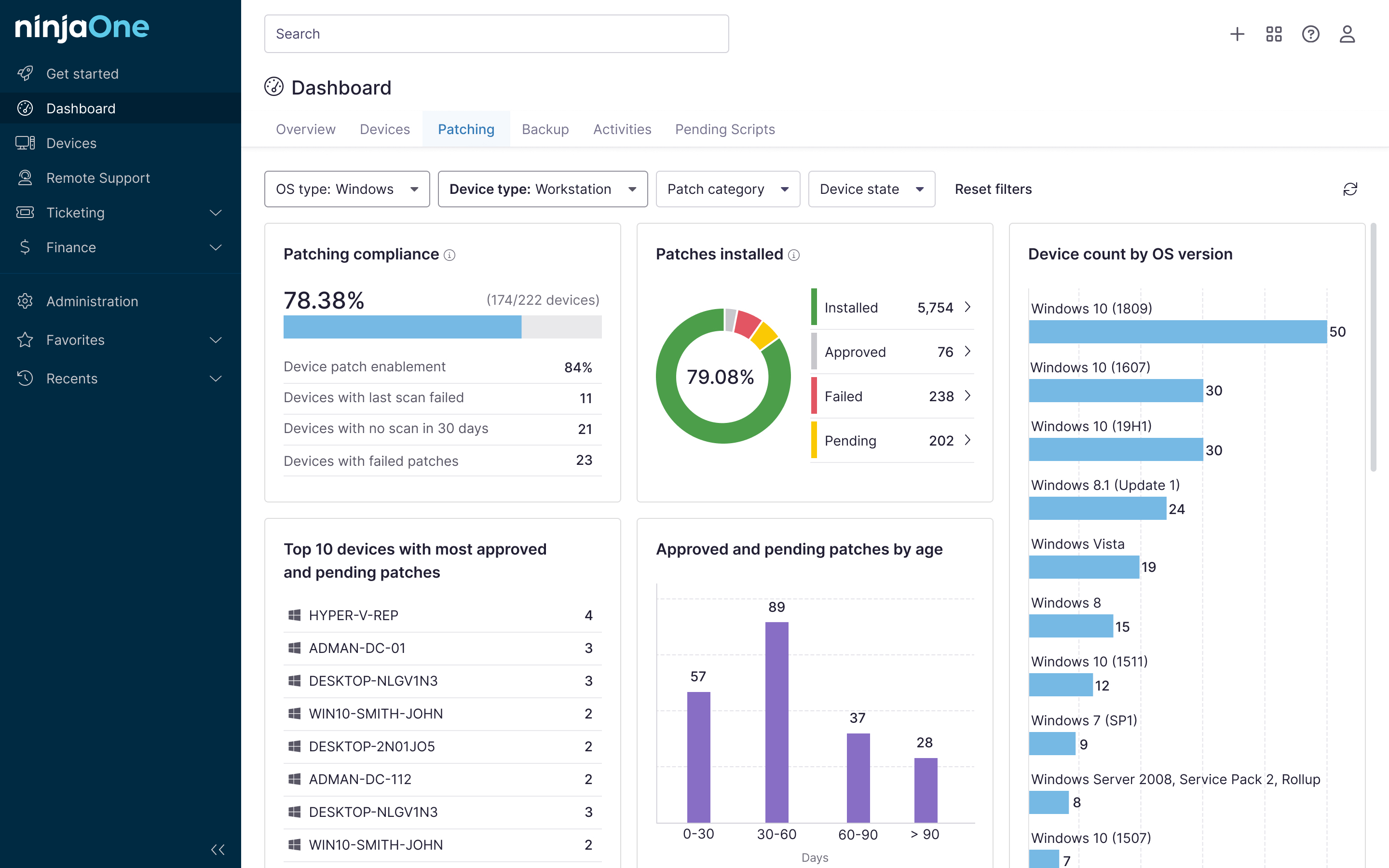
NinjaOne’s dashboard can be customized to highlight or isolate a segment of the IT environment. For instance, you can quickly monitor endpoint security with a centralized view of device health, security status, patch management, and integrated antivirus solutions.
Simplify QBRs and reviews
MSPs can use NinjaOne’s autonomous data collection and reporting templates to create focused presentations in great detail efficiently.
With NinjaOne, MSPs can deliver predictable, transparent, and evidence-based ITAM and endpoint security services.
Improve consistency and readiness with IT maintenance calendars
One way to practice proactive IT management is to utilize templates for iterative tasks, particularly in IT maintenance, where a strict deployment schedule and auditing make a world of difference.
On that note, technology and compliance requirements evolve, so maintenance templates should follow through. For instance, new tasks should be added as needs emerge, while outdated tasks must be retired accordingly. Automate IT processes where possible, but never compromise your edge in auditing.