A structured and tool-focused onboarding process is crucial when hiring new technicians for a managed service provider (MSP) environment. MSPs rely heavily on consistently using platforms like RMM, PSA, documentation, and security systems.
Therefore, technician onboarding should be tailored around using these core tools to accelerate ramp-up time, reduce costly errors, and instill confidence in both technicians and clients.
Keep reading to learn how to build a tool-centric onboarding process for new MSP technicians.
What should be included in onboarding training?
Your MSP technician training program should have structured phases to guide new hires through steps without overwhelming them with information. Each stage must build upon the last, starting from basic access to tool mastery.
Here’s a guide for general stages and actions to include in your training process:
Stage 1: Pre-onboarding preparation
Preparation is crucial for onboarding success. Before the technician arrives, you must set the foundation for a smooth first week.
- Provision tool access:
- Create accounts in the PSA, RMM, documentation/knowledge base (KB), and security systems.
- Test each login to ensure no password resets or MFA issues arise on their first day.
- Apply the correct role-based permissions to prevent access errors or unnecessary privileges.
- Deliver a tool map:
- Share quick references with tool names, login URLs, and authentication methods.
- Briefly explain each tool’s purpose (for example, PSA = ticketing + time tracking, RMM = remote monitoring + automation).
- Provide a visual diagram showing how the tools connect in the overall workflow.
Stage 2: Day 1 tool walkthrough
The first day sets the tone for a technician’s confidence. Build familiarity and confidence right away.
- Provide guided demos.
- Walk them through login processes, MFA steps, and dashboards.
- Demonstrate core navigation, from menus and search functions to shortcuts and help sections.
- Assign starter tasks.
Stage 3: Role-based tool modules
After the initial exposure, training should dive deeper into modules tailored to the technician’s role.
- PSA training
- Create new tickets with categorization.
- Set priorities based on SLAs and escalate if necessary.
- Track time accurately.
- Use ticket notes and internal comments.
- RMM training
- Launch secure remote sessions.
- Apply scripts to automate tasks.
- Read system health dashboards and interpret alerts.
- Document results for traceability.
- Documentation training
- Edit existing KB entries with proper formatting and version control.
- Create new documentation.
- Link KB articles to tickets.
- Security tools training
- Identify different alert severities and required actions.
- Escalate suspicious events to senior engineers or SOC teams.
Stage 4: System integration awareness
Avoid confusion by showing new hires how tools interconnect to support seamless workflows.
- Demonstrate a complete workflow. For example:
- A ticket comes into the PSA.
- The RMM is used to connect remotely and resolve the issue.
- Documentation is updated to reflect the fix for future reference.
- Security alerts, if related, are logged and escalated appropriately.
- Explain trigger-based automation (for example, PSA tickets automatically triggering scripts in the RMM).
- Highlight dependencies (for example, if data is not properly logged in one system, it can disrupt reporting or escalations in others).
Stage 5: Feedback and check-in
Finally, technicians can also learn from constructive feedback. Make sure to reinforce learning and address knowledge gaps early in the process.
- Schedule an end-of-week touchpoint:
- Schedule a short meeting to ask what’s clear and what’s confusing.
- Review a technician’s first real tickets or tasks and provide constructive feedback.
- Clarify any missteps in tool usage to prevent them from forming bad habits.
- Assign a tool “buddy”:
- Pair the new technician with a peer for less formal, day-to-day guidance.
- Ensure the buddy checks in at least once daily during the first two weeks.
- Initiate a continuous feedback loop.
- Use pulse surveys or quick check-ins to check their comfort level.
- Adjust the pace of the training if a technician is struggling.
Optional automation touchpoint
You want to avoid wasting time and frustrating new hires when they encounter roadblocks due to broken logins or offline systems during training. It’s a good idea to use automation to validate if critical tools are functional before onboarding begins. Consider starting with a PowerShell script, such as the one below:
$tools = @{
“PSA” = “https://psa.domain.com/health”;
“RMM” = “https://rmm.domain.com/health”;
“KB” = “https://kb.domain.com/health”
}
foreach ($tool in $tools.GetEnumerator()) {
try {
Invoke-RestMethod -Uri $tool.Value -TimeoutSec 5 | Out-Null
Write-Host “$($tool.Key) is accessible”
} catch {
Write-Host ” Unable to access $($tool.Key)”
}
}
This script pings the health endpoints of critical systems, including PSA, RMM, and KB. It checks if each tool is accessible and responsive within a defined timeout period. The results are displayed immediately, alerting the onboarding team if a system is unavailable.
⚠️ Things to look out for
Risks | Potential Consequences | Reversals |
| Information overload |
|
|
| Inconsistent onboarding delivery |
|
|
| Lack of real-world application (training is too theoretical) |
|
|
| Failure to update onboarding content |
|
|
Core ideas of building confidence through tool-centric onboarding
Employee onboarding, especially for technicians, is often generalized and rushed. This scenario can lead to new hires feeling unsure how to navigate the systems they’ll use daily on the job. To ensure they can excel in their positions and deliver consistent service, focus on mastery of tools, including PSA, RMM, documentation, ticketing, and security platforms. Here are some of the most essential principles to follow:
Onboarding must be tool-specific.
Generic onboarding creates unnecessary gaps that technicians will have to fill independently. To avoid this, you want to focus on training new hires on specific platforms and emphasizing how these tools fit into their daily workflows. Such focus can reduce guesswork and set clear expectations.
Practice-based orientation accelerates competence.
Learning by observing alone is not enough. It’s always best to let new hires experience simple but meaningful hands-on tasks during IT support training, such as closing a ticket or creating a basic tech report. These tasks enable them to familiarize themselves with the tool and reduce anxiety, especially when taking on more essential core tasks later.
Focus on confidence, efficiency, and consistency from the start.
Make new technicians feel equipped and supported to build their confidence. It will also encourage them to become more efficient in their work, leading to more consistency across the team. This consistency strengthens the MSP-client relationship.
Quick-Start Guide
NinjaOne can support building a tool-centric onboarding process for new MSP technicians. Here’s how NinjaOne facilitates this:
1. Structured Training Environments
- NinjaOne allows you to create isolated, sandboxed environments where new technicians can practice without affecting live customer systems.
- You can replicate customer setups for realistic training scenarios.
- Assign limited permissions to new hires so they only access tools and data appropriate for their skill level.
- Gradually expand access as they prove competence.
3. Progressive Skill Development
Use NinjaOne’s Workramp integration for tiered training:
- Phase 1: Basic remote access, ticket handling, and simple troubleshooting.
- Phase 2: Advanced tools like PowerShell, scripting, and deeper system management.
- Phase 3: Specialization in areas like backup, security, or network management.
4. Real-Time Monitoring & Feedback
- Track technician activity in real time to identify knowledge gaps.
- Use session recordings and logs for constructive feedback.
5. Automated Workflows
Automate repetitive tasks (e.g., device checks, patch deployments) to let new techs focus on learning core skills.
Best practices for sustainable tool onboarding
Your IT support onboarding process should be repeatable and role-aware, as your tools and operations evolve continuously. Here are some best practices to ensure sustainability and scalability:
- Maintain consistency across staff: Use the same structured module per role to ensure technicians follow the same workflows and avoid confusion and errors.
- Tailor for different roles: Customize tool paths for different technicians (such as L1, Tier 2, project engineers, and security experts) to ensure training is always relevant and efficient.
- Stagger delivery of training: It’s good to pace training sessions over several days. This pacing empowers technicians to apply new knowledge in real-world tasks before advancing to more complex functions.
- Build a just-in-time documentation: Provide concise, searchable guides, like a “Tool Tips” section, for specific tasks to reduce dependence on senior staff and support self-sufficiency.
- Measure the onboarding effectiveness: Like every other business process, you need to track and measure specific onboarding metrics (such as ramp time, ticket resolution rates, and self-reported confidence scores) to refine and improve the program later.
- Review and update quarterly: Regular reviews must be done as tools evolve, new features roll out, and client needs shift. Leaders can then update training materials, refresh documentation, and incorporate feedback from recent hires.
NinjaOne platform integration ideas
The onboarding process can be more efficient and scalable when automated. MSPs leveraging NinjaOne can embed the onboarding workflow into the platform to ensure that tool access, progress tracking, and performance monitoring happen consistently.
Here are a few integration ideas:
- Use NinjaOne to automate tool credential provisioning and track onboarding via tags (for example, “PSA_GotIt”, “RMM_Completed”) for quick visual indicators of progress.
- Deploy preconfigured agents or scripts to initiate RMM access or KB setup directly to the technicians’ workstations.
- Monitor usage across new accounts and let NinjaOne generate alerts if onboarding steps are incomplete.
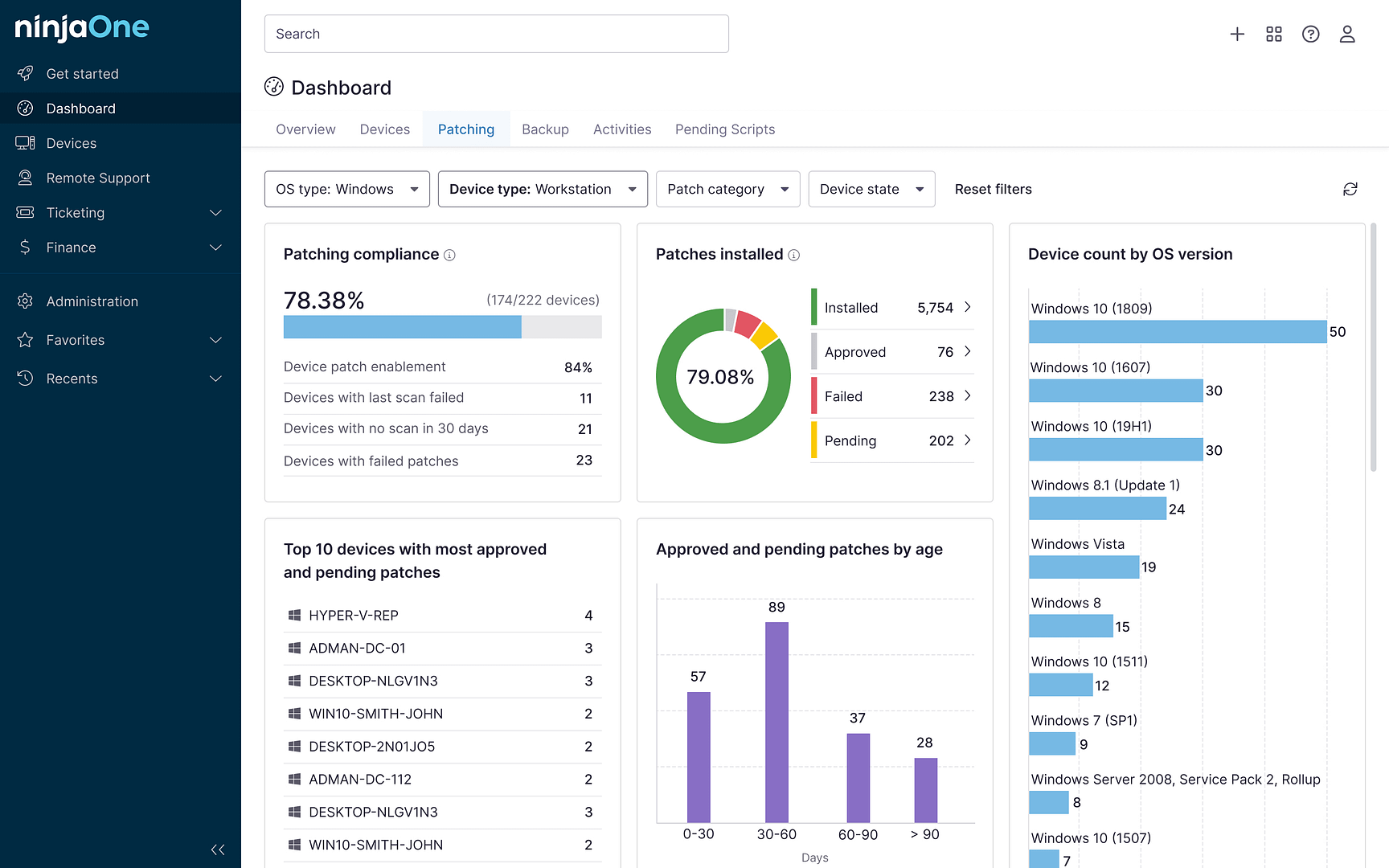
- Offer dashboard views showing onboarding status across tools and staff, so leaders can quickly identify bottlenecks and provide targeted support where needed.
Onboarding that builds technicians (and trust)
Focusing on structured, role-based training can help MSPs turn new hires into reliable, industry-ready technicians. This kind of onboarding, paired with sustainable best practices and risk management, ensures confidence and good service from day one. With the right approach, new technicians can strengthen client trust and lead to business success.
Related topics: