Key Points
Proactively anticipating and eliminating recurring IT issues for VIP users requires defined user profiles, clear disruption thresholds, continuous monitoring, and structured escalation to maintain trust and service quality.
- Define and categorize VIP user profiles to tailor support levels, expectations, and communication strategies.
- Set measurable disruption and SLA thresholds to trigger escalation before recurring issues impact user experience.
- Track repeat incidents using tagging, problem logs, dashboards, and root-cause ownership to identify systemic issues early.
- Use automation, monitoring tools, and standardized governance reviews to prevent issues across similar environments and demonstrate continuous improvement.
All users are important customers to any business, and they expect a frictionless experience. Because of this, the Technical Account Manager responsible for IT issue resolution should make VIP support their top priority. They need to be proactive in anticipating and eliminating problems before the client even notices them.
Remember that clients have a low tolerance for recurring issues. In fact, even minor problems that occur repeatedly can damage your organization’s reputation. Proactively preventing such issues will, on the other hand, make your team appear more trustworthy and reliable.
Oversight and control is crucial over legacy systems.
Framework for proactive issue resolution
Define the user profiles (executives, client liaisons, billable high-risk roles)
There are various types of user profiles, and an MSP must have different methods for handling them. Some users require more attention than others, while some customers prefer to be left alone unless an issue occurs. Understanding the needs and perspectives of each customer can be a significant help in providing them with the services they require.
Set acceptable disruption thresholds (e.g., “no more than two Teams lag complaints per month”)
It’s essential to provide your users with the best possible experience. However, incidents and issues are also unavoidable. Setting acceptable disruption thresholds is a good way to strike a balance between these two factors. If incidents move past the threshold, then an escalation is necessary. There may be an underlying issue that can only be resolved by more experienced tech experts.
Use ticket and alert tagging to monitor user-specific incidents
Tickets and tagging aren’t just for alerting; they can also serve as a log of the issues a client experiences. It helps technical account managers monitor their customers and see right away if there are recurring issues and if escalation is necessary.
Log repeat incidents under “Problem” categories—not just tickets
Don’t just keep track of individual tickets. You should also have a log of recurring issues across different clients. If it occurs frequently enough, there may be an underlying issue that requires further attention or escalation.
Assign RCA owners and track solution deployment timelines
Team members must conduct a root-cause analysis (RCA) in the event of an incident. This helps everyone understand the issue, how to fix it, and how long it will take. The analysis can also reveal areas for improvement, so technical account managers will have a faster fix ready if a similar situation arises again.
Push fixes to similar environments when applicable
If a user is experiencing an issue, clients with similar environments may also be experiencing the same issue. If that’s the case, it’s essential to be proactive and implement fixes for other clients before they report the issue.
Automation example: Detecting repeated issues using event logs
Event logs provide a wide variety of information. They’re a record of system, security, and application events in a computer. Keeping track of these logs can help you anticipate and eliminate recurring issues for your users.
Use a flexible, documented script template that you can adapt to their own applications and use cases to monitor and analyze system event logs.
Best practices for how to deal with recurring problems
Create a dedicated watchlist for user-specific alerts
If you’re working with multiple customers, it’s easy to accidentally overlook things. This isn’t ideal for your customers. Creating a dedicated watchlist, especially for high-value clients, can help resolve this issue. Set specific alerts so the dedicated CSMs will easily notice when a VIP customer has raised a concern.
Set specific SLA thresholds: Faster response, shorter resolution windows
Customers should never be kept waiting. It’s important to have a response time threshold and ensure that IT support staff or technicians resolve issues within the specific SLA (e.g., 15-minute response, 2-hour resolution target). This prevents downtime and future problems.
Use per-user dashboards to track active incidents and downtime
It’s not enough to respond to customer concerns quickly. Customer care representatives should also practice proactive issue resolution. One way to achieve this is to create specific dashboards for each client.
Keep track of the products and services they use. If there’s an incident or some unexpected downtime, IT staff must act quickly and try to resolve the issue before the client raises a ticket.
Document and share RCA outcomes internally (e.g., KB articles or post-mortems)
MSPs should also learn from the outcomes of past incidents. Conducting internal root-cause analysis and post-mortems can help identify gaps that the current procedure may not yet address. Managers will also have an easier time developing policies and SLA targets to further improve response times and issue resolutions.
Hold monthly reviews of each user’s incident history
This is another way to be proactive in issue resolution. If a user is experiencing a high number of incidents within a short period, there may be a deeper issue at play and may require escalation.
Auto-escalate when issue thresholds are crossed
Set a threshold for the number of incidents a client can have before automatically escalating. This saves everyone a lot of time and resources. The customer won’t have to create a ticket because you have a system in place for it.
Governance and review cadence
Appoint a tech lead or technical account manager to own VIP reporting
VIP clients should have their own dedicated technical account managers to ensure they receive the necessary attention and that their issues are promptly addressed. This person should ideally be a tech expert who can resolve issues on their own.
Use escalation workflows that notify leadership of repeated issues
Having a clearly outlined escalation workflow means every team member knows what they’re supposed to do when an incident occurs. Some issues can’t be resolved by IT support staff on their own, especially if they are recurring and more technical than what they’re trained for.
Track improvement trends across months to demonstrate proactive resolution
This is especially important for client reporting. Users should have the support they need, and MSPs need to be able to show concrete evidence that they’re capable of providing that. This will foster a stronger relationship between the client and the service provider.
Build a VIP-specific section in your QBR deck or monthly updates
VIP users are some of your most important customers. Therefore, incident reports and resolutions should be included in the quarterly business reports and business updates. You can highlight victories and improvements, as well as note points for growth and the different ways the rest of the organization can support these VIP clients.
NinjaOne Platform integration ideas to help prevent recurring normal and VIP user problems
Here are some ways to use NinjaOne tools to anticipate and eliminate recurring user problems:
- Tag VIP users in NinjaOne’s asset inventory or contact records to ensure that they are always given priority.
- Use monitoring thresholds per endpoint (e.g., CPU utilization, disk latency, app crash frequency).
- Set up scripted checks using a remote scripting tool that automatically creates PSA tickets when specific thresholds are met.
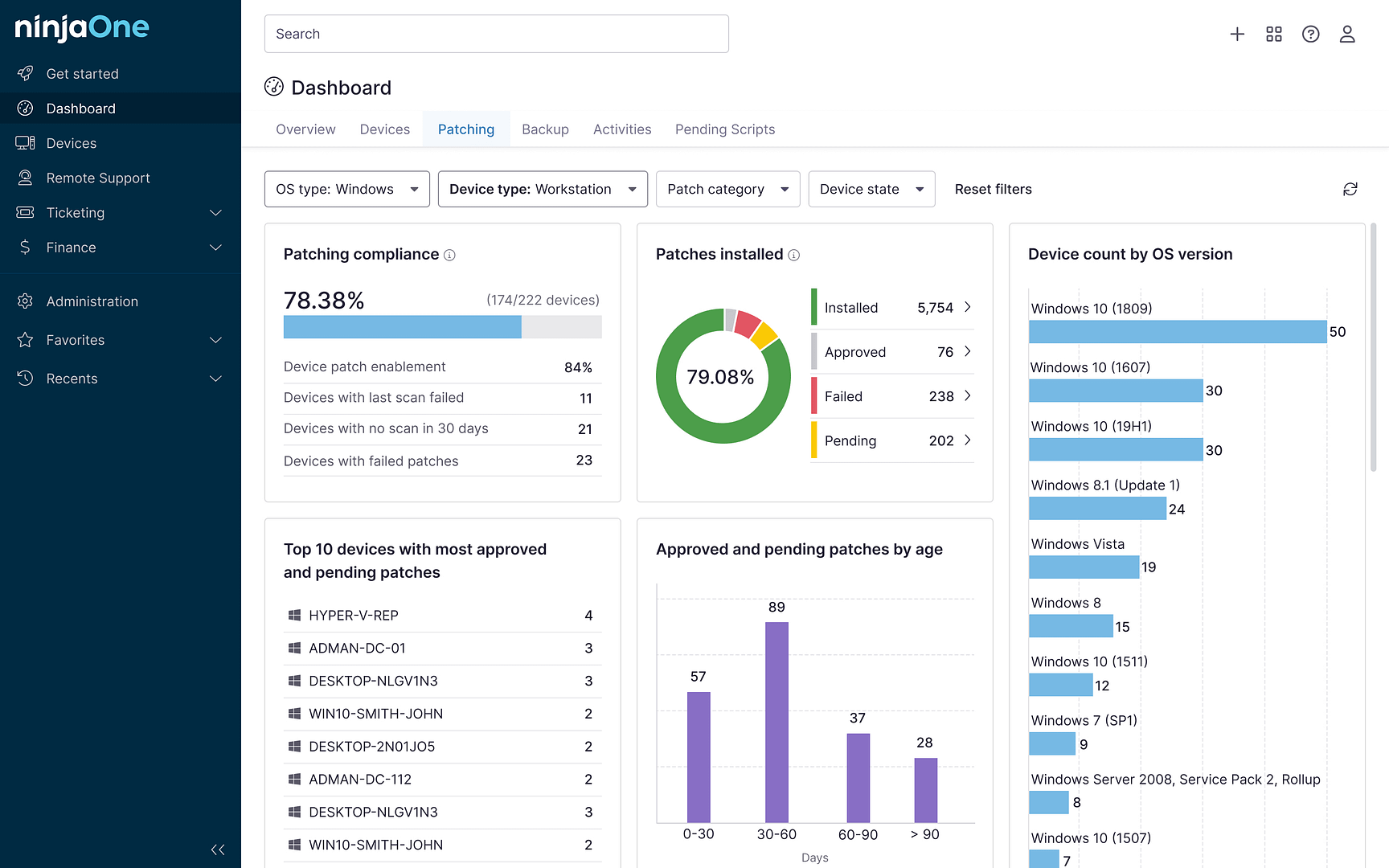
- Create dashboard tiles that show incident counts, patch health, and other relevant information.
- Automate scheduled patch reports for devices.
- Use NinjaOne’s policy framework to deploy preventive scripts across different client groups.
Bring consistency and governance to complex infrastructures with NinjaOne.
Resolve recurring user problems with the right tools
Users experiencing recurring issues can pose a threat to your organization’s reputation. Because of this, MSPs must be proactive in order to avoid friction, reinforce trust, and consistently deliver high-quality service. By combining automation, trend monitoring, and personalized SLAs, MSPs can deliver experiences that customers actually notice and appreciate.