Key Points
- Enterprise patch management is critical for large organizations to address challenges such as network downtime, patch rollout across multiple OS (Windows, Mac, Linux), server redundancies, scalability, and standardization.
- Proper automation and orchestration in patching reduces costs, streamlines IT operations, and supports enterprise growth.
- Benefits of enterprise patch management include:
- Eliminating security risks,
- Reducing data breach exposure,
- Enhancing system features,
- Providing reliable IT support, and
- Ensuring compliance with cybersecurity regulations
“Some things age better with time; unfortunately, the software is not one of them,” iLink Digital explains. Enterprise patch management systems come to the rescue whenever software malfunctions or becomes outdated. In this overview, we’ll uncover the challenges, benefits, and case studies for enterprise patch management.
Current enterprise tech challenges
Enterprises face unique challenges that differ significantly from those encountered by small-to-medium-sized businesses (SMBs). An enterprise patch management solution must address and solve these enterprise-specific challenges. Some current patching and technological issues that many enterprises are facing today include:
Network utilization
Network downtime is costly and, unfortunately, can be caused by patching. Flawed patches, failed deployments, and reboot difficulties can all negatively affect an enterprise network.
Patching rollout
Large businesses often rely on multiple operating systems. Enterprise patching solutions should be able to roll out patches to Windows, Mac, and Linux operating systems.
Server redundancies
Server redundancies are backup servers that can take over for a primary server in the event of failure. An enterprise patch management solution should accommodate server redundancies within an organization.
Scalability and standardization
Standardization allows enterprises to reduce the complexity and costs of patch management. Additionally, it supports scalability and keeps pace with an enterprise’s continuous growth.
As these examples show, enterprise-level patching brings its own set of complications. For a closer look, our Top Patch Management Challenges of 2025 video explores these pain points in more depth and how teams are working to overcome them.
Patch management benefits for enterprises
IT departments and MSPs use many different types of patch management, all of which provide similar benefits for an organization. Some benefits that patch management provides for enterprises include:
Eliminate security risks
Data breaches can be disastrous for an enterprise, and IBM’s 2026 Cost of a Data Breach report puts the global average cost of a data breach at $4.99 million, the highest figure IBM has ever recorded. Enterprise patch management helps organizations identify and prevent security vulnerabilities that could damage their business.
Provide tech support
When software issues arise in an organization, all teams within a business rely on their MSP or IT department to fix the bug quickly so that they can get back to work. Patch management enables IT teams to provide the necessary technical support for all members within an enterprise.
Improve functions and features
In addition to tightening security, patching can also add new features to the software, helping businesses outperform competitors and attract new clients.
Meet compliance standards
Enterprises need to follow multiple cybersecurity compliance standards and practices to improve security. Patch management ensures that enterprises protect their important data and remain compliant with these standards.
Patch management case studies with NinjaOne
When a complete patch management policy and software solution work together, an organization receives all the benefits listed above. However, you shouldn’t just take our word for it. Here are a few case studies that show how NinjaOne’s enterprise patch management solution helps remote workforces, improves user experiences, tightens security, and supports compliance efforts.
Hybrid workforce case study
This hybrid workforce case study demonstrates how effective patch management supports on-site and off-site employees.
During 2020, when COVID-19 forced many businesses worldwide to transition from on-site to remote work environments, an insurance company (which requested to remain anonymous for security purposes) that offers vehicle, home, and business insurance partnered with NinjaOne for patch management services that could support their hybrid work environment.
In their words:
“We were able to transition our entire patching process over to Ninja very quickly so that we could support our newly remote and hybrid workforces. We were also able to finally solve our patching challenges with field employees who never came into the office.”
Zero Latency VR user experience case study
This Zero Latency VR user experience case study illustrates how patch management improves user experience by enabling IT teams to provide superior innovation and support.
Zero Latency VR is the global leader in free-roam, multiplayer virtual reality gaming. Since partnering with NinjaOne in 2018, Zero Latency has used patch management to build a secure IT infrastructure, provide superior innovation, deliver its services regularly, and support its customers remotely.
The Zero Latency team explains, “We’re both a high-growth technology company and an entertainment company. We need to deliver an amazing customer experience in order to continue growing rapidly. With Ninja, we’ve built a process that allows us to innovate rapidly, respond to issues proactively, and deliver support to customers in a way that sets us apart in the industry.”
City of Vidalia security and compliance case study
This security & compliance case study with the City of Vidalia shows how a reliable patch management solution can strengthen IT security and improve compliance.
Vidalia, LA is a small city with around 4,000 residents that relies on a small tech team for the IT management of various city departments, including City Hall, the Police Department, the Fire Department, the Utility Department, and more.
After partnering with NinjaOne and implementing a patch management solution, they were able to build a more secure network, ensure compliance standards were met, streamline support efforts, and more.
Their team stated, “Compliance is very important for the agencies we manage, from CJIS compliance for our Police Department to PCI compliance for City Hall. Automating patch management through Ninja allows us to keep our operating systems up-to-date, making both achieving compliance and reporting on compliance far easier.”
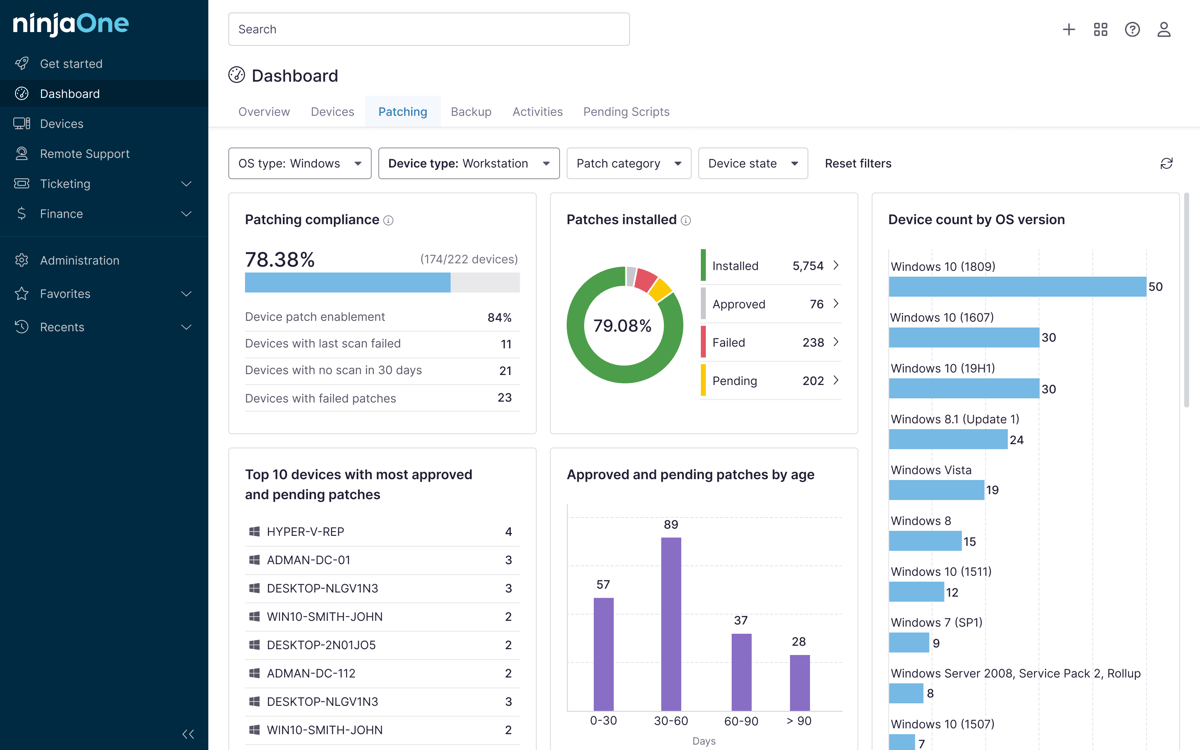
Automate your patching processes with NinjaOne
Protect your endpoints, improve client experiences, and pave the way for innovation with NinjaOne’s patch management software solution. Start your free trial with NinjaOne today.