Key Points:
- IT environments generate more alerts, device events, and tickets than any technician can manually sort through, and the time spent gathering context before fixing anything has become the real bottleneck.
- Resolution quality often depends on who happens to pick up the ticket, since institutional knowledge tends to live in people’s heads instead of the workflow.
- NinjaOne Katana AI is a new AI assistant, built natively into NinjaOne, that summarizes device health and activity, recommends fixes, and lets technicians search their environment in plain language.
- Katana AI reasons over a customer’s own NinjaOne environment, so what it surfaces reflects how that specific environment actually behaves, not generic best practices.
- Every recommendation requires a technician’s approval before anything runs. Role-based access controls, per-AI permissions, and a kill switch keep IT leaders in control of what Katana AI can see and do.
- Katana AI is currently in Early Access.
An alert fires. Before you can fix anything, you have to figure out what it actually means. Is this device having a one-off hiccup, or is it part of something bigger happening across the environment? That means pulling up device history, checking recent activity, maybe cross-referencing it against similar alerts elsewhere in your environment. By the time you understand the problem, you’ve spent more time investigating than you will resolving it.
That gap between “something’s new” and “I know what to do about it” is where most of a technician’s day disappears.
The real work starts before you start fixing anything
Every endpoint throws off signals: alerts, patch events, performance data, activity logs. Individually, none of these are hard to read. At scale, across a growing fleet of devices, the alerts become noise you have to dig through before you can find the alert that actually matters.
Traditional monitoring tools show you the data. They don’t tell you what it means or what to do about it. So, the burden falls on the technician to correlate an alert with a device’s history, cross-reference it against past issues, and decide whether it’s worth escalating, all before touching a fix.
Uncover hidden browser risks
Great instincts take time to build
Here’s the part that’s harder to fix with better dashboards: even once the problem is clear, the fix isn’t always obvious. A technician who’s seen a pattern before recognizes it instantly. A technician who hasn’t yet has to search documentation, ask a colleague, or work through it by trial and error, and there’s no shortcut around that except experience.
That’s not a flaw in any individual technician. It’s how expertise gets built, one issue at a time, over years. The problem is that in the meantime, resolution speed and consistency naturally vary across a team while that expertise is still being earned.
Build a stronger security foundation
Growing without losing speed
IT teams are managing more endpoints every year, and MSPs feel that pressure multiplied across every client environment they support. The faster environments scale, the more valuable it becomes for every technician, not just the most experienced ones, to move quickly and confidently. For MSPs specifically, that’s a margin story too: the faster a whole team can resolve issues consistently, the more capacity there is to take on new clients without things slipping.
Introducing NinjaOne Katana AI
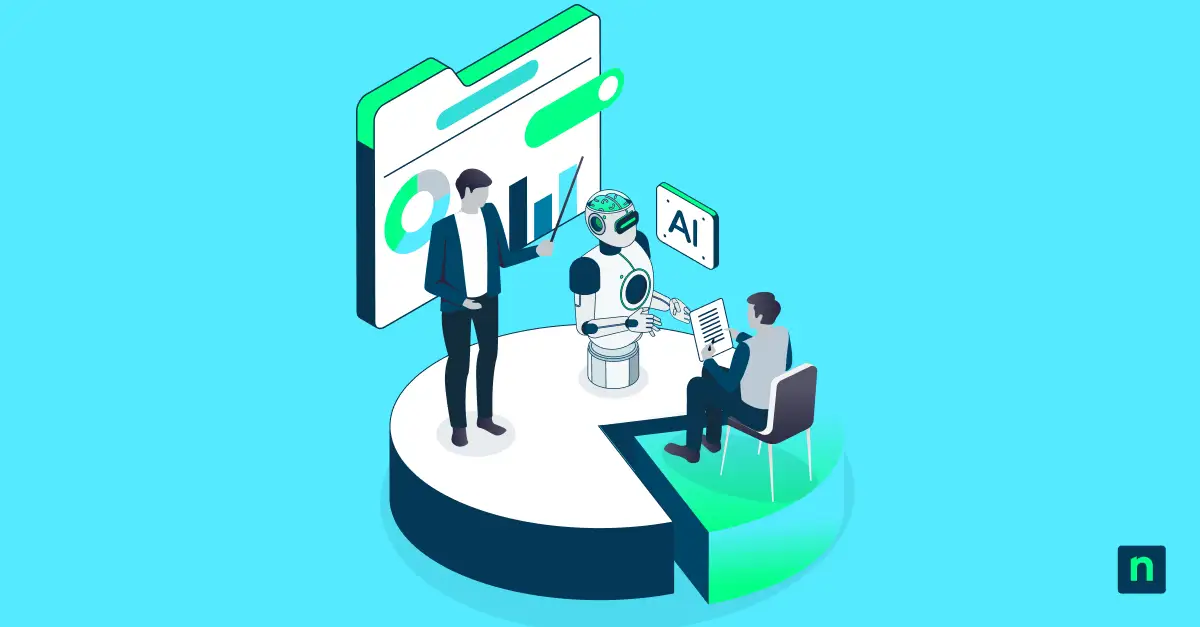
NinjaOne Katana AI is a new, agentic AI assistant, built directly into the NinjaOne platform, designed to close the gap between noticing a problem and actually resolving it, and to help every technician build that resolution instinct faster.
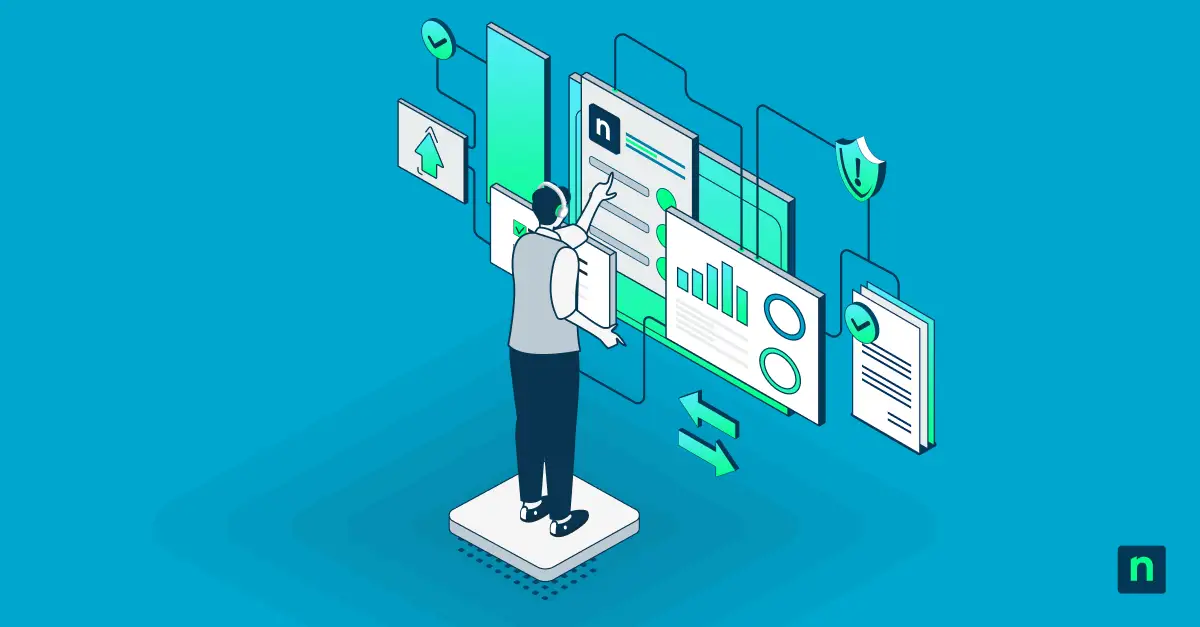
Instead of manually pulling device history, alert logs, and past issues together, technicians get an instant summary: device health, recent activity, and correlated alerts, so they understand what’s actually happening before they start digging. Because Katana AI reasons over a customer’s own NinjaOne environment rather than a generic model, what it surfaces reflects how that specific environment behaves, not a generic best-practice guess.
From there, Katana AI recommends the next step: relevant scripts, proven fixes, related incidents. A technician who’s new to an environment, or new to the field, gets the same starting point as someone who’s been troubleshooting it for years. That’s what helps less experienced technicians ramp up faster and handle more on their own, while freeing up experienced technicians to spend less time walking others through the basics and more time on the work that actually needs their depth of knowledge.
And it’s built to work where technicians already are. Recommendations, scripts, and next steps surface inline, so acting on a suggestion doesn’t mean switching tools or losing your place. Technicians can also search their environment using plain language instead of building filters or knowing exactly where to look.
None of this works, though, if it comes at the cost of control. That’s why governance isn’t an add-on to Katana AI. It’s part of how it was built. Katana AI recommends; it doesn’t act on its own; every suggested fix or script requires a technician’s explicit approval before anything runs. Role-based access controls and per-AI permissions let IT leaders decide exactly where Katana AI is active, down to the individual technician, and a global kill switch can shut off access instantly, org-wide.
Your best technician’s judgement, available to everyone
NinjaOne Katana AI is about helping every technician build their expertise faster. When context, recommendations, and the ability to act are all in one place, less experienced technicians gain confidence sooner, and the whole team resolves issues with more consistency, no matter who picks it up first.
NinjaOne Katana AI is currently in Early Access.