


Key points
- Smart city network infrastructure connects thousands of IoT devices using Wi-Fi, Ethernet, fiber optic, and LPWAN technologies.
- IT teams must inventory every connected device to close visibility gaps from unmonitored departmental deployments.
- Segmenting IoT networks from public and administrative systems protects against unsecured physical ports and access.
- Tracking firmware, patch status, and vendor support lifecycles prevents devices from becoming attack vectors.
- Centralizing data storage with role-based access control and encryption safeguards sensitive smart city data.
Smart cities provide real-time data that enables the delivery of services and public convenience, as well as improving efficiency and cost optimization.
Smart city network infrastructure presents a significant scalability challenge for IT departments. Rather than having to deal with distributed devices in one building or a single organization, smart cities connect thousands of devices indoors, outdoors, and even ones that move around.
This guide outlines what IT teams need to effectively manage smart city infrastructure, including endpoints, IoT, and the critical infrastructure that keeps them connected in unique public-built environments.
What smart city network infrastructure includes
Smart cities are made up of Internet of Things (IoT) devices, such as sensors and other embedded devices, as well as standard endpoints like servers and PCs used to control them, in combination with the network infrastructure that keeps them connected.
This networking infrastructure can include Wi-Fi, Ethernet, fiber-optic, point-to-point wireless, radio, Bluetooth, and other connection technologies, as well as use case-specific technologies like low-power wide-area network (LPWAN) implementations such as LoRaWAN.
The devices used in smart cities often include:
- Traffic sensors and connected signals
- Public safety cameras and emergency systems
- Smart streetlights
- Smart meters
- Environmental sensors
- Parking sensors
- Waste management sensors
- IoT gateways
In addition to network infrastructure and devices, there are also the associated cloud platforms and apps used to interact with and manage these devices. This all combines to present a huge, varied attack surface area involving multiple technologies and vendors, each with unique risks.
Smart city applications and benefits
Smart city infrastructure lets cities collect data from real-time operations that can be used to improve service quality, safety, and efficiency, and help with forward resource planning. This includes a vast range of applications such as:
- Traffic flow monitoring
- Smart parking
- Public safety alerts
- Environmental monitoring
- Air quality tracking
- Smart lighting
- Water and utility metering
- Waste collection optimization
- Infrastructure health monitoring
- Emergency response coordination
Each application has its own operational and security requirements. For example, data collected from traffic flow monitoring devices periodically requires low bandwidth and latency (and may be done by an IoT gateway device that accumulates data before sending it), whereas CCTV needs high bandwidth, low latency, and, in many cases, high security to maintain privacy.
Smart city IoT management challenges
Visibility and security are the biggest challenges for IT teams that manage smart city solutions. Without governance, smart cities can become a region-scale shadow IT nightmare – an unmanageable assortment of IoT devices and endpoints.
Smart cities can begin as small, fragmented projects in different departments that proliferate until they become practically useful and entrenched – meanwhile, they accumulate risk as they create cybersecurity blind spots. For example, a traffic department may deploy traffic monitoring cameras without oversight, relying on them for years to inform decision-making, completely under the radar of the IT team tasked with maintaining security. Left unpatched, they could become a vector for exploits.
The presence of devices in public spaces also presents inherent challenges: unsecured physical Ethernet ports, as well as devices that can be easily stolen and repurposed, require additional security controls. Devices that contain credentials, API keys, or other sensitive information should be kept physically secure, and public-facing ports and networks should be locked down to specific MAC addresses or using 802.1X (this also prevents enterprising members of the public from trying to score free internet from your city).
What’s needed to manage smart city networks
The first step is inventory – you must have a comprehensive catalog of existing smart city devices, from what they are, to where they are, and how they’re connected. Going forward, departments must coordinate and let you know what they are planning so that you can accommodate oversight and prevent visibility gaps.
Centralized storage of data from across your smart city infrastructure is also critical. This way, it can be secured with role-based access control and encryption where necessary, preserving sensitive data and privacy/compliance.
Tech teams should also implement robust security controls, including:
- Segmenting IoT networks from administrative and public systems, and restricting access to physical ports and Wi-Fi.
- Tracking firmware, patch status, and vendor support lifecycles.
- Using alerts that distinguish critical service impact from low-priority device noise.
- Documenting dependencies between sensors, gateways, networks, and platforms.
Network and security monitoring should watch for suspicious activity and security events, as well as device health and connectivity, to ensure IoT devices are fit for purpose.
Ownership should be intentionally assigned to ensure responsibility and coverage, and all infrastructure, connection methods, roles, and other information should be documented in a central repository. Incident response should be regularly tested, and procedures and third-party access to systems should be reviewed periodically.
Smart city devices and infrastructure have different management requirements, but they can be unified
Managing the plethora of smart city devices – from embedded devices to those running desktop and mobile operating systems – is an ongoing, ever-evolving challenge.
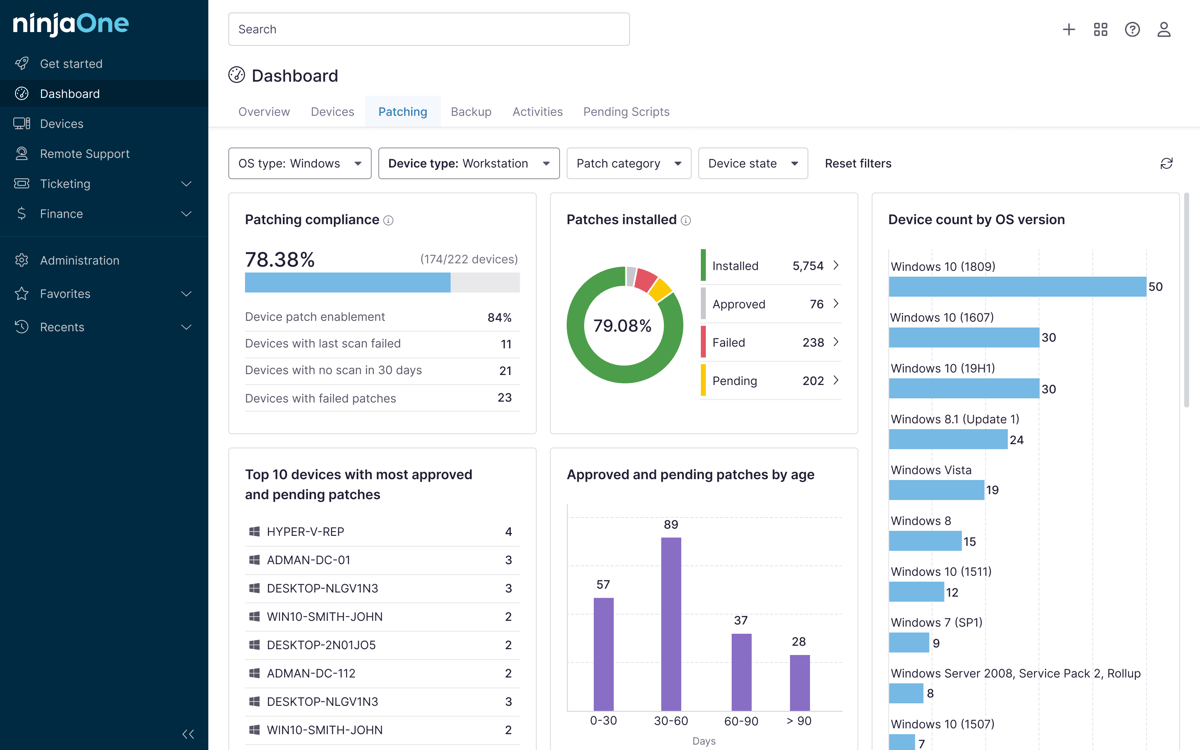
A unified IT management platform like NinjaOne can assist with this by combining remote monitoring and management (RMM), mobile device management (MDM), scripted automation that can pull data from third-party management tools, and cybersecurity insights in a single platform that helps your team maintain visibility and control, even in highly varied and distributed environments.