
Key points
- Manifest-based app deployment standardizes enterprise app distribution by defining metadata, dependencies, and policies in a single structured file across Windows, macOS, Linux, and mobile platforms.
- Application manifests reduce packaging inconsistencies and configuration errors by replacing platform-specific scripts with a single deployment definition.
- Manifest-driven deployments improve security and compliance by enforcing signed packages, hash validation, version controls, and policy checks as part of the deployment process.
- Integrating manifest-based app deployment into CI/CD pipelines enables automated builds, testing, approvals, and rollbacks across enterprise environments with full version traceability.
- This approach supports modern enterprise app distribution models by aligning DevOps and IT operations around standardized software delivery processes.
Modern IT environments exist across multiple platforms, device types, and operating systems. You probably manage Windows, macOS, Linux, and mobile endpoints, each with its own packaging standards, deployment tools, and update cycles.
As your environment grows, consistency can become harder to maintain. This is where manifest-based app deployment changes how you approach distribution. Instead of managing scripts and platform-specific configurations separately, you define everything (metadata, dependencies, and policies) in a single, structured file.
That shift provides a consistent foundation for building scalable enterprise app distribution models while aligning deployment processes across teams and platforms.
Enterprise app distribution models
You likely rely on a mix of tools to deliver applications across your environment. On Windows and Apple devices, platforms like Microsoft Configuration Manager, Intune, and Jamf play a central role. At the same time, vendor portals and custom pipelines support mobile and specialized deployments.
For example, you might:
- Deploy internal applications through Intune for managed endpoints
- Use Jamf for macOS and iOS lifecycle management
- Publish mobile apps through Apple App Store or Google Play
- Package custom applications with scripts for internal distribution
As you move between these systems, each platform introduces its own packaging requirements: MSI for Windows, PKG for macOS, DEB or RPM for Linux, and mobile-specific formats.
Without a shared structure, your team can spend time translating configurations across tools rather than standardizing them.
Common challenges in traditional distribution models
As your deployment model expands, certain challenges become more visible in daily operations. They usually appear in two areas: packaging consistency and operational visibility.
Missing OS-specific packaging metadata and configuration errors
Every platform expects precise metadata to complete installations successfully. When that information is incomplete or inconsistent, deployments can behave unpredictably.
For example, a macOS deployment may require specific .plist entries, while a Windows installer depends on MSI metadata for silent installs. If those details don’t align, you’ll see incomplete installations, unexpected prompts, or configuration drift.
You also manage differences in how dependencies are handled. A package that installs smoothly on Windows may require additional configuration on Linux or macOS. Without a consistent structure, troubleshooting becomes platform-specific instead of systematic.
Manual scripting and fragmented compliance visibility
Custom scripts often evolve organically as your environment grows. They solve immediate needs but introduce variation over time.
When scripts handle packaging, deployment logic, and configuration separately, it becomes harder to track which version is deployed where and why.
You might pull reports from one system for Windows deployments and another for mobile apps, then manually reconcile the data. This slows down audits and makes it harder to demonstrate compliance across your environment.
By standardizing your approach, you move from scattered visibility to a unified view of deployment activity.
The role of manifest-based app deployment
With manifest-based app deployment, you define your deployment logic in a single declarative file. This file becomes the foundation for how applications are packaged, validated, and delivered.
Instead of maintaining separate scripts and configurations for each platform, you create a shared structure that applies across all environments.
What is an application manifest and its core components
An application manifest is a structured file, typically written in JSON or YAML, that describes everything required for deployment. Within a manifest, you define:
- Application identity, version, and dependencies
- Supported operating systems and environment requirements
- Pre-install and post-install actions
- Security requirements such as signing and validation
For example, when you release a new version of an internal application, the manifest ensures that every platform receives the correct dependencies, configuration steps, and validation checks without having to rewrite deployment logic for each platform.
Security and compliance controls
When you use manifests, security becomes part of the deployment process itself. You define trusted signing certificates, enforce hash validation, and specify version requirements directly in the file. These controls ensure that only approved packages reach your endpoints.
This approach aligns deployment with your broader compliance strategy and ensures that security policies are applied consistently across all environments.
App center app distribution and reliable rollback
Microsoft’s App Center app distribution service previously supported multi-OS release workflows, but its retirement shifts deployment toward a combination of tools.
Today, you define build and release workflows through Azure DevOps Pipelines or GitHub Actions, then distribute applications through platform-specific channels like TestFlight, Google Play, or enterprise tools such as Intune.
With a manifest-driven approach, you still control how releases behave. Deployment logic, validation, and rollback rules live in your pipeline and manifest definitions, giving you a consistent way to manage staged rollouts across platforms, even as the tooling evolves.
CI/CD automation for manifest-based app deployment
Once you define deployment as code, you can integrate it directly into your CI/CD pipelines.
Treating application manifests as code
Store application manifests in Git alongside your application code so they follow the same lifecycle. Every change, whether it’s a version update or a new dependency, moves through pull requests, where peers review deployment logic just like any other code change.
This approach gives you a clear, versioned history of every update. During a security review or audit, you can trace exactly who modified signature requirements or OS compatibility rules, and when those changes were approved and merged.
Automating build and release workflows
You can extend manifest-based app deployment into your CI pipelines, whether you’re using Jenkins, GitHub Actions, or Azure DevOps, by using the manifest as the foundation for each stage of your release process.
In practice, this means the manifest can guide:
- How binaries are compiled and packaged for each operating system
- How test deployments run in clean VMs or containers to validate behavior
- How approval gates are applied for version policies, security checks, and compliance controls
When you validate manifests as part of your CI/CD workflows, deployments follow a consistent path across development, staging, and production.
Observability and deployment traceability
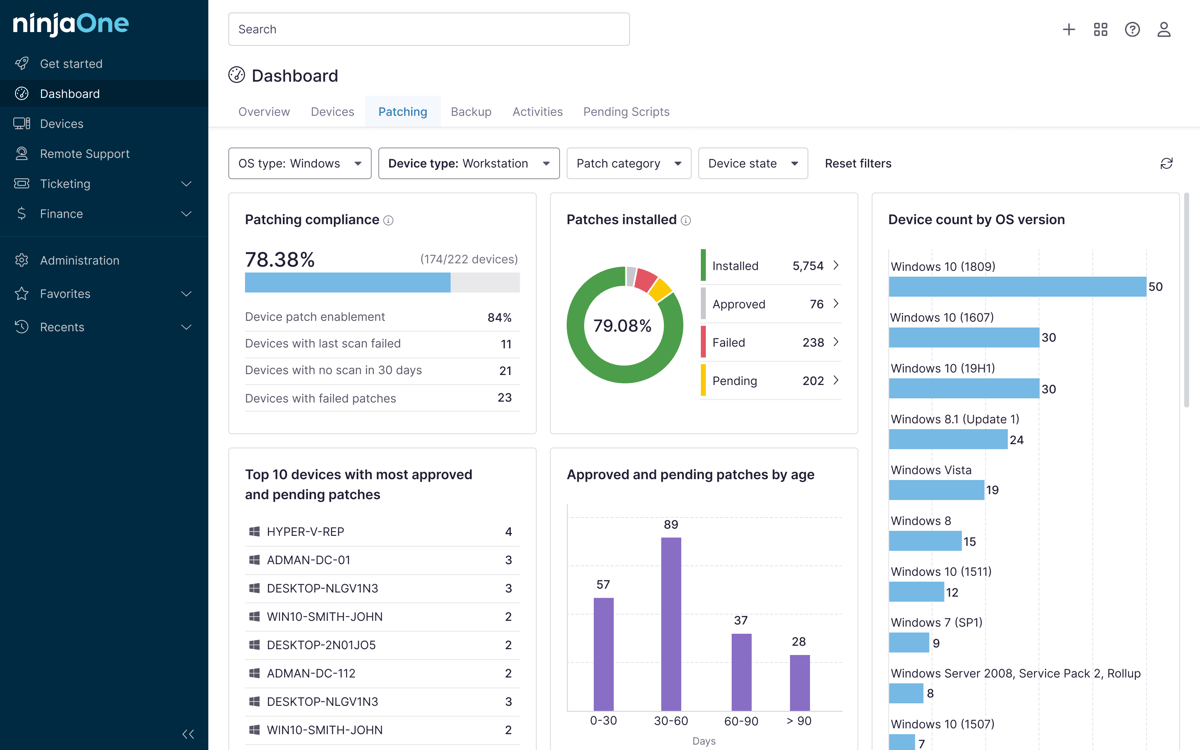
You can connect your CI/CD system to a central dashboard that tracks application versions, deployment history, and rollback events across environments. This gives you a clear view of which manifest revision was deployed to each endpoint group and when.
With this level of visibility, you can review manifest history and pipeline activity in one place. Over time, this consolidated view helps you refine your deployment process, improve consistency, and make informed decisions based on real deployment data.
Preparing enterprise app distribution for modern workflows
As your environment evolves, your distribution model needs to support scale, consistency, and speed across platforms. Manifest-based app deployment gives you a structured way to do that by defining metadata, dependencies, and policies in a single, reusable format.
Instead of managing packaging logic across scripts and tools, you standardize delivery through manifests and integrate them into your CI/CD workflows. This creates a consistent release model where build, validation, rollout, and rollback follow the same defined path across environments.
This approach aligns DevOps and IT operations around a shared deployment model. Teams work from the same source of truth, apply the same controls, and improve processes based on real deployment data, creating a system that scales with both your infrastructure and your release velocity.
Ready to simplify your app distribution workflows?
Software delivery shouldn’t depend on scripts, workarounds, or guesswork. NinjaOne brings endpoint management, patching, monitoring, and support into one platform so every deployment follows a clear, repeatable path.
Start your free trial and see what controlled, scalable app distribution looks like in practice.
Quick-Start Guide
Deployment Methods:
– Built-in packages – 40+ pre-configured third-party apps (Google, Microsoft, etc.)
– Policy-based deployment – Define apps centrally, deploy across device groups automatically
– Custom scripts – PowerShell, Batch, ShellScript for any application
– Scheduled tasks – Deploy at specific times or on recurring schedules
– MDM integration – Apple (Apps & Books), Android (Google Play), Microsoft Intune
Key Features:
– Mass deployment to multiple devices simultaneously
– Conditional installation (install only if missing)
– Ring deployment for phased rollouts
– Patch caching to optimize bandwidth
– Maintenance mode to suppress alerts during deployment
– Credential management for improved install rates
Supported Platforms: Windows, macOS, Linux, Windows 365, Intune
NinjaOne’s policy system functions as a manifest-based model—define requirements once, distribute automatically across your fleet.