
Key Points
- Regular review of backup coverage, recovery strategy, and trend analysis supports better planning and long-term client trust.
- A structured, repeatable review process turns SaaS backups into a dynamic strategy instead of a one-time configuration.
- Integrating backup insights into QBRs expands conversations to risk management, recovery outcomes, and business impact.
Backups only deliver value when they are proven, documented, and communicated. While most Managed Service Providers (MSPs) manage Software as a Service (SaaS) backups for Microsoft 365 or Google Workspace, many fail to review the results with clients, creating trust, compliance visibility, and shared accountability gaps.
This article explains how to integrate SaaS backup reviews into Quarterly Business Reviews (QBRs) and elevate them into a strategic discussion point.
If you’d rather watch than read, check out our video on How to Integrate SaaS Backup Reviews Into Client QBRs.
Integrating SaaS backup reviews into client QBRs
To integrate SaaS backup reviews into client QBRs, define the review scope, gather backup health metrics, translate them into business terms, align with Recovery Time Objective (RTO) and Recovery Point Objective (RPO), include restore testing evidence, use a standard review template, and establish governance.
📌 Prerequisites:
- Active SaaS backup coverage for key services
- Admin access to backup reporting and restore logs
- Defined RTO and RPO
- A QBR agenda template with an “Operational Health” or “Backup Review” section
- A documentation repository to store client-facing reports
Step 1: Define what the review covers
This step allows MSPs to ensure consistency across clients, reduce oversights, and present a structured framework that clients can understand.
📌 Use Case: An MSP preparing for a QBR with a client that uses Microsoft 365, Google Workspace, and Salesforce needs to demonstrate backup performance across all platforms.
Break the SaaS backup review into three pillars:
- Coverage: Identify which SaaS applications, users, and data types are protected to ensure no gaps in the backup strategy. This step helps catch overlooked services, such as newly onboarded SaaS platforms or additional user accounts.
- Health: Present metrics like backup job success rates, backup frequency, data retention periods, and error events to demonstrate reliability while pointing out areas that need remediation.
- Recoverability: Provide evidence from restore tests or simulations to prove you can restore data when needed. This step turns backups into a tangible, validated business assurance.
⚠️ Warning: An incomplete coverage map may result in blind spots in backups. (For more info, refer to: Things to look out for)
Step 2: Collect backup health metrics
This step enables MSPs to prove service reliability, highlight risks, and give clients a view of their SaaS data protection posture.
📌 Use Case: An MSP supporting a client with 500 Microsoft 365 mailboxes wants to validate Service Level Agreement (SLA) compliance and demonstrate the value of ongoing backup services.
Steps to collect backup health metrics:
- Export job statistics: Gather backup success and failure rates from your SaaS backup dashboard or logs to show whether backups are running reliably or if recurring errors need attention.
- Validate RPO compliance: Identify the oldest recoverable item across the platforms to confirm if restore points meet contractual recovery objectives.
- Summarize restore test results: Include outcomes from scheduled restore simulations or actual restores performed during the last quarter to prove recoverability.
Step 3: Translate technical metrics into business language
Translating into business language ensures stakeholders can understand metrics and the value they deliver.
📌 Use Case: An MSP presenting to a CFO needs to explain backup reliability and recovery performance without drowning the conversation in logs or error codes.
Below are examples of how you can translate technical metrics into business-oriented statements:
Backup reliability
- Technical: 97% of backup jobs succeeded, while 3% failed but were retried.
- Business-oriented statement: Nearly all backups succeeded, and the few that didn’t were automatically retried and resolved within 24 hours.
Recovery time objectives
- Technical: Average mailbox restore time = 42 minutes, while SLA target = 60 minutes.
- Business-oriented statement: On average, restores were completed 30% faster than the agreed SLA, meaning your data was accessible well within business requirements.
Recovery validation
- Technical: Completed restore tests for Google Drive, Exchange mailboxes, and Teams messages
- Business-oriented statement: Last quarter, we successfully tested restores across your key SaaS applications, validating that we can recover critical data.
A technical metric paired with a plain-language explanation reinforces trust, demonstrates SLA alignment, and highlights the business value of managed SaaS backup services.
⚠️ Warning: Use terms that match the contract to maintain trust and avoid disputes. (For more info, refer to: Things to look out for)
Step 4: Align backup reviews with RTO and RPO expectations
This step allows MSPs to prove that technical performance supports business continuity goals.
📌 Use Case: A client relies heavily on Microsoft 365 and Salesforce. Their SLA specifies an RTO of 60 minutes for email restores and an RPO of 12 hours for Salesforce records.
Steps to align backup reviews with RTO and RPO:
- Confirm compliance: Validate that each SaaS platform meets its recovery targets, supported by last quarter’s metrics.
- Highlight gaps: Highlight where objectives were missed, explain the cause, and provide corrective actions.
- Reassess objectives: Discuss with the client whether the current RTO or RPO values match business needs.
Step 5: Include restore testing evidence
This step showcases real-world restore testing in QBRs to show recovery is possible and reliable.
📌 Use Case: An MSP working with a law firm must reassure the client that they can recover critical communications and documents quickly in case of accidental deletion.
Include the following restore testing evidence in your next QBR:
- Mailbox restore: Recover a random user’s Gmail or Exchange mailbox into a sandbox to validate time-to-recover and data integrity.
- File restore: Retrieve a deleted Google Drive or OneDrive file and confirm it matches the original.
- Collaboration data: Test Teams or Slack conversation export recovery to prove you can restore even dynamic collaboration data.
- Capture results: Document each test with screenshots, recovery timing data, and validation notes.
⚠️ Warning: Always perform testing in a sandbox environment to avoid data exposure. (For more info, refer to: Things to look out for)
Step 6: Build a standard QBR backup review template
This step enables MSPs to reduce prep time, highlight trends, and demonstrate accountability.
📌 Use Case: An MSP managing multiple SaaS clients wants to avoid reinventing the wheel for each QBR. By adopting a single, repeatable template with pre-defined sections, the team can easily plug in metrics and evidence from each quarter.
Make sure to include the following sections in your QBR backup review template:
- Backup coverage map: This map shows which SaaS services, users, and data types are currently protected. It helps surface issues with newly onboarded employees or SaaS apps that have not yet been backed up.
- Job success rates: Present quarterly trends in backup successes vs. failures to demonstrate reliability and highlight areas that need improvement.
- Restore test outcomes: Summarize the results and timing of restore tests conducted during the quarter to reinforce confidence that data is recoverable and backed up.
- RTO and RPO compliance: Compare performance against documented recovery objectives, flagging missed targets and corrective actions.
- Recommendations: Provide insights, such as adding SaaS workloads, tightening RPOs for critical apps, or expanding retention.
Step 7: Establish governance and next steps
This step enables MSPs to ensure that backup reviews result in improvements rather than remaining a passive status update.
📌 Use Case: An MSP presenting to a mid-sized client finds that while backups are reliable, retention policies are not aligned with new compliance requirements.
Steps to establish governance and next steps:
- Secure client sign-off: Confirm with the client that they understand the current backup posture, including successes, risks, and coverage. This step provides mutual accountability and reduces ambiguity about what to expect next.
- Define next quarter’s testing scope: Agree on which new SaaS platforms, data types, or larger datasets will be included in restore testing to ensure ongoing validation evolves with business needs.
- Identify and document gaps: Identify gaps and log them as formal action items.
Best practices to follow when integrating SaaS backup reviews
Here are some best practices when integrating SaaS backup reviews into QBRs:
| Component | Purpose and value |
| Coverage, health, recoverability | Ensures the backup scope is reviewed |
| Health metrics collection | Provides transparent reporting |
| Business-language translation | Improves client understanding |
| RTO or RPO alignment | Validates service expectations |
| Restore test evidence | Proves backups actually work |
| Standardized QBR template | Ensures repeatability |
| Governance actions | Drives continuous improvement |
⚠️ Things to look out for
| Risks | Potential Consequences | Reversals |
| Incomplete coverage map | Blind spots in backups and unmet expectations | Maintain a per-platform checklist and require a client sign off each quarter. |
| Using terms that don’t match the contract | Loss of trust and disputes over SLAs | Include a 1-page technical appendix and link each claim to a metric. |
| Testing in production or with live data | Data exposure and operational impact | Use a sandbox or isolated tenants and mask the data shown. |
NinjaOne services that help integrate SaaS backup reviews
NinjaOne can enhance its backup-related workflows with automation and better documentation practices to maximize QBR value and ensure client confidence. Embedding backup review tasks into QBR prep saves MSPs time while strengthening accountability and service quality.
Schedule recurring QBR prep tasks tied to backup review items
You can create recurring tasks in NinjaOne to remind teams to validate backup success, test restores, and compile supporting evidence. Scheduling ensures consistency, prevents critical steps from being overlooked, and prevents MSPs from manually checking backup health before each QBR.
Automate the collection of backup job success logs
NinjaOne can automatically pull success and failure logs from backup systems to remove the need for manual exports while reducing human error. Automating the collection of success logs provides an up-to-date snapshot of backup reliability before QBRs.
Store restore test evidence in NinjaOne docs or ticket attachments
You can attach proof of a successful restore test directly to client tickets or store it in NinjaOne Docs. Centralizing this evidence simplifies reporting, makes audits easier, and reassures clients that their data protection strategy is actively validated.
Link backup health summaries into QBR dashboards or client reports
MSPs can give clients a view of data protection health by feeding backup performance summaries into QBR dashboards. Doing this builds trust and turns technical backup into meaningful, client-friendly insights.
Create tickets for follow-up items flagged during QBRs
You can automatically generate follow-up tickets for gaps identified during QBRs. This ensures action items are tracked, assigned, and completed.
Quick-Start Guide
Here’s how you can integrate SaaS backup reviews into client QBRs using NinjaOne:
Key Steps for Integration
1. Prepare Backup Metrics
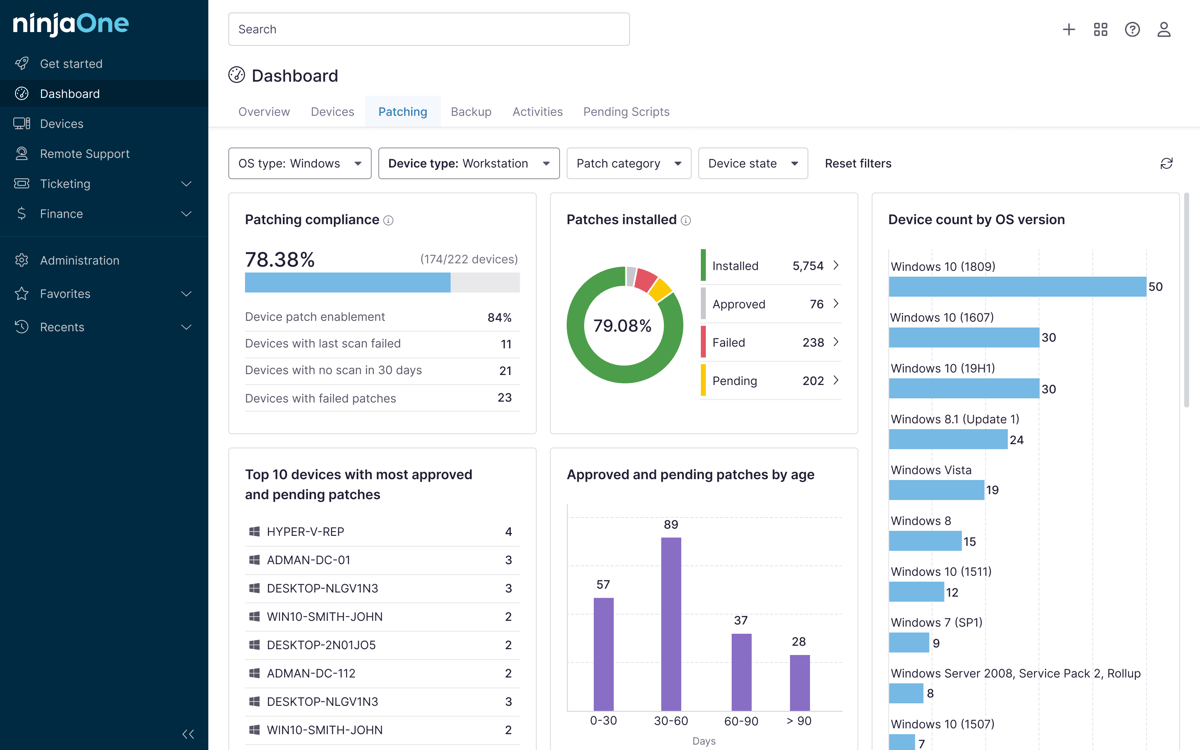
Use NinjaOne’s reporting to gather key metrics such as backup success rates, restore times, storage usage, and any issues encountered. These metrics provide concrete evidence of your service’s reliability and value.
2. Include Backup Reviews in QBR Agenda
Add a dedicated section for SaaS backup review in your QBR agenda. This ensures that backup performance is discussed alongside other service metrics.
3. Demonstrate Value with Real-World Examples
Share specific examples of successful restores or disaster recoveries enabled by NinjaOne’s SaaS backup. This makes the discussion tangible and highlights the ROI of the backup solution.
4. Address Client Concerns Proactively
Use the QBR as an opportunity to address any backup-related concerns the client might have. Show how NinjaOne’s features, such as automated backups, encryption, and easy restore options, mitigate risks.
5. Leverage NinjaOne’s Reporting Tools
Generate customizable reports from NinjaOne that can be directly shared during QBRs. These reports can include backup status, performance trends, and compliance metrics.
6. Discuss Future Enhancements
Use the QBR to gather client feedback on backup features they’d like to see. This shows you’re committed to continuous improvement and aligns your services with their evolving needs.
Integrate SaaS reviews to turn QBRs into strategic discussions
Integrating SaaS backup reviews into QBRs transforms backups into a client-facing value driver. By systematically presenting coverage, health metrics, restore results, and RTO and RPO compliance, MSPs can reinforce client trust, highlight improvement opportunities, and demonstrate the tangible business value of managed SaaS backup services.
Related topics: