
Key Points
- DNS security at scale blocks malicious domains, encrypts resolver traffic via DoH/DoT, and standardizes policy, logging, and governance across all clients.
- Align resolver and policy design with security and compliance goals by using recursive resolvers that support filtering, encryption, allowlists, denylists, and defined failover behaviors.
- Pilot DNS policies and resolvers with a small user cohort to establish baselines for latency, block rates, and compatibility before full deployment.
- Enforce endpoint and network DNS controls through GPO, MDM, or VPN profiles, block plaintext DNS egress, and verify DoH/DoT adoption across Windows, macOS, iOS, and Android.
- Centralize DNS telemetry to detect spikes in blocked threats, correlate events with firewall or EDR data, and refine allowlists to improve accuracy and coverage.
DNS security is an essential tool for any organization. It helps you block known malicious or unacceptable domains and reduces risk and data exposure. Encrypting resolver traffic reduces interception and tampering. Industry best practices call for a layered approach to DNS security. combining policy enforcement, encryption, logging, and governance.
Guide to implementing DNS security at scale
📌 Prerequisites:
- You need a clear resolver strategy for every client, including which primary and secondary resolvers to use and which encryption methods you support.
- You should have the ability to deploy DNS settings, DoH or DoT profiles, and certificate trust stores to all your endpoints where needed.
- You need to have network control of egress to limit plaintext DNS and resolver bypass paths.
- You need to have centralized logging for DNS queries and security events.
- You need change control, a pilot cohort, and defined rollback steps.
Step 1: Decide on the resolver and policy model
The resolver and the applied policies are one of the most important parts of implementing DNS security at scale. This will vary, depending on the organization, since they’ll need to meet your specific security, privacy, and performance needs.
When deciding, you must:
- Choose recursive resolvers. They should support DNS filtering and DoH or DoT. The resolver should also properly document its endpoints and certificates.
- Define your baseline policies. This may include block categories for malware, phishing, newly registered domains, and high-risk content.
- Establish an allowlist and denylist policy, including who can request changes and how long exceptions last.
- Plan for failover and captive portal behavior to avoid user lockouts during travel or guest Wi-Fi use.
At the end of it, you should have a resolver and a comprehensive policy profile for all your clients. This should contain clear controls and governance.
Step 2: Pilot and baseline before broad rollout
Before rolling out the new policy profile and resolver, you need to test things out and establish a baseline. This will validate the impact of the policies and resolver and help tune your policies while offering little risk in return.
To conduct a pilot test and establish baseline results, you must:
- Select a representative pilot group. Measure their query latency, block rate, and ticket volume.
- Turn on DNS logging and sample events. Look for spoofing attempts, malware callbacks, and unexpected destinations.
- Capture app compatibility findings and pre-stage known allowlists for critical services.
By the end of it, you should have a tuned policy and encryption profile with an established baseline for performance and compatibility.
Step 3: Enforce on endpoints and the network
To ensure that people use secure DNS in your endpoints, make it the path of least resistance. Staff should find using these protocols the easiest way to accomplish their tasks.
To do that, you should:
- Push resolver and DoH or DoT settings via GPO or your preferred MDM. The method for this will vary depending on your needs. Validate the effectiveness of its implementation on Windows, macOS, iOS, and Android, depending on which devices you use.
- Block outbound plaintext DNS whenever possible. Resolution must be done through approved resolvers.
- Configure VPN and roaming profiles. This way, corporate DNS and encryption persist off-network.
- Provide a support script for your IT staff so they can verify encryption, resolver reachability, and policy status during troubleshooting.
Once enforced, you can expect consistent enforcement across devices and locations with validated behavior.
Step 4: Operate, investigate, and remediate
Of course, implementation isn’t the final step. You should keep track of your DNS telemetry and use the data to take actionable steps.
To do that, you should:
- Set up an alert for spikes to blocked categories, unusual destinations, and repeated failures to resolve critical domains.
- Investigate false positives and misconfigurations quickly and adjust allowlists when needed.
- Correlate DNS events with endpoint EDR and firewall logs from incidents.
- Review resolver uptime and failover events and document lessons learned.
Once you’ve accomplished these steps, you can expect fewer successful phishing attempts, faster incident investigation, and clear exception management for both IT support staff and regular users.
Step 5: Measure outcomes and report simply
After implementation, you should measure how the resolver and DNS policies affect your operations. This will prove the value of your actions and give you guidance on what improvements you still have to make.
Here are some metrics you should be keeping track of:
- Blocked threats by category and client
- Encrypted DNS coverage by device cohort
- Median and p95 query latency and resolver uptime
- Exception count, age, and owner
- Helpdesk volume related to DNS issues before and after rollout
Create a one-page document that shows the security benefit and user impact of DNS security and how they impact operational health, and send it to your clients every month.
Useful NinjaOne integrations for implementing encrypted DNS
- Policy deployment at scale: use scripts or policies to set DNS resolvers, apply DoH or DoT settings, and verify configuration on endpoints.
- Detection and tickets: Set an alert for resolver reachability failures or plaintext DNS attempts and open tickets with diagnostics attached.
- Auto-remediation: run standardized network stack repair, resolver reapplication, and verification steps when monitors detect DNS failure.
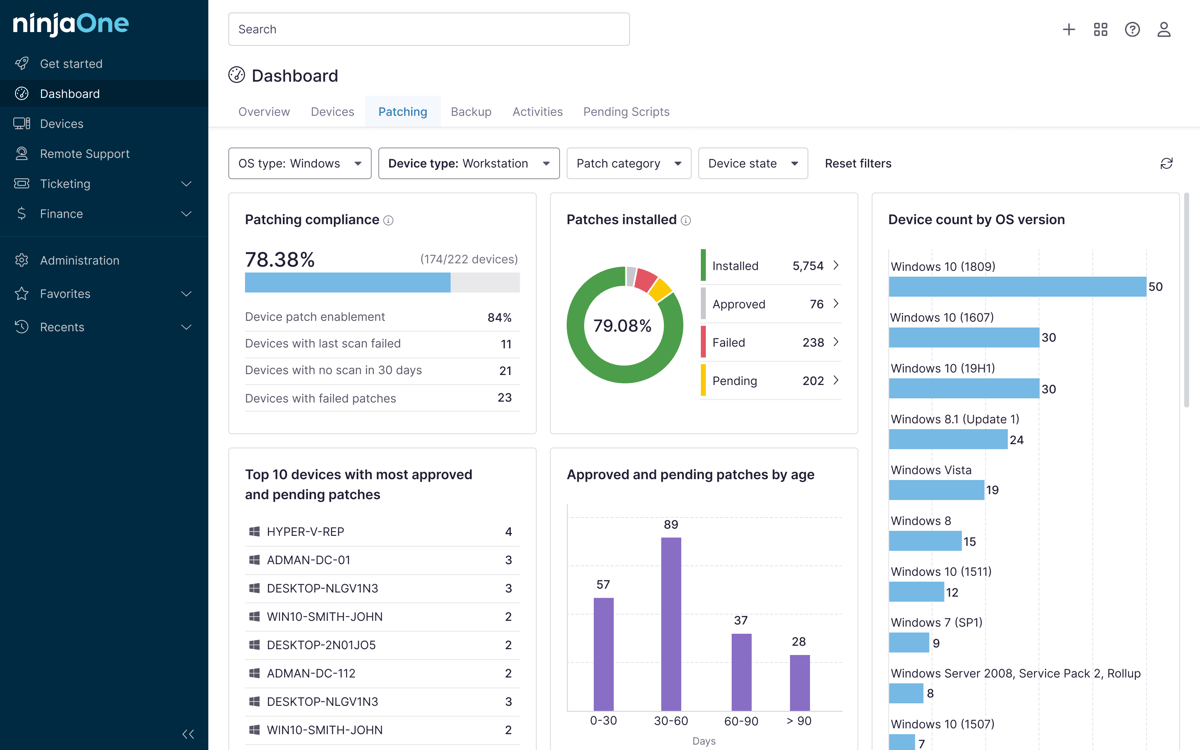
- Reporting: generate client dashboards with blocked threat counts, encrypted DNS coverage, resolver health, and exception aging.
Bolster your endpoint security with DNS blocking
Combine DNS blocking with encrypted DNS, enforce on endpoints and at the network edge, monitor logs for meaningful signals, and keep exceptions on a short leash. Ensure you run a pilot first and conduct simple monthly reporting; that way, you can reduce risk without slowing users down.
Related Links: