
Key Points
- Warning Signs to Look Out For: IT teams can proactively watch out for signs of tool obsolescence, such as diminishing ROI, operational friction, insufficient scalability, lack of integrations, and frequent use of workarounds.
- Building an Evaluation Framework: Audit your team’s pain points, score candidate tools on a criteria matrix, pilot the top choice with a small group, and set clear success metrics before committing to a new tool.
- Safeguarding Transition Phase: Ensure a smooth migration by cleaning up the old system, rolling out in stages, training technicians, keeping a rollback option, and reviewing results afterward.
- Use Automation for Tool Failure Detection: Run a script to track metrics like remote session failure rates, and use the data to flag underperforming tools and justify a switch.
- Plan Around Business and Contract Cycles: Schedule tool evaluations before license renewals and align replacement decisions with business goals to minimize costs and avoid rushed migrations.
- Measure Success After the Switch: Monitor KPIs such as ticket resolution time, automation effectiveness, technician satisfaction, and client feedback to confirm that the new tool delivers measurable operational improvements
Over time, even the most reliable managed service provider (MSP) tools show their age and become incompatible with your operations. Performance slows, integrations no longer fit, and vendor support loses its edge. What was once streamlined workflows can become a source of frustration for technicians and clients alike.
Replacing a remote monitoring and management (RMM), professional services automation (PSA), or automation platform is not giving up. Think of switching MSP tools as strategic upgrading. The decision should not be reactive. It should be guided by objective signals, evaluation, and transition planning, which will be discussed in this guide.
If you’d rather watch than read, check out our video on How to Decide When to Switch RMM, PSA, or Other MSP Tools.
5 clear signs it’s time to switch MSP tools
Even some of the best MSP tools could become more of a liability than an asset. Instead of waiting for it to fail, it’s best to be on guard for warning signs that a tool is obsolete.
Sign #1: Diminishing ROI
If licensing costs rise without real improvements and if technicians’ efficiency stays flat or declines, the tool may no longer be worth the investment.
Sign #2: Operational friction
Another sign is if a tool is slow, has a clunky user interface, lags, and interrupts workflows. A good MSP tool should not hinder productivity.
Sign #3: Insufficient scalability or integrations
The platform cannot handle growing client needs or connect with newer systems. When integrations stall, the tool becomes a hindrance.
Sign #4: Vendor support is declining
Updates, documentation, and ticket responses become slower or less reliable. Poor vendor support leaves you exposed to risks and unresolved issues.
Sign #5: Technicians use workarounds
Technicians rely on scripts or manual fixes to fill gaps without using the tool. Too many workarounds indicate it no longer fits operational needs. Why continue subscribing to a tool if your technicians no longer use it?
Minimize tool sprawl with a unified IT management platform.
Sign up for a free trial or watch a demo of NinjaOne
How to decide when to switch MSP tools
Switching tools should never be done on a whim. It should be backed up by data from a structured evaluation, which should allow you to measure your options objectively.
Prerequisites:
- Access to your tool’s performance data, like uptime, logs, and technician feedback
- A review of the total cost of ownership, including licensing and support
- An updated map of tool integrations and dependencies you’re using with your MSP
- Defined business outcomes or key performance indicators (KPIs), such as faster ticket resolution, improved automation, and stronger reporting
- Alignment with the leadership, technicians, and relevant stakeholders
Key tasks in developing a tool replacement evaluation framework
| Tasks | What does it do? | How can you do it? |
| Perform a needs audit | This identifies pain points, missing features, and support gaps. | Gather technician feedback, review tickets, and document recurring issues. |
| Create a criteria matrix | Provides an objective way to compare tools. | Score and compare tools on alignment, cost, usability, integrations, and vendor support |
| Put new tools under pilot testing | Validates performance and fit before rolling it out. | Test the new tools with a small group of technicians or clients to see if they fit well. |
| Define a success metric | Measure whether the tool improves operations. | Track gains and see whether there are reduced escalations, and if users are satisfied. |
💡Note: Pilot testing and metrics will lower the risk of a poor MSP tool migration. They will also give you evidence to secure leadership buy-in and team adoption.
Plan transition and mitigations
A successful tool migration requires careful planning and safeguards, which allow MSPs to reduce risks, avoid service interruptions, and support technicians.
📌 Use Cases:
- This ensures smooth migration from the old tools to the new platforms.
- Reduces the risk of service interruptions and client impact.
- Enable technicians to adapt to the new systems.
📌 Prerequisites:
- Requires a complete inventory of your current scripts, workflows, and configurations.
- A clear migration timeline with assigned responsibilities.
Tasks | What does it do? | How can you do it? |
| Inventory cleanup | This prevents gaps during migration | Catalog and clear configurations, scripts, and workflows from the old system |
| Roll out in stages | Limits disruption and validates stability | Deploy to test groups who give feedback before a larger rollout. |
| Train and support your technicians | Enables technicians to adapt relatively quickly | Deliver documentation, walkthroughs, and onboarding sessions. Ensure the users will quickly master the tool. |
| Possess a rollback strategy | Reduces risk if issues occur early | Keep fallback options ready to restore the old tool in case the new one fails to meet expectations. |
| Perform a post-migration review | Confirms success and improves processes | Measure efficiency, gather feedback from users, and update SOPs. |
PowerShell snippet example to automate assessment of remote session failure rates
Automation can help you spot early warning signs of tool failure that could go unnoticed. With a script, you can measure recurring issues and use the data to decide if it’s time to switch tools or perform a PSA migration.
📌 Use Cases:
- Identifies hidden performance problems in RMM tools
- Provides objective data to support migration planning and stakeholder buy-in
📌 Prerequisite:
- PowerShell 5.1 or later with permission to run scripts on endpoints.
The sample snippet below calculates the failure rate of remote sessions. If it has a high fail rate, it flags a tooling issue that could signal the need for replacement.
$sessions = Import-Csv ‘C:\logs\RemoteSessions.csv’
$failRate = ($sessions | Where-Object { $_.Status -eq ‘Fail’ } | Measure-Object).Count / $sessions.Count * 100
if ($failRate -gt 10) { Write-Host “Remote session failure rate at $failRate% may indicate tooling issues.” }
⚠️ Things to look out for
Risks | Potential Consequences | Reversals |
| Ignoring early warning signs of tool failure and issues | Tool failures escalate into downtime and client complaints. | Regular health checks and audits to catch issues before they disrupt service. |
| Switching tools reactively without data | Decisions driven by frustration lead to poor replacements. | Follow a structured evaluation framework and pilot before committing. |
| Overlooking the integrations you’ve used in your earlier tools | Critical workflows or data may break during migration. | Map dependencies and test integrations during pilots. |
| No rollback strategy implemented in case the new tool doesn’t meet expectations | Failed migrations cause extended outages. | Keep fallback options and old system access until the new tool is stable. |
| Poor training and onboarding of the new tools | Technicians resist adoption, misuse the new tool, or fail to make full use of it. | Provide documentation, walkthroughs, and peer champions for rollout. |
| Lack of success metrics | Hard to prove the value of the switch to stakeholders | Define KPIs such as efficiency gains, reduced escalations, or cost savings. |
Best practices when deciding whether to switch MSP tools
Align evaluation timelines with tool renewal dates
Plan evaluations around contract or license renewal periods. This helps you avoid penalties and gives you leverage when negotiating with vendors.
Favor long-term vendor partnerships over impulsive changes
Focus on vendors with proven track records and roadmaps that align with your growth. Avoid switching tools just to chase new features without clear business value.
Capture lost value from underperforming tools
Track technician time wasted on workarounds and log client escalations tied to tool failures. These hidden costs help justify a replacement when building a business case.
Maintain documentation of retired tools
Keep records of old tool configurations, scripts, and workflows. Historical context supports audits and helps diagnose issues that might resurface.
Build a semi-annual review cycle for tool health
Set regular checkpoints to evaluate performance, scalability, and vendor support. A consistent review cycle helps you stay proactive instead of waiting for failures.
NinjaOne platform integration ideas
Integration idea | What it does | How to apply it |
| Tag tools by lifecycle stage | This tracks where each platform stands in its lifecycle. | Label tools as Active, Evaluating, or Legacy Replacement Pending. |
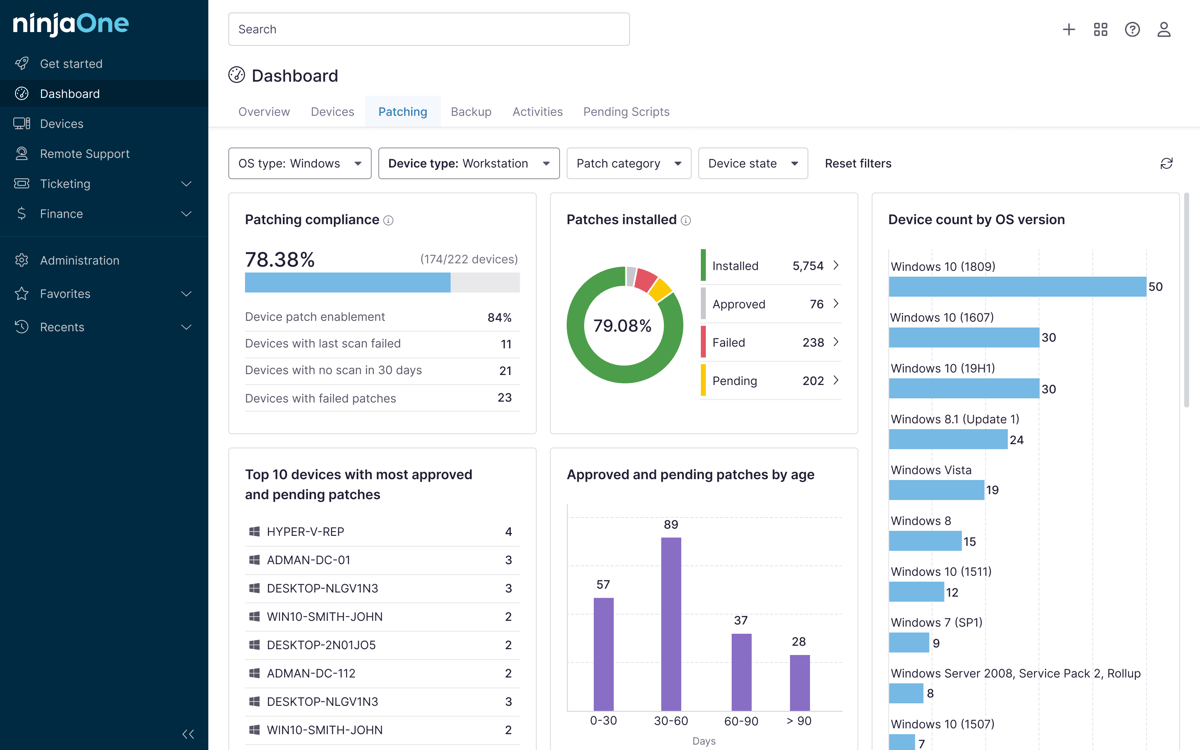
| Use dashboards to monitor tool health | This will provide a clear view of performance and support trends. | Visualize uptime, support response times, and usage data in one place. |
| Schedule reminders for tool reviews | It will ensure evaluations happen before renewals are missed. | Set automated nudges ahead of renewal dates to review licenses or retirement plans. |
| Leverage templates for migrations | Reduces risk and speeds up tool transitions. | Use template-driven migration plans and rollback staging in PSA workflows. |
Choose an IT platform built to support growth, integrations, and operational efficiency.
Switching MSP tools is a smart evolution
Replacing a foundational tool is not a failure. It is a smart evolution that allows your MSP to stay efficient, scalable, and aligned with client needs. With clear warning signs, structured evaluations, and disciplined migrations, you can replace outdated tools smoothly and without any interruptions.
By following this guide, you will know clear signals for tool retirement, gain lower-risk transitions through pilot testing, stronger onboarding for new systems, and better long-term agility. Ultimately, your MSP will have a new toolset that supports growth instead of holding it back.
Related topics:
- Guide for MSPs: How to Use an RMM Platform
- The Cure for Overtooling & Vendor Sprawl
- The (Re)Evolving MSP Software Stack: Statistics on What Tools are In and Out
- 90+ Best Managed Service Provider (MSP) Software From User Ratings & Reviews for 2026
- Open Source RMM Software for MSPs: The Pros & Cons
- What is RMM? A Modern Definition Plus Evaluation Criteria for 2026