Key Points
- Flow analysis reveals how endpoints, applications, and services communicate across the network, unlike traditional network monitoring that tracks CPU, latency, and interface status.
- By analyzing source/destination IPs, ports, protocols, data volume, and session duration with flow analysis, organizations gain insights into bandwidth usage and communication paths.
- Flow-based monitoring explains which applications or systems are generating traffic and causing congestion, while device monitoring only identifies infrastructure symptoms.
- Flow technologies such as NetFlow, sFlow, and IPFIX enable scalable traffic visibility.
- Network flow data helps identify abnormal communication patterns, lateral movement, command-and-control traffic, and potential data exfiltration without deep packet inspection.
- Combining device metrics, performance monitoring, and network flow analysis delivers comprehensive insight into availability, usage trends, and security risks.
When it comes to traditional network monitoring, you’ll focus on device health metrics such as CPU usage, interface status, and latency. While these metrics are essential, they do not explain how traffic actually moves through the network.
Network flow analysis, on the other hand, will fill this gap by analyzing conversations between endpoints, applications, and services, providing visibility into traffic behavior rather than just infrastructure state.
What network flow analysis is
Network flow analysis is a way of monitoring, analyzing, and interpreting the IP traffic that’s going through your network infrastructure. This can include routers and switches. It does this by examining summarized records of network conversations. These records will generally describe:
- Source and destination addresses
- Ports and protocols in use
- Volume of data transferred
- Duration of communication
How flow analysis differs from traditional monitoring
Flow analysis isn’t the same as traditional monitoring. They have their own use cases and advantages. With traditional network monitoring, you can answer questions such as:
- Is a device online or offline?
- Is an interface saturated?
- Are there errors happening?
Flow analysis, on the other hand, answers different questions like:
- Which applications are generating traffic
- Which systems communicate most frequently
- Where the congestion is coming from
- How network usage is changing over time
Both perspectives are necessary for full network understanding. In an enterprise setting, it’s best to implement both, so you have a full view of what’s happening in your network infrastructure.
NetFlow and other flow technologies
NetFlow is one of the most widely known network protocols for flow analysis, but it’s not your only option. You can also implement other options, and it’s recommended that you mix and match these tools to make the most out of your network flow analysis.
Here are other flow technology tools you can use to make your analysis easier:
- sFlow – This samples packets to infer traffic patterns.
- IPFIX – This is a standardized flow export format.
- Vendor-specific flow implementations
Despite differences in implementation, all serve the same analytical purpose. Using them will depend on your network flow analysis goals and your specific organization’s goals and limitations.
Operational use cases for flow analysis
Network flow analysis is used in many ways. Some common use cases include:
- Identifying your network’s top users and bandwidth consumers
- Diagnosing congestion and performance issues
- Supporting capacity planning decisions
- Detecting unusual or unauthorized traffic patterns
These use-case scenarios focus on behavior rather than infrastructure state, which makes them ideal for flow analysis monitoring instead of traditional monitoring.
Flow analysis and network security
From a security perspective, the data you get from network flow analysis can help:
- Spot unexpected communication paths
- Identify lateral movement patterns
- Detect data exfiltration behavior
- Support incident investigation timelines
Flow analysis adds context that raw alerts often lack. You can use it to support more traditional network monitoring methods and add another layer of security for your network.
Integrating flow analysis into monitoring strategies
Effective network visibility strategies aren’t just one thing. Relying on a single strategy can lead to failure or missed alerts. Instead, it’s important to combine:
- Device and interface monitoring
- Performance and availability metrics
- Network flow analysis
Implementing this layered approach provides both health and behavior perspectives. It gives your IT admins a more comprehensive view of your network infrastructure and gives you more avenues to detect points of failure or congestion.
Limitations and scope considerations when it comes to network flow monitoring
Network flow analysis isn’t perfect, however. Some of its limitations include:
- Flow analysis does not inspect packet payloads.
- It relies on an accurate export configuration.
- It can generate large data volumes, which can be difficult to manage.
- It requires interpretation and context that will require personnel training and insight.
Flow data is powerful, but it must be used alongside other signals. Always remember to use it alongside other traditional network monitoring tools to ensure you don’t miss any outages or problems when they occur.
Common misconceptions about flow-based network monitoring
| Misconception | Reality |
| Flow analysis will replace packet capture. | Network flow analysis doesn’t replace packet capture; it complements it and serves a different purpose. |
| NetFlow is the only option you have for network flow analysis. | Multiple flow technologies exist, and you can use them simultaneously for more comprehensive coverage. |
| Flow data can only be analyzed for large networks. | Smaller environments can also greatly benefit from traffic visibility and analysis. |
Using NinjaOne for network flow analysis
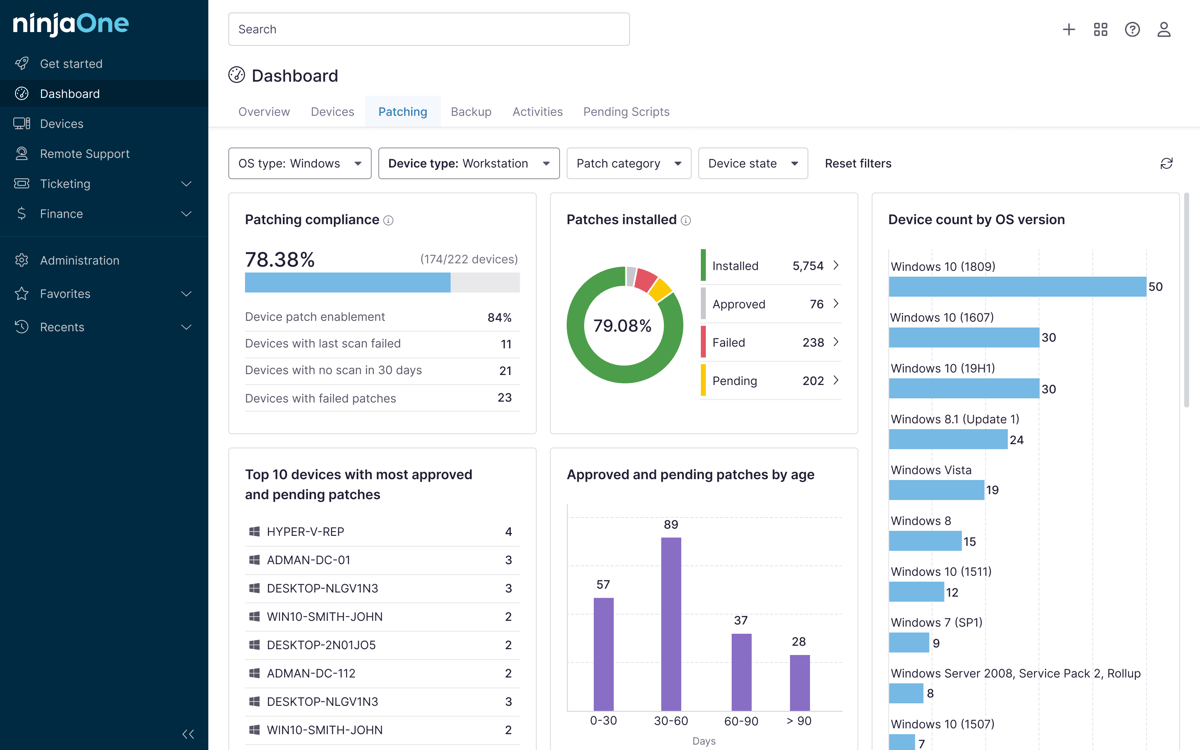
You can use NinjaOne RMM tools to support network visibility by bringing together device monitoring, performance metrics, and day-to-day operational insights. Flow analysis complements this visibility by adding traffic behavior context, giving teams a clearer view of how the network is actually being used.
Develop a strong understanding of network flow analysis to bolster your network infrastructure
Network flow analysis will give you and your IT team a more comprehensive view into traffic behavior that traditional monitoring cannot deliver alone. By understanding who communicates with whom and how traffic patterns evolve, organizations gain deeper insight into performance, capacity, and security across their networks.
Related Articles: