
Key Points
- Device kiosk mode restricts computers, tablets, and phones to defined apps or workflows so devices stay focused on a specific task.
- Kiosk mode enforces restrictions at the device or user session level, limiting access to system settings, files, and unauthorized apps.
- Kiosk mode works across Windows, Android, iOS, ChromeOS, and web browsers, but setup methods and feature limitations vary by platform.
- Organizations use device kiosk mode for public-facing devices, shared workstations, and task-focused systems where consistency matters more than flexibility.
- Kiosk mode depends on proper device enrollment and management tools to apply policies, manage updates, support troubleshooting, and maintain compliance.
Kiosk mode locks devices into a controlled setup where users can access only approved apps or workflows. It’s commonly used on public-facing devices, shared workstations, and role-based systems that need consistency rather than flexibility.
This guide explains what device kiosk mode is, its benefits and limitations, and how it works across platforms.
What kiosk mode does
Kiosk mode is a device setting that locks a device (computer, tablet, or phone) to a defined app or a limited set of functions and restricts everything else on the system.
You’d use kiosk mode if you want to:
- Limit which apps or system features people can use.
- Block access to device settings and core operating systems.
- Enforce a consistent user experience across sessions.
- Reduce the risk of misuse or accidental changes.
You’ll usually see this on public-facing devices, such as public terminals or self-service checkouts in places like restaurants, retail stores, and hospitals. In these setups, users can only perform predefined tasks like placing orders, checking in, and making payments.
How kiosk mode works across platforms
You can set up kiosk mode on different platforms. While the goal is the same everywhere, which is locking the device to approved apps, features, or workflows, the way it’s enforced and managed varies by platform. Here’s a quick overview:
| Windows | Android | iOS/iPadOS | ChromeOS | Web browsers | |
| How it’s set up | Assigned Access | Android Kiosk Mode/Lock Task Mode | Guided Access (user-enabled) or Single App Mode (supervised) | Google Admin Console | Command-line flags or OS startup scripts |
| What kiosk mode does | Locks the device to one app or a small set of apps | Locks the device to one or more approved apps | Locks the device to a single app | Automatically launches a specific app or website at startup | Runs a single website in full-screen kiosk mode |
| What users can access | Only the allowed apps | Only approved apps | Only the open app | Only the assigned app or site | Only the assigned website |
| What can be disabled | Desktop, system settings, other apps | System UI, notifications, hardware buttons | Buttons, gestures, system features | Desktop, files, browser controls | Tabs, address bar, menus |
| Best used for | Public PCs, check-in kiosks, exams | Retail tablets, POS devices | Education, healthcare, surveys | Digital signage, school devices | Info kiosks, dashboards |
Security and operational benefits
Kiosk mode is a simple setup that provides both security and operational benefits.
Security benefits
Kiosk mode reduces the attack surface by limiting what users can access. When only approved apps and features are available, there’s less opportunity for misuse, accidental changes, or access to sensitive files and settings. This also helps support compliance in regulated environments where device use must be tightly controlled.
Operational benefits
Kiosk mode lowers the support burden because device behavior is standardized to a specific purpose. Moreover, setup and ongoing management are simpler, and devices are more reliable in shared, unattended, or public-facing environments since restrictions are already enforced.
Limitations and scope considerations
Kiosk mode has limitations, and it’s important to understand them before setting it up. Here are key considerations to keep in mind:
- While kiosk mode restricts what users can do on the device, it doesn’t replace antivirus, patching, encryption, or other core security controls.
- Because the device is locked down, updates and fixes may not happen automatically. This means you need to plan when and how apps, the operating system, and security patches will be updated.
- Access restrictions can also make troubleshooting more difficult unless administrators have a clear way to regain control of the device.
- Kiosk mode works best when devices are properly set up and managed using the right tools.
Common misconceptions
There are a few common misconceptions about kiosk mode that can affect how it’s used. It’s worth clearing them up:
Kiosk mode is only for public devices
Kiosk mode is common in public kiosks, but it’s not limited to that type of setup. It’s also widely used on internal devices such as POS systems or warehouse scanners, where shared workflows need to stay simple.
Kiosk mode removes the need for MDM
Kiosk mode only controls what users can do on the screen. MDM controls the device itself. Device management is still needed for updates, security policies, and remote troubleshooting, especially in large environments.
All kiosk modes behave the same across platforms
As mentioned above, kiosk mode works differently depending on the platform. What’s possible on Windows may not be possible on iOS or Android, so setup and limitations vary.
NinjaOne integration
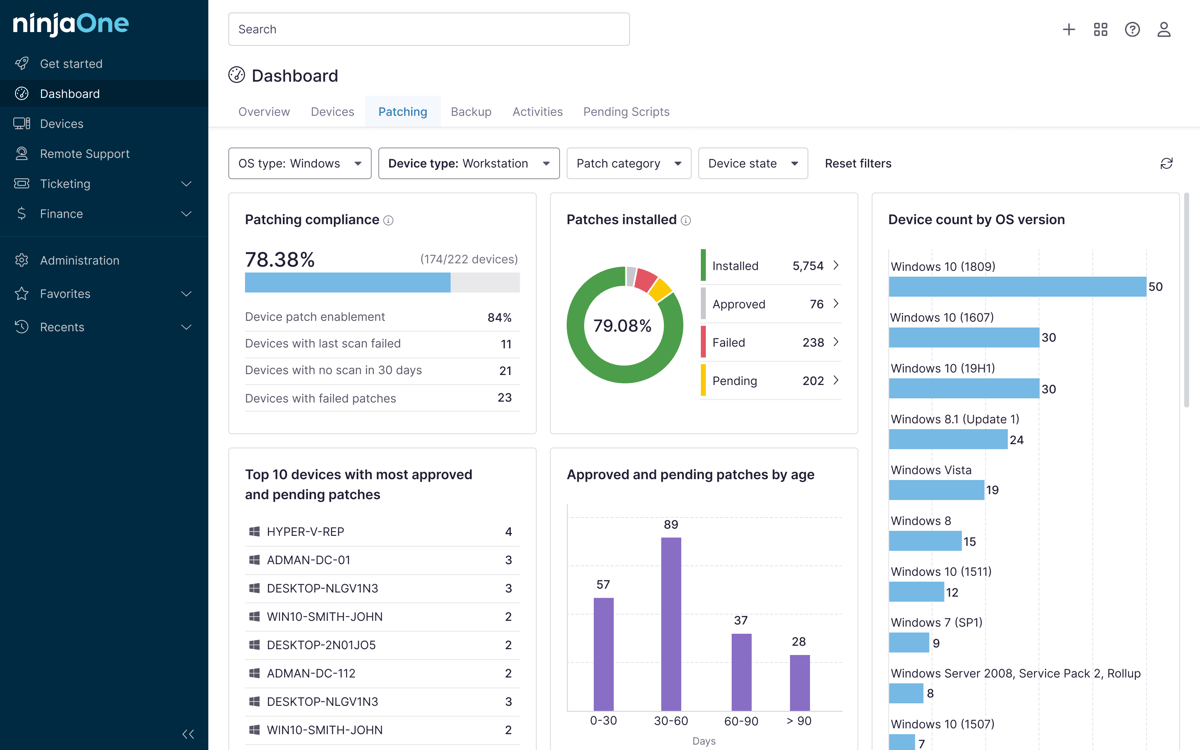
NinjaOne supports kiosk deployments by giving IT teams centralized control over devices used in kiosk scenarios.
| NinjaOne capability | How it helps |
| Centralized device management | Enables admins to manage kiosk devices from one dashboard instead of configuring each device manually. |
| Policy enforcement | Helps keep kiosk settings consistent and prevents unwanted changes across devices. |
| OS and app update management | Makes it easier to plan and deploy updates without breaking kiosk behavior. |
| Remote monitoring and visibility | Provides insight into device health, status, and potential issues. |
| Remote access and troubleshooting | Allows admins to diagnose and fix problems without physical access to the device. |
| Compliance support | Ensures kiosk devices stay secure, up-to-date, and functioning as expected. |
Quick-Start Guide
NinjaOne can support kiosk mode on Android and iOS/iPadOS devices.
How NinjaOne Facilitates Kiosk Mode:
1. Centralized Device Management
- Dashboard Control: Manage all kiosk devices from a single dashboard, eliminating the need to configure each device manually.
- Policy Enforcement: Apply consistent kiosk settings across devices to ensure uniformity and prevent unauthorized changes.
2. OS and App Update Management
- Automated Updates: Plan and deploy OS and app updates without disrupting kiosk functionality.
- Patch Compliance: Ensure devices remain secure and up-to-date with automated patching capabilities.
3. Remote Monitoring and Visibility
- Device Health Insights: Monitor the status, health, and performance of kiosk devices in real time.
- Issue Detection: Identify potential problems early with proactive alerts and reporting.
4. Remote Access and Troubleshooting
- Diagnostic Tools: Access devices remotely to diagnose and resolve issues without physical presence.
- Session Control: Intervene quickly during malfunctions or security incidents.
5. Compliance and Security Support
- Audit Trails: Maintain logs of configuration changes and access events to meet compliance requirements.
- Security Policies: Enforce security settings that align with kiosk mode restrictions.
Device kiosk mode for reliable and predictable device use
Kiosk mode is a practical way to control device use across platforms. When access is limited to approved apps or workflows, devices are easier to manage, more reliable, and consistent in shared or task-specific setups.
Related topics: