Key Points
- Datalogic rugged Android devices typically operate across high-throughput warehouses, distribution centers, retail, and field environments where downtime impacts revenue.
- Rugged handheld device management requires firmware governance tailored to OEM-customized Android, including controlled update cadences, compatibility testing, and stage deployments to avoid downtime.
- Hardware health oversight, including the monitoring of charge cycles, battery temperature, and physical wear indicators, helps reduce the risk of unexpected device failure.
- Role-based policy segmentation aligns security enforcements to actual operational risk, right-sizing restrictions according to risk profile.
- Centralized visibility shifts rugged device governance from reactive incident response to proactive fleet management.
Datalogic rugged Android devices span from handheld mobile computers to rugged tablets, typically deployed across logistics, fulfillment, and retail environments. Unlike consumer smartphones, their capabilities help them fit within operational workflows where uptime can influence revenue.
Effective rugged handheld device management helps account for the durability, reliability, and firmware alignment of Datalogic devices. Proper management ensures these devices can perform all expected functions, not just scanning, but also maintaining connectivity, running applications, and handling data.
Understanding portable rugged computer environments
Rugged handheld Datalogic devices usually operate within physically and operationally demanding environments. Understanding these environments helps you build a governance plan aligned with real-world risk.
Warehouse and fulfillment centers
Warehouses normally house high-throughput and time-sensitive operations handled across multi-shift schedules. In this environment, scanning volume can easily reach thousands of reads per day. On top of that, devices can be dropped, exposed to dust and debris.
Governance within this type of environment should account for accelerated wear and replacement cycles, as a single device failure can stall workflows and impact revenue.
Distribution centers and logistics hubs
Logistics operations operate under strict throughput targets, making downtime tolerance close to zero. Since devices used in receiving, sorting, and departures are tied to warehouse management systems, issues can cause consequences that can impact the whole logistics chain.
Similar to warehouse operations, fleet governance for this environment should focus on firmware stability, network reliability, and rapid device replacement strategies.
Retail environments
In cashier and retail counters, Datalogic devices change hands frequently between staff and are used extensively during store hours. Governance strategies should revolve around shared device security and ensuring all retail-specific functionalities remain consistent across device handoffs and shift changes.
Field services environments
Rugged tablets and mobile devices carried by field-based personnel, such as couriers or field technicians, often experience variable to no network connectivity. Since field devices may go on extended periods without connection, governance should focus on offline operational continuity and deferred policy enforcement.
Scanning-driven workflows
Environments that heavily rely on scanning should treat rugged handheld device management as operational IT risk management, as a single device can disrupt inventory tracking, order fulfillment, shipment verification, or retail processes.
Policy enforcements must also prioritize uptime, rapid remediation, and seamless replacements rather than focusing on maintaining baselines alone.
Software and hardware management for rugged devices
Ensuring operational device performance across rugged Datalogic device fleets depends on proper software and hardware maintenance. In fast-paced, high-demand environments, neither can be treated as a periodic maintenance task, as both require ongoing management practices that anticipate failure before it happens.
Firmware, OS, and OEM alignment
Datalogic rugged Android devices run on a customized Android OS tailored for enterprise and industrial use, helping them integrate better with scanning hardware, device-specific drivers, and enterprise-grade system extensions.
However, this reality also means that standard Android update practices don’t apply to rugged devices, and treating firmware management as routine OS patching can cause significant operational risk.
In reality, software governance strategies should include the following procedures:
Procedure | Rationale | Purpose |
| Controlled OS update cadence | Unlike regular Android devices, rugged fleet updates must be scheduled across operational windows. | Scheduling helps you avoid pushing firmware and OS updates during peak operational hours. |
| Compatibility testing | Datalogic enterprise applications are often coupled with specific firmware versions, and when they break, they can halt operational workflows. | Compatibility testing helps ensure stability by catching firmware and application conflicts before a device enters production use. |
| OEM partnership coordination | OEM coordination provides you with advanced notice of upcoming releases, compatibility issues, and recommended upgrade paths. | This helps you avoid deploying releases without context, reducing the risk of deploying updates that conflict with existing operational software or infrastructure. |
| Hardware driver validation | Incompatible drivers can impact device functionality, which can decrease the productivity of operational environments. | Validation ensures that updates don’t silently degrade device performance. |
| Staged deployment procedures | A single firmware issue can affect your entire rugged device environment if a problematic update gets deployed across a fleet. | This minimizes environment-wide firmware incidents by ensuring issues are detected through staged update deployment. |
Battery and hardware health oversight
High-throughput environments utilize devices continuously, especially on multi-shift workflows, which accelerates hardware wear. Extended device usage degrades devices faster, and without proactive monitoring and structured physical health inspections, battery failures and other hardware issues can cause unexpected shutdowns mid-shift.
To avoid unwanted downtime, consider monitoring the following:
Procedure | Rationale | Purpose |
| Charge cycle patterns | Devices accumulating charge cycles at an accelerated rate can indicate silent battery issues. | Monitoring charge cycle patterns provides visibility into battery health trends, allowing you to proactively plan replacements. |
| Battery temperature trends | Prolonged device usage can cause high battery temperatures, reducing the battery’s lifespan, or worse, causing a thermal runaway explosion. | Battery temperature trends can help surface battery health and charging infrastructure issues before they lead to safety risks or disruptions. |
| Physical wear indicators | Aside from batteries, hardware conditions like housing integrity and port condition can impact device reliability and end-user productivity. | Including device inspection practices in your rugged handheld device management strategy helps document wear state and flag devices for replacement to reduce operational downtime. |
Device role segmentation in rugged handheld device management
Within a large rugged device fleet, each operational role carries a different risk profile. In this light, applying uniform policies across environments can over-restrict low-risk devices, and on the other hand, under-secure high-risk devices.
By segmenting managed rugged devices by role, you align policy enforcement to the required operational context and security controls per device group.
Below are some sample policies per operational role:
- Receiving scanners: Policies should lock down application environments, enforce worker authentication per session, and implement strict network access controls to ensure data reliability and integrity at the point of capture.
- Packing and shipping devices: Enforcements in this operational role should focus on app stability and session continuity to ensure devices remain in a consistent, operational state throughout a shift.
- Inventory audit units: Governance on this operational role must focus on preventing compliance drift through automated remediation on reconnection and maintaining detailed audit logs to ensure consistent configurations.
- Field inspection tablets: Since these devices often operate off-site, policies should prioritize on-device enforcements, local encryption, tough authentication, remote-wipe capability, and compliance checks that sync after reconnection.
Consistent enforcement helps device group assignments maintain accuracy as environments change. Additionally, governance strategies should include a formal device reassignment workflow to update group membership when operational roles change.
Centralized visibility and rugged device management
In large Datalogic rugged device fleets, configuration drift happens silently as batteries degrade and asset records fall out of sync over time. These can go undetected for extended periods of time, slowly compounding until an unplanned outage reveals underlying issues.
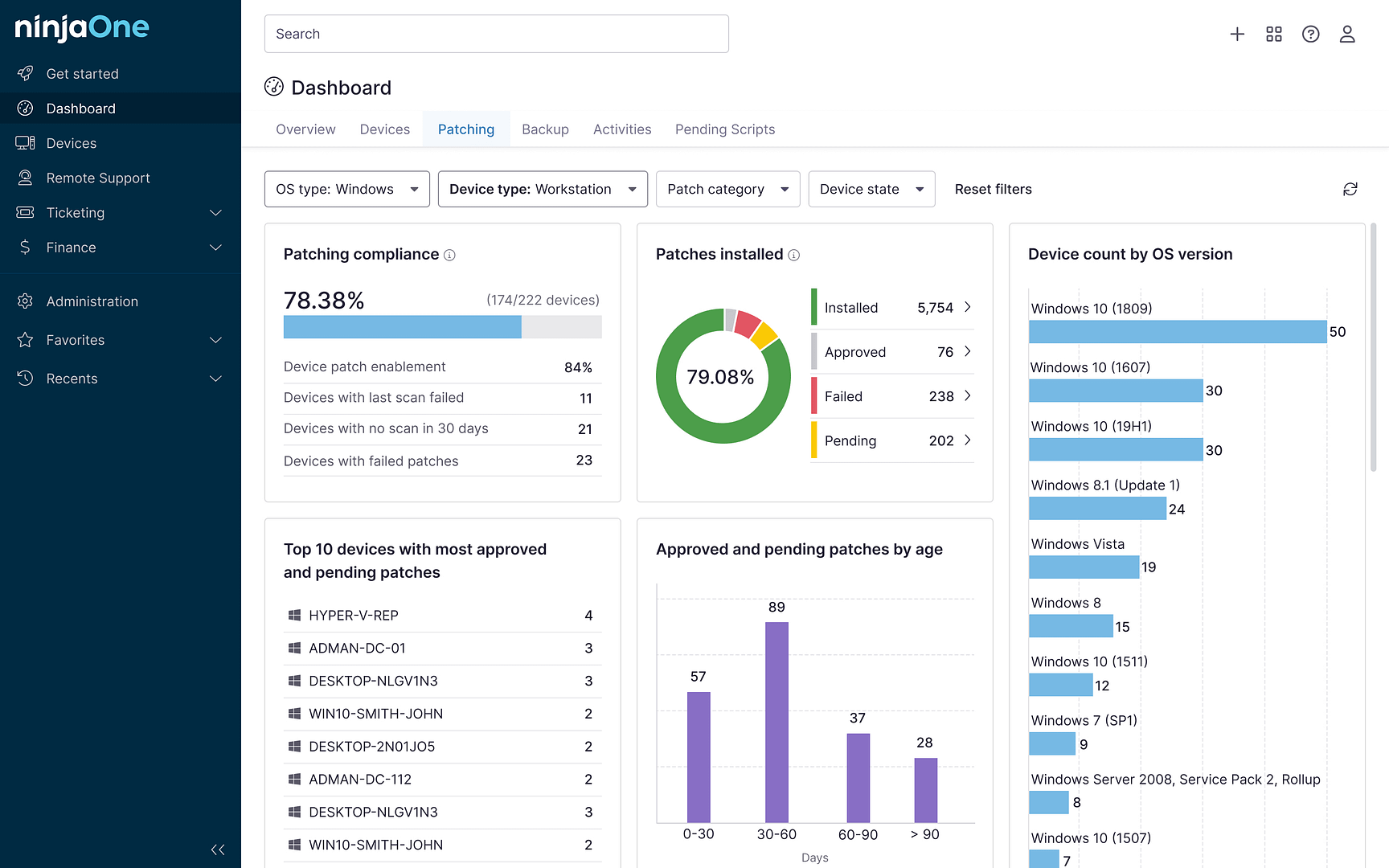
Centralized visibility helps organizations shift governance practices from reactive firefighting to proactive remediation. To make that shift possible, organizations need the following rugged handheld device management capabilities:
- Real-time device health dashboards: This provides technicians with current, actionable information regarding device state, including battery health, application state, and compliance.
- Hardware inventory tracking: Frequently updated inventory records help organizations monitor device state, operational role, and location, which leaves an accurate asset history that supports incident response.
- Compliance monitoring: This should regularly track operational baselines, including firmware alignment and security configuration state, to ensure consistent role configuration across an environment.
- Remote remediation: Technicians should have wide remote capabilities, such as remote application restarts, policy enforcement, and remote wipe, to accelerate remediation speed.
- Complete lifecycle documentation: Supports lifecycle audits by providing traceable device ownership, configuration, and end-of-life data, helping organizations plan replacements in a timely manner.
Operating these monitoring capabilities together helps surface unreported changes and configuration drift that can slowly erode the expected baseline of endpoint devices. Through proactive monitoring, technicians can ensure configuration consistency per device role at scale.
Proactive governance strengthens rugged handheld device management
Managing handheld Datalogic device fleets requires more than enforcing uniform policies across an environment. Organizations should focus on segmenting roles to right-size configurations according to a device’s operational and compliance requirements. Additionally, ongoing monitoring strategies help surface silent configuration drift to ensure baseline alignment.
NinjaOne helps with rugged device management by supporting centralized monitoring, automated patching, remote access, and lifecycle management capabilities. This ensures rugged devices stay within their operational role’s baseline, enabling them to preserve configurations that address their unique risk profiles.